Photo: Wikipedia
Political ClimatePolitical Climate in Madera, CA
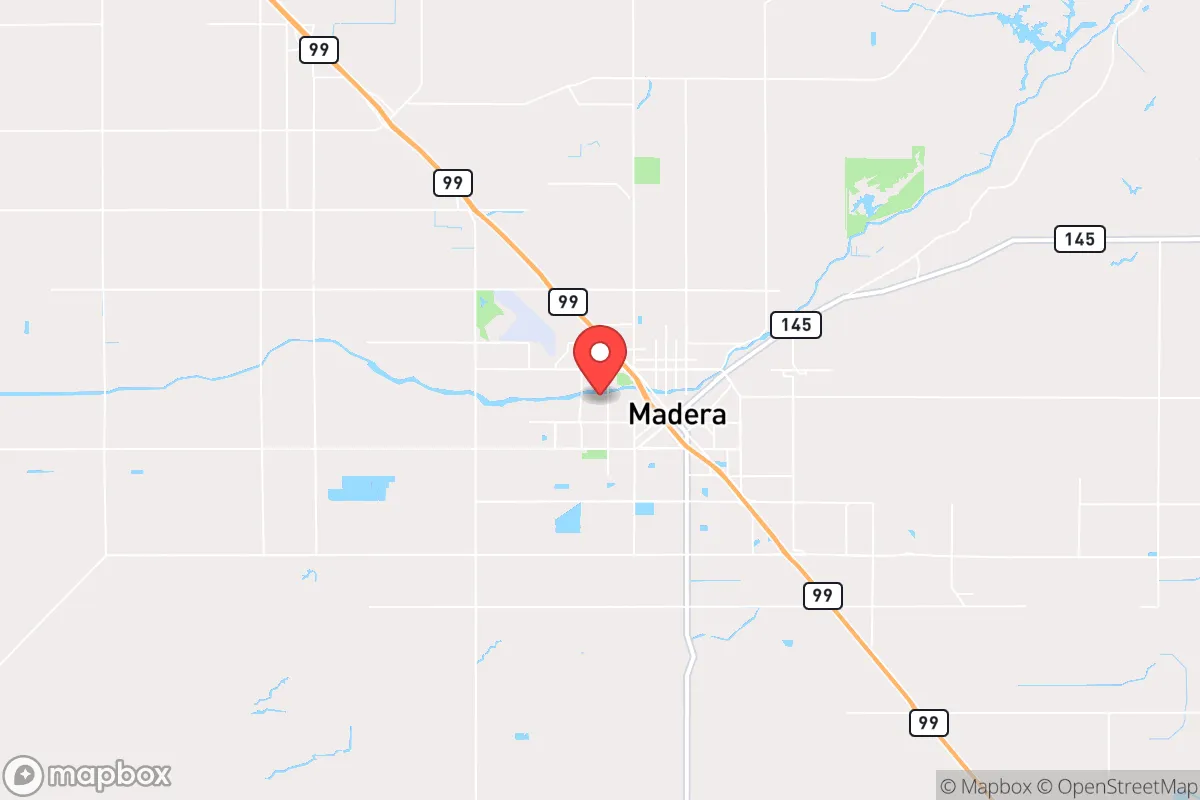
District shown is the primary district for this city’s centroid. Cities may span multiple districts.
Local Political AnalysisPolitical Analysis of Madera, CA
Madera, California, sits in a political pocket that feels noticeably different from the state’s coastal strongholds. With a Cook Partisan Voting Index (PVI) of R+1, the city and its immediate surroundings lean slightly Republican, but it’s a tight margin that reflects a community where conservative and moderate voters hold real sway. Over the past decade, Madera has shifted rightward, mirroring trends in the broader Central Valley, though not as dramatically as some neighboring towns. The area’s political trajectory is one of slow, steady polarization, with local elections often decided by single-digit margins and a growing divide between the city’s older, more conservative base and younger, more diverse residents who lean left.
How it compares
Madera’s R+1 PVI puts it in a different universe from California’s famously blue coastal regions. For context, the state as a whole has a Cook PVI of D+13, meaning Madera is about 14 points more Republican than the average California district. Drive 30 minutes west to Fresno, and you’ll find a similar mix—Fresno County leans R+5, but the city of Fresno itself is more purple, with a Democratic mayor and a city council split between parties. Head north to Merced, and you’ll see a D+5 lean, reflecting its larger university population. But Madera’s real contrast is with the Bay Area or Los Angeles: a 90-minute drive to San Francisco or a 3-hour drive to L.A. puts you in districts that are D+20 or more. Within Madera County, the city of Madera is the most politically balanced spot; the surrounding unincorporated areas, like Chowchilla to the south, trend more conservative (R+8 or so), while the foothill communities near Yosemite lean slightly left. This makes Madera a kind of political bellwether for the Central Valley—a place where both parties have to work for every vote.
What this means for residents
For conservative residents, Madera offers a rare sense of political comfort within California. Local government, from the city council to the county board of supervisors, is reliably Republican, meaning lower taxes and fewer regulations on businesses and agriculture are the norm. You’ll see “Trump 2024” signs on lawns and bumper stickers on trucks without much pushback. For liberal residents, life is more of a balancing act. While you won’t face open hostility, progressive policies on housing, environmental regulation, or social issues often stall at the local level. The city’s school board, for example, has debated curriculum content and library books in ways that mirror national culture wars. That said, Madera’s growing Latino population—now over 60% of the city—is slowly shifting the electorate leftward, especially among younger voters. In practice, this means both sides feel they have a shot: conservatives hold the levers now, but liberals see demographic trends working in their favor over the next decade.
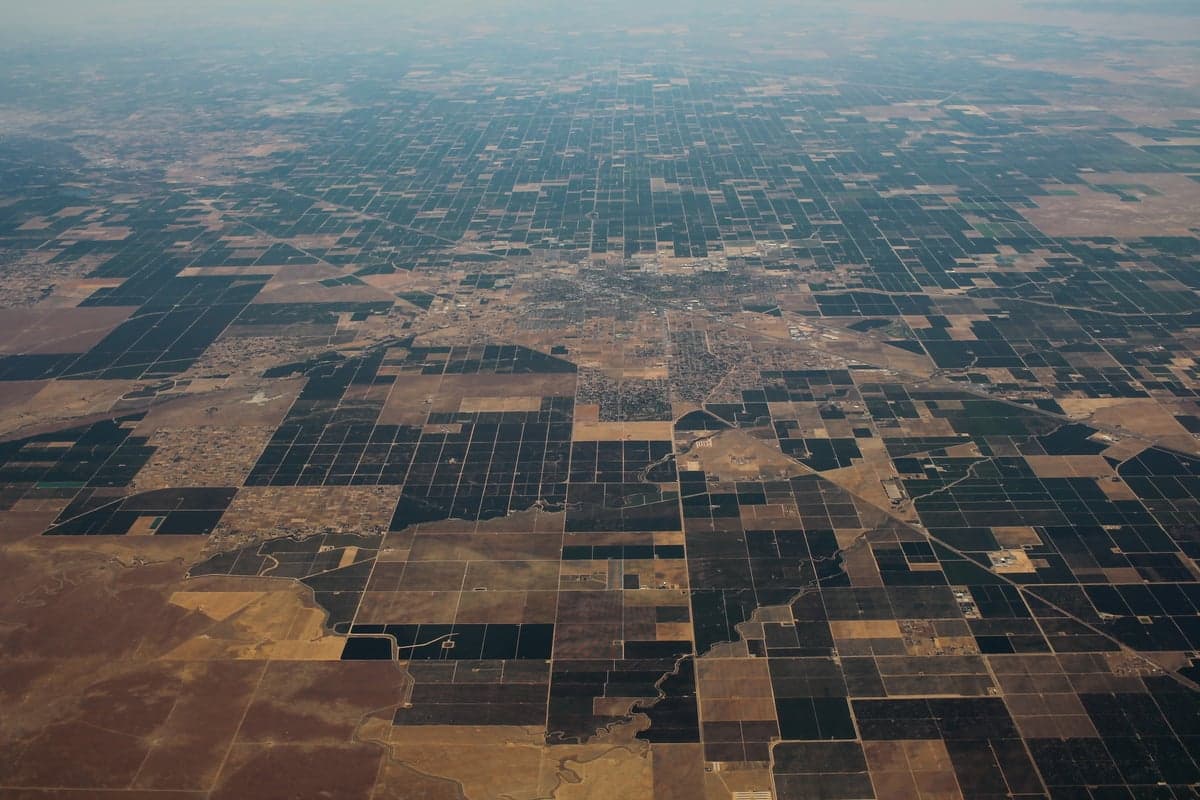
Culturally, Madera stands apart from California’s coastal image. This is a working-class, agricultural town where water rights and farm labor laws dominate political conversations, not tech regulation or housing density. The city’s annual Madera Fair and its strong ties to the dairy and almond industries reinforce a conservative, family-oriented ethos. Yet there’s also a quiet, practical progressivism: the city has a robust community college, Madera Community College, and a growing number of residents commute to Fresno for jobs in healthcare and education, bringing back more moderate views. The biggest policy distinction from the rest of California is on housing—Madera has resisted the state’s push for high-density development, preferring single-family homes and slower growth. For anyone moving here, the political climate is best summed up as “California with a drawl”: the state’s blue laws still apply (gun control, environmental rules), but the local culture and governance push back against them at every turn. It’s a place where you can be a proud conservative without feeling like an outcast, or a liberal who learns to pick your battles. Either way, the politics here are lived, not just debated.

State Political ClimatePolitical Climate in California
State Political AnalysisPolitical Environment in the State
California is a solidly Democratic state, but the reality is far more complex than a simple blue label. The state’s political lean is driven overwhelmingly by the massive, dense populations of the coastal metros—Los Angeles, the San Francisco Bay Area, and San Diego—while vast inland regions vote just as heavily Republican. Over the last 10-20 years, the state has shifted leftward on social and cultural issues, but a significant and vocal conservative minority remains, concentrated in the Central Valley, the Inland Empire, and the far north. For a relocator, the key takeaway is that your experience of California’s politics will depend almost entirely on which of these very different Californias you choose to live in.
Urban vs. rural divide
The political map of California is a study in stark contrasts. The Democratic strongholds are the coastal urban centers: Los Angeles County alone casts about a quarter of the state’s votes, and it’s deep blue. San Francisco and the Bay Area (including Oakland and San Jose) are even more uniformly progressive. San Diego is a bit more moderate but still reliably Democratic. These areas drive the state’s overall partisan lean because of sheer population. Flip to the interior, and you get a different picture. The Central Valley—places like Bakersfield (Kern County), Fresno, and Modesto—votes heavily Republican, driven by agriculture, oil, and a more traditional, family-oriented culture. The far north, including Redding (Shasta County) and the Sierra foothills, is also deep red. Even within blue counties, you’ll find conservative pockets: Orange County, once a GOP bastion, has trended purple and now elects Democrats in many districts, but cities like Huntington Beach and Yorba Linda remain reliably conservative. The Inland Empire—Riverside and San Bernardino counties—is a true swing region, often deciding close statewide races by a few points.
Policy environment
California’s policy environment is defined by high taxes, heavy regulation, and a strong social safety net. The state has a progressive income tax with rates up to 13.3%, one of the highest in the nation. Property taxes are capped at 1% of assessed value (thanks to Prop 13), but sales taxes and gas taxes are among the highest. The regulatory posture is aggressive on environmental and labor issues: strict emissions standards, a $16 minimum wage (rising to $18 for some industries), and mandatory paid sick leave. Education policy is dominated by the teachers’ unions, with per-pupil spending above the national average but mixed outcomes. Healthcare is heavily regulated, with a state-run exchange (Covered California) and strong protections for abortion and transgender care. Election laws are among the most liberal: universal mail-in voting, same-day registration, and no-excuse absentee ballots. For a conservative relocator, the tax and regulatory burden is the biggest practical concern, while the social policies may be a dealbreaker or a non-issue depending on where you settle.
Recent policy direction
Recent legislation shows California doubling down on its progressive identity. On gun and self-defense law, the state has some of the strictest rules in the nation: an assault weapons ban, a 10-day waiting period, a “may-issue” concealed carry regime (though a recent Supreme Court ruling is forcing changes), and a new law allowing private citizens to sue gun manufacturers. On parental and education rights, the state has passed laws protecting LGBTQ+ students’ privacy from their parents (AB 1955, which prohibits schools from notifying parents about a child’s gender identity) and mandating ethnic studies for high school graduation. On speech, California has laws against “hate speech” that go beyond federal protections, and it has banned public libraries from removing books based on content. On privacy and surveillance, the California Consumer Privacy Act (CCPA) is one of the strongest in the nation, giving residents control over their data. On medical and bodily autonomy, the state is a sanctuary for abortion and gender-affirming care, with laws protecting providers and patients from out-of-state prosecution. On property rights, rent control has been expanded statewide (AB 1482), and new laws make it harder to evict tenants. On taxation, a new wealth tax on high-net-worth individuals is being debated, and the state has already passed a “mansion tax” on properties over $5 million in Los Angeles. On voting and ballot access, California has made it easier to vote than almost anywhere else, with automatic registration and ballot drop boxes everywhere. The direction is clearly toward more regulation, more social protections, and more individual rights in areas like privacy and bodily autonomy, but at the cost of higher taxes and less local control.
Civil unrest & political movements
California has a long history of political activism, and recent years have seen both left- and right-wing movements flare up. The 2020 Black Lives Matter protests were massive in Los Angeles, San Francisco, and Oakland, sometimes turning violent with looting and property damage. On the right, the “Recall Newsom” movement in 2021 gathered over 1.7 million signatures, though the recall ultimately failed. The state’s sanctuary policies are a major flashpoint: California limits cooperation between local law enforcement and federal immigration authorities, and some cities like San Francisco and Los Angeles have gone further, declaring themselves “sanctuary cities.” This has led to tensions with the federal government and with more conservative inland counties. Election integrity controversies have been less intense than in some states, but there were protests outside ballot counting centers in 2020, and some rural counties have passed resolutions questioning the security of mail-in voting. The secession movement, “Calexit,” has fizzled after a failed 2018 ballot initiative, but the idea of a “State of Jefferson” in the far north—a proposed conservative state carved out of Northern California and Southern Oregon—still has grassroots support in places like Redding and Yreka. For a new resident, the most visible flashpoint is likely the homelessness crisis in major cities, which is often tied to political debates over housing policy, mental health funding, and public safety.
Projection
Over the next 5-10 years, California’s political trajectory is likely to remain leftward, but with growing internal friction. Demographic shifts are key: the state’s population has been declining slightly since 2020, driven by out-migration to Texas, Arizona, and other states. Those leaving tend to be middle-class families and conservatives, while the state continues to attract immigrants and young, progressive professionals. This could deepen the urban-rural divide, making coastal cities even bluer and inland areas even redder. In-migration from other states is slowing, but the state’s high housing costs and taxes are a persistent drag. The most likely scenario is a continued push for progressive policies on climate, housing, and social issues, but with increasing pushback from the business community and from moderate Democrats in swing districts. A new resident moving in now should expect to find a state that is politically vibrant but polarized, where your experience depends heavily on your zip code. The practical reality is that if you live in Bakersfield or Huntington Beach, you’ll be in a conservative bubble with local representation that fights the state’s direction. If you live in San Francisco or Los Angeles, you’ll be in a progressive environment where the state’s policies are the baseline.
For a conservative relocator, the bottom line is that California is not a monolith. You can find communities that share your values, especially in the Central Valley, the Inland Empire, and parts of Orange County. But you will be living under a state government that is actively pursuing policies you likely disagree with on taxes, guns, education, and social issues. For a liberal relocator, California offers a policy environment that aligns with your values, but you’ll pay for it in taxes and cost of living. The practical takeaway is to choose your city carefully, understand that local politics can buffer or amplify state policy, and be prepared for a state that is deeply engaged in political experimentation—for better or worse.
* Values derived from national, state, county, city and local statistics and may differ in a specific area. Last updated: 2026-09-19T04:53:43.000Z
Narrative content on this page is AI-generated and may contain mistakes. Verify any details that matter before acting on them.
ReloMaps may earn a commission from affiliate links at no extra cost to you.

