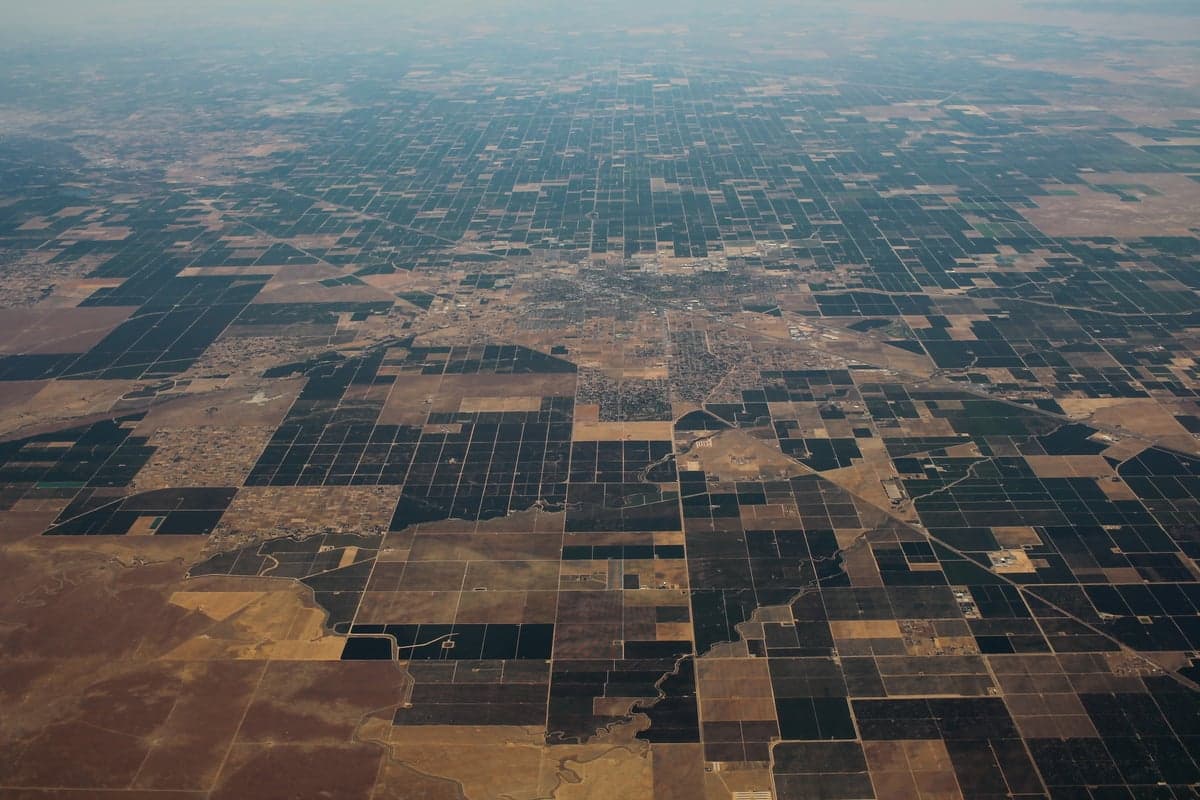
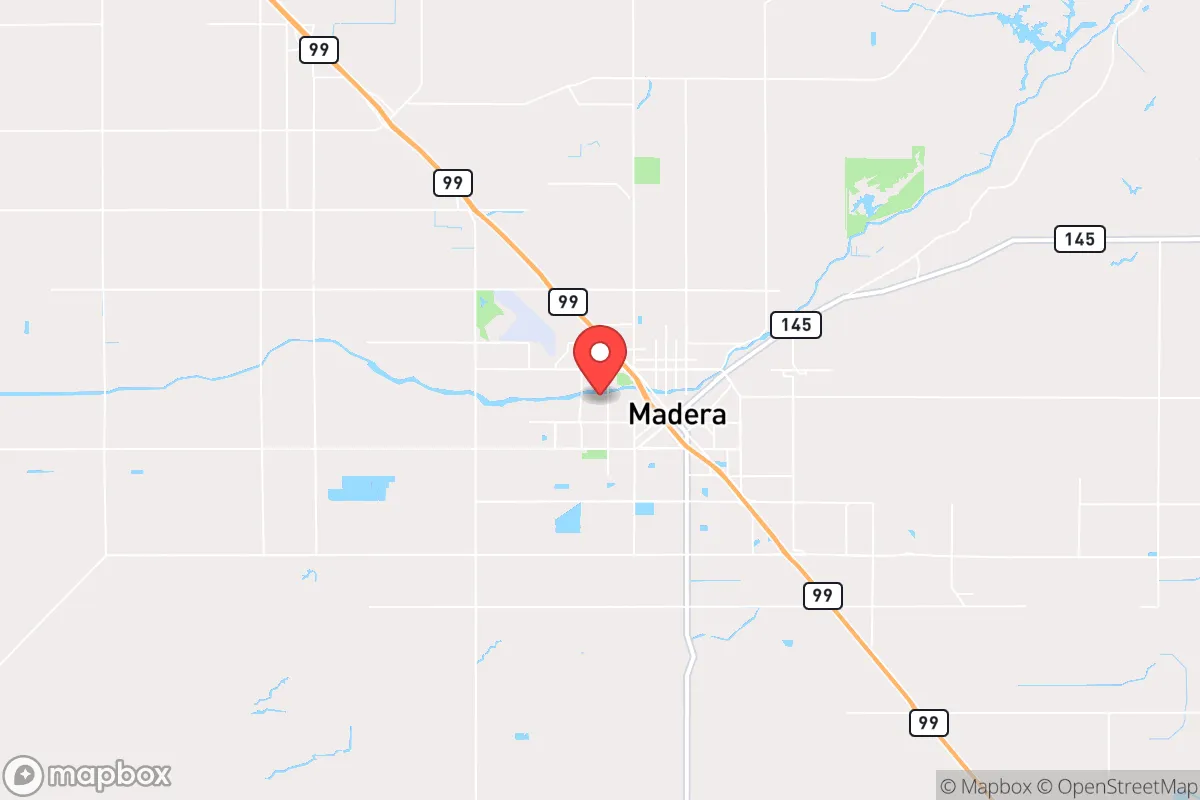
Photo: Wikipedia
Quality of Life in Madera, CA
A high quality of life with strong walkability, manageable living costs, healthy neighborhood signals, and solid amenity access.
What does Quality of Life tell us?
Quality of Life blends cost of living, nearby amenities, socioeconomic signals, and neighborhood character. City-level scores represent the whole municipality; individual neighborhoods can differ.
What does this tell us?
Quality of Life blends cost of living, nearby amenities, socioeconomic signals, and neighborhood character. City-level scores represent the whole municipality; individual neighborhoods can differ.
Cost of Living
11% above national average
The Real Cost of Living in Madera, CA for 2026
| Tier | Individual | Family (4) |
|---|---|---|
| Survival | $20k | $37k |
| Comfortable | $65k | $96k |
| Luxury | $115k+ | $178k+ |
| Elite (Top 5%) | $153k+ | $237k+ |
66%
The Area Signal
A metric tracking the socioeconomic signals of the area.
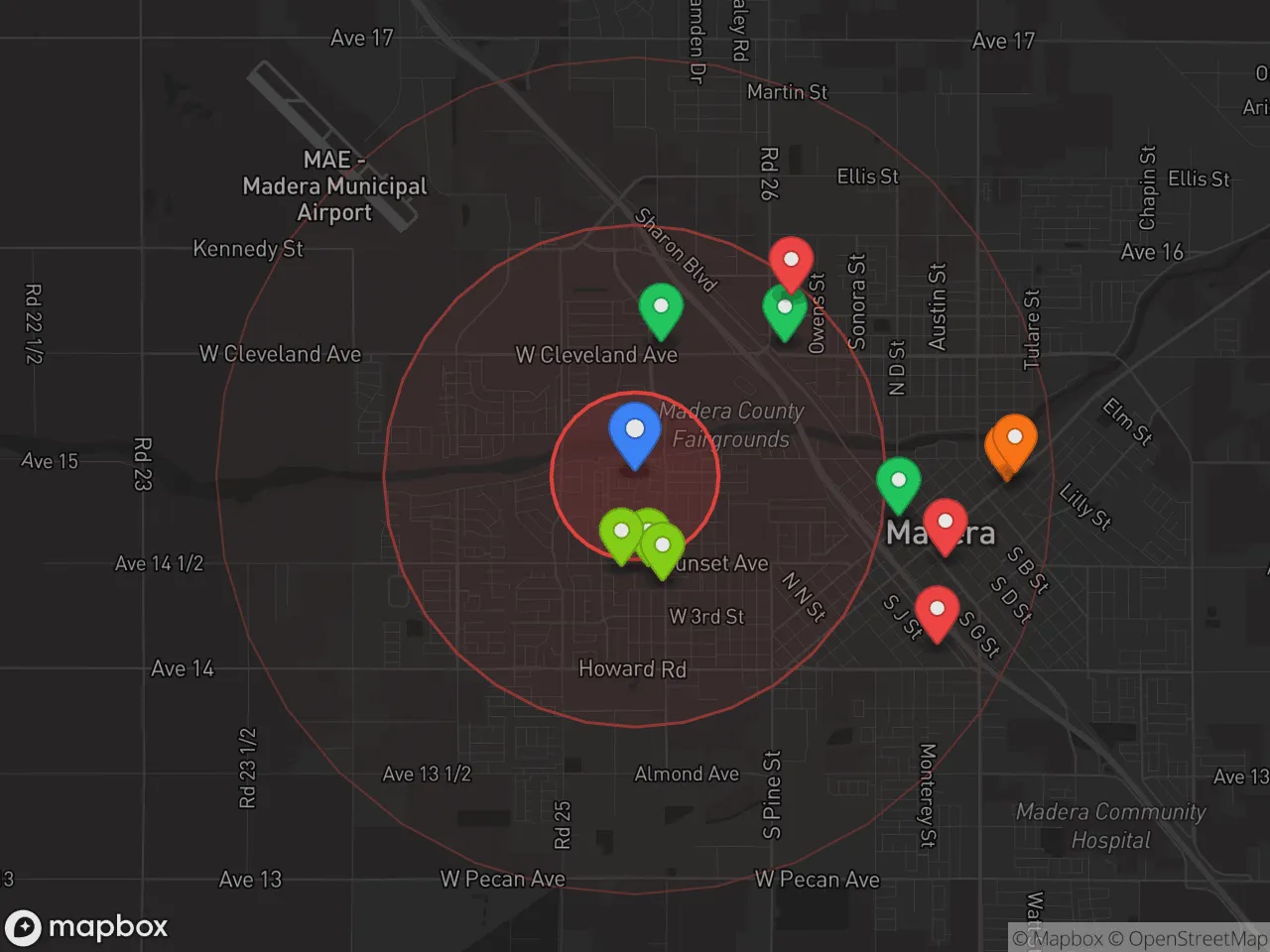
Hobbies
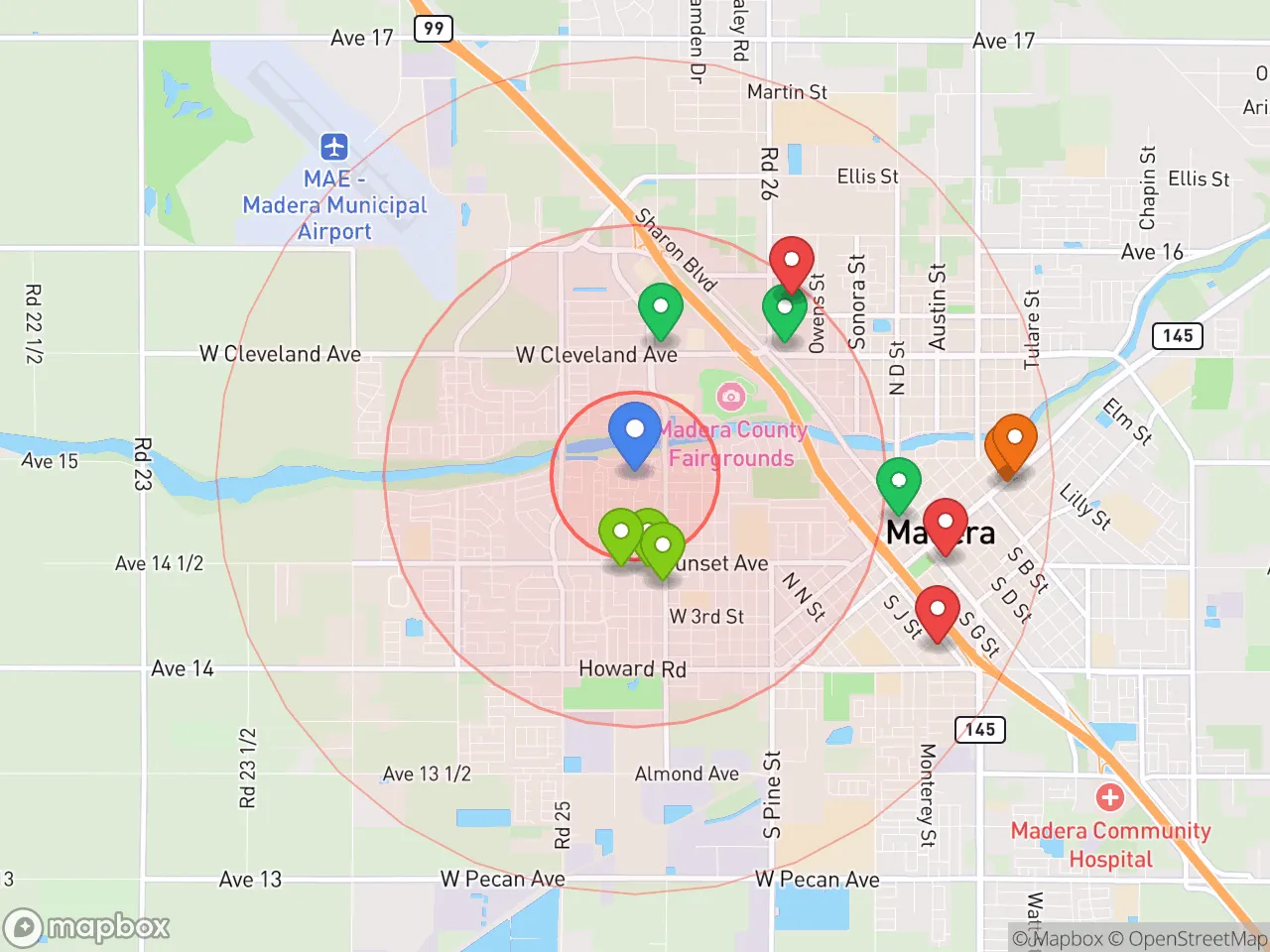
Explore the areaGroceries
1 within 10 miles
Gas
20 within 10 miles
Hospital
7 within 20 miles
Airport
SJC — San Jose International
Post Office
USPS — Madera, CA
Critical Amenities
Quality-of-Life Analysis
Madera, California, presents a quality-of-life profile that sits between the high-cost coastal metros and the more affordable inland Central Valley, with a cost-of-living index of 111 (11% above the U.S. average). The city attracts a mix of agricultural workers, commuters to Fresno and Merced, and families seeking a quieter, more affordable alternative to the Bay Area, though it remains less affluent than many of its western neighbors. Median household incomes here trail state averages, and the population skews younger and more family-oriented, with a significant share of residents working in farming, logistics, and local services.
Cost of living, housing, and affordability compared to Fresno and Merced
Madera’s housing market is a key draw for budget-conscious buyers, with a median home value of $335,900—roughly $100,000 less than the California median and about 15% below Fresno’s typical home price. Renters also find relative value: the median rent of $1,237 is notably lower than the state average of around $1,800, though it has risen steadily since 2020. The overall cost-of-living index of 111 is driven primarily by housing and transportation; groceries and healthcare are closer to national norms. Compared to Merced (index ~105) and Fresno (index ~108), Madera is slightly pricier, but it remains far cheaper than the Bay Area (index 160+) or coastal cities like Santa Cruz. The trade-off is a longer average commute of 26.5 minutes, which is typical for the Valley but can stretch to 40+ minutes for those working in Fresno’s tech or healthcare sectors. Property taxes are moderate under Proposition 13, but new buyers should factor in Mello-Roos fees in some newer subdivisions.
Schools, amenities, and what daily life is like for families
Daily life in Madera revolves around its agricultural roots and growing suburban infrastructure. The Madera Unified School District serves most families, with schools like Madera High School and Thomas Jefferson Middle School offering average test scores that lag behind state benchmarks—a common pattern in the Central Valley. For higher-rated options, families often look to charter schools or private institutions in Fresno, 25 minutes south. Amenities are practical rather than upscale: the city has a solid park system (notably Lions Town & Country Park and Madera Municipal Golf Course), a historic downtown with local eateries, and the Madera County Library. Shopping and dining are limited compared to Fresno, but the Madera Marketplace provides big-box retail and chain restaurants. The rhythm of life is slower and more community-oriented, with events like the Madera Fair and farmers’ markets reinforcing a small-town feel. Healthcare access is adequate via Madera Community Hospital, though specialists often require a drive to Fresno. Commuters to Fresno or Merced (via CA-99) face moderate traffic, but the trade-off is lower housing costs and less congestion than larger cities.
Madera is best suited for families and workers who prioritize affordability and a quieter pace over urban amenities and top-tier schools. First-time homebuyers, agricultural and logistics professionals, and remote workers with flexible schedules will find the housing market accessible, especially compared to the Bay Area. Those seeking vibrant nightlife, elite schools, or high-end shopping may feel limited and should consider Fresno or Clovis instead. For anyone willing to trade some convenience for lower costs and a tight-knit community, Madera offers a solid, grounded quality of life in the Central Valley.

Crime in Madera, CA
Crime rates similar to the national median for U.S. locations.
Violent CrimeViolent Crime Analysis
Property CrimeProperty Crime Analysis
Crime Analysis
Madera, California, reports crime rates that significantly exceed both state and national averages, making it a location where safety is a primary concern for potential residents. With a violent crime rate of 431.5 incidents per 100,000 residents and a property crime rate of 1,089.6 per 100,000, the city faces challenges that are compounded by its position within California’s broader criminal justice environment. The influence of progressive district attorneys and judges in the region, who often prioritize rehabilitation over incarceration, contributes to a system where offenders cycle back onto the streets, undermining public safety and victim justice.
Crime in context
Madera’s violent crime rate of 431.5 per 100,000 is more than double the national average of roughly 380 per 100,000 and significantly higher than the California state average of approximately 442 per 100,000. Property crime, at 1,089.6 per 100,000, also exceeds the national benchmark of about 1,954 per 100,000 but is notably lower than the state average of roughly 2,300 per 100,000. However, these figures mask a deeper issue: the city’s proximity to larger metro areas like Fresno means it is subject to the same lenient sentencing policies and catch-and-release practices that have eroded deterrence across the Central Valley. Progressive criminal justice reforms at the state level, including Proposition 47 and early release programs, have directly reduced the consequences for property and drug crimes, emboldening repeat offenders.
What residents experience
Residents of Madera frequently report concerns about property crimes such as vehicle theft, burglary, and vandalism, which are the most common offenses. The city’s violent crime is concentrated in specific categories, with aggravated assault making up the largest share, followed by robbery. Gang-related activity is a persistent issue, particularly in neighborhoods near Highway 99 and the downtown corridor. Many locals express frustration that the judicial system fails to hold offenders accountable, as district attorneys in Madera County have increasingly adopted diversion programs and plea deals that minimize jail time. This approach, while intended to reduce recidivism, often results in criminals being released quickly to reoffend, leaving victims feeling that justice is secondary to offender rehabilitation.
Neighborhood-level safety varies considerably. Areas west of the Madera Municipal Airport and newer subdivisions near Avenue 12 tend to have lower crime incidence, while older sections near the city center and along the Southern Pacific Railroad tracks experience higher rates of theft and assault. Gated communities and developments with private security offer a buffer, but overall, Madera’s crime landscape reflects the broader challenges of a region where progressive judicial policies have prioritized leniency over public safety. Prospective residents should research specific blocks and consult local police crime maps before committing to a move.
* Values derived from national, state, county, city and local statistics and may differ in a specific area. Last updated: 2026-09-19T04:53:43.000Z
Narrative content on this page is AI-generated and may contain mistakes. Verify any details that matter before acting on them.
ReloMaps may earn a commission from affiliate links at no extra cost to you.

