Photo: Wikipedia
Demographics of Madera, CA
Affluence Level in Madera, CA
A below-average socioeconomic profile. Incomes, home values, and educational attainment trail the U.S., with higher poverty and unemployment.
People of Madera, CA
The people of Madera, California today form a predominantly Hispanic community of 67,133 residents, with 80.2% identifying as Hispanic or Latino, 12.7% as non-Hispanic White, 3.0% as Black, 1.3% as Indian (subcontinent), and 0.6% as East/Southeast Asian. The city is notably less educated than state averages—only 10.3% of adults hold a bachelor’s degree or higher—and has a foreign-born population of 18.9%, a figure that reflects ongoing immigration from Mexico and Central America. Madera’s identity is rooted in agricultural labor, family-oriented neighborhoods, and a working-class character that sets it apart from the more suburban and professional communities of the northern San Joaquin Valley.
How the city was settled and grew
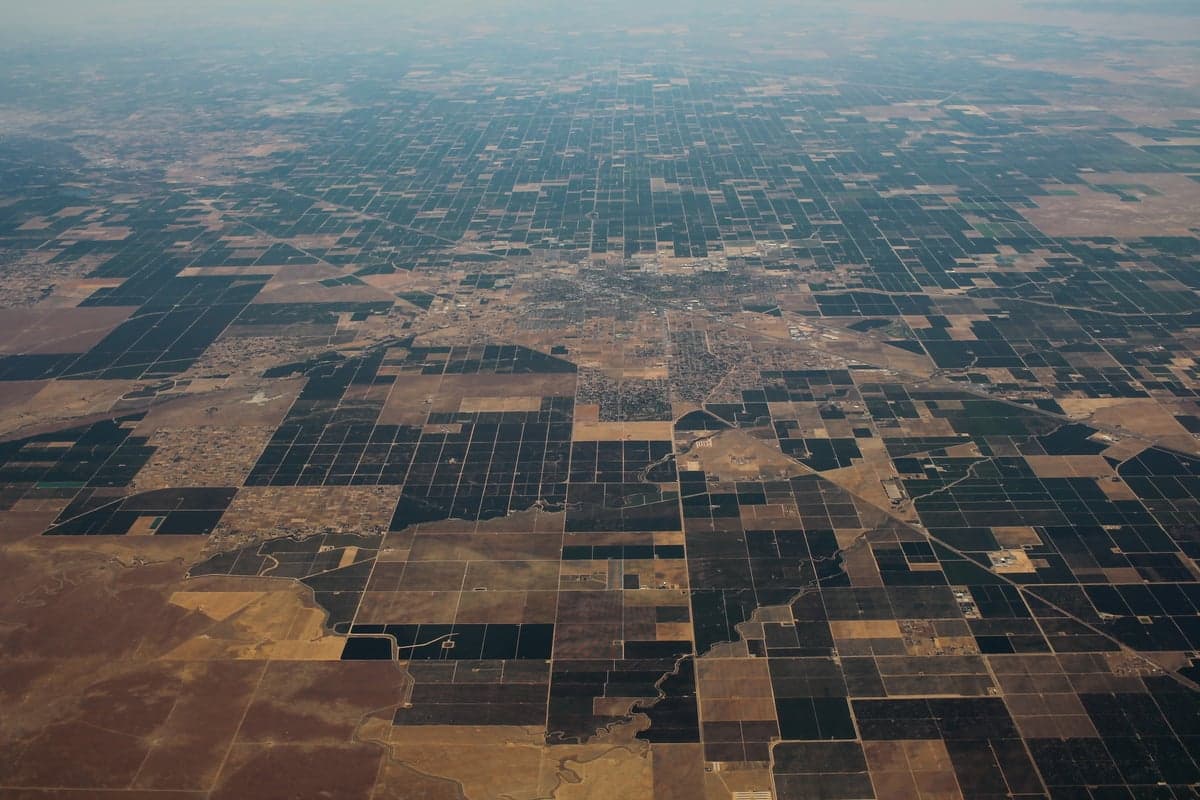
Madera’s original population was drawn by the land and the railroad. Founded in 1876 as a stop on the Southern Pacific Railroad, the city was named for the lumber (Spanish for “wood”) shipped from the nearby Sierra Nevada. The first significant wave of settlers were Anglo-American farmers and ranchers who took advantage of the 1862 Homestead Act and later the Central Pacific land grants. They established the Madera Colony, a planned agricultural district laid out in the 1880s, which attracted Midwestern families seeking irrigated farmland. By the early 1900s, Madera’s economy shifted decisively toward large-scale fruit and nut orchards, drawing the first Mexican laborers to work the fields. These early Mexican immigrants settled in the West Side neighborhood, near the railroad tracks and packing sheds, creating a barrio that remains a core Hispanic enclave today. A smaller wave of Japanese and Filipino farmworkers arrived in the 1910s and 1920s, forming a modest Asian community concentrated around South Madera, though most were displaced or interned during World War II. The city’s population remained small—under 10,000 until 1950—and overwhelmingly Anglo, with a Hispanic minority confined to agricultural labor.
Modern era (post-1965)
The 1965 Hart-Cellar Immigration Act fundamentally reshaped Madera’s population. Family reunification provisions triggered a surge of Mexican immigration, and by 1980 the Hispanic share had risen to roughly 40%. This wave settled primarily in the East Madera neighborhoods east of Highway 99, where affordable housing and proximity to agricultural jobs created a rapidly expanding Hispanic working-class corridor. The 1990s and 2000s saw continued Hispanic growth, driven by both immigration and higher birth rates, while the Anglo population aged and declined. By 2010, Madera was 75% Hispanic. The Madera Ranchos area, a semi-rural district southeast of the city, absorbed some Anglo families seeking larger lots, but the city core became increasingly Hispanic. The Indian (subcontinent) population, though small at 1.3%, is a recent addition, concentrated in the Northwest Madera neighborhoods near the Madera Community Hospital, where a handful of Indian-owned motels and medical offices have appeared since 2000. The Black population, at 3.0%, is dispersed but slightly more visible in the Central Madera area near the historic downtown, reflecting a modest migration from the Bay Area and Southern California since the 1990s.
The future
Madera’s population is projected to continue its Hispanic majority trajectory, with the non-Hispanic White share likely falling below 10% within a decade. The foreign-born share has stabilized near 19%, suggesting that future growth will come primarily from U.S.-born Hispanic families rather than new immigration. The city is becoming slightly more diverse at the margins: the Indian and East/Southeast Asian populations, though tiny, are growing slowly, drawn by lower housing costs compared to the Bay Area and Fresno. New subdivisions in the Madera Meadows area, west of the city limits, are attracting a mix of Hispanic and Anglo first-time homebuyers, but the overall pattern is one of ethnic concentration rather than dispersal. Culturally, Madera is becoming more distinctly Hispanic, with Spanish-language media, Latino-owned businesses, and Catholic parish life dominating the public square. The city’s low college attainment rate (10.3%) and heavy reliance on agriculture and warehousing jobs suggest that upward mobility will remain a challenge, potentially limiting in-migration from more educated groups.
For someone moving in now, Madera offers a stable, family-oriented community with a strong Hispanic cultural identity and affordable housing—but limited economic diversity and educational opportunity. The city is not becoming more cosmopolitan; it is becoming more deeply rooted in its working-class, agricultural heritage. New residents should expect a place where Spanish is commonly heard, community life centers on church and extended family, and the pace of change is slow.

* Values derived from national, state, county, city and local statistics and may differ in a specific area. Last updated: 2026-09-19T04:53:43.000Z
Narrative content on this page is AI-generated and may contain mistakes. Verify any details that matter before acting on them.
ReloMaps may earn a commission from affiliate links at no extra cost to you.

