
Photo by Ron Dauphin on Unsplash
Political ClimatePolitical Climate in St Landry County
Showing district-level results — no local-only data available.
Local Political AnalysisPolitical Analysis of St Landry County
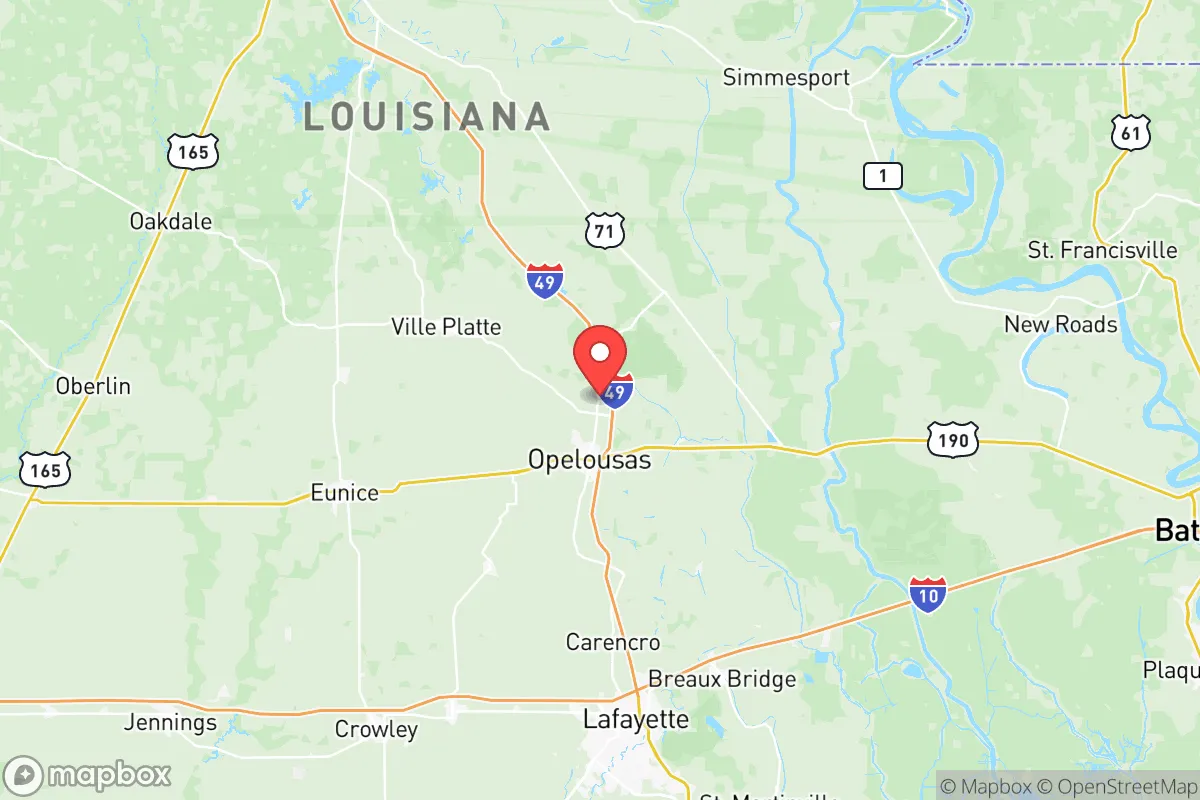
St Landry Parish leans Democratic by a Cook PVI of D+8, but that number tells only part of the story. This is a deeply conservative-leaning Democratic stronghold, where registered Democrats outnumber Republicans but often vote like their GOP neighbors on social and cultural issues. The parish has been shifting rightward over the past decade, mirroring the broader Louisiana trend, but it remains a blue island in a sea of red — the state as a whole carries a Cook PVI of R+10. The real action is in the precincts: the town of Opelousas, the parish seat, still delivers solid Democratic margins thanks to its majority-Black population, while Eunice and Ville Platte lean increasingly Republican, and the rural precincts around Washington and Grand Coteau are swing territory that can tip either way depending on the race.
How it compares
St Landry’s D+8 rating is a full 18 points more Democratic than Louisiana’s R+10 statewide average, making it one of the most Democratic parishes in Acadiana. But that comparison is misleading if you expect a progressive bastion. The parish’s Democratic voters are overwhelmingly African American, and the white Democratic base has been shrinking for years. In Opelousas, precincts near the historic district and the university campus lean reliably blue, while Eunice’s precincts around the Cajun Prairie and the Eunice High School area have trended red since 2016. The swing precincts — like those around the St Landry Parish Airport and the rural crossroads of Lawtell — are where elections are decided; they voted for Trump in 2020 but also supported Democratic Governor John Bel Edwards in 2019. Compared to Louisiana as a whole, St Landry is less polarized: you’ll find more split-ticket voters here than in the state’s deep-red rural parishes or its deep-blue urban centers.
What this means for residents
For conservative residents, especially in Eunice and the northern part of the parish, the D+8 label doesn’t feel restrictive. Local offices — sheriff, school board, police jury — are often held by conservative Democrats or moderate Republicans, and the parish’s cultural conservatism on issues like gun rights and abortion means most elected officials reflect those views regardless of party label. For liberal residents, particularly in Opelousas and around the University of Louisiana at Lafayette’s satellite campus, the political climate can feel like a constant negotiation. Progressive policies on criminal justice reform or environmental regulation rarely get traction at the parish level, but the Democratic lean does mean that federal and state Democratic candidates pay attention — St Landry is one of the few rural parishes where a statewide Democrat can expect a competitive showing. The practical reality is that most residents, regardless of party, share a common skepticism of Baton Rouge and Washington, and local politics tends to focus on roads, drainage, and schools rather than national culture wars.
Culturally, St Landry Parish stands apart from Louisiana’s deep-red rural parishes by its strong Creole and Cajun heritage, which fosters a live-and-let-live attitude that sometimes cuts against partisan lines. The annual Zydeco Festival in Opelousas and the Courir de Mardi Gras in Eunice draw crowds from across the political spectrum, and the parish’s Catholic roots mean that social issues are often framed through a religious lens rather than a purely partisan one. Policy-wise, the parish has resisted some of the more aggressive conservative measures seen elsewhere in Louisiana — for example, it has not passed a Second Amendment sanctuary resolution, unlike neighboring Evangeline Parish — but it also hasn’t embraced progressive reforms like criminal justice diversion programs. For newcomers, the key takeaway is that St Landry is a place where party labels matter less than personal relationships, and where the political climate is best understood by looking at precinct-level results in Opelousas, Eunice, and the rural swing areas rather than the countywide PVI number.

State Political ClimatePolitical Climate in Louisiana
State Political AnalysisPolitical Environment in the State
Louisiana is a solidly Republican state with a Cook PVI of R+10, but it’s not a deep-red monolith. The state benefits from a strong conservative coalition in rural and suburban areas, but it also has significant Democratic strongholds, particularly in New Orleans and Baton Rouge. Over the past 10–20 years, the state has shifted rightward, driven by cultural conservatism, energy industry loyalty, and a backlash against national Democratic policies. Since 2000, every presidential election has gone Republican by double digits, except for 2020 when Trump won by 19 points. You can see this trajectory in the state’s two most populous parishes: Orleans Parish (New Orleans) votes over 75% Democratic, while East Baton Rouge Parish (Baton Rouge) is a closely contested swing jurisdiction that has leaned red in recent cycles.
Urban vs. rural divide
The political map of Louisiana breaks down along classic urban-rural lines. The anchor of the Democratic vote is the Greater New Orleans region, including Orleans Parish and its inner suburbs like Jefferson Parish, which has trended blue in local races but still goes red in presidential contests. Baton Rouge is the other major blue-leaning metro, home to Louisiana State University and a sizable state workforce. Outside these two metros, the state is overwhelmingly Republican. The Acadiana region, centered around Lafayette, is reliably red and deeply culturally conservative. Shreveport and the northwest corner (Caddo Parish) vote Democratic but are losing population. The Florida Parishes (St. Tammany, Tangipahoa) are solid red and fast-growing, especially the North Shore of Lake Pontchartrain near Mandeville and Covington. The rural parishes from the Mississippi Delta to the Gulf Coast — places like Vernon, Bossier, and St. Mary — vote 70+% Republican. The current map: New Orleans and Baton Rouge account for roughly 20% of the state’s vote, rural and small-town Louisiana the other 80%.
Policy environment
Louisiana’s state-level policy leans conservative but with some pragmatic exceptions. The state has no income tax on Social Security income or military pensions, and a flat income tax on other earnings at 3% (after a 2023 legislative session simplification). Sales tax is high — state rate is 4.45%, but local additions can push it over 10% in places like New Orleans and Baton Rouge. The regulatory posture is business-friendly, especially for oil and gas, petrochemicals, and agriculture. Education policy is a mixed bag: the state has a robust charter school system (especially in New Orleans), but public school performance is below national averages. Gov. Jeff Landry (R), elected in 2023, has pushed for universal school choice legislation. Healthcare policy is less restrictive than many southern states — Louisiana expanded Medicaid under the Affordable Care Act, covering over 400,000 adults. Election laws are moderately conservative: no-excuse early voting is allowed (7 days), but voter ID is required (no photo ID requirement for absentee, but strict for in-person). The state has a closed primary system for presidential races but open primaries for other offices, meaning voters can cross over in local elections.
Recent policy direction
Louisiana has moved decisively rightward under Gov. Jeff Landry, especially on gun, education, and religious liberty issues. The state enacted constitutional carry (permitless carry of handguns) in 2024, joining the majority of Republican states. Parental rights were strengthened by a 2023 law requiring schools to notify parents of a child’s mental health or medical requests, and banning sexual content in classroom libraries. Abortion is banned with very limited exceptions (rape, incest, or life of the mother) — the state’s trigger law took effect after Dobbs. Privacy and surveillance: Louisiana has no broad data privacy law similar to California or Virginia, but it does have a specific biometric privacy law and a 2023 law limiting employer use of social media for hiring decisions. Property rights are strong — the state is a “doctrine of capture” jurisdiction for oil and gas, meaning mineral rights can be severed. On voting: the state passed a restrictive photo ID law in 2022 and reduced early voting from 10 days to 7 days (reversed in 2023 under court order). The overall direction: less regulatory burden, more localized cultural control, and a firearm-friendly environment.
Civil unrest & political movements
Louisiana has a history of high-profile civil unrest, particularly around police shootings and racial justice movements. The 2016 protests in Baton Rouge after the shooting of Alton Sterling were large and multi-day, involving a Red Cross shelter and federal intervention. More recently, the state has seen organized conservative activism around “election integrity” (the Landry administration created a new election fraud unit in the Secretary of State’s office) and school board battles over library books. Immigration politics are less vocal than in border states — Louisiana is a “sanctuary city” for none, and local law enforcement generally cooperates with ICE. There is a small but visible secession movement (Louisiana has a long history of nullification rhetoric, especially around federal environmental regulations affecting the energy industry). During COVID, rural parishes defied state health orders, leading to lawsuits and sheriffs refusing to enforce mandates. A new resident would notice the strong presence of Confederate monuments and symbolism, especially in rural and small-town Louisiana, and the ongoing disputes over their removal (St. Tammany Parish blocked removal in 2023). The 2020 election saw no major controversy in Louisiana — the state voted for Trump by 19 points with no significant legal challenges.
Projection
Over the next 5–10 years, Louisiana will likely become more Republican and more culturally conservative, though with pockets of blue resistance. The key demographic trend is out-migration: the state is losing population to Texas and Florida, particularly among younger, more educated residents. Those leaving are disproportionately Democratic-leaning, while the state’s growing population is in retirement-age and energy-sector workers, who vote red. The North Shore (Mandeville, Covington) and the Acadiana suburbs of Lafayette are the fastest-growing areas and are solidly Republican. New Orleans is stable but losing overall population share. Baton Rouge is the wild card — it still has a substantial federal and state workforce but is trending red. Expect more school choice expansion, continued gun rights expansion (possibly the removal of the remaining concealed-carry permit requirement), and further restrictions on abortion access. The oil and gas industry will continue to dominate state politics, so climate or environmental regulations will face heavy resistance. By 2035, the state’s Cook PVI could shift to R+13 or even R+15 as rural and suburban growth continues.
Bottom line for a new resident: if you are a conservative, you’ll find a state that largely matches your views on guns, taxes, and education, with a government actively working to reinforce those positions. If you lean left, you’ll find a vibrant blue enclave in New Orleans and a smaller one in Baton Rouge, but you will be politically outnumbered in most of the state outside those cities. The practical reality is that Louisiana is a low-regulation, low-service state — for instance, the highest sales tax burden in the country can hit even conservatives’ budgets, and you’ll find limited public transportation and health services in rural areas. For families, the school choice environment offers options, but public school quality is uneven, so check local districts carefully. Overall, the state rewards self-reliance and will not change its political direction anytime soon.
* Values derived from national, state, county, city and local statistics and may differ in a specific area. Last updated: 2026-06-24T18:05:00.000Z
Narrative content on this page is AI-generated and may contain mistakes. Verify any details that matter before acting on them.
ReloMaps may earn a commission from affiliate links at no extra cost to you.

