
Photo by Ron Dauphin on Unsplash
Demographics of St Landry County
Affluence Level in St Landry County
A below-average socioeconomic profile. Incomes, home values, and educational attainment trail the U.S., with higher poverty and unemployment.
People of St Landry County
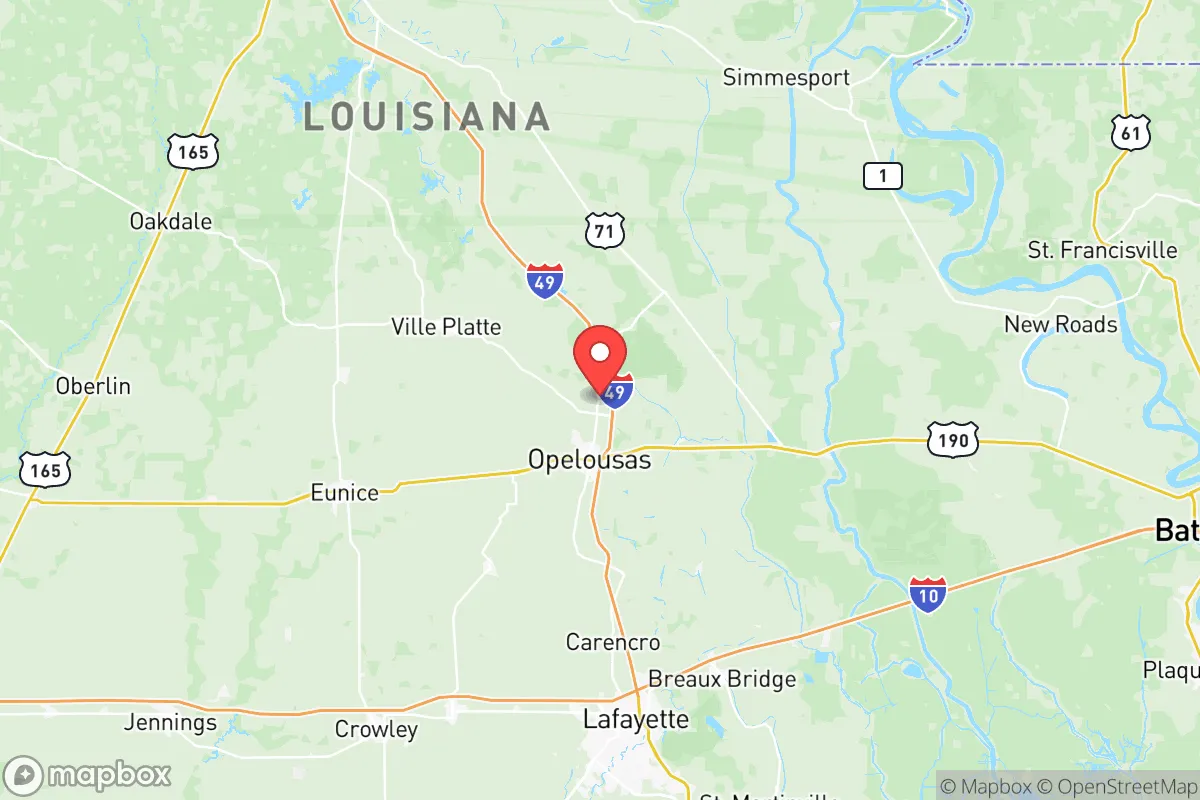
St. Landry Parish’s 82,128 residents form a population that is roughly split between a White majority (53.1%) and a Black or African American minority (39.9%), with a very small Hispanic (2.8%) and foreign-born (0.9%) presence that makes it one of Louisiana’s more ethnically homogeneous parishes. Its identity is deeply rooted in a rural, Creole and Cajun cultural heritage, centered on the historic towns of Opelousas (the parish seat and one of Louisiana’s oldest settlements), Eunice, Sunset, Arnaudville, and Washington. The population is modestly declining, with an older age profile (median age ~38) and a low college attainment rate (14.3%), reflecting a predominantly blue-collar economy tied to agriculture, healthcare, and oilfield services.
Settlement & growth (pre-1960)
Before European contact, the area was inhabited by the Attakapas and Opelousas Native American tribes, who gave the parish its name. The first Europeans were French and Acadian (Cajun) settlers in the mid-18th century, who established the Poste des Opelousas (modern-day Opelousas) around 1720, making it a key trading post and administrative center for the French colony of Louisiana. The French influence remains strong, with French and Creole languages still spoken by older generations in areas like Eunice and Arnaudville.
After the Louisiana Purchase (1803), American settlers began arriving, but the region remained predominantly French-speaking and Catholic. In the 1800s, a significant influx of enslaved and free people of African descent shaped the parish’s Black population, working on cotton and sugar plantations along the Bayou Teche corridor near Washington and Port Barre. After the Civil War, many freedmen stayed as sharecroppers and tenant farmers, establishing communities like Lawtell and Grand Coteau, which became centers of Black Catholic life.
The late 19th and early 20th centuries saw the arrival of a small number of Italian immigrants, who settled in Opelousas and Sunset, working as farmers and merchants. Oil discoveries in the 1920s-40s drew some white and Black workers to the oilfields around Krotz Springs and Arnaudville, but the parish’s economy remained primarily agricultural (cotton, rice, soybeans, and crawfish).
The 1940s-50s saw a modest outmigration of Black residents during the Great Migration, as many moved to Houston and Los Angeles for industrial jobs. However, the parish did not experience the same dramatic urban influx seen in northern industrial cities, and its rural, small-town character persisted.
Modern era (post-1965)
The post-1965 era in St. Landry Parish has been defined by demographic stability rather than dramatic transformation. The foreign-born population remains very low (0.9%), reflecting the parish’s limited appeal to post-Hart-Cellar immigration streams that predominantly flowed to coastal cities and Sun Belt suburbs. The small Hispanic population (2.8%) grew modestly in the 2000s-2010s, driven by Mexican and Central American laborers working in crawfish and rice farming around Eunice and Lebeau, but this growth has slowed.
The major demographic shift has been internal migration and suburbanization. Since the 1980s, the parish’s population has been drifting toward the I-49 corridor linking Opelousas to Lafayette and Alexandria. New subdivisions have emerged around Opelousas’s southern fringe and near Grand Coteau, attracting white professionals commuting to healthcare and education jobs in Lafayette. Meanwhile, many young residents (both Black and White) have left for Baton Rouge, Houston, or Texas, contributing to a stagnant or slightly declining population.
The Black population share (39.9%) has been relatively stable, with no major new migration. The parish’s East/Southeast Asian population is negligible (0.1%), and the Indian-subcontinent population (0.5%) consists mostly of a few doctors and engineers at Opelousas General Health System or the University of Louisiana at Lafayette (just outside the parish). The White population (53.1%) skews older, with many aging Cajun and Creole families remaining in historic homes in Washington and Sunset.
The future
St. Landry Parish’s demographic trajectory points toward continued slow decline and aging. The birth rate is below replacement, and outmigration of younger adults to larger cities is likely to continue. The parish is not expected to attract significant immigration, given its lack of major urban amenities and economic diversification. The Hispanic share may grow modestly (to 3–4%) through agricultural and construction labor, but this will remain far below state or national averages.
The most notable trend is exurban sprawl from Lafayette. The southern end of the parish, especially around Arnaudville and Grand Coteau, may see gradual infill of commuter homes and subdivisions, attracting a slightly more diverse and educated population. However, the parish’s cultural identity—rooted in French-Catholic traditions, Zydeco music, and rural life—is likely to persist, as new arrivals are typically drawn by that same heritage. The low cost of living (median home value ~$110,000) may appeal to retirees and remote workers, but the parish will remain predominantly White and Black, with limited racial or ethnic diversification.
St. Landry Parish is becoming an older, slower-growing, culturally preserved pocket of rural Louisiana—a place where French and Creole traditions persist, but where economic opportunities and population growth are migrating to the nearby I-49 corridor and Lafayette metro area. For a relocating individual or family seeking deep-rooted community, low housing costs, and a slower pace of life—and who are comfortable in a mostly White and Black, heavily Catholic, and politically conservative environment—it offers an authentic if narrowing slice of Acadiana.

* Values derived from national, state, county, city and local statistics and may differ in a specific area. Last updated: 2026-06-24T18:05:00.000Z
Narrative content on this page is AI-generated and may contain mistakes. Verify any details that matter before acting on them.
ReloMaps may earn a commission from affiliate links at no extra cost to you.

