
Photo by Ron Dauphin on Unsplash
Personal Sovereignty in St Landry County
Strong independent fundamentals that actively favor personal liberty and low regulation.
What does Personal Sovereignty tell us?
Personal Sovereignty measures your capacity for self-reliance and independence with minimal government friction. Higher scores mean fewer barriers between you and the way you want to live... but it assumes you have the space you need and good neighbors.
What does this tell us?
Personal Sovereignty measures your capacity for self-reliance and independence with minimal government friction. Higher scores mean fewer barriers between you and the way you want to live... but it assumes you have the space you need and good neighbors.
State Policy
Energy independence: Net exporter (280% of energy produced in-state)
Personal Liberty
Homesteading

Personal Liberty Analysis
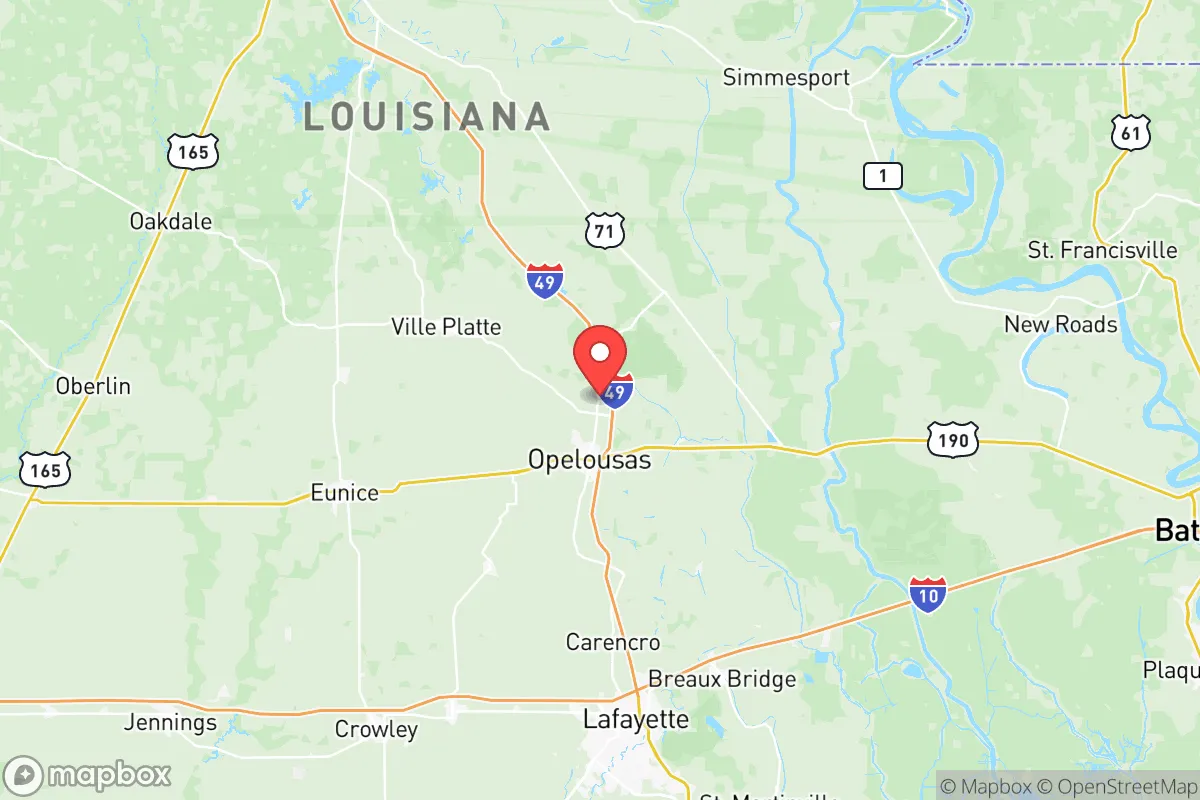
St Landry Parish offers a notably light-touch environment for residents who prioritize personal sovereignty, operating within Louisiana’s already low-regulation state framework. Unlike the denser regulatory climates found in East Baton Rouge or Orleans Parish, St Landry Parish combines a rural character with local governance that tends to defer to individual decision-making on property use, self-defense, and lifestyle choices. For single individuals and families seeking autonomy from heavy-handed oversight, the parish provides a practical foundation built on low taxes, expansive gun rights, and minimal zoning interference, though some variability exists between the parish seat of Opelousas and the more remote unincorporated communities like Melville, Washington, and Palmetto.
Tax burden and regulatory posture: What keeps the government footprint small
St Landry Parish’s regulatory posture reflects Louisiana’s historically light-touch approach. The parish levies a combined sales tax rate of approximately 9.75% in Opelousas (including state, parish, and city portions), but property taxes remain among the state’s lowest, with a typical effective rate of 0.45% to 0.60% of assessed value — far below national averages. Louisiana’s homestead exemption shields the first $75,000 of a home’s assessed value from parish property taxes, directly reducing the annual cost of ownership. No parish-level income tax exists since Louisiana residents pay state income tax at a flat 3% for most earners (2025-2026 rates), and the regulatory burden is shaped by state preemption: Louisiana law generally prevents local jurisdictions from imposing stricter rules than the state on issues like firearm carry, building codes for agricultural structures, and certain business licensing. However, incorporated towns like Opelousas, Eunice, and Ville Platte (though Ville Platte is in Evangeline Parish, it borders St Landry) have their own municipal codes that can regulate noise, nuisance, and some business hours — so residents seeking maximum regulatory freedom typically gravitate toward unincorporated areas such as Palmetto, Washington, or the rural stretches near Melville. Business formation is straightforward: Louisiana requires no local business license in unincorporated parish areas for most home-based enterprises, and occupational license taxes in small towns like Grand Coteau are minimal (often under $50 annually).
Self-defense and gun law specifics: Constitutional carry and stand-your-ground clarity
St Landry Parish is deeply embedded in Louisiana’s robust gun culture, and state law provides residents with strong self-defense protections that apply uniformly across the parish. Louisiana has been a constitutional carry state since 2021, meaning any adult 18 or older who can legally possess a firearm may carry a concealed handgun without a permit — no training or background check beyond the federal purchase requirement is necessary. The state also maintains a stand-your-ground statute (La. R.S. 14:20), which eliminates any duty to retreat before using deadly force when a person is lawfully present and reasonably believes force is necessary to prevent death, great bodily harm, or a violent felony. In practice, this means residents in Opelousas, Eunice, and rural areas like Washington face no local restrictions on open carry, magazine capacity, or firearm types, as Louisiana preempts all local firearm ordinances. The parish sheriff’s office is consistently supportive of Second Amendment rights — the St Landry Parish Sheriff’s Office issues concealed carry permits (though they are no longer required for in-state carry) and has not historically been aggressive in enforcing any marginal restrictions. For families, this legal environment provides clarity: self-defense decisions are governed by state statute, and local law enforcement typically does not second-guess defensive uses of force that meet the stand-your-ground criteria.
Self-reliance and homesteading viability: Lot sizes, zoning, and off-grid feasibility
St Landry Parish offers genuine viability for those seeking a self-reliant or homesteading lifestyle, with significant variation between its incorporated towns and unincorporated areas. In unincorporated sections — particularly around Melville in the south, Palmetto to the north, and the rural corridors near Washington — zoning is essentially nonexistent. There are no county-wide zoning ordinances in St Landry Parish; land use is governed primarily by state health and sanitation codes, not land planning departments. Minimum lot sizes for rural undeveloped parcels are typically 1 to 5 acres, depending on subdivision history and water/septic requirements, with many properties available under $5,000 per acre as of 2025. Off-grid living is legally feasible: Louisiana has no statewide prohibition on rainwater collection (though the state encourages but does not require permits for larger cisterns), and composting toilets and solar panels are not restricted by parish ordinance. The Louisiana State Uniform Construction Code applies only to new residential construction over a certain square footage in incorporated areas, so building a small cabin or workshop on rural land without a permit is generally possible. However, residents near Grand Coteau or the city limits of Eunice should check municipal setback and building permit requirements — Eunice, for example, has a city planning commission that reviews new structures. For those raising livestock, St Landry Parish has no county-level bans on chickens, goats, or even small cattle operations on parcels over 2 acres, but any commercial-scale operation must follow state Department of Agriculture guidelines. Water access is straightforward: many rural properties rely on private wells (permit required from the Louisiana Department of Health, but no parish-level oversight), and off-grid solar systems are common and unregulated provided they meet utility interconnection rules if grid-tied.
Personal liberties: Parental rights, medical autonomy, speech, and property freedom
St Landry Parish operates within a broader Louisiana legal framework that prioritizes individual liberty in several key areas relevant to families and single residents. Parental rights are strongly protected: Louisiana law recognizes parental authority over a child’s education, medical decisions, and religious upbringing, with no local school board policies in St Landry Parish (such as in Opelousas’s St Landry Parish School Board) that override these state rights. Homeschooling is permitted under a simple notification process — filing an affidavit with the Louisiana Board of Elementary and Secondary Education — and local school districts do not impose additional curriculum or testing requirements beyond state law. Medical autonomy is generally respected: Louisiana does not require childhood vaccines for non-public school attendance (home/private school exemptions are broad), and residents can choose their own medical providers without parish-level interference. Free speech protections are standard under the First Amendment, and there are no local ordinances in St Landry Parish that restrict signage, political expression, or assembly beyond basic public safety rules. Property rights are solid: eminent domain is limited to public projects with fair compensation, and no parish-level rent control or landlord restrictions exist. For those who value the ability to live without constant oversight, Washington and the rural areas near Ville Platte (in neighboring Evangeline Parish but closely tied economically) offer environments where neighbors rarely file complaints about home repairs, vehicle storage, or minor construction — a sharp contrast to the more rules-heavy subdivisions near Baton Rouge.
Overall, St Landry Parish delivers a level of personal sovereignty that stands among the strongest in Louisiana outside of the most remote parishes. Its combination of constitutional carry, no county zoning, low property taxes, and a state-level legal framework that leaves individual choices to residents creates a cohesive environment for those who prioritize autonomy. While Opelousas and Eunice retain municipal codes that modestly constrain certain activities, the vast unincorporated areas — places like Melville, Palmetto, and Washington — afford a degree of self-reliance that is increasingly rare in suburban or urban settings. For relocation researchers comparing options, St Landry Parish offers a practical, fiscally light, and legally permissive home base that supports independent living without requiring residents to retreat to the remotest corners of the state.

* Values derived from national, state, county, city and local statistics and may differ in a specific area. Last updated: 2026-06-24T18:05:00.000Z
Narrative content on this page is AI-generated and may contain mistakes. Verify any details that matter before acting on them.
ReloMaps may earn a commission from affiliate links at no extra cost to you.

