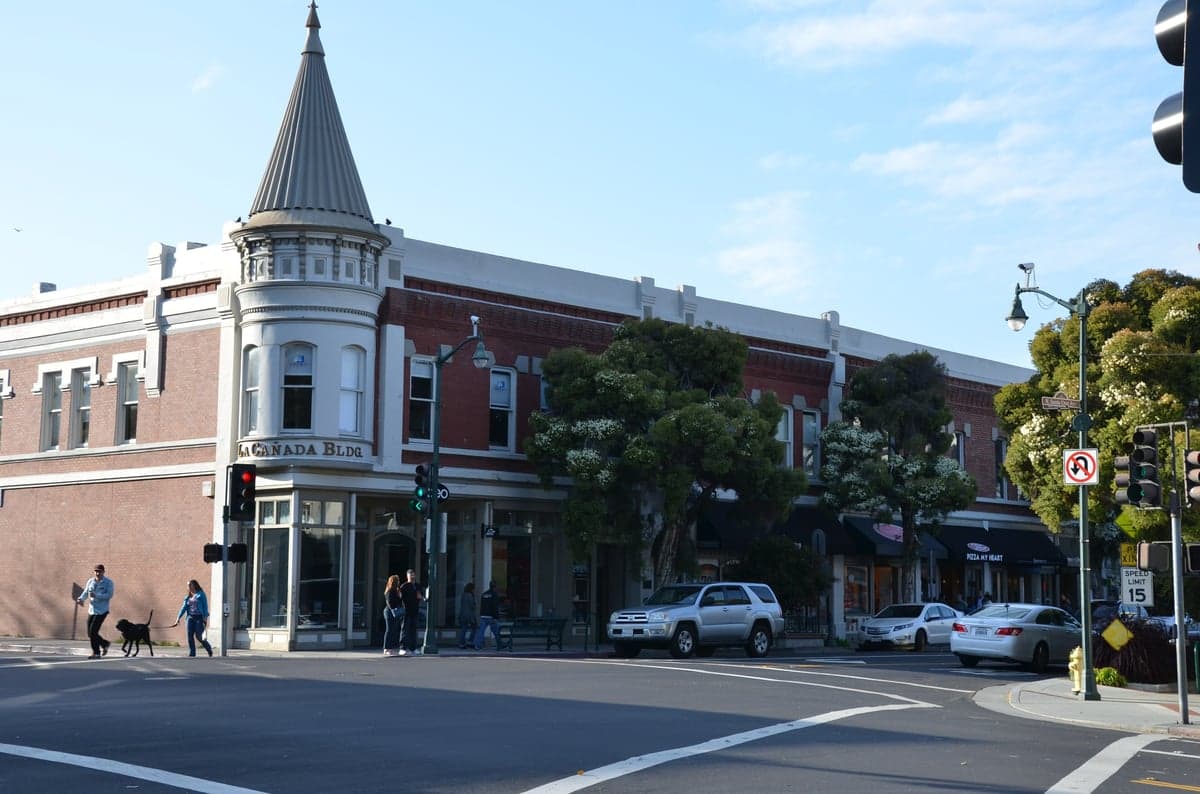
Photo: Wikipedia
Political ClimatePolitical Climate in Los Gatos, CA
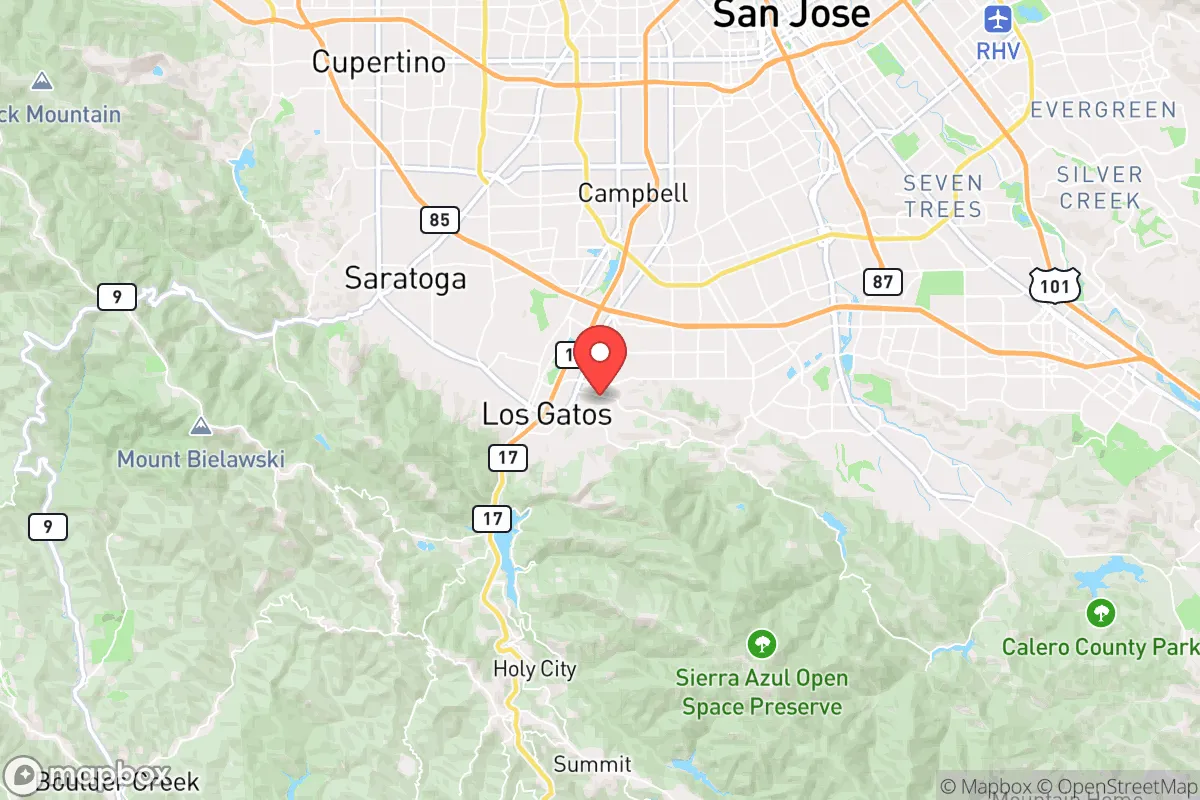
District shown is the primary district for this city’s centroid. Cities may span multiple districts.
Local Political AnalysisPolitical Analysis of Los Gatos, CA
Los Gatos has long been a reliably blue town, and that hasn’t changed. With a Cook Partisan Voting Index (PVI) of D+26, it’s one of the most consistently Democratic communities in the South Bay. That number means a Democratic candidate can expect to win by about 26 points more than the national average here. In practice, that translates to a town where local elections are often decided in the primary, and where Republican candidates rarely crack 40% of the vote. The trajectory has been steadily leftward over the past two decades, mirroring the broader Bay Area shift, though Los Gatos has held onto a slightly more moderate, fiscally-conservative streak than neighboring towns like Santa Cruz or Berkeley.
How it compares
Comparing Los Gatos to the rest of California is tricky because the state as a whole doesn’t have a single Cook PVI—it’s a massive, diverse place. But for context, the state’s overall lean is roughly D+13 to D+15, meaning Los Gatos is about twice as Democratic as the state average. That puts it in the same league as other wealthy, educated enclaves like Palo Alto (D+30) or Cupertino (D+28), but noticeably more liberal than nearby towns like Saratoga (D+15) or Campbell (D+12). Drive just 15 minutes east to San Jose’s Evergreen district, and you’ll find a more mixed political landscape, with a significant Asian-American electorate that leans Democratic but is less uniformly progressive. Head south over the Santa Cruz Mountains into Scotts Valley, and you’re in a D+10 area that feels noticeably more purple. The contrast is sharpest with the Central Valley, just an hour east, where places like Modesto (R+12) are a world away politically.
What this means for residents
For liberal residents, Los Gatos is a comfortable place to live. Local government is reliably progressive on social issues, environmental policy, and housing—though the town’s NIMBY reputation means new development is fought tooth and nail. You’ll find strong support for public schools, bike lanes, and open space preservation. For conservative residents, it can feel like being in a bubble. You’re unlikely to hear much dissenting opinion at a town council meeting or a school board election. But it’s not hostile—most people are polite, and the town’s wealth means there’s a live-and-let-live attitude. The real friction isn’t between left and right; it’s between the old guard (fiscally moderate, pro-business) and the newer wave (more focused on equity, climate, and density). That tension plays out in debates over downtown parking, housing density near the VTA light rail, and the future of the Los Gatos Creek Trail.
Culturally, Los Gatos feels less overtly political than its PVI suggests. You don’t see as many yard signs or bumper stickers as you do in, say, Berkeley or Santa Cruz. The town’s identity is more about wine tasting, hiking, and high-end shopping than activism. That said, the policy consequences are real: the city has a strong rent control ordinance, a robust climate action plan, and a police oversight committee. It’s a place where the Democratic majority governs, but with a light touch—more “let’s get the bike lanes funded” than “let’s defund the police.” For anyone moving here, the key takeaway is that Los Gatos is a comfortable, consensus-driven liberal town where the biggest political fights are about how much to grow, not which direction to go.

State Political ClimatePolitical Climate in California
State Political AnalysisPolitical Environment in the State
California is a deeply blue state where Democrats hold every statewide office and supermajorities in both legislative chambers, but the reality on the ground is far more fractured than the statewide numbers suggest. Over the past 20 years, the state has shifted from a competitive purple battleground—George W. Bush lost it by just 10 points in 2004—to a solidly Democratic stronghold where Joe Biden won by 29 points in 2020 and Kamala Harris carried it by roughly 20 points in 2024. That shift is driven almost entirely by the Bay Area and Los Angeles County, while vast stretches of the Central Valley, Inland Empire, and far northern counties have moved sharply right, creating one of the most polarized political landscapes in the country.
Urban vs. rural divide
The political map of California is essentially a story of three Californias. The coastal metros—San Francisco, Oakland, San Jose, Los Angeles, and San Diego—generate the overwhelming Democratic majorities. San Francisco County gave Biden 85% of the vote in 2020, and Los Angeles County alone produced more Democratic votes than 40 other states. In contrast, the Central Valley and interior regions are reliably Republican: Bakersfield (Kern County) voted +22 for Trump in 2020, and Redding (Shasta County) went +35 for Trump. The Inland Empire around Riverside and San Bernardino is the true battleground—these counties have been trending red for a decade, with San Bernardino County flipping from Obama +15 in 2012 to Trump +2 in 2024. Suburbs like Orange County, once a Republican stronghold, have become competitive: it voted for Biden in 2020 and Harris in 2024, but by margins under 5 points, and local races there remain toss-ups. Fresno and Modesto are classic purple cities where the mayoral races often flip between parties, reflecting the broader Central Valley ambivalence toward coastal Democratic dominance.
Policy environment
California’s policy environment is defined by high taxes, heavy regulation, and expansive government services. The state has a progressive income tax with a top marginal rate of 13.3% (the highest in the nation), a state sales tax of 7.25% that can climb to over 10% with local add-ons, and property taxes capped at 1% of assessed value under Proposition 13 (though reassessment on sale can be painful). The regulatory posture is among the most aggressive in the country: California sets its own vehicle emissions standards (waived by the EPA), mandates renewable energy targets of 60% by 2030 and 100% by 2045, and has some of the strictest labor and environmental laws anywhere. Education policy is dominated by the California Teachers Association, with per-pupil spending around $15,000 (above the national average) but outcomes that rank near the bottom in reading and math proficiency. Healthcare is heavily regulated, with a state-run insurance exchange (Covered California) and a push toward a single-payer system that has stalled repeatedly. Election laws are among the most accessible: universal mail-in ballots were made permanent after 2020, same-day registration is available, and the top-two primary system means general election ballots often feature two Democrats in deep-blue districts.
Recent policy direction
The last five years have seen California double down on its progressive identity, with a flurry of legislation that touches every aspect of life a relocator might care about. On gun and self-defense law, the state passed SB 2 in 2023, which effectively bans concealed carry in most public places (including parks, banks, and hospitals) and requires a "good cause" showing—a law currently tied up in federal court. Parental and education rights have been a flashpoint: AB 1955 (2024) prohibits school districts from requiring parental notification when a child changes their gender identity, while the state has also banned book bans and mandated ethnic studies for high school graduation. On speech and privacy, the California Age-Appropriate Design Code (2022) imposes strict data privacy rules on tech companies for minors, but critics argue it could chill free speech online. Medical and bodily autonomy is strongly protected: California has codified abortion rights into law (SB 245, 2022), expanded Medicaid coverage for undocumented immigrants, and passed a law protecting gender-affirming care for minors from out-of-state prosecution. Property rights are constrained by rent control (AB 1482 caps annual increases at 5% plus inflation) and a statewide housing mandate that forces cities to upzone for density. Taxation has moved leftward: Proposition 30 (2022) would have raised taxes on high earners for EV subsidies (it failed), but the legislature passed a wealth tax study bill in 2024. Voting and ballot access expanded with automatic voter registration and the permanent vote-by-mail system, though Republicans have raised concerns about ballot harvesting and signature verification.
Civil unrest & political movements
California has been a stage for some of the most visible political movements in the country. The 2020 George Floyd protests in Los Angeles, Oakland, and San Francisco were among the largest and most destructive, with looting and arson causing billions in damage. The state also saw sustained pro-Palestinian encampments at UCLA and UC Berkeley in 2024, leading to police crackdowns and arrests. On the right, the California Republican Party has struggled to gain traction, but grassroots movements like the "Recall Gavin Newsom" effort in 2021 gathered 1.7 million signatures and forced a special election (Newsom survived with 62% support). Immigration politics are a constant flashpoint: California is a "sanctuary state" under SB 54 (2017), which limits local law enforcement cooperation with federal immigration authorities, and the state has sued the Trump administration multiple times over border policies. Secession rhetoric has faded since the "Calexit" movement peaked in 2016, but rural counties like Shasta and Siskiyou have floated "State of Jefferson" secession proposals, though none have gained real traction. Election integrity controversies are less intense than in swing states, but Republican activists have raised concerns about the state's universal mail-in system, and a 2024 audit found that roughly 1 in 1,000 ballots had signature issues—a rate critics say is too high.
Projection
Over the next 5-10 years, California’s political trajectory is likely to remain blue but with growing internal friction. Demographic shifts are the key driver: the state is losing population to Texas, Arizona, and Nevada—net domestic out-migration of roughly 300,000 people per year since 2020—and those leaving tend to be middle-income families and conservatives, while the state continues to attract high-skilled immigrants and young progressives. This self-selection reinforces the Democratic lean. However, the Inland Empire and Central Valley are growing faster than the coast, and those areas are trending red, which could make statewide races slightly more competitive by 2032. The housing crisis is the wild card: if the state fails to build enough housing (it needs 2.5 million units by 2030), the cost of living will continue to push out moderates, leaving an even more polarized electorate. A relocator moving in now should expect a state where the coastal cities become more progressive, the interior becomes more conservative, and the political fights over housing, taxes, and education become more bitter.
For a new resident, the bottom line is that California offers a clear trade-off: you get robust public services, strong environmental protections, and broad personal freedoms on social issues, but you pay for it with the highest taxes in the country, a heavy regulatory burden, and a cost of living that can be crushing. If you lean conservative, you’ll find like-minded communities in places like Bakersfield, Redding, or Huntington Beach, but you’ll be fighting an uphill battle in state politics. If you lean liberal, you’ll feel at home in San Francisco or Berkeley, but you’ll also face the practical frustrations of homelessness, traffic, and bureaucracy that no amount of progressive policy has solved. The state is not for everyone, but for those who can afford it and align with its values, it remains a place of unmatched opportunity and natural beauty.
* Values derived from national, state, county, city and local statistics and may differ in a specific area. Last updated: 2026-09-19T04:56:55.000Z
Narrative content on this page is AI-generated and may contain mistakes. Verify any details that matter before acting on them.
ReloMaps may earn a commission from affiliate links at no extra cost to you.

