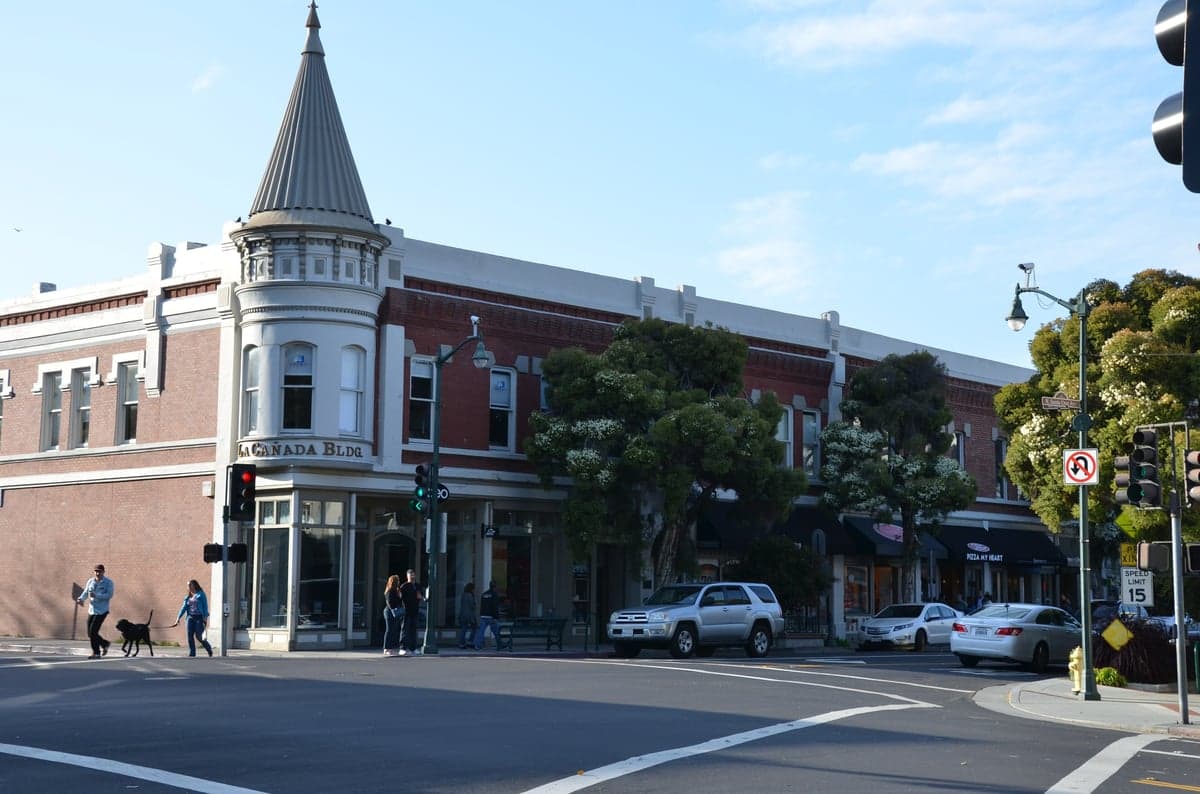
Photo: Wikipedia
Personal Sovereignty in Los Gatos, CA
Moderate friction. Expect trade-offs in some aspect of personal liberty and independence.
What does Personal Sovereignty tell us?
Personal Sovereignty measures your capacity for self-reliance and independence with minimal government friction. Higher scores mean fewer barriers between you and the way you want to live... but it assumes you have the space you need and good neighbors.
What does this tell us?
Personal Sovereignty measures your capacity for self-reliance and independence with minimal government friction. Higher scores mean fewer barriers between you and the way you want to live... but it assumes you have the space you need and good neighbors.
State Policy
Energy independence: Importer (33% of energy produced in-state)
Personal Liberty

Personal Liberty Analysis
Los Gatos presents a nuanced personal sovereignty environment that balances affluent suburban comfort with California’s heavy state-level regulatory framework. For a conservative-leaning individual or family weighing relocation, the town offers strong local property rights and low crime, but operates within a state that imposes some of the nation’s highest tax burdens, strictest gun laws, and most expansive regulatory reach. Understanding how these forces interact at the local level is critical to assessing whether Los Gatos aligns with your autonomy priorities.
Tax burden and regulatory posture in Santa Clara County
California’s state income tax tops out at 13.3% for high earners, and Los Gatos residents face a combined state and local sales tax rate of 9.125% (Santa Clara County’s base plus local add-ons). Property taxes are capped at 1% of assessed value under Proposition 13, but because Los Gatos home values average well above $2 million, annual bills often exceed $20,000. The town itself maintains a relatively light local regulatory touch—zoning is enforced but not aggressively punitive, and business licensing is straightforward for most professional services. However, the state’s California Environmental Quality Act (CEQA) can delay or block property improvements, and the California Coastal Commission (though less relevant inland) sets a precedent for environmental review that extends to hillside developments common in Los Gatos. The regulatory posture is best described as high-cost, moderate-local-friction: you pay heavily through taxes and compliance costs, but day-to-day interactions with town government are professional and predictable.
Self-defense and gun law specifics in California
California’s firearm laws are among the strictest in the nation, and Los Gatos residents must comply fully. The state requires a 10-day waiting period and a Firearm Safety Certificate for all purchases, and bans “assault weapons” by feature-based criteria (e.g., pistol grips, flash hiders). Magazine capacity is limited to 10 rounds. Concealed carry permits (CCW) are issued by Santa Clara County, a jurisdiction historically restrictive under Sheriff Laurie Smith (retired 2022). The current sheriff, Robert Jonsen, has signaled a more objective “good cause” standard post-Bruen, but the county still requires a live-fire qualification, background check, and a fee of roughly $200. Approval rates have risen but remain below rural counties. Open carry is effectively banned. For self-defense at home, handguns and shotguns are legal without a permit, but storage laws require firearms to be locked when not in immediate use. Stand-your-ground does not exist in California; the state imposes a “duty to retreat” if safe to do so, and self-defense claims are scrutinized heavily in civil litigation. For a reader prioritizing self-defense autonomy, Los Gatos is a jurisdiction where exercising that right requires significant administrative effort and legal awareness.
Self-reliance and homesteading viability: lot sizes, zoning, off-grid feasibility
Los Gatos is a dense, affluent suburb with limited homesteading potential. Typical single-family lots range from 0.15 to 0.5 acres in the flatland neighborhoods, though hillside properties (e.g., in the “Los Gatos Mountains” area) can reach 1–5 acres. Zoning is predominantly R-1 (single-family residential), which allows vegetable gardens, small livestock (chickens, rabbits) with permits, and beekeeping under strict setback rules. However, off-grid living is effectively impossible within town limits. The town requires connection to municipal water and sewer, and solar panels must be grid-tied with net metering approval from Pacific Gas & Electric (PG&E). Rainwater catchment is allowed but limited to 5,000 gallons per property without a permit, and composting toilets are not permitted as primary sanitation. The county’s building code mandates energy efficiency standards (Title 24) that make fully independent systems costly and legally complex. For a family seeking true self-reliance—raising meat animals, generating off-grid power, or drilling a private well—Los Gatos is a poor fit. The hillside areas offer more space but still fall under county fire and building codes that restrict independent infrastructure. The best homesteading prospects in the region are in rural Santa Clara County areas like Morgan Hill or Gilroy, not Los Gatos proper.
Personal liberties: parental rights, medical autonomy, speech, and property
California law generally supports parental rights in education through the “Parent’s Bill of Rights” (Education Code 51101), which grants access to curriculum materials and the right to opt children out of certain instruction. However, Los Gatos Union School District and Los Gatos-Saratoga Union High School District follow state mandates on LGBTQ+ inclusive curriculum and sexual health education, with no local opt-out beyond state-provided exemptions. Medical autonomy is constrained by California’s mandatory vaccination laws for school attendance (no personal belief exemptions for K-12), though medical exemptions are available. Telehealth and direct-primary-care arrangements are legal and growing. Free speech is protected under the First Amendment, but local ordinances regulate signage (e.g., political signs limited to 30 days before an election) and public assembly permits for groups over 50. Property rights are strong in the sense that zoning is stable and eminent domain is rare, but the California Environmental Quality Act (CEQA) gives neighbors broad standing to challenge developments, which can delay or kill projects. The town also enforces strict tree protection ordinances—removing a heritage oak requires a permit and often a replacement plan. For a reader valuing maximal personal liberty, Los Gatos offers a high baseline of civil rights but with notable state-level carve-outs in medical choice, firearm access, and property use.
Overall, Los Gatos ranks as a moderate-to-low sovereignty environment compared to conservative strongholds in Texas, Florida, or even rural Northern California. The town’s affluence and low crime provide a sense of personal security, but the state’s tax, gun, and regulatory framework imposes significant constraints on self-reliance and autonomy. For a family that values top-tier schools, low crime, and a predictable suburban lifestyle—and is willing to trade some personal freedom for those benefits—Los Gatos works well. For a reader whose primary priority is maximizing personal sovereignty, areas like El Dorado County (CA) or Washoe County (NV) would offer a lighter regulatory touch and lower tax burden. The key takeaway: Los Gatos is a comfortable, high-cost environment where autonomy is exercised within clearly defined state and local boundaries, not a frontier for self-directed living.

* Values derived from national, state, county, city and local statistics and may differ in a specific area. Last updated: 2026-09-19T04:56:55.000Z
Narrative content on this page is AI-generated and may contain mistakes. Verify any details that matter before acting on them.
ReloMaps may earn a commission from affiliate links at no extra cost to you.

