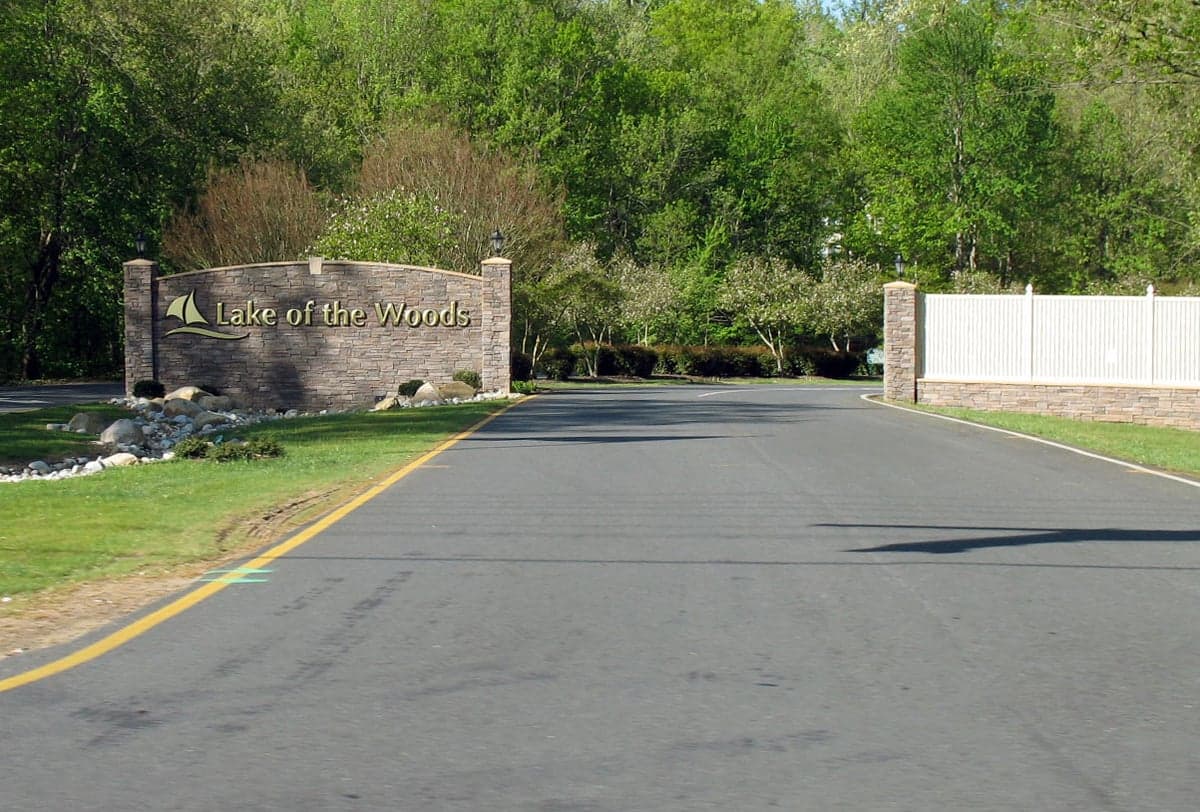
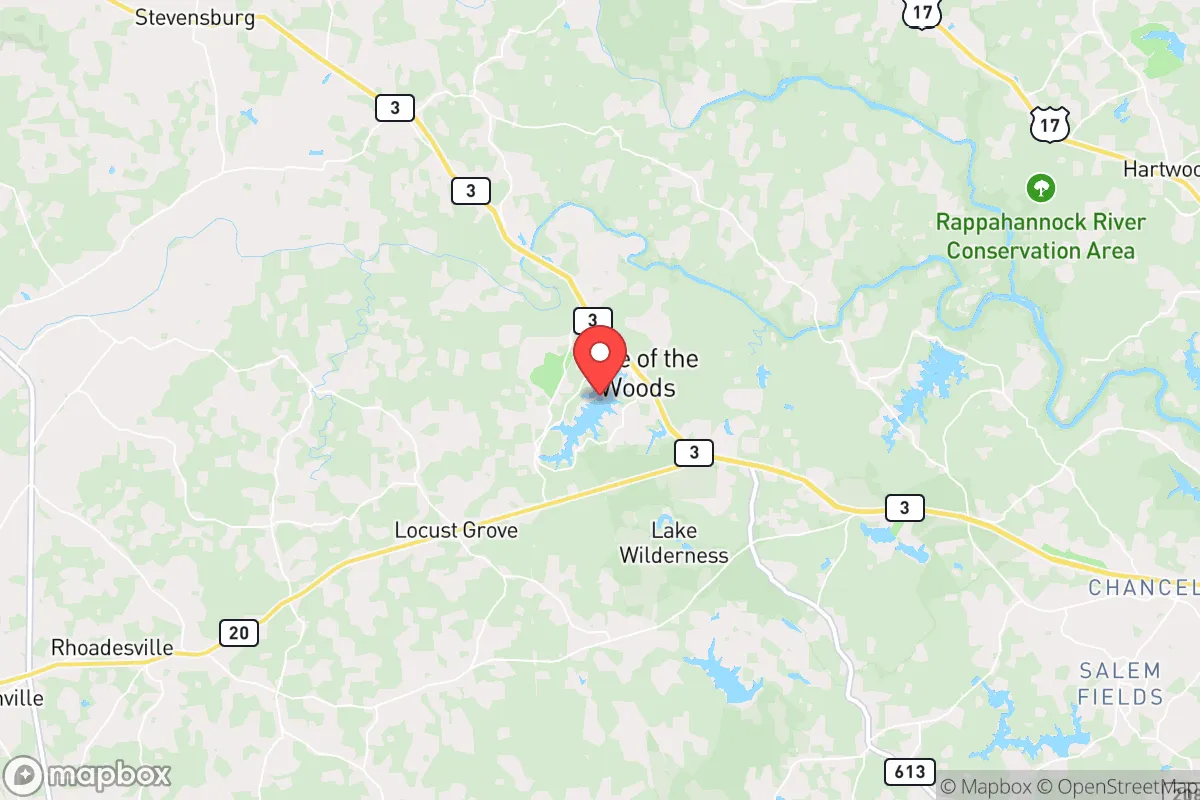
Photo: Wikipedia
Political ClimatePolitical Climate in Lake of the Woods, VA
District shown is the primary district for this city’s centroid. Cities may span multiple districts.
Inherited from parent state — no local data available.
Local Political AnalysisPolitical Analysis of Lake of the Woods, VA
Lake of the Woods sits in a political sweet spot that’s a little more purple than the rest of Virginia. The community’s Cook Partisan Voting Index (PVI) of D+2 means it leans Democratic, but just barely—two points more Democratic than the national average. That’s a noticeably lighter shade of blue than Virginia as a whole, which clocks in at D+4. What that tells you, if you’ve lived here a while, is that this isn’t a deep-blue enclave like Arlington or Richmond’s Fan District. It’s a place where the national Democratic advantage gets shaved down by a solid conservative minority, and where local elections often hinge on turnout and a handful of swing voters.
How it compares
To really feel the difference, drive 20 minutes west to Culpeper or 30 minutes north to Warrenton. Those towns lean Republican—Culpeper County went for Trump by about 15 points in 2020—and their politics feel more traditional, with a heavy emphasis on gun rights, lower taxes, and slower growth. Lake of the Woods, by contrast, sits in Orange County, which has been trending bluer as more D.C. commuters and retirees from Northern Virginia settle in. The county voted for Biden by a slim margin in 2020, and that shift is visible in local school board and supervisor races, where moderate Democrats now hold seats that were reliably Republican a decade ago. Still, the D+2 PVI means you’ll see just as many Trump signs in yards as Biden ones during election season—it’s a genuine toss-up neighborhood, not a safe seat for either party.
What this means for residents
For conservative residents, the practical reality is that you’re not outnumbered, but you’re not in charge either. Local government tends to be pragmatic—zoning decisions, road improvements, and school funding get debated on their merits rather than along strict party lines. You can still find a Republican club meeting at the community center, and the gun range stays busy. For liberal residents, the D+2 lean means your vote counts, but you’ll need to show up. The community association and county board often see close votes, and progressive initiatives—like expanding public transit or adding bike lanes—face real opposition from a vocal minority. Both sides find common ground on keeping the area’s rural character intact: preserving the lake, limiting overdevelopment, and maintaining the low crime rate that makes Lake of the Woods feel like a safe haven from the chaos of Northern Virginia.
Culturally, the area reflects its political split. The local farmers market and the annual Fourth of July parade draw everyone, but you’ll hear different conversations at the coffee shop depending on which side of the lake you’re on. The biggest policy distinction from the rest of Virginia is the tax burden: Orange County’s real estate tax rate is about $0.68 per $100 of assessed value, noticeably lower than the state average of $0.82, which keeps both conservative and liberal homeowners happy. Looking ahead, the trajectory is toward a slow, steady blue shift as more remote workers and retirees arrive from D.C., but don’t expect Lake of the Woods to flip deep blue anytime soon—the D+2 PVI is likely to hold for the next decade, making it one of the most balanced communities in the state.

State Political ClimatePolitical Climate in Virginia
State Political AnalysisPolitical Environment in the State
Virginia has shifted from a reliably purple swing state to a solidly Democratic-leaning one over the past two decades, carrying a Cook PVI of D+4. The transformation is driven by explosive growth in the Washington, D.C. suburbs, particularly in Northern Virginia, which now dominates statewide elections. While the state still elects Republican governors in off-years (Glenn Youngkin in 2021), the legislature has been under Democratic control since 2020, and no Republican has won a statewide race for president or U.S. Senate since 2009. For a conservative relocator, the practical reality is that Virginia is a blue state with a red-tinted governor’s mansion every four years, but the underlying demographic trends point toward a continued leftward drift.
Urban vs. rural divide
The political map of Virginia is a textbook case of urban-rural polarization. The Democratic stronghold is Northern Virginia—specifically the counties of Fairfax, Loudoun, Prince William, and Arlington—which together cast roughly one-third of all statewide votes and deliver margins of 60-70% for Democrats. The Richmond metro area (Henrico, Chesterfield, and the city itself) and Hampton Roads (Norfolk, Virginia Beach, Chesapeake) also lean blue, though more moderately. Meanwhile, rural and exurban areas are deeply Republican: Southwest Virginia (Bristol, Abingdon, Wise County) votes 70-80% Republican, as do the Shenandoah Valley counties like Augusta and Rockingham. The Roanoke and Lynchburg areas are competitive but lean red, with Lynchburg’s Liberty University providing a conservative anchor. The key battlegrounds are the exurban “collar counties” like Spotsylvania and Stafford, which flipped from red to purple in the 2010s and now lean Democratic in presidential years. A conservative moving to Virginia will find a welcome mat in most places west of I-95, but will feel politically isolated inside the Beltway.
Policy environment
Virginia’s state-level policies reflect its divided government. The income tax is a flat 5.75% (with a standard deduction of $8,000 for single filers), and the sales tax is 5.3% (higher in Northern Virginia and Hampton Roads due to local add-ons). Property taxes are set locally and vary widely—Loudoun County levies about $1.15 per $100 of assessed value, while Bristol is around $0.80. The state has a right-to-work law, meaning union membership is not mandatory for employment. Education policy is a flashpoint: Governor Youngkin pushed for expanded school choice and “parents’ rights” in curriculum, but the Democratic legislature blocked most of his agenda. Virginia’s public schools are generally well-funded, especially in Northern Virginia, but rural districts struggle with declining enrollment and funding gaps. Healthcare is a mixed bag—the state expanded Medicaid under the ACA in 2019, covering about 400,000 additional residents, but private insurance costs remain high. Election laws are moderately restrictive: Virginia requires a photo ID to vote, offers no-excuse absentee voting, and has 45 days of early voting. The state does not have a voter ID law as strict as some Southern states, but it also does not allow same-day registration.
Recent policy direction
The last five years have seen Virginia lurch left on several fronts, then partially pull back under Youngkin. In 2020, the Democratic legislature passed a sweeping gun control package: universal background checks, a “red flag” law (allowing temporary seizure of firearms from individuals deemed a threat), a one-handgun-per-month limit, and a ban on assault weapons (later struck down by a court). Self-defense law is still castle doctrine (no duty to retreat in your home), but open carry is legal with a permit. On education, Youngkin’s executive orders banned “inherently divisive concepts” in public schools and created a tip line for parents to report critical race theory instruction, though the legislature defunded the tip line. Abortion remains legal up to 26 weeks (the second trimester), with a 24-hour waiting period and parental consent for minors. In 2024, a proposed constitutional amendment to enshrine abortion rights failed to pass the legislature. On privacy, Virginia passed the Consumer Data Protection Act in 2021, giving residents rights to access, correct, and delete personal data held by companies. Property rights are generally strong—Virginia is a “Dillon’s Rule” state, meaning local governments only have powers explicitly granted by the state, which limits local zoning and land-use restrictions. Ballot access is straightforward: major party candidates get automatic ballot access, and third-party candidates need 10,000 signatures for statewide office. The overall direction is a slow, contested march leftward, with occasional Republican vetoes or executive actions slowing the pace.
Civil unrest & political movements
Virginia has been a stage for some of the most visible political flashpoints in the country. The 2017 “Unite the Right” rally in Charlottesville—a white nationalist gathering that turned violent—left the state scarred and led to the removal of Confederate statues across Virginia. The event also galvanized both anti-racist and conservative activist movements. In 2020, the Second Amendment Sanctuary movement swept through rural counties, with over 100 localities passing resolutions vowing not to enforce new gun laws. The 2021 gubernatorial race was dominated by education and parental rights, with Youngkin’s focus on “critical race theory” in schools driving suburban turnout. Immigration politics are relatively quiet—Virginia has no sanctuary city laws, but some localities (like Arlington and Fairfax) have policies limiting cooperation with ICE. Election integrity controversies flared in 2020, with Trump’s campaign challenging absentee ballot procedures, but no widespread fraud was found. The state’s election system is generally seen as secure, though rural Republicans remain skeptical of mail-in voting. A new resident will notice that political signs and bumper stickers are common in both blue and red areas, but the tone is more civil than in, say, Texas or California—Virginians tend to keep politics polite in public.
Projection
Over the next 5-10 years, Virginia will likely continue its slow drift leftward, driven by in-migration from the D.C. suburbs and the aging of the rural population. The 2030 census will likely shift the state’s congressional map further toward Northern Virginia, reducing rural representation. However, the state’s off-year gubernatorial elections (2025, 2029) will remain competitive—Republicans can win if they run a moderate, business-friendly candidate who can peel off suburban voters. The key wildcard is the growth of Fredericksburg and the I-95 corridor, which is filling with D.C. commuters and could flip more exurban seats blue. For a conservative moving in now, expect to live in a state where your vote for president or Senate is unlikely to matter, but your vote for governor and local offices can still swing elections. The state’s tax burden is moderate and unlikely to rise dramatically, but gun laws will probably tighten further if Democrats hold the legislature. The cultural environment will remain split: rural and small-town Virginia will feel like a red state, while the suburbs will feel increasingly blue.
Bottom line for a new resident: If you’re a conservative, Virginia offers a decent quality of life with moderate taxes and good schools, but you’ll need to accept that statewide politics are against you. Focus on local elections—county board, school board, and state house races—where your vote carries weight. If you’re a liberal, you’ll find a welcoming policy environment in most of the state, but be prepared for cultural friction in rural areas. The state is not a political paradise for either side, but it’s a functional, well-governed place where most people get along despite their differences.
* Values derived from national, state, county, city and local statistics and may differ in a specific area. Last updated: 2026-10-18T23:06:48.000Z
Narrative content on this page is AI-generated and may contain mistakes. Verify any details that matter before acting on them.
ReloMaps may earn a commission from affiliate links at no extra cost to you.

