Photo: Wikipedia
Demographics of Lake of the Woods, VA
Affluence Level in Lake of the Woods, VA
An upper-middle-class area. Household wealth, education levels, and homeownership run ahead of national benchmarks.
People of Lake of the Woods, VA
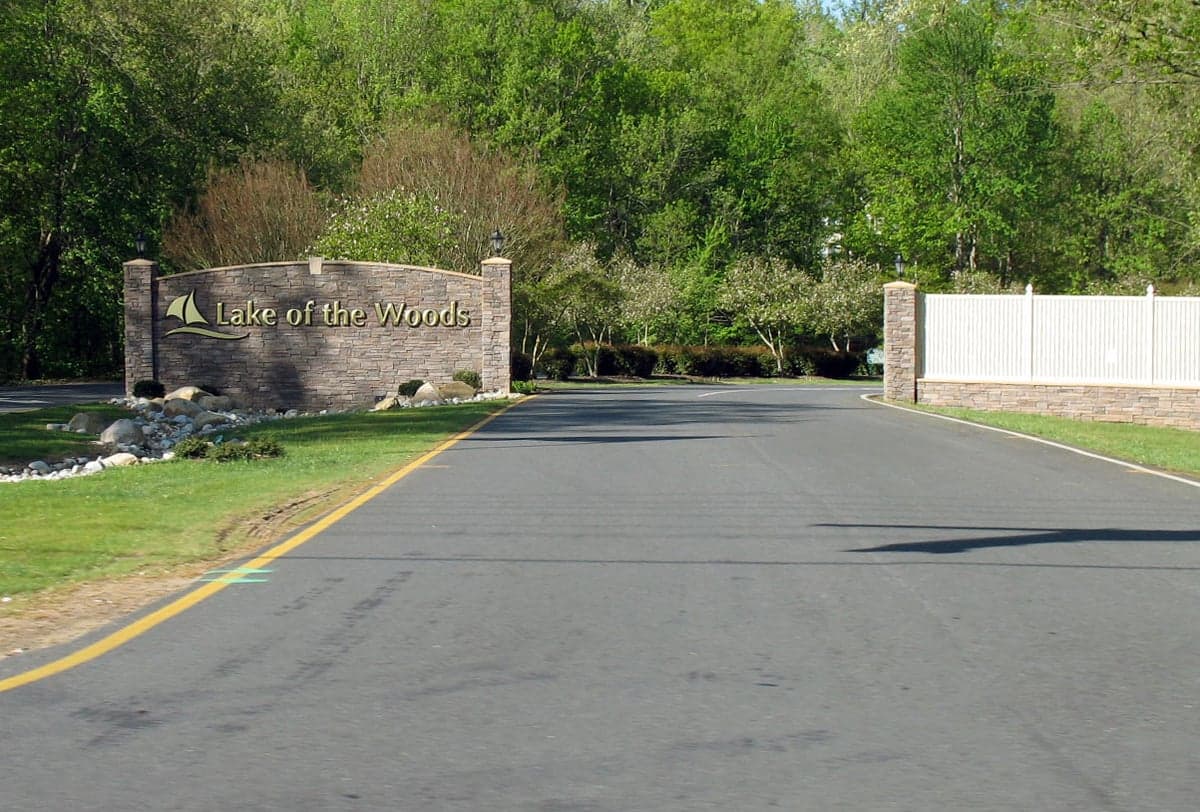
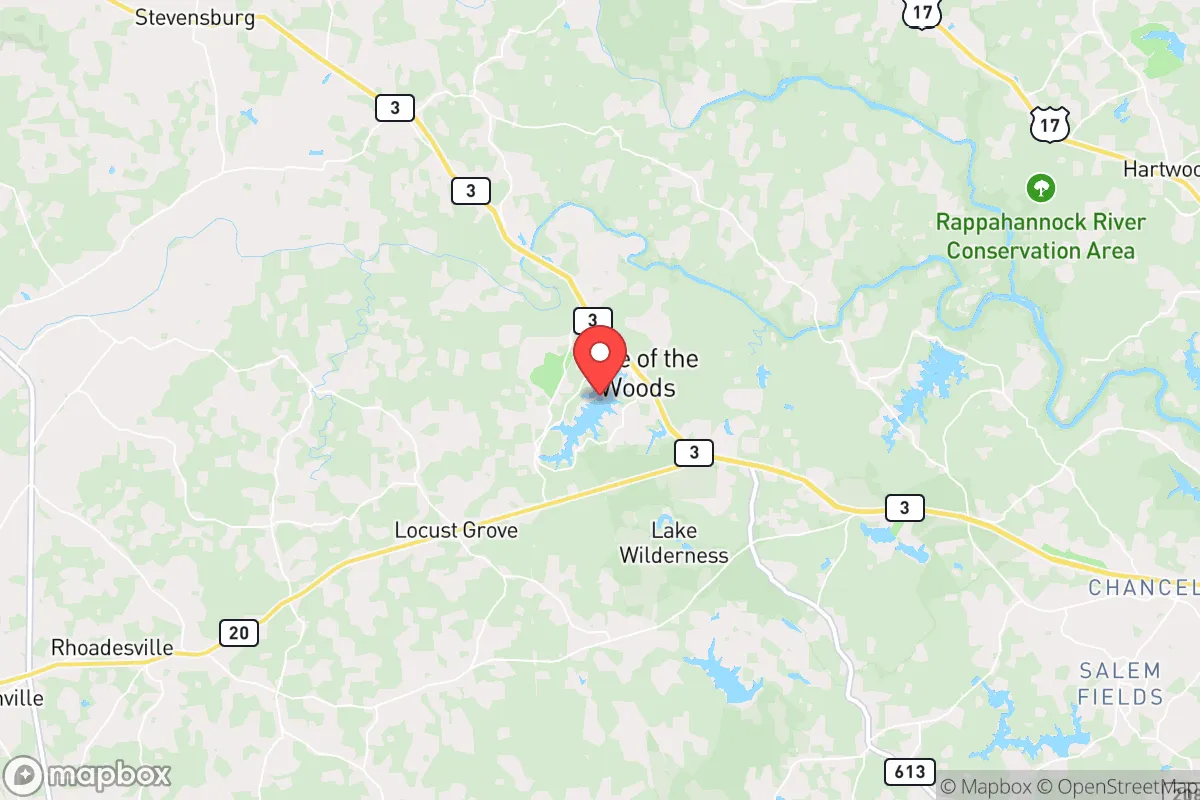
The 8,165 residents of Lake of the Woods, Virginia, form a predominantly white, college-educated, and politically conservative community centered on a private gated lake resort in Orange County. With a foreign-born population of just 2.4%, the area is notably less diverse than Virginia as a whole, and its character is defined by second-home owners, retirees, and families seeking a secure, recreation-oriented lifestyle. The population is older than the state median, and the community’s identity is tightly bound to the Lake of the Woods Property Owners Association (LWPOA) and its amenities—golf courses, a clubhouse, and the 500-acre lake itself.
How the city was settled and grew
Lake of the Woods is not a historic settlement but a planned recreational community developed from the late 1960s onward. The land was originally part of rural Orange County, a region of small farms and timber holdings with no significant pre-20th-century population center on this exact site. The first wave of residents arrived after the lake was created by damming a branch of the Rapidan River in 1968, and the community was marketed primarily to Washington, D.C., area professionals seeking a weekend or retirement retreat. The earliest neighborhoods—Lakewood Hills and Rapidan Shores—were built in the 1970s and attracted mostly white, middle-to-upper-income families from Northern Virginia and Maryland. A second wave in the 1980s and 1990s, driven by the expansion of telecommuting and the I-95 corridor’s growth, filled out Fairway Estates (adjacent to the golf course) and Hickory Ridge, a section of larger custom homes. No significant immigrant or minority populations settled during these decades; the community remained overwhelmingly white and native-born through the end of the 20th century.
Modern era (post-1965)
Since the 2000 census, Lake of the Woods has seen modest demographic diversification, though it remains far less diverse than Orange County as a whole. The Hispanic share of the population reached 7.8% by the most recent estimates, largely concentrated in the Lakeview Terrace neighborhood, where a small number of families work in local construction, landscaping, and hospitality services tied to the resort economy. The Black population stands at 6.9%, with most households located in the South Gate area near the community’s secondary entrance—a pattern reflecting broader regional housing-market sorting rather than any formal exclusion. East and Southeast Asian residents (1.9%) are scattered across Fairway Estates and Rapidan Shores, often in second homes owned by professionals from the D.C. suburbs. The Indian-subcontinent population is effectively zero (0.0%), and Arab or Middle Eastern residents are statistically negligible. The college-educated share (45.2%) is well above the national average, reflecting the community’s draw for remote workers and retirees with advanced degrees. The overall character remains that of a gated, amenity-driven enclave where newcomers are expected to conform to the homeowners’ association’s strict architectural and behavioral covenants.
The future
The population of Lake of the Woods is likely to grow slowly—perhaps 1–2% annually—as buildable lots within the gated community become scarce. The demographic trend points toward a slight increase in Hispanic and Black shares, driven by younger families priced out of the D.C. market who find the community’s home prices (median around $350,000) relatively affordable. However, the foreign-born share is unlikely to rise above 5% in the next decade, as the community lacks the rental housing, public transit, and entry-level jobs that attract international migrants. The most significant shift may be generational: as the original 1970s homeowners age out, their properties are being purchased by younger telecommuters and families from Northern Virginia, who are slightly more diverse and less tied to the area’s traditional conservative politics. New construction is concentrated in the North Ridge section, where larger lots and newer floor plans appeal to families with children, while Lakewood Hills is seeing a wave of tear-downs and rebuilds by affluent buyers. The cultural identity is evolving from a pure retirement and second-home community toward a primary-residence suburb for remote workers, but the gated, low-density, amenity-focused character will persist.
For a prospective resident, Lake of the Woods offers a stable, safe, and socially homogeneous environment where property values are supported by the homeowners’ association and the lake amenities. The community is becoming slightly more diverse and younger, but it will remain a predominantly white, college-educated, and politically conservative enclave for the foreseeable future. Newcomers should expect a quiet, rule-bound lifestyle with limited ethnic or cultural diversity, but strong recreational infrastructure and a tight-knit social fabric centered on the lake and golf course.

* Values derived from national, state, county, city and local statistics and may differ in a specific area. Last updated: 2026-10-18T23:06:48.000Z
Narrative content on this page is AI-generated and may contain mistakes. Verify any details that matter before acting on them.
ReloMaps may earn a commission from affiliate links at no extra cost to you.

