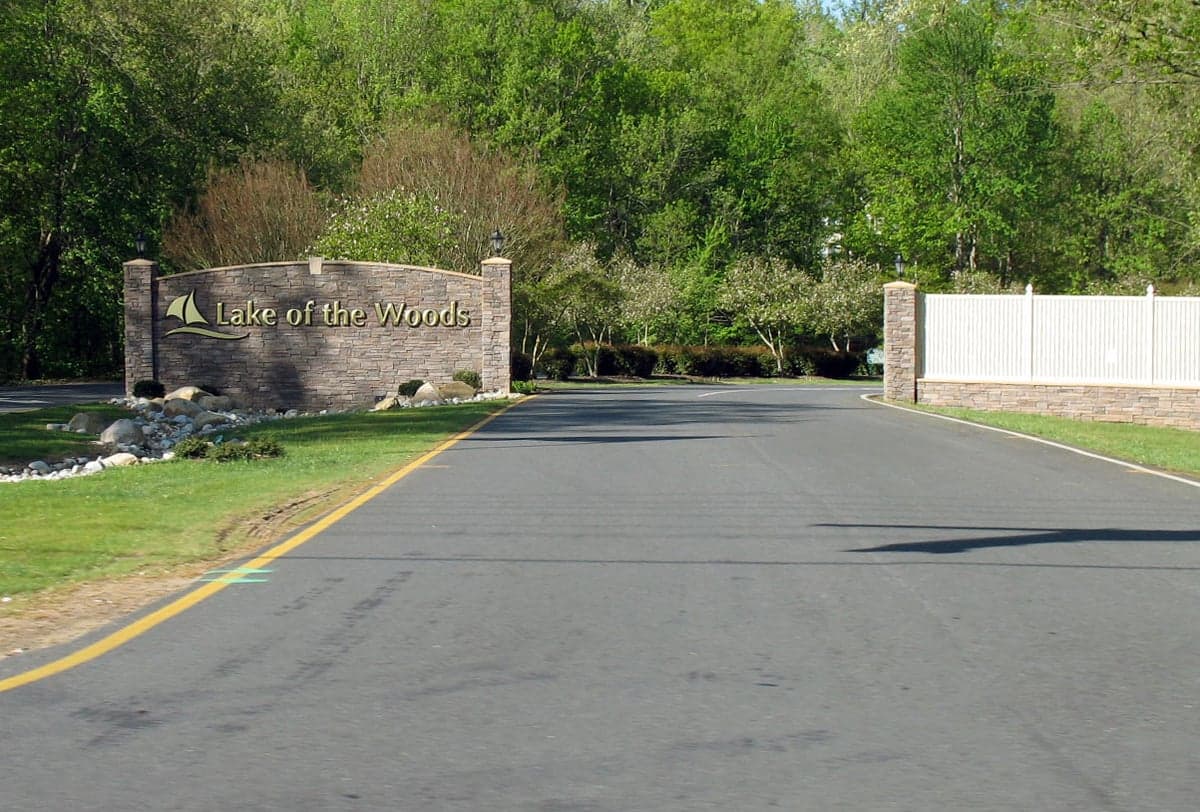
Photo: Wikipedia
Strategic Assessment of Lake of the Woods, VA
Workable tactical position. Some exposure to population density or targets, but generally defensible in a crisis.
What does the Strategic Assessment tell us?
Our Strategic Assessment grades tactical survivability of an area. Major population centers, military targets, fallout zones, natural disasters, and border exposure all drive risk — lower exposure means a more defensible position in a crisis.
This is heavily inspired by Joel Skousen's Strategic Relocation book. Highly recommended you checkout the book ($)What does this tell us?
Our Strategic Assessment grades tactical survivability of an area. Major population centers, military targets, fallout zones, natural disasters, and border exposure all drive risk — lower exposure means a more defensible position in a crisis.
This is heavily inspired by Joel Skousen's Strategic Relocation book. Highly recommended you checkout the book ($)Strategic Pillars
Key Distances
Regional Safe Places
Below is our recommended "safe zones" in Virginia and the surrounding area based on our strategic heuristics. For most people, it's unrealistic to live in a “safe zone” full-time due to work, family or other personal reasons. They tend to be more rural. However, many of these areas are perfect for second homes and retreat properties that double as a vacation home or even a short-term rental.
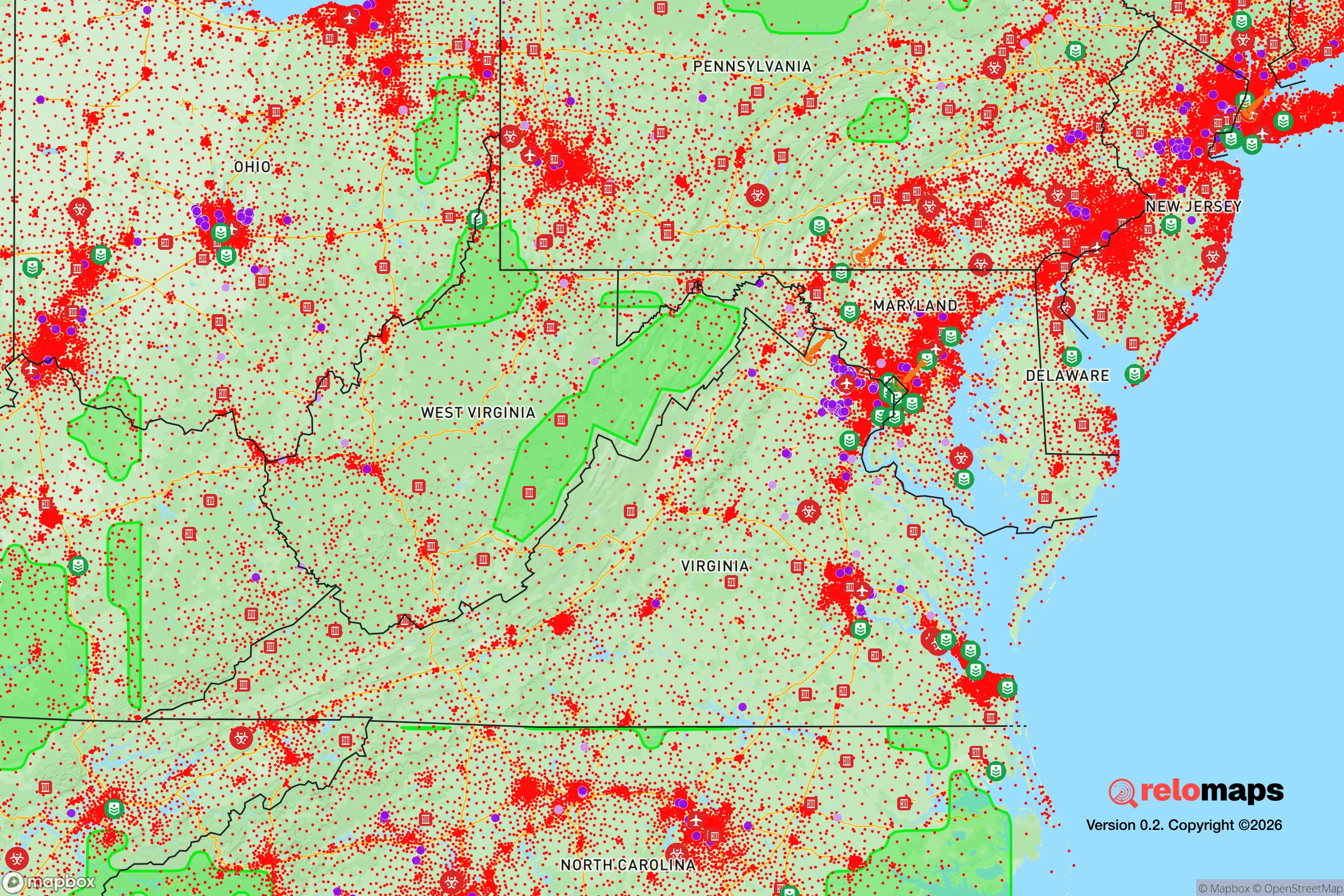
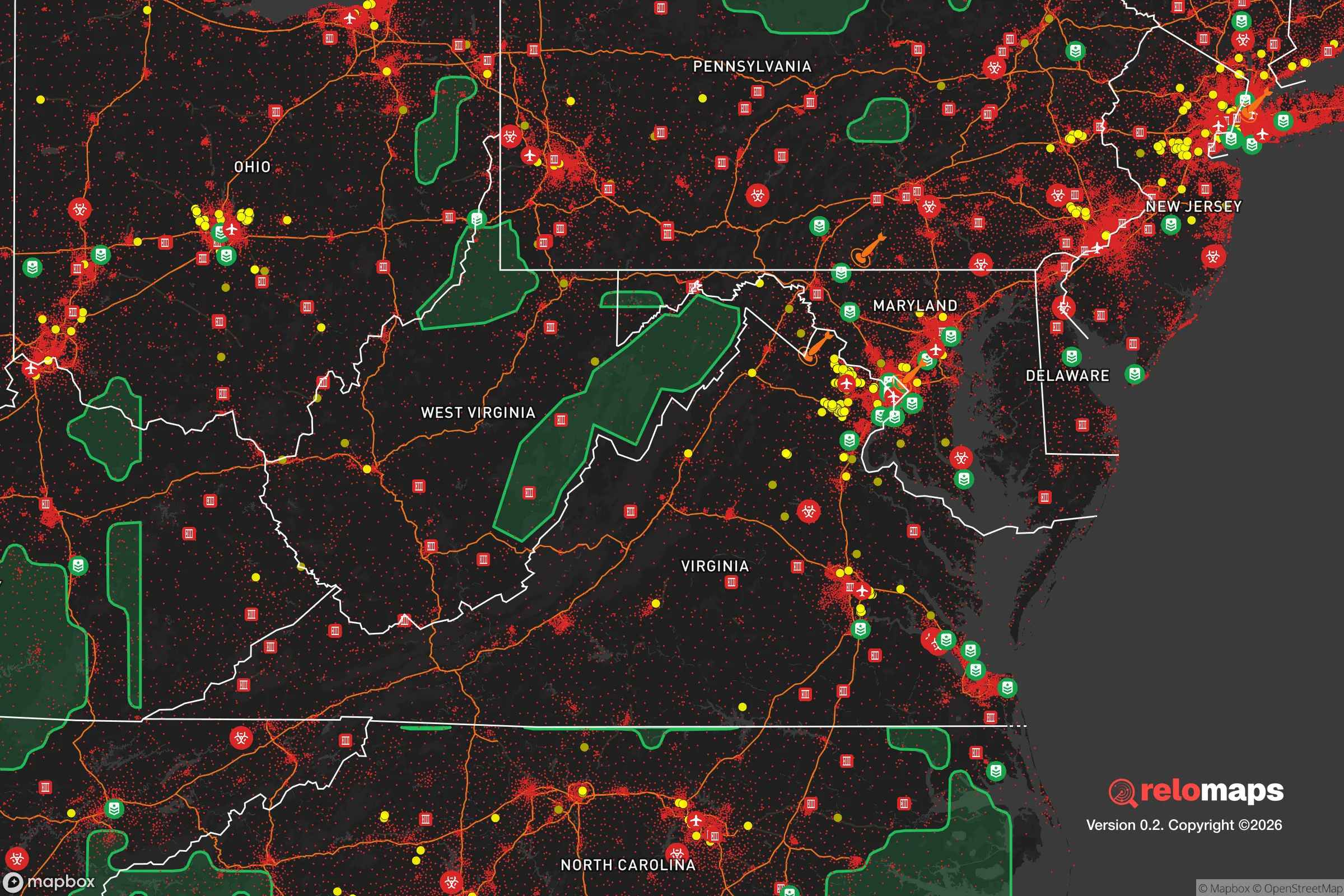


Important Note: For informational purposes only. This does not mean nothing bad ever happens in the green zones. Please use common sense. This is based on public data and modeled with AI. We tried to take a conservative approach but mistakes happen. We update this regularly as new information becomes available.
Solar Generator Recommendations
Backup power matters more here than in safer locations. We've picked three solar generators across budgets and capacity tiers — start with the budget unit if you only need a few essentials, or step up if you want to run a fridge and HVAC for days at a time.
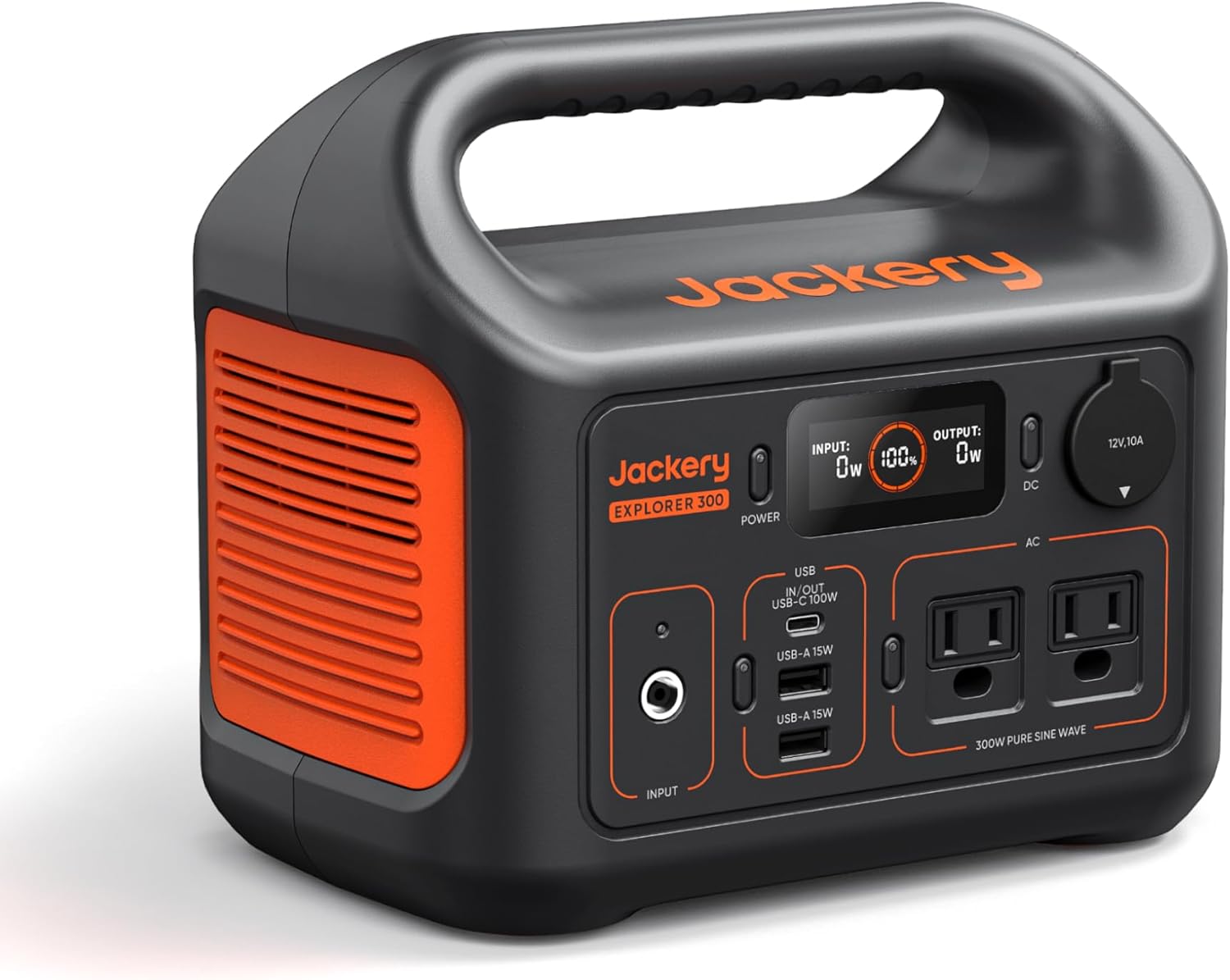
Jackery Portable Power Station Explorer 300
Budget OptionPower on the Go: Weighing only 11 lbs, it's convenient to set up and store with book-sized foldable solar panels

BLUETTI Portable Power Station AC180
Designed for both indoor and outdoor scenarios, AC180 is highly capable as it has a robost capacity and continuous output power.

EF ECOFLOW DELTA Pro Ultra Power Station
Upgraded PickEcoFlow DELTA Pro Ultra is a whole-home energy system designed to grow with your family. Integrated with the Smart Home Panel 2, it scales to meet your evolving energy needs — keeping your home powered, intelligent, and secure through every stage of life.
We earn a commission, at no additional cost to you.
Strategic Assessment Analysis
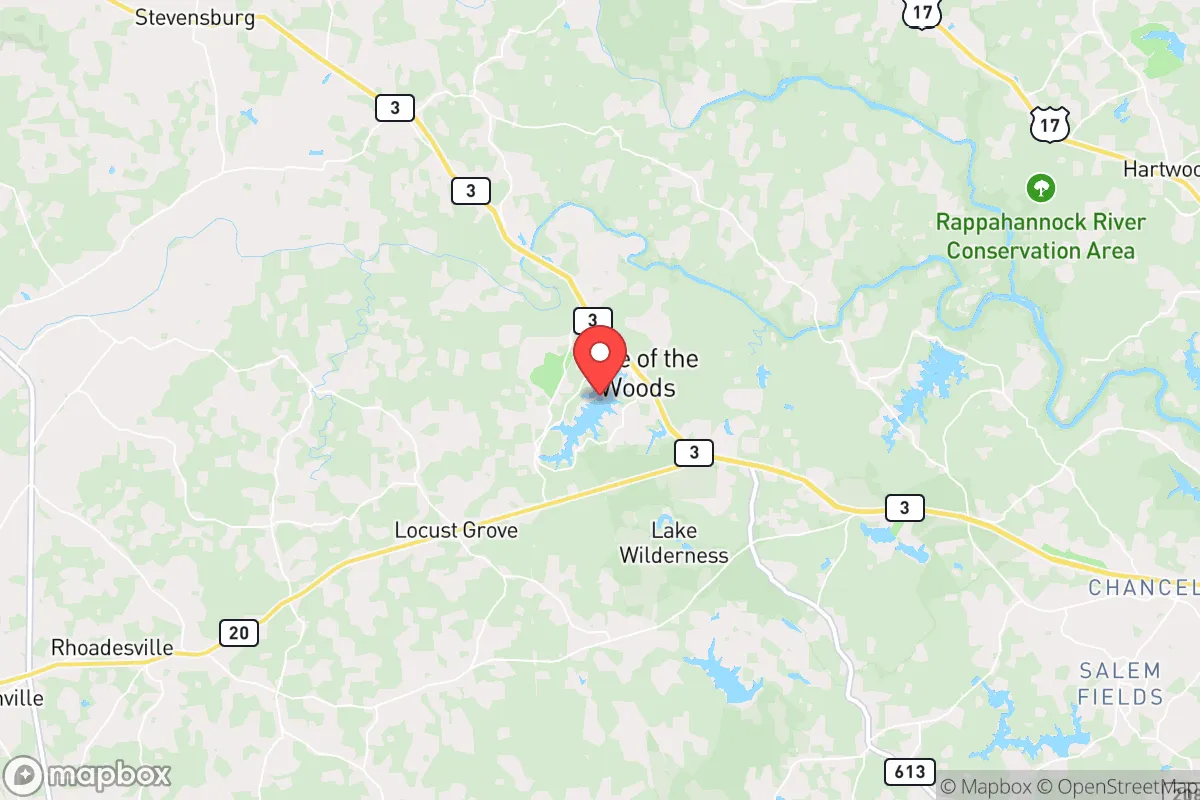
Lake of the Woods, Virginia, occupies a distinctive strategic niche for the relocation-minded reader: it offers the buffer of a rural, gated community while sitting within a manageable drive of the Washington D.C. metro area, yet its resilience profile is shaped more by its geographic isolation than by proximity to urban centers. Located in Orange County, roughly 70 miles southwest of D.C., the community benefits from being outside the immediate blast and fallout zones of a major metropolitan target, while still providing access to regional infrastructure. For a single individual or family weighing disaster readiness and self-sufficiency, Lake of the Woods presents a mixed picture—strong on natural buffers and community cohesion, but with notable vulnerabilities in supply-chain dependence and energy infrastructure.
Geographic position and natural advantages for long-term stability
Lake of the Woods sits in the Piedmont region of Virginia, a transitional zone between the coastal plain and the Blue Ridge Mountains. This location offers several natural advantages. The area is elevated enough to avoid the worst of sea-level rise and storm surge that threaten coastal Virginia, yet it is not so mountainous that winter storms or landslides become routine hazards. The community is built around a 550-acre man-made lake, which provides a significant water resource—though it is not a primary drinking water source for most homes, it does offer a backup for irrigation, fire suppression, and emergency use. The surrounding landscape is heavily forested with mixed hardwoods and pines, which provides natural cover and reduces the risk of wind damage compared to open plains. The region’s climate is temperate, with four distinct seasons, meaning that extreme heat or cold is rare, and the growing season is long enough for subsistence gardening (roughly 180 frost-free days per year). For a relocator thinking about long-term stability, the area’s distance from major fault lines, hurricane landfall zones, and wildfire-prone terrain is a clear positive. The nearest active seismic zone is the Central Virginia Seismic Zone near Charlottesville, about 40 miles southwest, but significant earthquakes are infrequent and low-magnitude.
Risks, exposures, and proximity to fallout-relevant landmarks
The primary strategic vulnerability for Lake of the Woods is its proximity to the Washington D.C. metropolitan area, which is a high-value target for both conventional and nuclear threats. While the community is far enough to avoid the immediate blast radius of a ground burst in D.C. (which would be catastrophic within about 5-10 miles), it lies within the downwind fallout plume zone for a surface burst at the nation’s capital. Prevailing winds in the region are from the west and northwest, meaning that fallout from a D.C. strike would likely drift east and northeast—away from Lake of the Woods. However, a strike on the Norfolk naval base or the Dahlgren Naval Surface Warfare Center (about 60 miles southeast) could produce fallout that reaches the area under certain wind conditions. The community is also within 30 miles of the North Anna Nuclear Generating Station, a two-unit pressurized water reactor in Louisa County. While the plant has robust containment structures, a major accident or sabotage event could necessitate evacuation or sheltering. Beyond nuclear risks, the area is exposed to seasonal severe weather, including thunderstorms, hail, and occasional tornadoes (Orange County is in Tornado Zone 3, moderate risk). Flooding is localized around the lake and its tributaries, but most homes are on elevated lots. The biggest man-made risk is likely grid failure: the region’s power infrastructure is aging, and a prolonged outage from a cyberattack or EMP event would leave the community dependent on backup generators and stored fuel.
Practical resilience for a relocator: food, water, energy, and defensibility
For a relocator serious about self-sufficiency, Lake of the Woods offers a mixed bag. On the positive side, the community’s gated nature provides a degree of physical security and social cohesion—neighbors know each other, and the homeowners’ association (HOA) maintains common areas and security patrols. This social fabric can be a force multiplier in a crisis, enabling coordinated defense and resource sharing. However, the HOA also imposes restrictions that may limit individual preparedness: backyard chickens, large gardens, and visible solar panels may be restricted or require approval. Water is the most critical resource. Most homes are on private wells or community water systems, and the lake itself is a backup source, but treatment and pumping would require electricity. A hand pump or solar-powered well pump is a wise investment. The area’s soil is primarily clay-loam, which is workable but not ideal for large-scale agriculture; raised beds and composting would be necessary for serious food production. Local food sources are limited—the nearest grocery stores are in Culpeper (15 minutes) or Fredericksburg (30 minutes), and supply chains could be disrupted quickly. For energy, the grid is reliable under normal conditions, but solar potential is moderate (about 4.5 peak sun hours per day), and battery storage would be essential for off-grid capability. Propane is widely available for heating and cooking, and many homes have fireplaces or wood stoves. Defensibility is a strong point: the gated entrance, limited road access (primarily Route 3 and Route 20), and surrounding forests make the community relatively easy to secure. However, the single main road in and out (Lake of the Woods Drive) could become a choke point during an evacuation, and the community’s population of roughly 8,000 means that resources could be strained quickly if a crisis draws in outsiders.
The overall strategic picture for Lake of the Woods is one of moderate resilience with clear trade-offs. It is not a remote bunker location, nor is it a high-risk urban center. For the reader who wants a balance of community support, natural buffers, and access to regional resources, it is a viable option—provided they invest in backup power, water storage, and food production capabilities. The area’s greatest strength is its social cohesion and defensible layout; its greatest weakness is its dependence on external supply chains and its proximity to high-value targets. A relocator who treats Lake of the Woods as a base for building self-sufficiency—rather than a pre-built safe haven—will find it a solid foundation. For those seeking absolute isolation and zero exposure to fallout or grid failure, the Shenandoah Valley or West Virginia would be better bets. But for a family or individual who wants to stay within striking distance of D.C. while maintaining a credible resilience posture, Lake of the Woods deserves serious consideration.

* Values derived from national, state, county, city and local statistics and may differ in a specific area. Last updated: 2026-10-18T23:06:48.000Z
Narrative content on this page is AI-generated and may contain mistakes. Verify any details that matter before acting on them.
ReloMaps may earn a commission from affiliate links at no extra cost to you.

