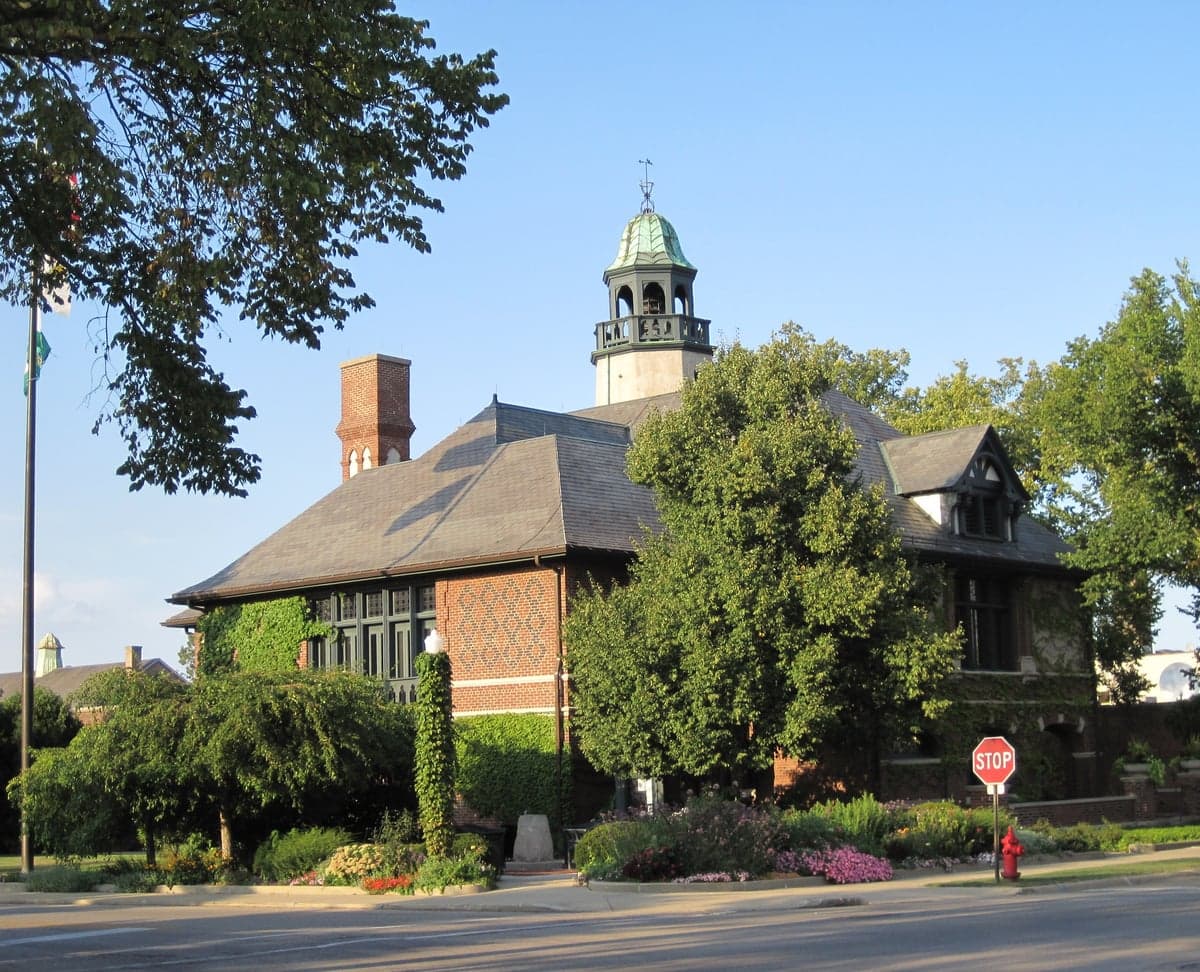
Photo: Wikipedia
Political ClimatePolitical Climate in Lake Forest, IL
District shown is the primary district for this city’s centroid. Cities may span multiple districts.
Local Political AnalysisPolitical Analysis of Lake Forest, IL
Lake Forest is one of the most reliably Democratic strongholds in Illinois, with a Cook Partisan Voting Index (PVI) of D+12, meaning it votes about 12 points more Democratic than the national average. That’s a full five points bluer than the state of Illinois as a whole, which sits at D+7. If you’ve been around here long enough, you’ve seen the shift happen in real time—what was once a reliably moderate Republican enclave, home to old-money families and corporate executives, has become a solidly liberal suburb, especially in presidential elections. In 2020, Joe Biden carried Lake Forest by a margin closer to 20 points, and the trendline is only getting steeper as younger families move in from Chicago and the North Shore.
How it compares
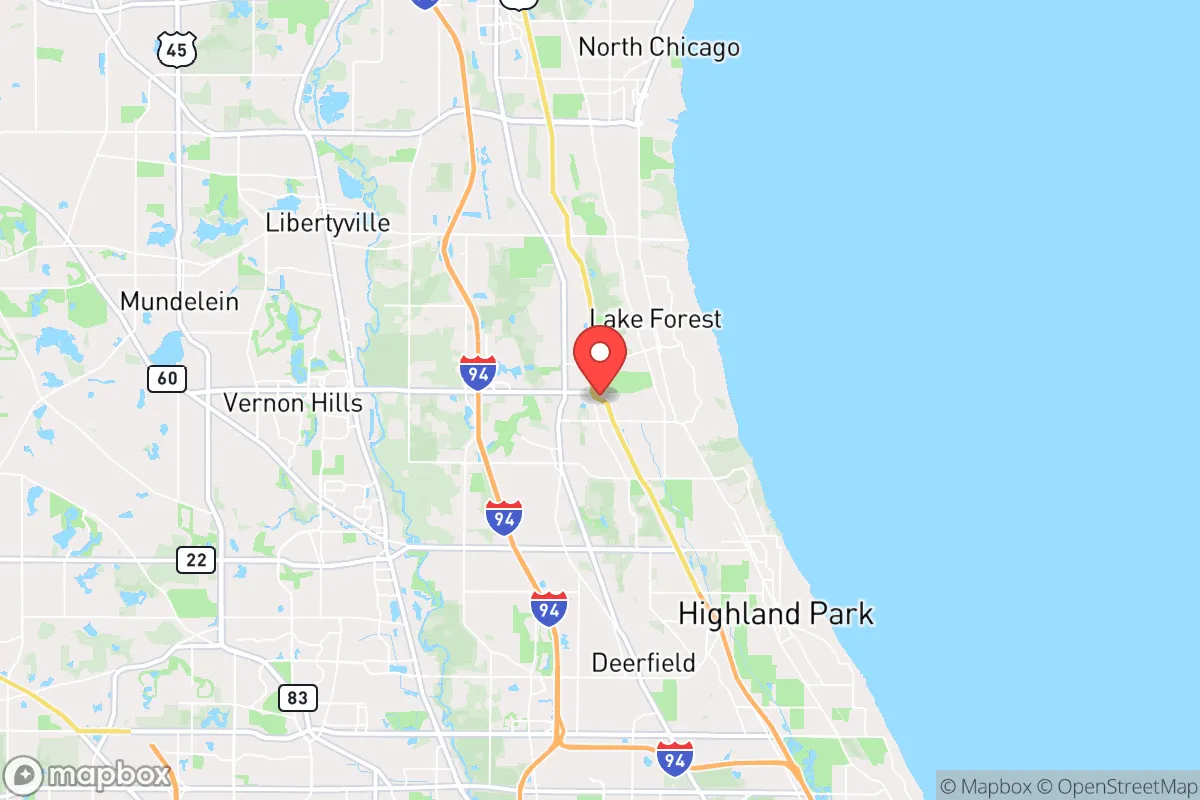
Compared to the rest of Illinois, Lake Forest is distinctly more liberal than the state average, but it’s not an outlier on the North Shore. Neighboring Highland Park and Winnetka are similarly D+12 or even D+14, while towns like Libertyville and Mundelein to the west are more purple, often swinging between D+3 and D+5. Drive 15 minutes west to Waukegan or North Chicago, and you’ll find working-class, majority-minority communities that vote Democratic by even larger margins, but with a very different economic and cultural feel. The real contrast comes when you head south or west of the county line: places like Barrington, Lake Zurich, or even parts of Grayslake still lean Republican, often by R+5 to R+10. So Lake Forest sits in a blue bubble, but it’s a wealthy, highly educated blue—think high property taxes, strong public schools, and a local government that prioritizes environmentalism and social services over tax cuts.
What this means for residents
For liberal residents, Lake Forest is comfortable. You’ll find plenty of neighbors who share your views on climate action, gun safety, and public education. The city council and school board are reliably progressive, and local elections rarely feature serious conservative challengers. For conservative residents, it can feel like swimming upstream. You’re not alone—there are still pockets of old-guard Republicans, especially in the older lakefront neighborhoods and among longtime families—but you’ll be in the minority at town hall meetings and PTA fundraisers. That said, the political climate here is generally polite and low-key. People don’t put up yard signs for candidates; they put up signs for the local food pantry. The real friction isn’t between neighbors—it’s between Lake Forest and the state government in Springfield, where many residents feel their high property taxes (among the highest in the nation) don’t translate into proportional services for the North Shore.
Culturally, Lake Forest’s politics are shaped by its identity as a wealthy, educated, and environmentally conscious community. You’ll see strong support for the Lake County Forest Preserves, local land trusts, and renewable energy initiatives. The city has banned single-use plastic bags and invested heavily in bike paths and electric vehicle charging stations. At the same time, there’s a pragmatic, business-friendly streak—most residents are professionals or executives who want a well-run city with low crime and excellent schools, and they’re willing to pay for it. The result is a kind of “country club liberalism” that can feel out of step with the more working-class, union-driven Democratic politics of Chicago or the rest of Illinois. If you’re moving here, expect a community that votes blue but lives comfortably, and where the biggest political debates are about how to spend the surplus, not whether to cut taxes.

State Political ClimatePolitical Climate in Illinois
State Political AnalysisPolitical Environment in the State
Illinois is a solidly Democratic state with a Cook Partisan Voting Index of D+7, but that top-line number masks one of the most dramatic urban-rural splits in the country. Over the past 20 years, the state has shifted leftward at the state level, driven overwhelmingly by the Chicago metro area, while downstate and many collar-county suburbs have moved in the opposite direction. The result is a state where statewide Democrats win by comfortable margins, but Republicans hold significant local power in vast stretches of the state, and the political culture feels very different depending on whether you're in Chicago, its suburbs, or the farm country south of I-80.
Urban vs. rural divide
The political map of Illinois is essentially a story of one city versus the rest of the state. Chicago and its inner suburbs (Cook County) produce roughly 40% of the state's vote, and they vote Democratic by margins of 60-80 points in presidential elections. The collar counties — DuPage, Lake, Kane, Will, and McHenry — have been trending Democratic for a decade, with DuPage County flipping from reliably red to competitive and now leaning blue. Meanwhile, downstate Illinois — everything south of I-80, plus the western and southern exurbs — is deeply Republican. Counties like Effingham, Williamson, and Jefferson routinely vote 70-80% Republican. The city of Springfield itself is a blue island in a red sea, while Peoria and Rockford are more competitive but still lean Democratic. The divide is so stark that a Republican candidate for governor hasn't won a single downstate county by less than 20 points since 2014, yet still loses the statewide race by double digits because of Chicago and its suburbs.
Policy environment
Illinois has a progressive tax structure that is actually regressive in practice — the state relies heavily on a flat income tax (4.95%) and high property taxes, which are among the highest in the nation. The average effective property tax rate hovers around 2.1%, with Cook County and the collar counties often exceeding that. There is no state-level sales tax on groceries or prescription drugs, but local sales taxes can push the combined rate above 10% in Chicago. The regulatory environment is business-friendly in some sectors (finance, logistics, agriculture) but heavily regulated in others (energy, labor, healthcare). Illinois is a union stronghold, with a robust public-sector union presence that has shaped education and pension policy for decades. The state's education system is a tale of two states: well-funded suburban districts in the north and chronically underfunded rural districts downstate. Healthcare is dominated by large hospital systems like Advocate Aurora and Northwestern Medicine, and the state expanded Medicaid under the ACA. Election laws are among the most accessible in the country — no-excuse mail voting, automatic voter registration, and early voting are standard. Illinois also has a strong "blue wall" of election security measures, including paper ballot backups and post-election audits.
Recent policy direction
Over the past five years, Illinois has moved decisively left on a range of issues that matter to relocators. On gun and self-defense law, the state passed the Protect Illinois Communities Act in 2023, which bans the sale and possession of assault weapons and high-capacity magazines, and requires firearm owners to report lost or stolen guns within 48 hours. Illinois is a "may-issue" state for concealed carry, with local sheriffs having discretion. On parental and education rights, the state has codified expansive LGBTQ+ protections in schools, including a 2023 law requiring schools to allow transgender students to use facilities matching their gender identity. There is no school choice voucher program, though charter schools exist in Chicago. On speech and privacy, Illinois has one of the strongest biometric privacy laws in the country (BIPA), which has led to massive class-action lawsuits against tech companies. On medical and bodily autonomy, Illinois is a safe haven for abortion access, with a 2019 law codifying the right to abortion and a 2023 law protecting providers and patients from out-of-state prosecution. On property rights, the state has a strong eminent domain framework, but property taxes remain the biggest practical concern for homeowners. On taxation, the state has not passed a progressive income tax (a 2020 ballot measure failed), but the flat tax remains high. On voting and ballot access, Illinois has expanded mail voting permanently and implemented automatic voter registration at DMVs.
Civil unrest & political movements
Illinois has a history of organized political activism on both sides. The 2020 George Floyd protests in Chicago were among the largest in the country, with significant property damage and looting in the Loop and along Michigan Avenue. The state has a strong sanctuary state law (the TRUST Act, passed in 2017), which limits local law enforcement cooperation with federal immigration authorities. This has made Illinois a destination for immigrants, particularly in Chicago and the collar counties, but has also fueled backlash in downstate communities. There is a small but vocal secession movement in downstate Illinois — the "New Illinois" movement advocates for the creation of a separate state from Cook County and the collar counties, though it has no realistic path to success. Election integrity controversies have been minimal compared to states like Arizona or Georgia, but there have been isolated disputes over mail ballot processing in Cook County. The most visible flashpoint for a new resident would likely be the ongoing debate over crime and public safety in Chicago, which dominates local news and political campaigns.
Projection
Over the next 5-10 years, Illinois is likely to become more Democratic at the statewide level, driven by continued in-migration of diverse, college-educated populations to Chicago and its suburbs, and out-migration of conservative-leaning residents to neighboring states like Indiana, Wisconsin, and Missouri. The collar counties will continue to trend blue, while downstate will become even more Republican as its population shrinks and ages. The state's fiscal challenges — particularly the massive unfunded pension liability (over $140 billion) — will constrain future policy choices, but the political coalition in Springfield is unlikely to shift enough to address it with major reforms. For a new resident, the practical takeaway is that Illinois will remain a high-tax, high-service state with a progressive policy agenda, but the experience will vary dramatically depending on where you live. A conservative family in Effingham will have a very different daily life than a liberal family in Evanston, even though both are governed by the same state laws.
Bottom line for a new resident: If you're moving to Illinois, understand that your local experience will be shaped more by your county and municipality than by the state government. The state's political lean means you'll have access to strong public services, robust civil rights protections, and a high-tax environment. If you're conservative, you'll find like-minded communities downstate and in the outer suburbs, but you'll be living under a state government that is actively moving in the opposite direction on most issues. If you're liberal, you'll find a state that largely aligns with your values, especially in the Chicago metro area, but you'll pay for it in taxes and cost of living. Either way, Illinois is a state of stark contrasts, and your experience will depend heavily on which side of the urban-rural divide you choose to settle.
* Values derived from national, state, county, city and local statistics and may differ in a specific area. Last updated: 2026-10-29T16:04:16.000Z
Narrative content on this page is AI-generated and may contain mistakes. Verify any details that matter before acting on them.
ReloMaps may earn a commission from affiliate links at no extra cost to you.

