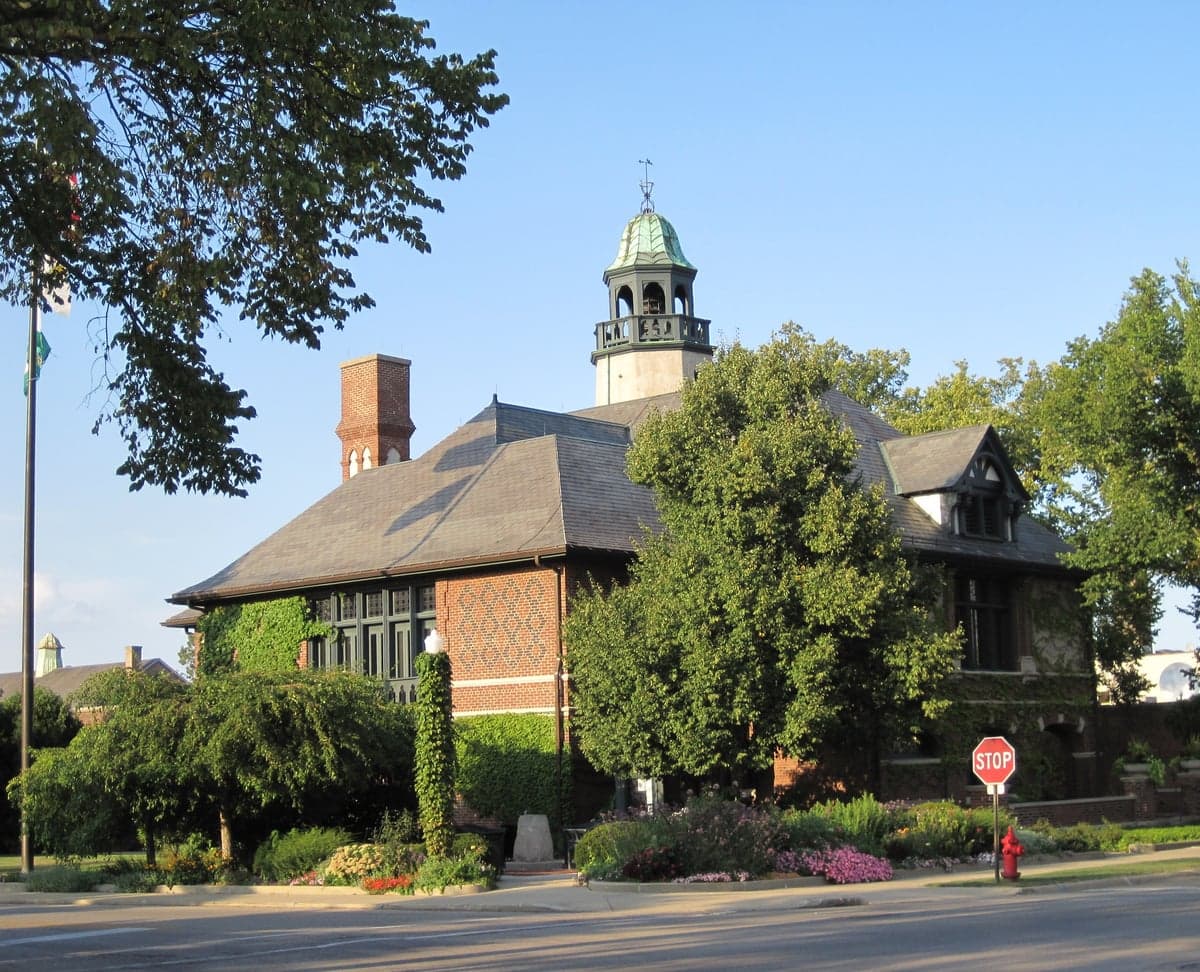
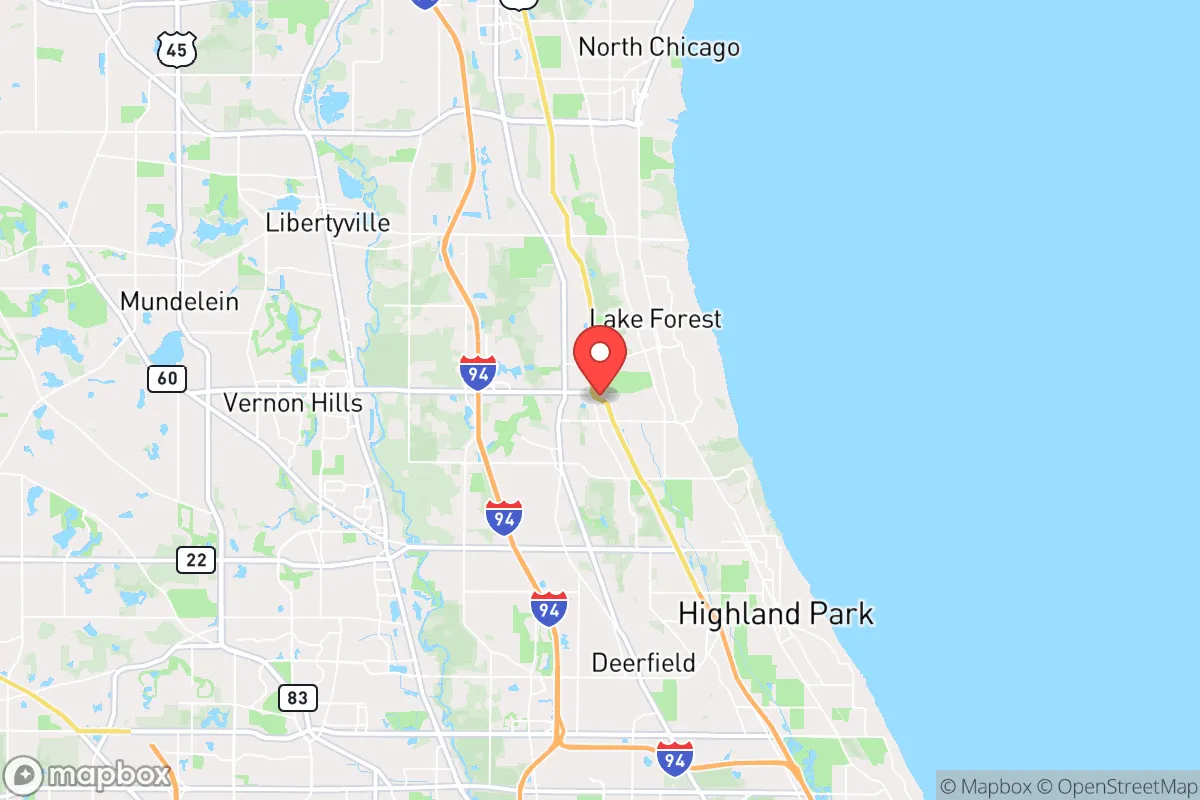
Photo: Wikipedia
Personal Sovereignty in Lake Forest, IL
Viable for self-reliance. Generally workable, though some barriers may limit total independence.
What does Personal Sovereignty tell us?
Personal Sovereignty measures your capacity for self-reliance and independence with minimal government friction. Higher scores mean fewer barriers between you and the way you want to live... but it assumes you have the space you need and good neighbors.
What does this tell us?
Personal Sovereignty measures your capacity for self-reliance and independence with minimal government friction. Higher scores mean fewer barriers between you and the way you want to live... but it assumes you have the space you need and good neighbors.
State Policy
Energy independence: Importer (45% of energy produced in-state)
Personal Liberty
Homesteading

Personal Liberty Analysis
Lake Forest, Illinois, presents a complex personal sovereignty environment where high property taxes and strict state-level regulations coexist with strong local property rights, excellent schools, and a deeply ingrained culture of self-reliance among its affluent residents. For the freedom-minded individual or family, the trade-off is clear: you gain significant personal autonomy in your daily life and community governance, but you pay a premium for it—both in taxes and in navigating Illinois’s broader regulatory framework. The city’s character is defined less by libertarian ideals and more by a pragmatic, high-trust conservatism that values order, stability, and local control within a heavily regulated state.
Tax burden and regulatory posture: what you pay for local control
Lake Forest’s tax burden is among the highest in the nation, driven primarily by property taxes. The combined effective property tax rate in Lake County typically ranges from 1.8% to 2.2% of assessed value, meaning a $1 million home carries an annual tax bill of $18,000 to $22,000. This is a direct consequence of Illinois’s reliance on property taxes to fund local services—schools, police, fire, and infrastructure—rather than a state income tax that is already a flat 4.95%. For a relocation prospect, this is the single largest recurring cost of personal sovereignty in Lake Forest. The regulatory posture at the city level is light-touch for established homeowners: zoning is enforced but predictable, building permits are processed efficiently, and the city’s historic preservation commission has real authority over exterior changes in designated districts. However, state-level regulations add significant friction. Illinois has a progressive income tax structure (flat rate as of 2026, but subject to political change), a high state sales tax (6.25% state + local, totaling 8%–10% in Lake Forest), and stringent environmental and labor laws that affect everything from home construction to business operations. The net effect: you pay heavily for the privilege of local autonomy, but within that framework, the city government is generally responsive and predictable, not adversarial.
Self-defense and gun law specifics: navigating Illinois’s restrictive framework
Illinois is one of the most restrictive states in the U.S. for gun ownership, and Lake Forest residents must comply fully with state law. The state requires a Firearm Owner’s Identification (FOID) card for possession of any firearm or ammunition, a process that involves a background check and a wait period. For concealed carry, a Concealed Carry License (CCL) is required, which mandates 16 hours of training (including live-fire qualification) and a separate application. Illinois is a “may-issue” state in practice, but the CCL process is standardized and non-discretionary for qualified applicants. The state also bans “assault weapons” and large-capacity magazines under the Protect Illinois Communities Act (enacted 2023), which is currently being challenged in federal court but remains in effect. Lake Forest itself has no additional local gun ordinances beyond state law, meaning no extra registration or storage requirements. Self-defense law in Illinois follows the “duty to retreat” standard outside the home, except in cases of home invasion or vehicle defense. Castle Doctrine applies to one’s dwelling, but there is no “stand your ground” law for public spaces. For a freedom-oriented resident, this means self-defense is legally viable inside the home but heavily constrained in public. The practical reality: most Lake Forest homeowners who choose to own firearms do so legally, with a focus on home defense and sport shooting, but the administrative burden and legal restrictions are significant compared to states like Texas or Florida.
Self-reliance and homesteading viability: lot sizes, zoning, and off-grid feasibility
Lake Forest offers unusual opportunities for self-reliance within a wealthy suburban context, but with clear limits. The city’s historic character is defined by large lots—many residential properties sit on one to five acres, particularly in the older, eastern sections near the lake. Zoning is primarily single-family residential with strict minimum lot sizes (often 40,000 square feet or more in the estate districts). This allows for substantial vegetable gardens, small orchards, chicken coops (allowed with a permit and setback requirements), and even beekeeping. However, off-grid living is effectively impossible within city limits. The city requires connection to municipal water and sewer, and building codes mandate grid-tied electrical service. Solar panels are permitted but must be installed by licensed contractors and meet aesthetic guidelines in historic districts. Rainwater collection for outdoor use is allowed, but potable rainwater systems are not permitted. Livestock beyond chickens (e.g., goats, pigs, or cows) is prohibited on residential lots under 10 acres, which covers virtually all in-city properties. For a family seeking to grow their own food, raise chickens, and reduce reliance on grocery stores, Lake Forest is viable. For anyone wanting to disconnect from utilities or live a truly self-sufficient homesteading lifestyle, the city’s zoning and code enforcement make that impractical. The surrounding unincorporated areas of Lake County offer more flexibility, but with fewer services and higher commute costs.
Personal liberties: parental rights, medical autonomy, speech, and property
Parental rights in Lake Forest are strong in practice, supported by the city’s highly rated public schools (Lake Forest High School, Deer Path Middle School, and elementary schools consistently rank among Illinois’s best). The school district is responsive to parent input, with active PTAs and school board elections that see high turnout. Illinois state law mandates comprehensive sex education and LGBTQ-inclusive curriculum in public schools, which some conservative families find objectionable, but local school boards have some discretion in implementation. Homeschooling is legal and relatively straightforward in Illinois, requiring only a notice of intent and instruction in core subjects, with no standardized testing or home visits required. Medical autonomy is more constrained: Illinois has a statewide vaccine mandate for school attendance (with medical and religious exemptions available, though religious exemptions are being challenged in court), and the state has broad public health powers. COVID-era mandates were enforced in Lake County, though compliance varied. Free speech is fully protected under the First Amendment, and Lake Forest has no local ordinances restricting political speech or assembly. Property rights are robust at the local level: the city’s zoning code is clear and consistently enforced, and eminent domain is rarely used. However, the state’s property tax system effectively limits the freedom to hold land without high carrying costs, and the statewide ban on rent control (preempting local ordinances) is a net positive for property owners. Overall, personal liberties in Lake Forest are strongest in the private sphere—family, education, property use—and weakest in areas where state law imposes uniform standards, such as healthcare mandates and gun regulation.
Compared to other high-freedom enclaves in the Midwest, Lake Forest offers a distinctly upper-tier version of personal sovereignty: high taxes and state-level restrictions are the price of admission, but the payoff is exceptional local governance, strong property rights, and a community that values self-reliance and privacy. For the conservative-leaning individual or family who can afford the tax burden and is willing to navigate Illinois’s regulatory landscape, Lake Forest provides a stable, predictable environment where personal autonomy in daily life is genuinely high. It is not a libertarian paradise—it is a well-managed, high-cost, high-trust community where freedom is exercised within clear boundaries, not in spite of them. For those seeking lower taxes and fewer state-level constraints, neighboring Wisconsin or Indiana offer more permissive environments, but with different trade-offs in services, schools, and community character.

* Values derived from national, state, county, city and local statistics and may differ in a specific area. Last updated: 2026-10-29T16:04:16.000Z
Narrative content on this page is AI-generated and may contain mistakes. Verify any details that matter before acting on them.
ReloMaps may earn a commission from affiliate links at no extra cost to you.

