
Photo: Wikipedia
Personal Sovereignty in Kittery, ME
Viable for self-reliance. Generally workable, though some barriers may limit total independence.
What does Personal Sovereignty tell us?
Personal Sovereignty measures your capacity for self-reliance and independence with minimal government friction. Higher scores mean fewer barriers between you and the way you want to live... but it assumes you have the space you need and good neighbors.
What does this tell us?
Personal Sovereignty measures your capacity for self-reliance and independence with minimal government friction. Higher scores mean fewer barriers between you and the way you want to live... but it assumes you have the space you need and good neighbors.
State Policy
Energy independence: Importer (30% of energy produced in-state)
Personal Liberty
Homesteading

Personal Liberty Analysis
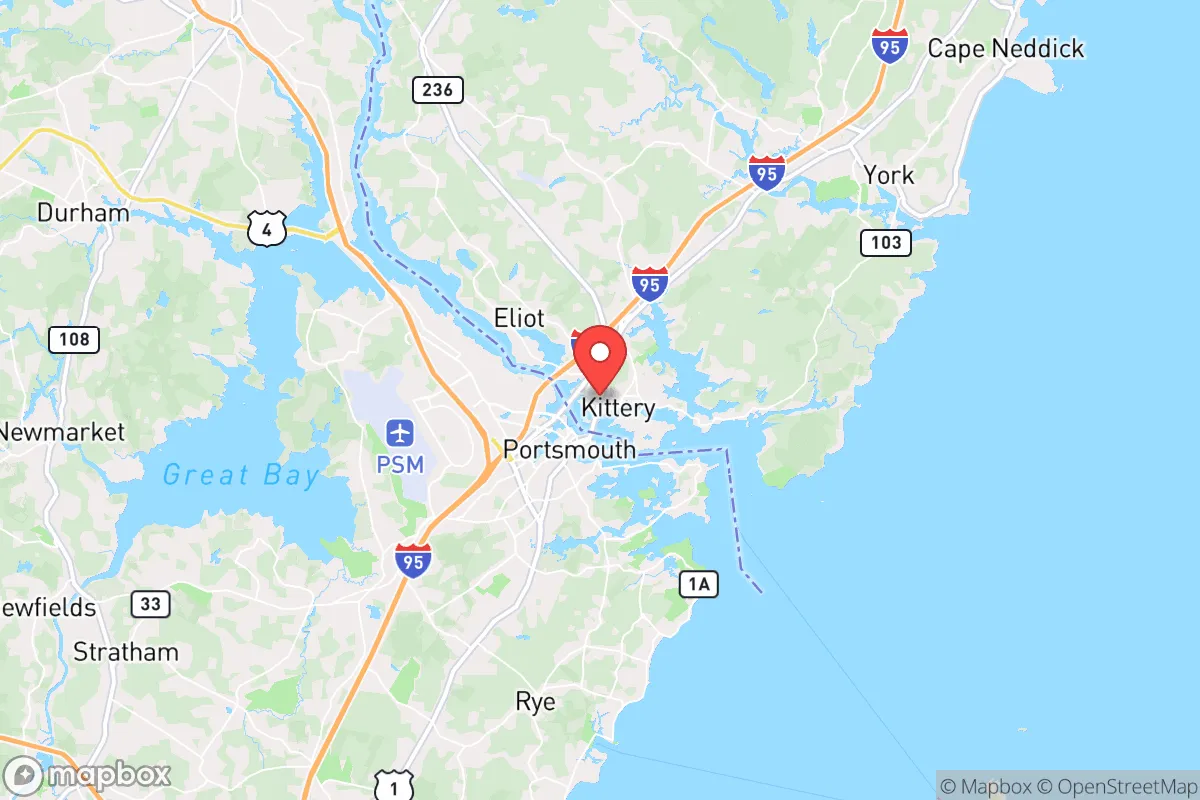
Kittery, Maine, offers a nuanced personal sovereignty environment that balances the state’s generally live-and-let-live ethos with the practical realities of a densely settled coastal town near a major military installation. For individuals and families who prioritize autonomy—whether in financial decisions, self-defense, or lifestyle choices—Kittery presents a mixed picture: the state-level legal framework is broadly protective of personal liberties, but local zoning, property costs, and proximity to Portsmouth, New Hampshire, create a regulatory and economic landscape that rewards careful planning. The town’s character is less about rugged off-grid independence and more about informed, deliberate self-reliance within a community-oriented, historically rooted setting.
Tax burden and regulatory posture in Kittery
Maine’s overall tax burden is among the highest in the nation, and Kittery residents feel this acutely. The state levies a 5.8% to 7.15% progressive income tax on most earned income, and the state sales tax is 5.5%, with local option taxes on prepared food and lodging adding to the cost of daily life. Property taxes in Kittery are significant—the 2025 mill rate is approximately 13.5 mills, meaning a home valued at $400,000 carries an annual tax bill of roughly $5,400. This is higher than the Maine median and substantially higher than in neighboring New Hampshire towns like Portsmouth, which has no state income tax. For a conservative-leaning reader, the regulatory posture is moderately heavy: Maine has a statewide building code, strict shoreland zoning (given Kittery’s extensive coastline and tidal rivers), and a robust environmental permitting process for any construction near water. However, the town itself is not aggressively anti-development; it has a planning board that follows state guidelines but does not impose unusually restrictive local ordinances beyond what is required for coastal resource protection. The net effect is that Kittery is not a low-tax haven, but its tax structure is predictable and transparent, and the regulatory burden is manageable for those who understand the rules upfront.
Self-defense and gun law specifics in Maine
Maine is a constitutional carry state, meaning any person 21 or older who is legally allowed to possess a firearm may carry it openly or concealed without a permit. This is a strong point for personal sovereignty advocates. There is no state-level requirement for a license to purchase a handgun, no waiting period, and no registry of firearms. Kittery itself has no local ordinances that further restrict gun ownership or carry. The state does have a “red flag” law (enacted in 2019) that allows law enforcement to petition for a temporary firearm seizure from an individual deemed a risk to themselves or others, which some readers may view as an infringement. However, the law includes due process protections and is not aggressively enforced in rural or suburban areas like Kittery. Background checks are required only for commercial sales; private transfers between individuals are unregulated. For self-defense in the home, Maine law strongly protects the use of deadly force against an unlawful intruder, with no duty to retreat in one’s own dwelling. Overall, Kittery’s gun laws are among the most permissive in New England, and the local culture is generally supportive of firearm ownership for hunting, sport, and self-defense.
Self-reliance and homesteading viability in Kittery
Kittery’s potential for self-reliance is limited by its geography and land use patterns. The town is roughly 18 square miles with a population density of about 600 people per square mile—moderate for Maine but high for a town with homesteading ambitions. Minimum lot sizes in residential zones are typically one to two acres, which is enough for a substantial garden, a small orchard, and a few chickens, but not for large-scale livestock or significant timber production. Zoning allows for accessory dwelling units, home-based businesses, and keeping of “domestic animals” (chickens, rabbits, bees) with a permit, but pigs, goats, and cattle are generally prohibited in most residential districts. Off-grid living is legally challenging: Maine’s Uniform Building Code requires connection to a septic system or approved alternative wastewater treatment, and the town enforces well-water testing for new construction. Solar panels are permitted, but net metering rules are state-regulated and favorable, though the upfront cost is high. The climate—with cold winters and a short growing season (zone 5b/6a)—further limits year-round food production. For a family seeking true self-sufficiency, Kittery is not ideal; it is better suited for a “semi-self-reliant” lifestyle where one grows a portion of their food, heats with wood (common in the area), and participates in local farmers’ markets and community-supported agriculture. The nearby Kittery Land Trust and local conservation areas provide access to public land for foraging and recreation, but private land suitable for homesteading is expensive and scarce.
Personal liberties: parental rights, medical autonomy, speech, and property
Maine law generally respects parental rights in education and healthcare. Parents have the right to homeschool without a teaching certificate, though they must submit a notice of intent and an annual assessment. The state does not have a “parental bill of rights” statute, but court precedent supports parental decision-making in medical care, including the right to refuse vaccines for school attendance (Maine allows philosophical exemptions for school immunization requirements). Medical autonomy is a mixed area: Maine has legalized recreational marijuana (since 2016) and allows medical use, but it also has strict prescription drug monitoring and a state-run health insurance exchange. For speech and assembly, Maine is a strong First Amendment state with no notable local restrictions in Kittery. Property rights are robust in theory, but the state’s “Tree Growth Tax Law” and “Farm and Open Space Tax Law” offer tax breaks for landowners who keep land undeveloped—a trade-off that incentivizes conservation over development. Kittery’s historic district (the Pepperrell Cove area) imposes design review for exterior changes, which some property owners may find restrictive. Overall, personal liberties in Kittery are well-protected at the state level, with the primary friction points being property taxes and coastal zoning rather than direct infringements on speech, religion, or family autonomy.
Compared to other areas in New England, Kittery offers a moderate-to-high level of personal sovereignty, especially in self-defense and educational choice. It is less restrictive than Massachusetts or Rhode Island on gun laws and homeschooling, but more expensive and regulated than rural inland Maine towns like Dover-Foxcroft or Jackman. For a conservative-leaning individual or family, Kittery’s appeal lies in its balance: you get the legal freedoms of a constitutional carry state with the amenities of a coastal community near a major city (Portsmouth) and a military base (Portsmouth Naval Shipyard). The trade-offs are higher taxes and limited homesteading potential. If your priority is maximum autonomy with minimal government interference, a more rural Maine town would serve you better. But if you want a community where personal liberties are respected, the schools are good, and you can still own firearms, garden, and make your own healthcare choices without bureaucratic hassle, Kittery is a solid, if not exceptional, choice.

* Values derived from national, state, county, city and local statistics and may differ in a specific area. Last updated: 2026-10-11T02:58:03.000Z
Narrative content on this page is AI-generated and may contain mistakes. Verify any details that matter before acting on them.
ReloMaps may earn a commission from affiliate links at no extra cost to you.

