Photo: Wikipedia
Demographics of Kittery, ME
Affluence Level in Kittery, ME
An upper-middle-class area. Household wealth, education levels, and homeownership run ahead of national benchmarks.
People of Kittery, ME
The people of Kittery, Maine, today number 5,284, forming a small, historically rooted community where 87.8% of residents identify as White, and the foreign-born population sits at just 0.7%. Despite its tiny size, Kittery is a distinctive coastal town with a strong sense of place, shaped by centuries of shipbuilding, fishing, and its strategic location at the mouth of the Piscataqua River. The population is notably well-educated—44.8% hold a college degree—and leans slightly older, with a character that blends old New England Yankee traditions with a growing number of professionals and retirees drawn by the area's maritime heritage and proximity to Portsmouth, New Hampshire.
How the city was settled and grew
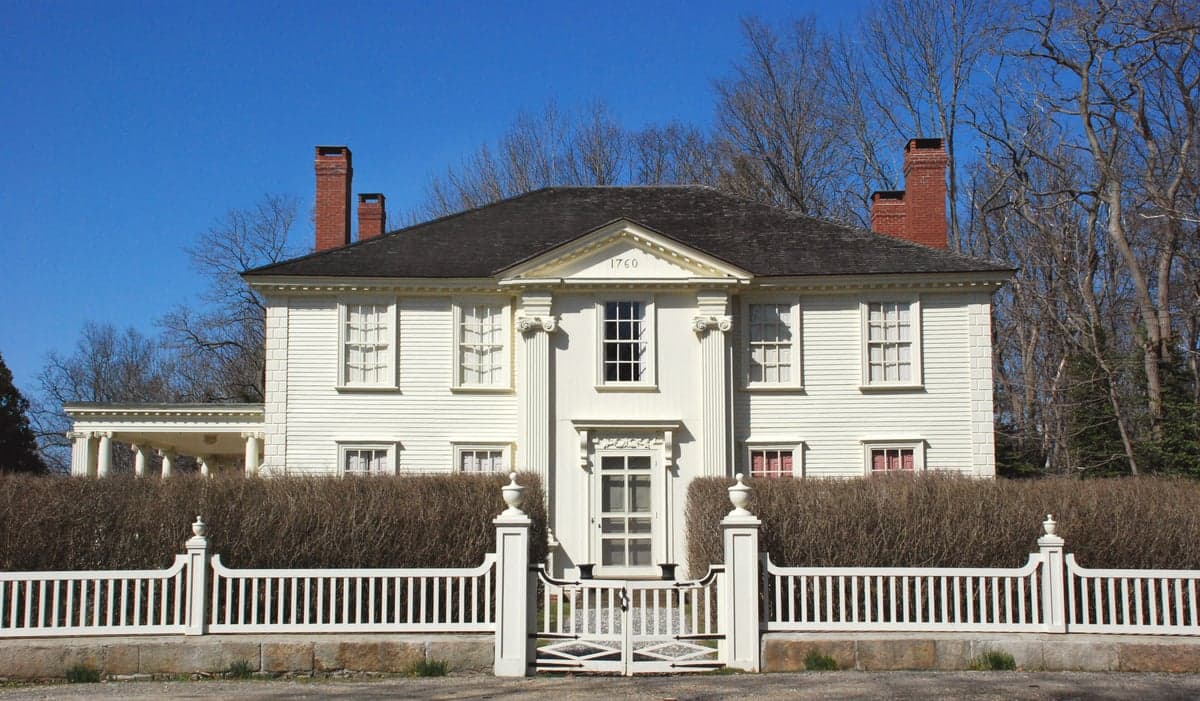
Kittery's human history begins in the early 1600s, when European settlers—primarily English Puritans and fishermen—established the first permanent English settlement in Maine. The town was officially incorporated in 1647, and its early population was drawn by the rich fishing grounds of the Gulf of Maine and the deep, sheltered harbor of the Piscataqua River. The original settlers clustered in what is now Kittery Point, the historic waterfront neighborhood where the town's oldest homes and the First Congregational Church (built 1730) still stand. By the 18th and 19th centuries, shipbuilding became the dominant industry, with the Badger's Island neighborhood—an island in the river—hosting major shipyards that built clipper ships and later naval vessels. This industry attracted skilled shipwrights, many of whom were English and Scottish immigrants, and a smaller number of free Black workers who settled in the Bray's Point area. The population remained overwhelmingly White and English-speaking through the early 20th century, with the 1900 census recording fewer than 3,000 residents. The Portsmouth Naval Shipyard, located on Seavey Island (part of Kittery), became the town's economic anchor after 1800, drawing a steady stream of workers from surrounding towns but not significantly diversifying the local population.
Modern era (post-1965)
After the 1965 Hart-Cellar Act, Kittery saw little of the immigration-driven diversification that reshaped larger American cities. The foreign-born population remains negligible at 0.7%, and the town's racial composition has shifted only modestly. The most notable change has been a small increase in Black residents (now 3.4%) and East/Southeast Asian residents (2.4%), with Indian-subcontinent residents at 0.2% and Hispanic residents at 2.9%. These newer residents have largely settled in the Kittery Foreside neighborhood, the commercial and residential area along Route 1, where a mix of older homes and newer apartment complexes offer more affordable entry points. Domestic in-migration has been more significant: retirees and remote workers from southern New England and the mid-Atlantic have moved into Kittery Point and the Spruce Creek area, drawn by lower property taxes (relative to Massachusetts) and the town's coastal charm. This wave has raised the college-educated share to 44.8%, well above the national average, and has contributed to a subtle cultural shift toward a more professional, amenity-oriented population. The town's identity remains firmly rooted in its Yankee maritime heritage, but the newer arrivals have brought a taste for farm-to-table dining, boutique shopping, and outdoor recreation that has reshaped the commercial strip along Route 1.
The future
Kittery's population is likely to remain small and predominantly White, with only gradual diversification. The town's limited housing stock—much of it historic and expensive—constrains growth, and the 2020 census showed a population increase of just 2.5% from 2010. The Hispanic and East/Southeast Asian shares may inch upward as service workers and professionals seek affordable alternatives to Portsmouth, but the foreign-born population is unlikely to exceed 2-3% in the next decade. The most significant demographic trend is aging: the median age is already above 45, and the town is attracting a disproportionate share of retirees and empty-nesters. Younger families are being priced out, as the median home value exceeds $500,000. Future growth will likely concentrate in the Kittery Foreside area, where a few small apartment and condo developments are planned, and in the Route 1 Bypass corridor, where commercial expansion may bring more rental housing. The cultural identity will continue to evolve toward a blend of old maritime tradition and new coastal affluence, with the town's historic districts preserved but its commercial heart becoming more polished and tourist-oriented.
For someone moving in now, Kittery offers a stable, safe, and scenic community with excellent schools and a strong sense of place, but it is not a place of rapid demographic change or cultural diversity. The population is becoming older, more educated, and more affluent, while remaining overwhelmingly White and native-born. New residents will find a town that values its history and natural beauty, but they should expect a quiet, homogeneous social environment where integration into existing networks—often centered on the yacht club, the historical society, or local churches—takes time. The bottom line: Kittery is a well-preserved New England coastal town that is slowly gentrifying, not diversifying, and is best suited for those seeking a tranquil, historically rich community rather than a dynamic, multicultural one.

* Values derived from national, state, county, city and local statistics and may differ in a specific area. Last updated: 2026-10-11T02:58:03.000Z
Narrative content on this page is AI-generated and may contain mistakes. Verify any details that matter before acting on them.
ReloMaps may earn a commission from affiliate links at no extra cost to you.

