Political ClimatePolitical Climate in Kearneysville, WV
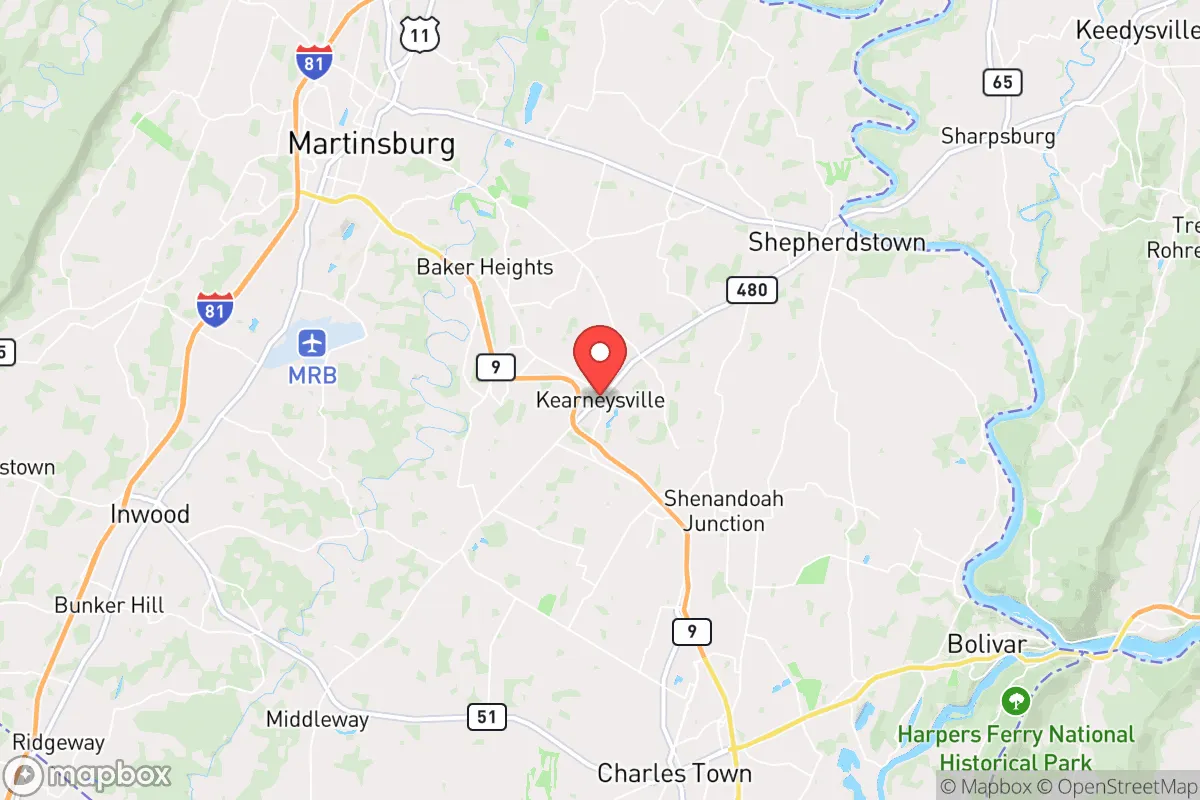
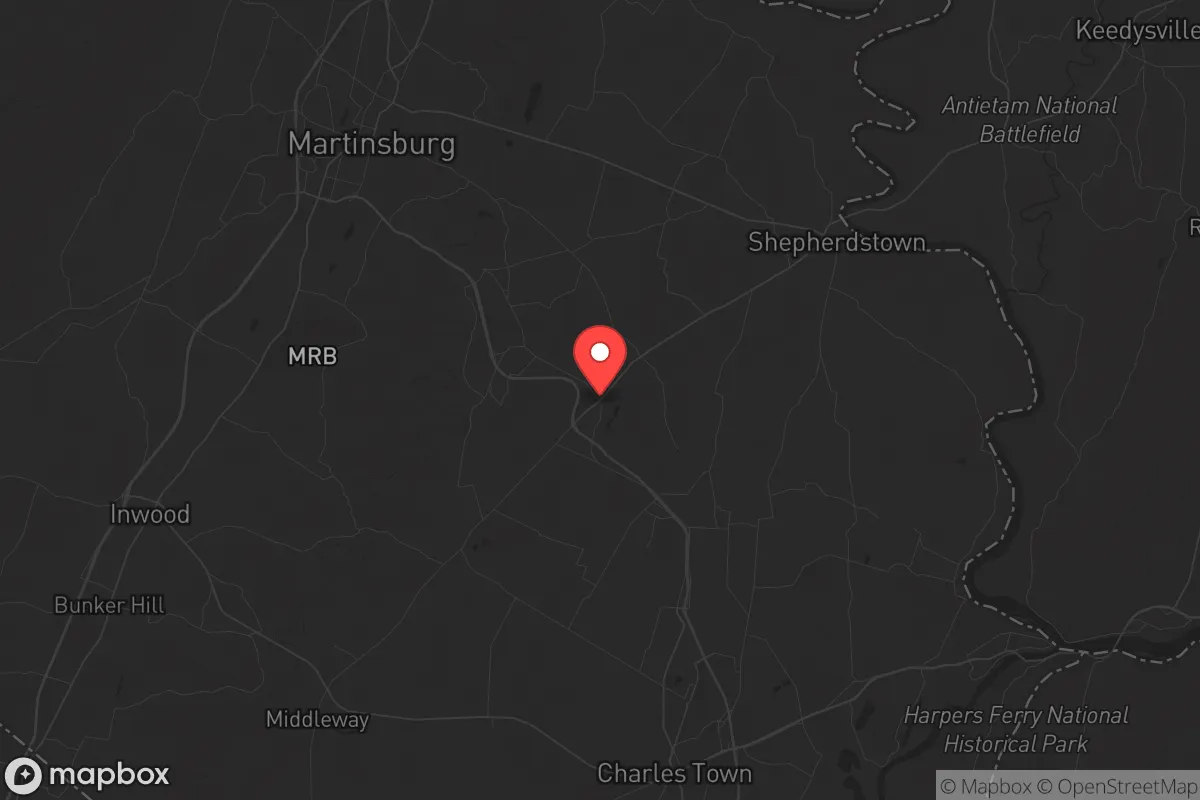
District shown is the primary district for this city’s centroid. Cities may span multiple districts.
Local Political AnalysisPolitical Analysis of Kearneysville, WV
Kearneysville leans heavily Republican, with a Cook Partisan Voting Index of R+20, making it one of the more conservative pockets in the Eastern Panhandle. This isn’t a recent shift—the area has been reliably red for decades, but the margin has widened since 2016 as new residents from the D.C. suburbs bring their own brand of fiscal conservatism and Second Amendment priorities. Locals will tell you that while the party registration numbers have stayed steady, the *type* of Republican has changed: you’ve got old-school farmers who vote on property rights and school choice, mixed with younger telecommuters who care more about tax rates and internet speeds. The result is a solidly conservative bloc that rarely wavers in presidential or state-level races, though local primaries can get surprisingly feisty between establishment and libertarian-leaning factions.
How it compares to West Virginia as a whole
West Virginia as a state is also deeply red—Trump won it by nearly 39 points in 2020—but Kearneysville’s R+20 is actually *less* conservative than many rural counties to the south and west. Places like Mingo or McDowell counties routinely vote 80%+ Republican, while Kearneysville sits in Jefferson County, which has a small but vocal Democratic minority concentrated in the historic town of Charles Town (about 10 minutes south). That contrast matters: in Kearneysville, you’ll find a few more split-ticket voters and a slightly higher tolerance for moderate Democrats on local school boards or county commissions. The state’s overall Cook PVI isn’t officially calculated, but by any measure it’s R+20 or deeper, meaning Kearneysville is basically a microcosm of the state’s lean—just with a bit more suburban nuance and less of the coal-country populism you’d hear in the southern coalfields.
What this means for residents
For conservative residents, the political climate is comfortable and affirming. Local government tends to be business-friendly, zoning is minimal, and gun laws are among the most permissive in the country—open carry is common, and you’ll see “We Support the Second Amendment” signs in many storefronts. Tax policy is also favorable: no state income tax on Social Security, and property taxes are low compared to nearby Maryland or Virginia. For liberal residents, life is more about finding your niche. There’s a small but active Democratic club in Charles Town, and the county’s growing diversity (thanks to D.C. transplants) has made conversations around development and schools more nuanced. You won’t face open hostility, but you’ll definitely be in the minority at town hall meetings. The practical trade-off is that progressive policy ideas—like higher density housing or public transit expansions—face an uphill battle, while conservative priorities like school choice and tax cuts tend to sail through.
Culturally, Kearneysville sits at a fascinating crossroads. It’s close enough to Shepherdstown (a college town with a more liberal vibe) and Harpers Ferry (a tourist hub with a mix of politics) that you can easily find a different atmosphere within a 15-minute drive. The local economy is heavily tied to agriculture and logistics—the Macy’s distribution center is a major employer—so policy debates often revolve around land use, truck traffic, and broadband access rather than the culture-war issues that dominate state politics. In practice, this means most residents, regardless of party, agree on wanting good roads, reliable internet, and keeping the area’s rural character intact. The political divide shows up more in how they define “rural character”—for conservatives, it’s about property rights and low taxes; for liberals, it’s about preserving farmland and limiting sprawl. Both sides tend to be pragmatic, though, and the local paper’s letters page is more likely to feature debates about school funding than national politics. Looking ahead, the area’s growth—Jefferson County’s population jumped 12% between 2010 and 2020—will likely keep the politics stable but not static, with new arrivals slowly nudging the conversation toward issues like infrastructure and environmental protection without flipping the overall conservative majority.

State Political ClimatePolitical Climate in West Virginia
State Political AnalysisPolitical Environment in the State
West Virginia has become one of the most reliably Republican states in the nation, with a partisan lean that has shifted dramatically over the past two decades. In 2000, the state was a battleground, voting for George W. Bush by just 6 points; by 2024, Donald Trump carried it by over 40 points. The dominant coalition is now a mix of rural, working-class voters, many of whom were once reliable Democrats but have realigned along cultural and economic lines. The state legislature holds a supermajority in both chambers, and every statewide office is held by a Republican. This isn't a purple state anymore—it's deep red, and the trajectory has been consistent since the early 2000s.
Urban vs. rural divide
The political map of West Virginia is defined by a stark urban-rural split, but even the urban areas are shifting. The largest metro, Charleston, has historically been a Democratic stronghold due to union influence and state government employment, but it has trended right in recent cycles. Kanawha County, which contains Charleston, voted for Trump by 20 points in 2024—a far cry from its blue-collar Democratic roots. Morgantown, home to West Virginia University, remains the most liberal pocket in the state, with Monongalia County often voting within single digits of the national average. Huntington and the surrounding Cabell County are more competitive but still lean Republican, driven by economic anxiety and cultural conservatism. The rural counties—like Mingo, Logan, and McDowell in the southern coalfields—are among the most Republican in the nation, often delivering 80%+ margins. The divide isn't just about population density; it's about economic base, with former union strongholds in the coal fields flipping hard to the GOP, while college towns like Morgantown and Shepherdstown in the Eastern Panhandle provide the only real Democratic resistance.
Policy environment
West Virginia's policy environment is aggressively conservative, shaped by the supermajority legislature and Governor Jim Justice, a Republican. The state has no personal income tax on Social Security benefits and has been phasing down its personal income tax, with a 4% flat rate now in effect—a major draw for retirees and remote workers. The regulatory posture is business-friendly, with right-to-work laws and a weak collective bargaining environment. Education policy has been a flashpoint: the state passed a broad school choice law in 2021, including charter schools and education savings accounts, though implementation has been slow. Healthcare is a mixed bag; the state expanded Medicaid under the ACA, but the legislature has resisted further expansion of government-run programs. Election laws have tightened: voter ID is required, and the state passed a ban on ballot drop boxes and limited absentee voting. Gun laws are among the most permissive in the country, with constitutional carry (no permit needed) and no state-level red flag law. Abortion is banned after 15 weeks with limited exceptions, and a 2024 law further restricted access by requiring in-person counseling and a 48-hour waiting period.
Recent policy direction
The last few years have seen a flurry of legislation that points toward an increasingly conservative and libertarian-leaning state. In 2023, the legislature passed a near-total ban on abortion, with exceptions only for medical emergencies, rape, and incest—but the rape and incest exceptions require a police report, which critics say creates a barrier. On gun rights, the state enacted permitless carry in 2022 and preempted local gun ordinances, meaning cities like Charleston and Huntington cannot enact their own restrictions. Parental rights in education were strengthened with a 2023 law requiring schools to notify parents of any curriculum involving sexuality or gender identity, and allowing parents to opt their children out. Property rights were bolstered by a 2024 law limiting the use of eminent domain for economic development. On the tax front, the state accelerated its income tax cuts, aiming for a flat 3.99% rate by 2026. Voting access has been restricted: the 2024 election law eliminated straight-ticket voting and shortened the early voting window. For a relocator weighing personal liberties, the state offers strong protections for gun owners, parents, and property holders, but limited medical autonomy and tighter voting rules.
Civil unrest & political movements
West Virginia has a history of labor activism, but recent political movements have been dominated by conservative and libertarian groups. The 2018 teachers' strike was a rare moment of cross-party unity, with educators shutting down schools for two weeks over pay and benefits—a movement that drew national attention and briefly revived labor organizing. Since then, the energy has shifted to the right. The state has seen a rise in Second Amendment sanctuary resolutions, with over 40 counties declaring themselves sanctuaries from any future federal gun restrictions. Immigration politics are less visible than in border states, but the legislature passed a 2024 law requiring local law enforcement to cooperate with federal immigration authorities, and there are no sanctuary cities in the state. Election integrity has been a persistent theme: the 2020 and 2024 elections saw no major controversies in West Virginia, but the legislature has nonetheless passed multiple bills tightening voting procedures, citing public concern. There is no serious secession or nullification movement, though some rural counties have floated the idea of joining neighboring states like Virginia or Kentucky in response to perceived neglect from Charleston. A new resident would notice the prevalence of political signage, especially in rural areas, and the general lack of visible protest activity outside of occasional labor or education rallies.
Projection
Over the next 5-10 years, West Virginia is likely to become even more Republican, driven by demographic trends and in-migration. The state's population is aging and shrinking, with young people leaving for job markets in Charlotte, Columbus, and Pittsburgh. The in-migration that does occur is largely from retirees and remote workers attracted by low taxes and rural lifestyle, and these newcomers tend to be conservative. The Eastern Panhandle, including Martinsburg and Charles Town, is growing fastest, drawing commuters from the D.C. metro area—this could introduce a small but growing libertarian-leaning or moderate Republican bloc. The Democratic Party is likely to remain weak, with its base confined to Morgantown and a few scattered union households. The policy direction will continue toward lower taxes, school choice expansion, and further restrictions on abortion and voting access. A relocator moving in now should expect a state that is culturally and politically homogeneous, with little political friction in daily life, but also limited public services and a shrinking tax base.
For a new resident, the bottom line is straightforward: West Virginia offers a deeply conservative environment with low taxes, strong gun rights, and minimal regulatory hassle, but also limited healthcare access, a shrinking economy, and a political culture that leaves little room for dissent. If you align with the dominant political values, you'll find a welcoming community and a low cost of living. If you don't, you'll be in a clear minority, especially outside of Morgantown or Shepherdstown. The state is stable politically, but that stability comes from demographic decline and out-migration, not from a vibrant, growing economy. Choose West Virginia for the lifestyle and the values, not for the job market or the public services.
* Values derived from national, state, county, city and local statistics and may differ in a specific area. Last updated: 2026-07-28T20:15:12.000Z
Narrative content on this page is AI-generated and may contain mistakes. Verify any details that matter before acting on them.
ReloMaps may earn a commission from affiliate links at no extra cost to you.

