Demographics of Kearneysville, WV
Affluence Level in Kearneysville, WV
A middle-class area roughly in line with national averages across income, home values, education, and employment.
People of Kearneysville, WV
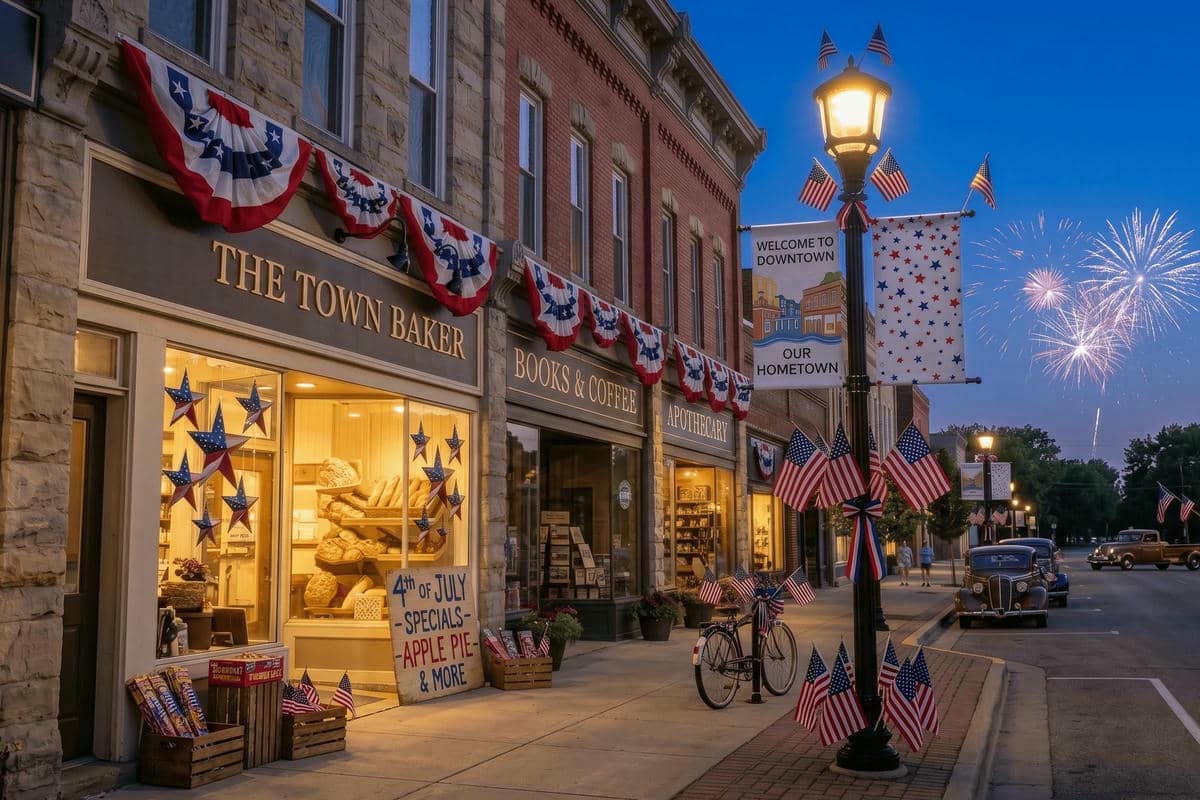
The people of Kearneysville, West Virginia, today number roughly 5,588, forming a small, predominantly white community with a growing Hispanic minority and a notable East/Southeast Asian presence. The population is less diverse than the national average but more diverse than much of the surrounding Eastern Panhandle, with a foreign-born share of 7.1% that signals steady, if modest, in-migration. The town retains a rural, family-oriented character, with a lower-than-average college attainment rate of 15.7% reflecting its historical roots in agriculture and trades. Residents often identify with specific, tight-knit subdivisions rather than a single downtown core, giving the area a decentralized, neighborhood-based identity.
How the city was settled and grew
Kearneysville’s settlement began in the mid-18th century, when European settlers—primarily of English, Scots-Irish, and German descent—moved into the fertile Shenandoah Valley under land grants from Lord Fairfax. The town was formally established in the 1830s around the Baltimore and Ohio Railroad, which made it a shipping point for wheat, apples, and livestock. The original population clustered in the Old Town district near the railroad depot, where small farms and mills defined daily life. A second wave arrived after the Civil War, when freed African Americans established a small community in the Pleasant View area, working as sharecroppers and laborers on surrounding orchards. By 1900, the population was almost entirely white and native-born, with a tiny Black minority, and the economy remained tied to agriculture—especially apple and peach orchards—through the mid-20th century. No major industrial or immigrant wave altered this pattern until after 1965.
Modern era (post-1965)
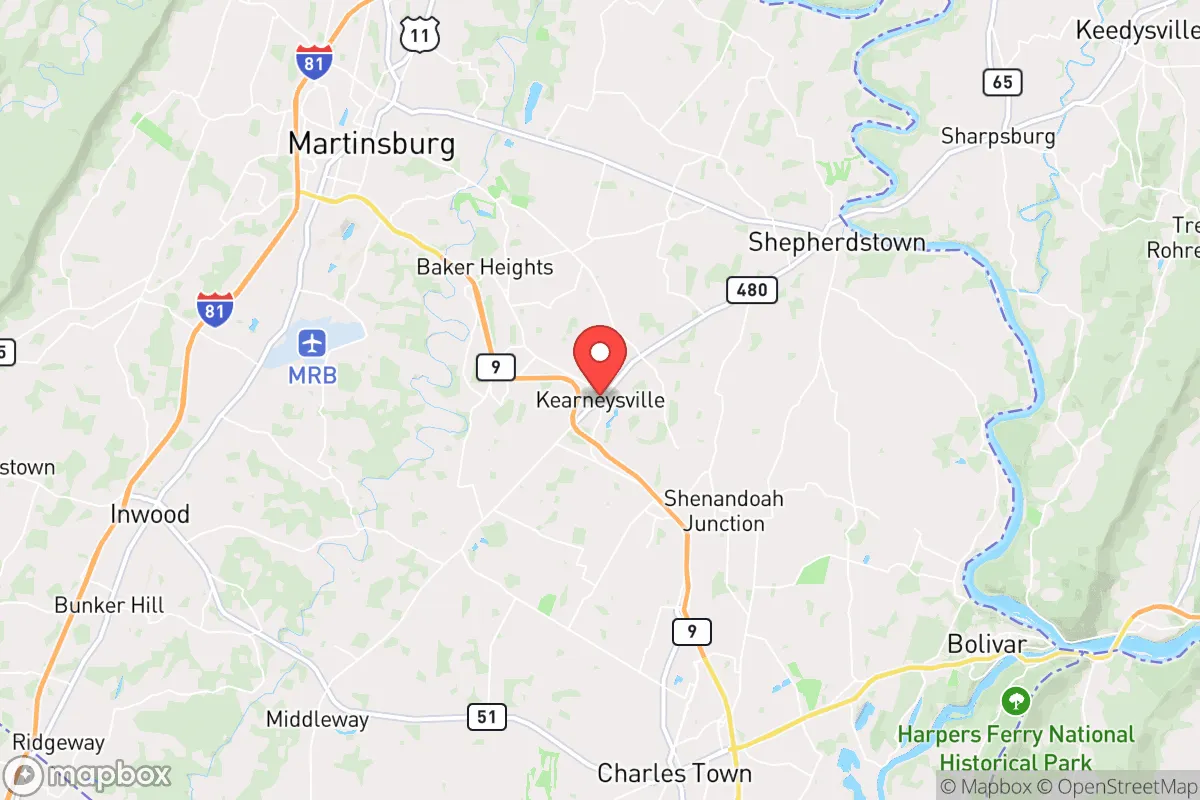
The 1965 Hart-Cellar Act had little immediate effect on Kearneysville, but the 1980s and 1990s brought the first significant demographic shift: suburban spillover from the Washington, D.C. metro area, located about 70 miles east. Commuters and retirees seeking cheaper land began building homes in new subdivisions like Frog Hollow and Hunters Green, which today house many of the town’s white, middle-class families. A more visible change came after 2000, when Hispanic immigrants—primarily from Mexico and Central America—moved into the area to work in the region’s expanding poultry processing plants and fruit orchards. They concentrated in the Ridgeway Estates neighborhood and along the W.Va. 9 corridor, where rental housing is more available. The Hispanic share of the population now stands at 13.9%, making it the largest minority group. East/Southeast Asian residents (4.1%), many of whom work in nearby tech and logistics firms in Martinsburg and Hagerstown, have settled in newer developments like Stonebridge, a subdivision built in the 2010s. The Black population (6.0%) remains modest, with many families still rooted in the historic Pleasant View area, though some have moved into mixed subdivisions. The white share has declined from an estimated 90% in 1990 to 71.8% today, driven almost entirely by Hispanic and Asian in-migration, not Black growth.
The future
The population of Kearneysville is projected to grow slowly but steadily, driven by continued exurban spillover from the D.C. region and by natural increase among the younger Hispanic population. The town is becoming more diverse, but the change is gradual: the white share will likely fall to around 65% by 2040, while the Hispanic share could reach 18-20%. East/Southeast Asian communities are expected to grow modestly, possibly to 6-7%, as more professionals seek affordable housing within commuting distance of the I-81 corridor. New subdivisions, such as the planned Willow Creek development on the town’s eastern edge, are attracting a mix of white and Asian families, while Hispanic residents are dispersing beyond Ridgeway Estates into older neighborhoods like Old Town. The Black population is likely to remain stable or grow slightly, but no large-scale migration from other regions is anticipated. Culturally, Kearneysville is evolving from a homogenous, agricultural community into a more layered, commuter-oriented suburb, though its rural character—low density, open space, and a slower pace—remains a draw for families seeking an alternative to the D.C. metro’s high costs and congestion.
For someone moving in now, Kearneysville offers a quiet, affordable base with a growing mix of neighbors, but it is not a place of rapid change or high diversity. The town is becoming more Hispanic and Asian, but the dominant culture remains white and family-focused, with a strong emphasis on local schools, church life, and outdoor recreation. Newcomers will find a community that is welcoming but not yet fully integrated across its neighborhoods, and the next decade will likely see continued suburbanization rather than a dramatic cultural shift.

* Values derived from national, state, county, city and local statistics and may differ in a specific area. Last updated: 2026-07-28T20:15:12.000Z
Narrative content on this page is AI-generated and may contain mistakes. Verify any details that matter before acting on them.
ReloMaps may earn a commission from affiliate links at no extra cost to you.

