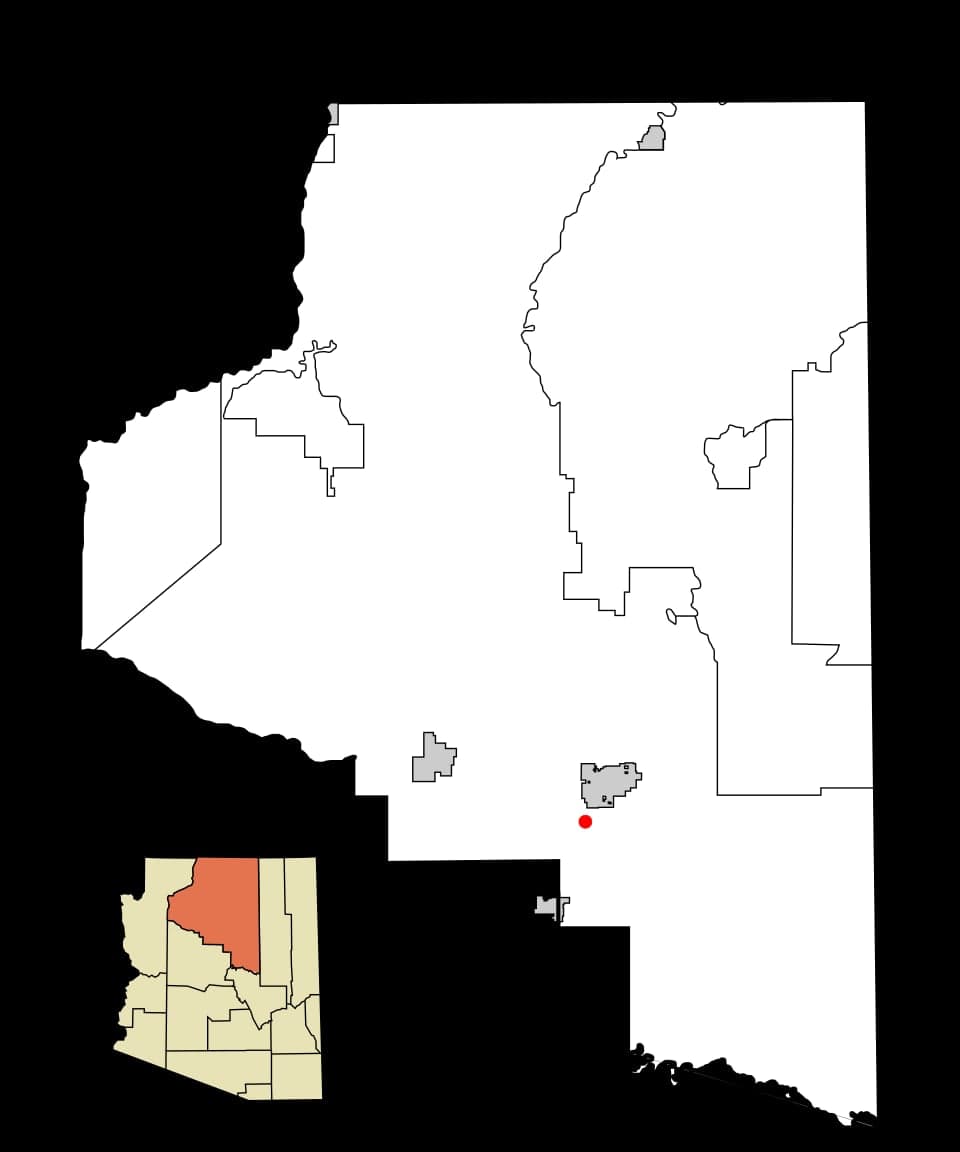
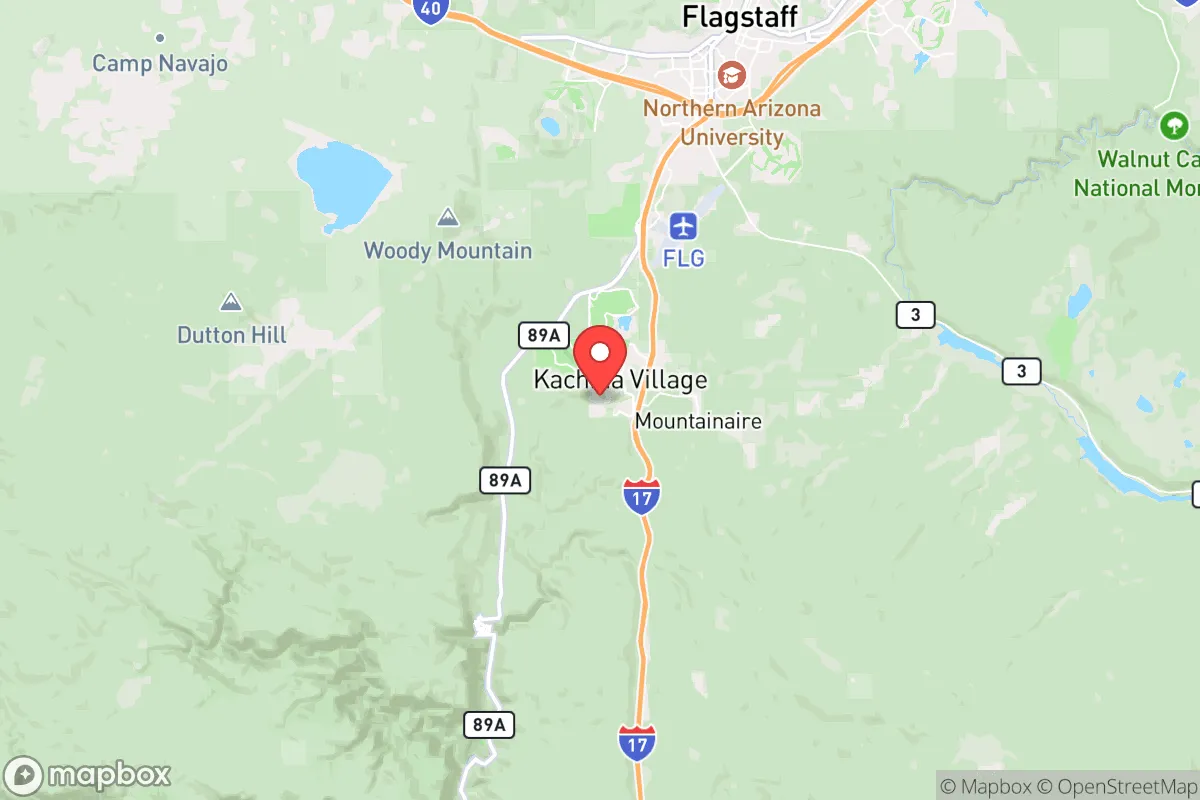
Photo: Wikipedia
Political ClimatePolitical Climate in Kachina Village, AZ
District shown is the primary district for this city’s centroid. Cities may span multiple districts.
Local Political AnalysisPolitical Analysis of Kachina Village, AZ
Kachina Village leans reliably Republican, with a Cook PVI of R+7, meaning the area votes about seven points more conservative than the national average. That’s a solid red pocket, especially when you compare it to Arizona as a whole, which sits at EVEN on the Cook PVI—a perfect swing-state balance. Over the last few election cycles, this precinct has stayed consistently right of center, even as the broader state has seesawed between parties. If you’re looking at the political map of northern Arizona, Kachina Village is a conservative anchor, while Flagstaff, just a few miles north, is a deep blue island in a mostly red region.
How it compares
Kachina Village’s R+7 PVI is a full seven points more conservative than Arizona’s statewide EVEN rating. That gap is significant: in a state that went for Biden by a razor-thin margin in 2020 and then flipped back to Trump in 2024, Kachina Village has never wavered. The contrast with Flagstaff is stark—Flagstaff’s precincts often lean D+10 or more, driven by Northern Arizona University and a younger, more diverse population. Drive ten minutes south to Kachina Village, and you’re in a world of single-family homes, retirees, and families who tend to vote straight-ticket Republican. Surrounding Coconino County as a whole is blue-leaning because of Flagstaff, but Kachina Village and nearby areas like Mountainaire and Munds Park are the red counterweights. The trajectory here is stable: no signs of a purple shift, even as Arizona’s suburbs in Maricopa County have moved left.
What this means for residents
For conservative residents, Kachina Village feels like a comfortable fit. Local elections, school board races, and county commission seats tend to reflect the same Republican lean, so you’re not constantly fighting an uphill battle on policy. Gun rights, lower taxes, and limited regulation are the default assumptions here. For liberal residents, it’s a different experience—you’re in the minority, but not isolated. Flagstaff’s progressive scene is a 15-minute drive, offering a cultural and political outlet that many small-town liberals rely on. In daily life, politics doesn’t dominate neighborly interactions; people here are more likely to talk about the weather, the forest, or the cost of living than to argue over candidates. That said, yard signs and bumper stickers do lean heavily red, and national politics can feel more present during election years.
One practical distinction: Kachina Village is unincorporated, so local governance comes from Coconino County, which has a mixed political makeup. The county board of supervisors includes both Republicans and Democrats, meaning land-use decisions, zoning, and fire district funding can get contentious. Residents here often feel the county government is tilted toward Flagstaff’s priorities, which fuels a sense of local independence. There’s a strong “leave us alone” vibe—people moved here for the trees, the quiet, and the space, not for political activism. That cultural preference for small-government pragmatism is the real throughline, more than any single party loyalty. If you’re considering a move, know that Kachina Village offers a reliably conservative community with easy access to a liberal city—a balance that works well for many, regardless of which side you lean toward.

State Political ClimatePolitical Climate in Arizona
State Political AnalysisPolitical Environment in the State
Arizona has transformed from a reliably Republican stronghold into the nation’s premier political battleground, with a Cook PVI of EVEN that perfectly captures its 50/50 split. Over the past 20 years, the state has shifted from a solid +10 GOP lean to a dead-even toss-up, driven by explosive growth in Maricopa County and a surge of new residents from blue states. The dominant coalitions are now a classic urban-suburban vs. rural divide, with the GOP clinging to a narrow registration edge while Democrats have won the last two presidential elections here by razor-thin margins.
Urban vs. rural divide
The political map of Arizona is essentially a story of two Maricopa Counties: the old, reliably red suburbs and the new, diversifying metro core. Phoenix and Tucson are the Democratic engines, with Tucson’s Pima County delivering 60%+ margins for Democrats and Phoenix’s urban core trending blue fast. The real action is in the suburbs: Mesa, Chandler, and Gilbert were once GOP lockboxes but are now competitive, with Gilbert’s educated, family-oriented voters splitting tickets regularly. Scottsdale remains a wealthy Republican bastion, but even there, the margins are shrinking. The rural counties tell the opposite story: Yavapai County (Prescott), Mohave County (Kingman/Lake Havasu), and Pinal County are deep red, with Trump winning some precincts by 40+ points. The key swing territory is Maricopa’s suburban “donut” — places like Peoria, Surprise, and Buckeye — where GOP-leaning but moderate voters decide every statewide race.
Policy environment
Arizona’s policy environment is a mix of conservative governance and direct-democracy progressivism. The state has a flat 2.5% income tax (one of the lowest in the nation) and a right-to-work law, creating a business-friendly regulatory posture. Education policy is a flashpoint: the state pioneered universal school vouchers (Empowerment Scholarship Accounts) under Gov. Doug Ducey, but voters have repeatedly rejected further expansion in ballot initiatives. Healthcare is a split story — Arizona expanded Medicaid under the Affordable Care Act, but the state also has some of the loosest telemedicine and scope-of-practice laws for providers. Election laws are a national battleground: the state requires ID to vote, has a permanent early voting list used by 80%+ of voters, and recently passed laws restricting ballot harvesting and requiring citizenship proof for federal elections. Property taxes are low, but sales taxes are high and vary by city — Phoenix’s combined rate is around 8.6%.
Recent policy direction
The last five years have seen Arizona lurch right on cultural issues while maintaining a moderate economic posture. On gun and self-defense law, the state passed constitutional carry in 2024, allowing permitless concealed carry — a major win for Second Amendment advocates. Parental and education rights saw the expansion of ESAs to all students, effectively creating a universal school choice system. On speech and privacy, Arizona passed a law banning government-mandated vaccine passports and restricting social media platforms from deplatforming users based on political views. Medical and bodily autonomy is the most volatile issue: the state has a 15-week abortion ban (2022) and a near-total ban from 1864 that was briefly revived in 2024 before being repealed — the current landscape is chaotic, with a ballot measure for abortion rights likely in 2026. Property rights are strong, with no state-level rent control and a robust “private property rights” act limiting eminent domain. Taxation has been trending down: the flat income tax was cut from 2.98% to 2.5% in 2023. Voting and ballot access remains a partisan tug-of-war, with Republicans pushing for stricter ID laws and Democrats fighting to keep the permanent early voting list intact.
Civil unrest & political movements
Arizona has been a flashpoint for organized activism on both sides. The 2020 election audit in Maricopa County (the “Cyber Ninjas” audit) was a national story, fueling election integrity movements that remain active in GOP circles. Immigration politics are ever-present: Yuma and Cochise Counties are ground zero for border crossings, and the state has seen dueling ballot initiatives on immigration enforcement. The “Red for Ed” teacher walkouts in 2018 were the largest in the nation, and the movement has evolved into a permanent progressive coalition pushing for higher school funding. On the right, the Arizona Freedom Caucus has become a powerful force in the legislature, pushing for election law changes and cultural legislation. Sanctuary city debates flare up regularly in Phoenix and Tucson, though no major city has adopted a formal sanctuary policy. A new resident would notice the constant presence of political signs, the intensity of local news coverage, and the fact that every election feels like a national referendum.
Projection
Over the next 5-10 years, Arizona is likely to remain a battleground, but the trajectory favors Democrats slightly due to demographic shifts. The state is adding 200,000+ new residents annually, many from California and the Midwest, and these newcomers tend to be moderate to liberal on social issues. The Hispanic population, now over 30% of the state, is trending Democratic but with a significant conservative Catholic minority. The wild card is the suburban swing voter in Maricopa County — if the GOP continues to nominate hardline candidates on abortion and election integrity, these voters will drift left. Conversely, if Democrats overreach on crime and border policy, the suburbs could snap back. Expect the state to legalize recreational marijuana (if it hasn’t already by the time you read this) and to see continued fights over school choice and water policy. A new resident moving in now should expect a state that is politically exhausting but functionally moderate — the extremes cancel each other out, and the result is a state that taxes low, regulates lightly, and lets you live your life mostly as you see fit.
For a new resident, the bottom line is this: Arizona is a place where your individual liberties are broadly respected, but you will be asked to vote every single year on something that matters. The state’s political climate is high-energy, high-stakes, and genuinely competitive — which means your vote actually counts here in a way it doesn’t in safe blue or red states. If you lean conservative, you’ll find a state that has delivered on school choice, gun rights, and low taxes, but you’ll need to accept that the culture is shifting. If you lean liberal, you’ll find a state where your vote can flip a seat, but you’ll have to live with a legislature that is often to your right. Either way, you’re moving to a place that is still figuring out what it wants to be — and you get a say in the answer.
* Values derived from national, state, county, city and local statistics and may differ in a specific area. Last updated: 2026-10-24T16:48:27.000Z
Narrative content on this page is AI-generated and may contain mistakes. Verify any details that matter before acting on them.
ReloMaps may earn a commission from affiliate links at no extra cost to you.

