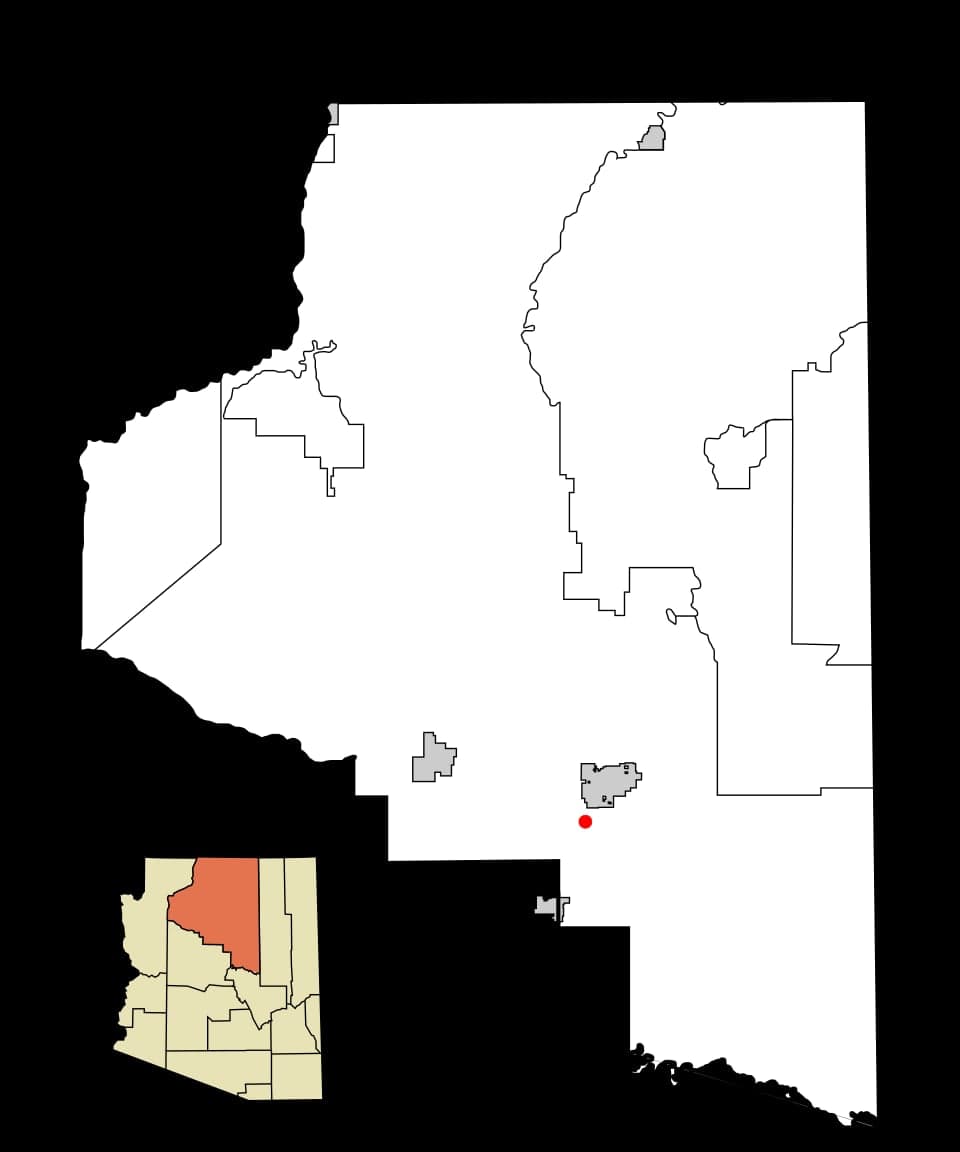
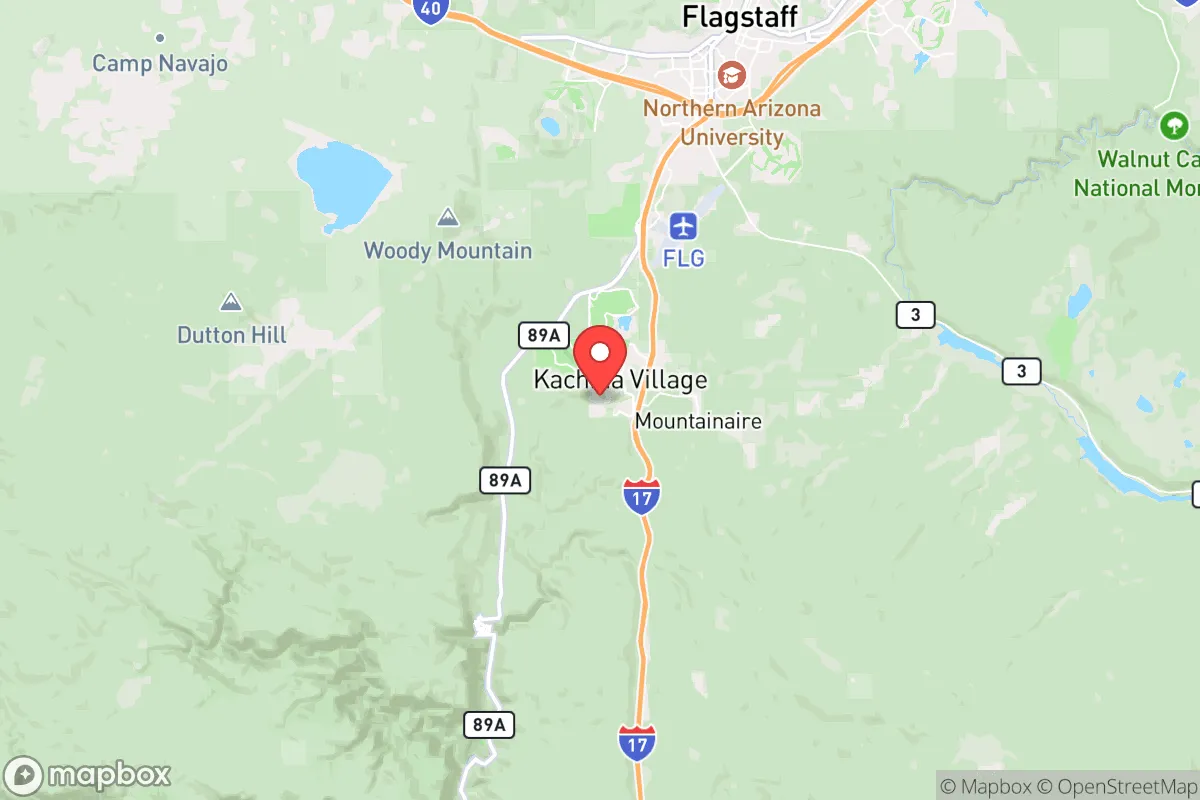
Photo: Wikipedia
Demographics of Kachina Village, AZ
Affluence Level in Kachina Village, AZ
A middle-class area roughly in line with national averages across income, home values, education, and employment.
People of Kachina Village, AZ
Kachina Village, Arizona, is a small, tightly-knit community of 3,212 residents, characterized by a predominantly White population (85.3%) and a notably high educational attainment, with over half of adults holding a college degree. The village is a quiet, forested enclave just south of Flagstaff, attracting residents who value outdoor recreation, privacy, and a slower pace of life. Its population is overwhelmingly native-born, with only 0.7% foreign-born, and the community is marked by a distinct absence of racial diversity, with no Black or Indian subcontinent residents reported. The village’s identity is rooted in its natural surroundings and its role as a bedroom community for Flagstaff workers and remote professionals.
How the city was settled and grew
Kachina Village was not a product of 19th-century settlement or land grants; it is a distinctly modern community, platted and developed in the late 20th century. The area was originally part of the Coconino National Forest, and the first residential lots were sold in the 1970s, marketed as affordable forest retreats for Flagstaff employees and second-home buyers from Phoenix. The earliest wave of residents were largely White, middle-class families and retirees drawn by the promise of a quiet, wooded lifestyle at a lower price point than Flagstaff proper. The original development, now known as the Kachina Village Core, consists of modest single-family homes on large, pine-shaded lots. A second wave in the 1980s and 1990s saw the expansion of the Ponderosa Pines subdivision, which attracted a slightly younger demographic of families and outdoor enthusiasts. No historic ethnic enclaves formed, as the village was built from scratch as a predominantly White, owner-occupied community.
Modern era (post-1965)
The modern era for Kachina Village has been defined by slow, steady growth and demographic stability rather than dramatic shifts. The post-1965 immigration reforms that reshaped many American cities had virtually no impact here; the village’s foreign-born population remains negligible at 0.7%. Instead, domestic in-migration has been the sole driver of change. The 2000s brought a third wave of residents, many of whom were remote workers and telecommuters from California and the Southwest, drawn by the area’s climate and proximity to Flagstaff’s amenities. These newcomers settled primarily in the Mountainaire Estates area, a slightly newer section with larger homes and more land. The village’s East/Southeast Asian population of 4.7% is a small but notable presence, likely composed of professionals working at Northern Arizona University or Flagstaff Medical Center, and they are dispersed throughout the community rather than concentrated in any single neighborhood. The Hispanic population, at 3.9%, is similarly scattered, with no distinct barrio or ethnic district. The village remains overwhelmingly White, and its character as a quiet, forested retreat has been preserved by slow growth and strict zoning that limits commercial development.
The future
The population of Kachina Village is likely to remain stable or grow only modestly over the next 10-20 years, constrained by limited land availability and the high cost of building in a forested, fire-prone environment. The community is not becoming more diverse; the White share is expected to remain dominant, with the small East/Southeast Asian and Hispanic populations growing only incrementally through natural increase and occasional in-migration. New residents will continue to be drawn from the same domestic pools: Flagstaff workers, remote professionals, and retirees seeking a rural lifestyle. Future development will likely be infill within existing subdivisions like Kachina Village Core and Ponderosa Pines, rather than large new neighborhoods, as the village is hemmed in by national forest land. The cultural identity of the area will remain centered on outdoor recreation, privacy, and a politically moderate-to-conservative leaning, with little pressure from urbanization or demographic change.
For someone moving in now, Kachina Village offers a stable, predictable, and homogeneous community where the population is not expected to change dramatically. It is a place for those who prioritize quiet, space, and nature over diversity and urban energy. The village’s future is one of gentle continuity, not transformation, making it a reliable choice for families and individuals seeking a long-term home in a forested setting near Flagstaff.

* Values derived from national, state, county, city and local statistics and may differ in a specific area. Last updated: 2026-10-24T16:48:27.000Z
Narrative content on this page is AI-generated and may contain mistakes. Verify any details that matter before acting on them.
ReloMaps may earn a commission from affiliate links at no extra cost to you.

