 Popular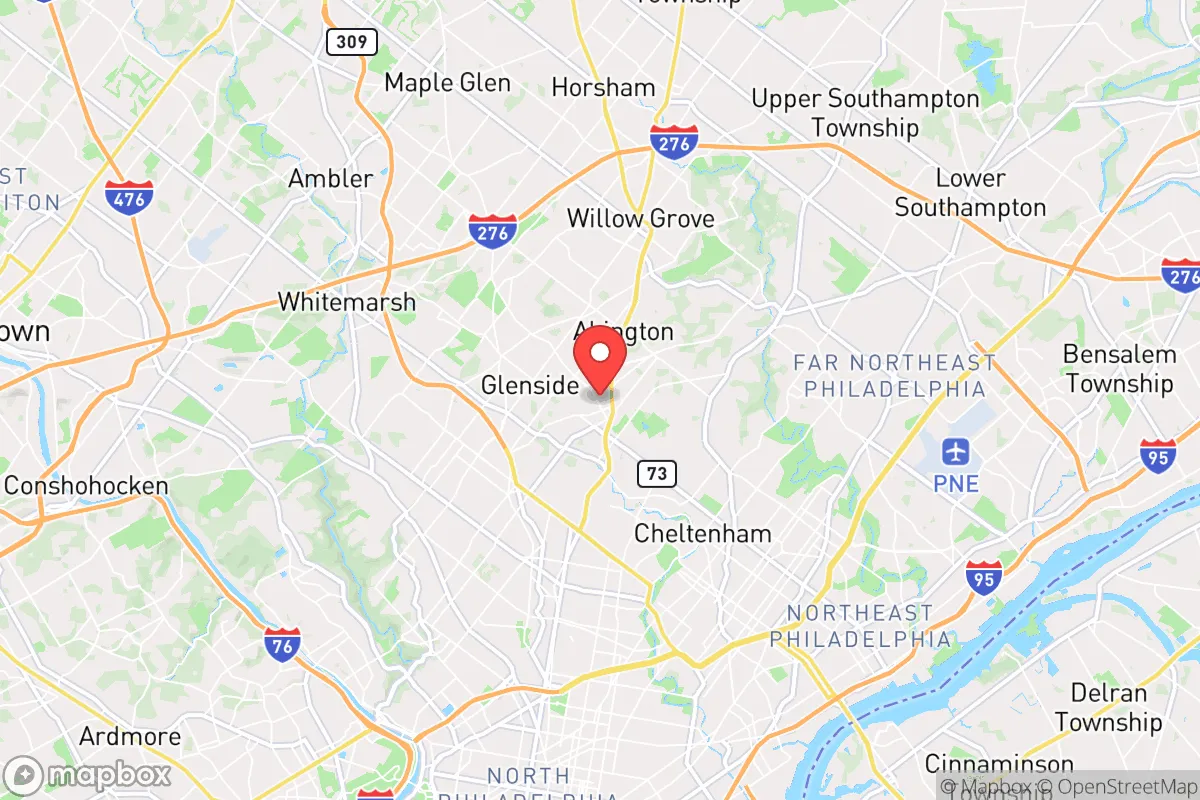
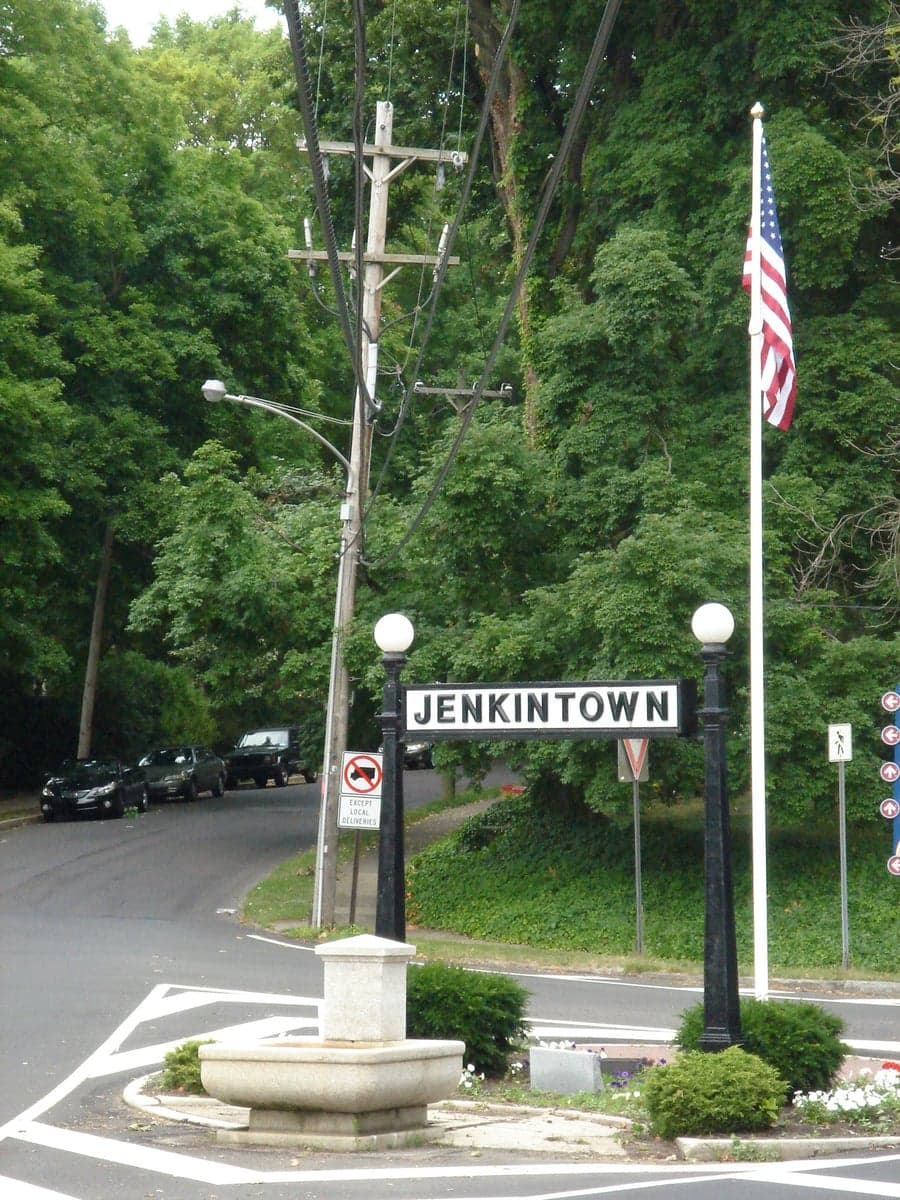
Photo: Wikipedia
Political ClimatePolitical Climate in Jenkintown, PA
District shown is the primary district for this city’s centroid. Cities may span multiple districts.
Local Political AnalysisPolitical Analysis of Jenkintown, PA
Jenkintown has long been a reliably blue dot in a swing state, and that hasn’t changed. With a Cook Partisan Voting Index (PVI) of D+8, the borough votes about eight points more Democratic than the national average. That’s a solidly liberal lean, and it’s been consistent for at least the last two presidential cycles—Biden took the borough by a wide margin in 2020, and Hillary Clinton did the same in 2016. The surrounding state of Pennsylvania, by contrast, sits at a Cook PVI of EVEN, meaning it’s a pure toss-up nationally. So Jenkintown isn’t just a blue dot; it’s a deep blue one, surrounded by a sea of purple and red.
How it compares
Drive ten minutes west to Abington or Elkins Park, and you’ll see a similar Democratic tilt—those towns are also reliably blue, though not quite as deep as Jenkintown. But head fifteen minutes north to Horsham or Upper Moreland, and the politics shift noticeably. Those areas lean more conservative, often voting Republican in local and state races. The contrast is starkest in the state legislature: Jenkintown sits in Pennsylvania’s 154th House District, which has been held by a Democrat for years, while neighboring districts to the north and west are represented by Republicans. This split mirrors the broader Pennsylvania divide—urban and inner-ring suburbs vote blue, while exurbs and rural areas vote red. Jenkintown’s D+8 PVI puts it in the same league as Philadelphia’s more affluent inner suburbs, like Swarthmore or Media, rather than the swingier towns further out.
What this means for residents
For liberal residents, the political climate is comfortable. Local elections are rarely competitive for Democrats—the borough council and school board are reliably progressive, and you’ll see plenty of yard signs for Democratic candidates in every cycle. Policy-wise, this means Jenkintown tends to adopt progressive stances on issues like affordable housing, environmental initiatives, and public transit funding. For conservative residents, it can feel like swimming upstream. You’re unlikely to find many like-minded neighbors in local politics, and your vote in state or federal races will be a minority one. That said, the borough’s small size means local government is still accessible—conservatives can and do serve on boards and commissions, and their voices are heard, even if they don’t often win. The real tension isn’t within Jenkintown itself; it’s between the borough and the surrounding county or state. When statewide ballot measures or county-level policies come up, Jenkintown’s liberal lean can put it at odds with the broader region.
Culturally, Jenkintown’s political identity shows up in everyday life. The local library hosts author talks on social justice, the farmers market is a hub for community organizing, and the school district emphasizes diversity and inclusion. You won’t see the same kind of culture-war battles here that you might in more evenly split towns. The borough’s small size—just over 4,000 people—means politics stays personal. People know their council members by name, and local issues like zoning or school funding get more attention than national talking points. Looking ahead, Jenkintown’s political trajectory seems stable. The borough’s demographics—educated, affluent, and increasingly diverse—suggest it will stay blue for the foreseeable future. But as Pennsylvania itself remains a battleground, Jenkintown will continue to be a reliable Democratic stronghold in a state that can’t decide which way to lean.

State Political ClimatePolitical Climate in Pennsylvania
State Political AnalysisPolitical Environment in the State
Pennsylvania is the ultimate swing state, carrying an EVEN Cook PVI that perfectly captures its razor-thin margins in recent presidential elections. Over the past 20 years, the state has shifted from a reliably blue-leaning battleground (voting for the Democrat in every election from 1992 to 2012) to a true toss-up where both parties pour tens of millions of dollars. The dominant coalitions are a shrinking but still potent union-heavy, urban Democratic base in Philadelphia and Pittsburgh, squared off against a growing, energized conservative coalition in the sprawling exurbs and rural small towns. The trajectory is a slow, grinding realignment: the old industrial Democratic strongholds are bleeding population and loyalty, while the fast-growing southeastern exurbs and central Pennsylvania counties are hardening into Republican territory. For a conservative relocator, this means you’re moving into a state where your vote genuinely counts, but where the cultural and policy battles are fought block by block.
Urban vs. rural divide
The political map of Pennsylvania is a study in stark contrasts. Philadelphia and its collar counties (Montgomery, Delaware, Chester) are the engine of the Democratic vote, delivering margins of 70-80% in the city itself. Pittsburgh and its immediate suburbs (Allegheny County) are similarly blue, though with a more moderate, union-flavored tilt. The rural spine of the state — the vast stretch from the Poconos down through the Susquehanna Valley and across the northern tier to Erie — is deeply Republican. Counties like Tioga, Bradford, and Jefferson routinely vote 70%+ Republican. The real battlegrounds are the fast-growing exurbs: Lancaster County, once a Republican lock, has become a competitive swing area as Philadelphia commuters and Amish population growth collide. York County and Cumberland County (outside Harrisburg) are reliably red but with growing suburban pockets that trend more moderate. The most politically distinct suburb is Bucks County, a Philadelphia exurb that flipped from red to blue in the Trump era and now hosts some of the most competitive state legislative races in the country. For a conservative, the practical takeaway is that your vote carries weight in the exurbs and rural areas, but you’ll be living in a state where the cities dominate the legislature and the governor’s mansion.
Policy environment
Pennsylvania’s policy environment is a mixed bag that reflects its divided government. The state has a flat income tax rate of 3.07%, one of the lowest in the nation, and a sales tax of 6% (with no tax on clothing or groceries). Property taxes are high, averaging around 1.5% of home value, and are the primary funding mechanism for schools — a perennial source of tension. The regulatory posture is moderate: Pennsylvania is not Texas, but it’s not California either. The state has a robust oil and gas industry (Marcellus Shale), but with stricter environmental regulations than neighboring Ohio or West Virginia. Education policy is a flashpoint: the state has a patchwork of 500 school districts, with a growing school choice movement (the state’s tax-credit scholarship program, the Educational Improvement Tax Credit, is popular but capped). Healthcare is dominated by large systems like UPMC and Penn Medicine, and the state expanded Medicaid under the ACA. Election laws are a battleground: Pennsylvania has no-excuse mail-in voting (passed in 2019 with bipartisan support), but the law is under constant legal challenge, and voter ID requirements are minimal (first-time voters must show ID, but there’s no general ID law). For a conservative, the low income tax and energy-friendly posture are draws, but the high property taxes and lack of school choice expansion are pain points.
Recent policy direction
The last five years have seen Pennsylvania lurch left on several fronts, but with significant conservative wins. In 2022, Democrat Josh Shapiro won the governorship, and the state legislature remains split (Republican-controlled House, Democratic-controlled Senate). Key recent legislation includes Act 77 of 2019, which expanded mail-in voting and is now the subject of ongoing litigation over signature verification and drop box rules. On gun rights, Pennsylvania is a shall-issue state for concealed carry, and in 2022, the legislature passed a preemption law that blocks local municipalities from enacting their own gun ordinances — a major win for gun owners. However, in 2023, Shapiro signed an executive order requiring universal background checks on all firearm sales at gun shows and online, which is being challenged in court. On education, the state’s school funding system was declared unconstitutional in 2023, and the legislature is now wrestling with how to redistribute money without raising taxes. On abortion, the state remains a relative haven in the region: abortion is legal up to 24 weeks, and Shapiro has vowed to veto any restrictions. On parental rights, the state has not passed a “parental bill of rights” like Florida, but local school boards in conservative counties have adopted their own policies on library books and curriculum transparency. For a relocator, the key takeaway is that the state is in a constant tug-of-war: the governor’s office leans left, but the legislature’s Republican majority blocks the most progressive items, creating a stalemate that keeps the state moderate on most issues.
Civil unrest & political movements
Pennsylvania has seen its share of political flashpoints. The 2020 election aftermath was intense: Philadelphia and Pittsburgh saw large protests, and the state became a national focus for election integrity debates, with the Trump campaign filing numerous lawsuits over mail-in ballot procedures. In 2021, the state’s Republican-controlled Senate launched a “forensic investigation” of the 2020 election, led by Senator Cris Dush, which ultimately found no evidence of widespread fraud but fueled ongoing distrust. Immigration politics are less heated than in border states, but the issue flares up: Philadelphia is a sanctuary city, and in 2023, a bus of migrants sent from Texas to Philadelphia sparked a brief political firestorm. On the right, the Pennsylvania Freedom Caucus has grown in influence, pushing for school choice expansion, election integrity reforms, and a constitutional convention to limit state spending. On the left, the Working Families Party and progressive activists have focused on criminal justice reform and rent control in Philadelphia. The most visible flashpoint for a new resident is likely to be local school board meetings, which have become battlegrounds over curriculum, library books, and transgender policies — especially in fast-growing exurbs like Central Bucks School District and Pennridge School District. For a conservative, you’ll find a robust, organized conservative movement in the exurbs and rural areas, but you’ll also encounter a well-funded progressive infrastructure in the cities.
Projection
Over the next 5-10 years, Pennsylvania is likely to remain a swing state, but the demographic trends favor a slow rightward drift. The population is aging and the birth rate is low, but in-migration from New York and New Jersey is bringing more moderate-to-conservative voters to the southeastern exurbs. The fastest-growing counties are Monroe, Pike, and Wayne in the Poconos (driven by New York transplants) and Lancaster, York, and Cumberland in the south-central region. These areas are trending redder, while Philadelphia and Pittsburgh continue to lose population. The state’s electoral college votes (19) will shrink to 17 after the 2030 census, reflecting this slow decline. The key wildcard is the state legislature: the current Republican majority in the House is razor-thin, and the 2024 redistricting cycle could shift the balance. If the GOP can hold the legislature and win the governorship in 2026, expect a wave of conservative legislation on school choice, election integrity, and tax reform. If Democrats hold the governorship and flip the legislature, expect expanded voting access, higher taxes on the wealthy, and stronger environmental regulations. For a conservative moving in now, the realistic expectation is that the state will remain a battleground for at least another decade, with policy outcomes swinging based on which party controls the governor’s mansion.
For a new resident, the bottom line is that Pennsylvania offers a genuine political battleground where your vote and your voice matter. The low income tax and strong gun rights are real draws, but you’ll need to navigate high property taxes, a divided government, and a cultural landscape that varies dramatically from Philadelphia to the Poconos. If you’re moving to the exurbs of Lancaster or York, you’ll find a conservative-friendly environment with good schools and a strong sense of community. If you’re moving to the city of Philadelphia, you’ll be in a deep-blue environment with all the policy implications that entails. The key is to choose your county wisely — in Pennsylvania, local government is where the rubber meets the road, and the political climate of your specific township or school district will shape your daily life far more than the state’s overall lean.
* Values derived from national, state, county, city and local statistics and may differ in a specific area. Last updated: 2026-09-10T20:01:24.000Z
Narrative content on this page is AI-generated and may contain mistakes. Verify any details that matter before acting on them.
ReloMaps may earn a commission from affiliate links at no extra cost to you.

