 Popular
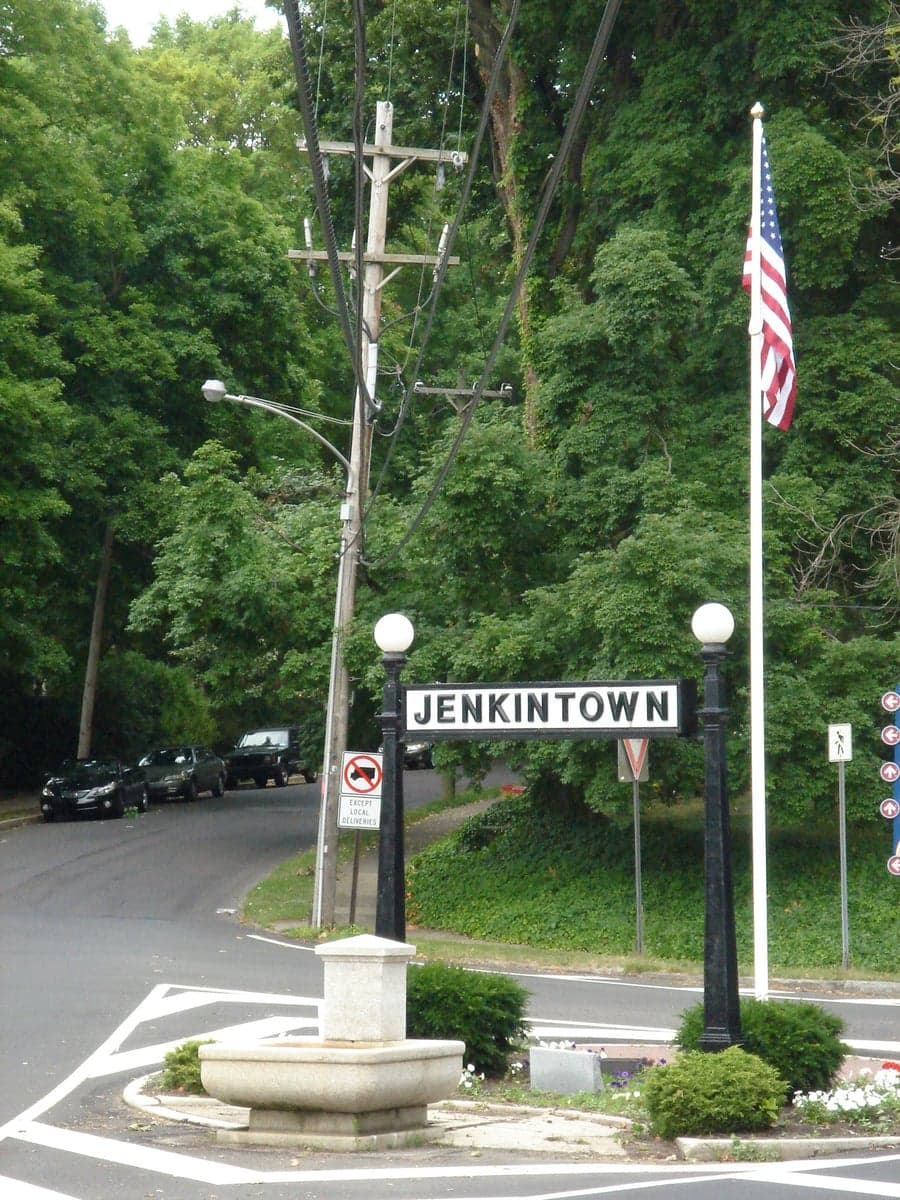
Photo: Wikipedia
Demographics of Jenkintown, PA
Affluence Level in Jenkintown, PA
A middle-class area roughly in line with national averages across income, home values, education, and employment.
People of Jenkintown, PA
Jenkintown, Pennsylvania, is a small, densely settled borough of 4,708 residents that functions as a tight-knit, walkable community within the Philadelphia suburbs. Its population is notably well-educated, with 71.8% holding a college degree, and predominantly White (76.5%), though it has seen modest growth in Black (10.1%) and Hispanic (7.8%) communities over recent decades. The borough’s character is defined by its historic rowhomes and single-family houses, a strong sense of local identity, and a population that values proximity to Center City Philadelphia while maintaining a small-town feel. For those considering a move, Jenkintown offers a stable, family-oriented environment with a demographic profile that is slowly diversifying but remains anchored by its historic core.
How the city was settled and grew
Jenkintown’s population history begins with its founding as a Quaker farming settlement in the late 17th century, part of William Penn’s land grant. The original European settlers were primarily English and Welsh Quakers who established homesteads along the Old York Road, a major colonial thoroughfare. The arrival of the North Pennsylvania Railroad in the 1850s transformed the area, drawing a wave of Irish and German immigrants who built the tracks and later settled in the working-class Rydal and Noble neighborhoods, just east of the borough’s core. By the early 20th century, Jenkintown had become a commuter suburb for Philadelphia’s business and professional class, with large Victorian homes constructed in the Jenkintown Manor district. A second wave of European immigration, particularly Italian and Eastern European Jewish families, arrived between 1900 and 1930, settling in the West Avenue and Greenwood Avenue areas, where they established small shops and synagogues. The borough’s population peaked at roughly 5,600 in the 1950s, reflecting the post-war suburban boom that filled its rowhomes and twin houses with middle-class families.
Modern era (post-1965)
After the 1965 Hart-Cellar Act, Jenkintown’s population began a gradual shift. The borough did not experience the large-scale immigration seen in nearby Philadelphia neighborhoods, but it did see modest domestic in-migration. The Black population grew from a negligible share in 1970 to 10.1% today, with many families settling in the Summit Avenue and Highland Avenue corridors, areas that offered more affordable housing stock compared to the pricier Manor district. Hispanic residents, now 7.8% of the population, began arriving in the 1990s and 2000s, primarily concentrated in the Washington Lane area near the borough’s southern border. East and Southeast Asian residents (1.5%) and Indian-subcontinent residents (0.7%) are small but present, often drawn by the borough’s top-rated public schools and proximity to pharmaceutical and tech employers in Montgomery County. The foreign-born share remains very low at 1.2%, indicating that most demographic change has come from domestic migration rather than international immigration. The Old York Road commercial corridor has seen a gradual turnover of businesses reflecting these shifts, with Hispanic-owned restaurants and Black-owned salons joining longstanding Italian delis and Jewish bakeries.
The future
Jenkintown’s population is projected to remain stable or decline slightly over the next decade, as the borough is largely built out with limited new housing development. The population is becoming slowly more diverse, driven by younger families of color moving in from Philadelphia and other suburbs, while the older White population ages in place. The Noble and Rydal neighborhoods are seeing modest infill development of townhomes and apartments, which may attract more Hispanic and Black residents. The borough’s cultural identity is evolving from a historically Jewish and Italian enclave to a more multiethnic community, though the pace of change is slow. For someone moving in now, Jenkintown offers a stable, family-oriented environment with excellent schools and a walkable downtown, but those seeking a highly diverse or rapidly changing community may find the borough’s gradual evolution too slow.
Jenkintown is becoming a quietly diversifying, well-educated suburb that retains its historic character while slowly adapting to broader demographic trends. For a family or individual seeking a safe, tight-knit community with strong schools and easy access to Philadelphia, the borough offers a stable and welcoming environment, though its population is unlikely to see dramatic change in the near future.

* Values derived from national, state, county, city and local statistics and may differ in a specific area. Last updated: 2026-09-10T20:01:24.000Z
Narrative content on this page is AI-generated and may contain mistakes. Verify any details that matter before acting on them.
ReloMaps may earn a commission from affiliate links at no extra cost to you.

