 Popular
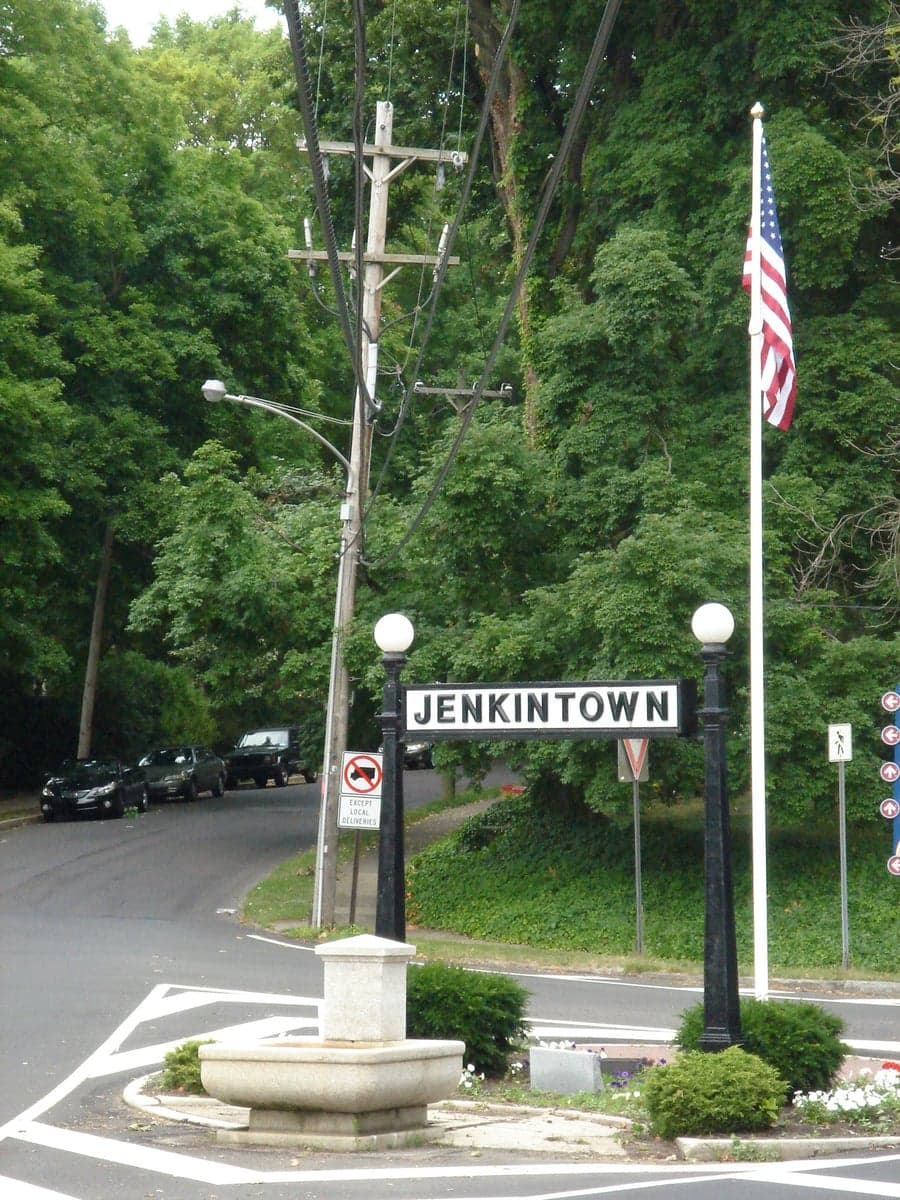
Photo: Wikipedia
Personal Sovereignty in Jenkintown, PA
Strong independent fundamentals that actively favor personal liberty and low regulation.
What does Personal Sovereignty tell us?
Personal Sovereignty measures your capacity for self-reliance and independence with minimal government friction. Higher scores mean fewer barriers between you and the way you want to live... but it assumes you have the space you need and good neighbors.
What does this tell us?
Personal Sovereignty measures your capacity for self-reliance and independence with minimal government friction. Higher scores mean fewer barriers between you and the way you want to live... but it assumes you have the space you need and good neighbors.
State Policy
Energy independence: Net exporter (150% of energy produced in-state)
Personal Liberty
Homesteading

Personal Liberty Analysis
Jenkintown, Pennsylvania, offers a nuanced personal sovereignty environment that balances the autonomy of a small, walkable borough with the regulatory realities of a densely populated suburban enclave within a mid-Atlantic blue state. For the freedom-minded individual or family, the key trade-off is clear: you gain a tight-knit, locally responsive community with relatively low property crime and a strong sense of place, but you operate within Pennsylvania's state-level tax structure and regulatory framework, which leans moderately interventionist compared to Sun Belt or rural Western states. The borough's small size—roughly one square mile with about 4,500 residents—means local government is accessible, but zoning and land-use rules are typical of an established inner-ring suburb, limiting certain forms of self-reliance.
Tax burden and regulatory posture in a suburban Pennsylvania borough
Pennsylvania's overall tax burden ranks near the middle nationally, but Jenkintown residents face a layered local reality. The state levies a flat 3.07% personal income tax—no progressive brackets—and a 6% sales tax (8% in Philadelphia, but Jenkintown is in Montgomery County, which adds no county sales tax). Property taxes are the primary local burden: the combined millage rate from Jenkintown Borough, Abington School District (which serves the borough), and Montgomery County typically lands around 30-35 mills, translating to roughly $4,500-$6,000 annually on a median home valued near $300,000. This is moderate for the Philadelphia suburbs but high by national standards. The regulatory posture is best described as moderately prescriptive: the borough enforces a detailed zoning code, requires permits for most structural changes, and follows Pennsylvania's Uniform Construction Code. There is no local income tax in Jenkintown itself, but the school district's budget drives most of the property tax burden. For a conservative-leaning reader, the key takeaway is that while Pennsylvania lacks a state-level property tax cap like California's Proposition 13, the borough's small government footprint keeps local bureaucracy relatively lean—you can get a building permit in days, not months, but you cannot bypass zoning for a backyard workshop or accessory dwelling unit without explicit approval.
Self-defense and gun law specifics in Pennsylvania
Pennsylvania is a "shall-issue" state for concealed carry permits, meaning Jenkintown residents face no discretionary denial from local law enforcement. The Montgomery County Sheriff's Office processes permits, typically within 45 days, with a $20 fee for a five-year license. Open carry is legal without a permit statewide, but Jenkintown's borough code does not preempt state law—meaning local ordinances cannot further restrict firearms beyond state statutes. This is a critical protection: unlike Philadelphia, which imposes its own additional restrictions (e.g., requiring a license to carry a firearm openly), Jenkintown follows the state's preemption statute, which prohibits municipalities from enacting their own gun control laws. Castle Doctrine is fully in effect: Pennsylvania's self-defense law presumes a reasonable belief of deadly threat when an intruder unlawfully enters an occupied dwelling, vehicle, or place of business. There is no duty to retreat in one's home (the "stand your ground" principle applies inside the dwelling). However, outside the home, Pennsylvania retains a duty to retreat if safely possible before using deadly force—a distinction from pure stand-your-ground states. Magazine capacity is not restricted by state law, and there is no state-level assault weapons ban. For practical purposes, a Jenkintown resident can own, carry, and use firearms for self-defense with fewer legal hurdles than in neighboring New Jersey or New York, but must still navigate federal background checks and the state's uniform firearms application process.
Self-reliance and homesteading viability: lot sizes, zoning, and off-grid feasibility
Jenkintown's suburban density makes traditional homesteading—raising livestock, extensive gardening, or off-grid living—largely impractical. The borough's minimum lot size is typically 5,000 to 7,500 square feet for single-family homes, with most lots closer to the lower end. Zoning is predominantly R-2 (residential, two-family) and R-3 (residential, multi-family), with strict prohibitions on keeping chickens, goats, or other livestock in residential districts. Backyard chickens are not permitted under current borough code, and any agricultural activity beyond ornamental gardening requires a special exception. Rainwater collection is not explicitly prohibited but must comply with stormwater management ordinances that prioritize drainage over cistern storage. Solar panels are allowed but must meet historic district guidelines if the property lies within Jenkintown's designated historic overlay—which covers much of the borough's older housing stock. Off-grid energy independence is effectively impossible: the borough requires connection to public water and sewer, and net metering with PECO (the electric utility) is allowed but subject to interconnection agreements. For a family seeking self-reliance through food production, energy independence, or reduced municipal dependence, Jenkintown is a poor fit. The borough's strength lies in community resilience—walkability, local businesses, and a strong civic fabric—not in rural-style autonomy. Readers serious about homesteading should look to Montgomery County's rural northern townships (e.g., Marlborough or Upper Frederick) where 2+ acre lots and agricultural zoning exist.
Personal liberties: parental rights, medical autonomy, speech, and property
Pennsylvania provides a generally favorable environment for parental rights. The state does not have a universal vaccine mandate for schoolchildren—only the standard CDC-recommended schedule is required, with medical and religious exemptions available. During the COVID-19 pandemic, Jenkintown's school district (Abington) followed state guidance on masking but did not impose local mandates beyond state orders. Parental notification for medical procedures is governed by state law: minors under 18 generally need parental consent for medical treatment, with exceptions for emergency care and certain reproductive health services. On medical autonomy, Pennsylvania is a moderate state: it expanded Medicaid under the ACA but does not have a state-level right-to-try law for terminally ill patients (though federal law applies). Vaccine mandates for healthcare workers exist at the state level for certain facilities, but individual practitioners in Jenkintown can choose their own policies. Free speech is protected under the Pennsylvania Constitution's Article I, Section 7, which is interpreted broadly by state courts—Jenkintown has no local ordinances restricting signage, leafleting, or public assembly beyond standard time-place-manner regulations. Property rights are robust: Pennsylvania's Eminent Domain Code requires just compensation and a public purpose, and the borough has not engaged in aggressive condemnation. However, the historic district overlay imposes design review for exterior changes to properties built before 1940, which covers a significant portion of the housing stock. This means you cannot paint your Victorian home a non-historic color or replace original windows without approval from the Jenkintown Historic Architectural Review Board—a tangible limit on property autonomy that freedom-minded buyers should weigh carefully.
Overall, Jenkintown offers a moderate personal sovereignty profile that sits between the heavy-handed regulation of Philadelphia proper and the near-total autonomy of rural Pennsylvania townships. The borough's small size and engaged local government mean that residents can influence policy through direct participation—town council meetings are accessible, and zoning variances are decided locally. The trade-offs are real: you cannot keep chickens, you must follow historic district rules, and your property tax bill will be significant. But for the conservative-leaning reader who values community, walkability, and a strong school system over rural independence, Jenkintown provides a workable balance where state-level protections on guns, speech, and parental rights are not undermined by aggressive local overreach. Compared to similar suburbs in New Jersey or Maryland, Jenkintown's regulatory environment is notably lighter—a fact that matters for anyone prioritizing personal sovereignty within commuting distance of Philadelphia.

* Values derived from national, state, county, city and local statistics and may differ in a specific area. Last updated: 2026-09-10T20:01:24.000Z
Narrative content on this page is AI-generated and may contain mistakes. Verify any details that matter before acting on them.
ReloMaps may earn a commission from affiliate links at no extra cost to you.

