 Popular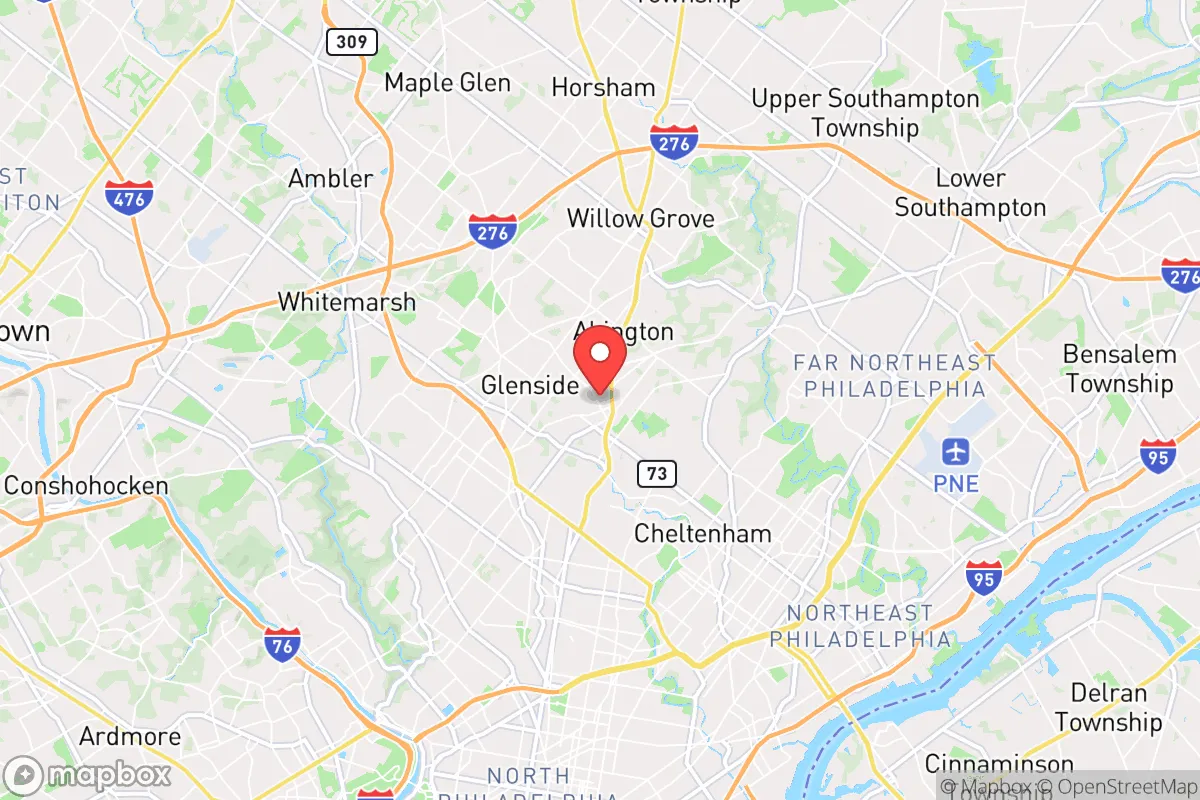
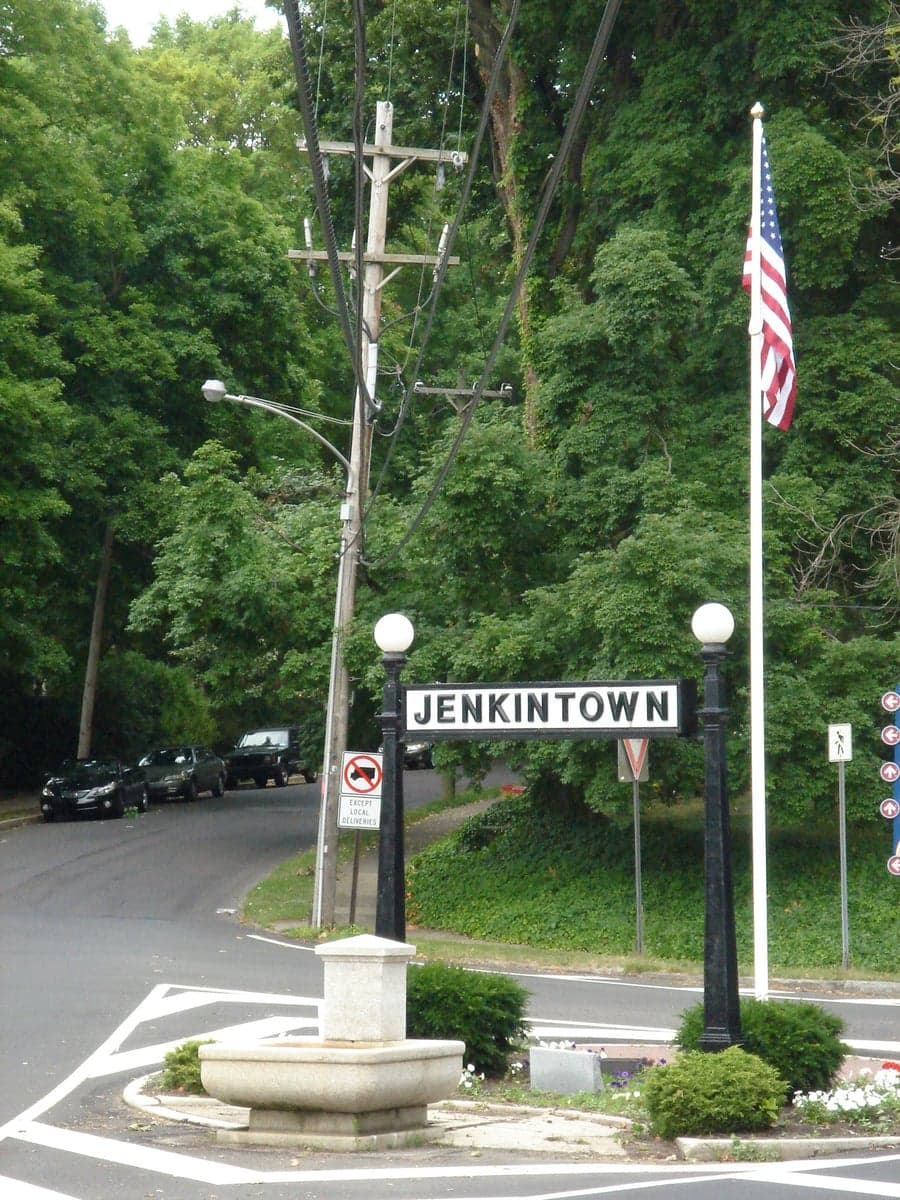
Photo: Wikipedia
Strategic Assessment of Jenkintown, PA
Multiple tactical vulnerabilities. Population density, target proximity, or disaster risk are likely compounding. A retreat property and exit planning is required.
What does the Strategic Assessment tell us?
Our Strategic Assessment grades tactical survivability of an area. Major population centers, military targets, fallout zones, natural disasters, and border exposure all drive risk — lower exposure means a more defensible position in a crisis.
This is heavily inspired by Joel Skousen's Strategic Relocation book. Highly recommended you checkout the book ($)What does this tell us?
Our Strategic Assessment grades tactical survivability of an area. Major population centers, military targets, fallout zones, natural disasters, and border exposure all drive risk — lower exposure means a more defensible position in a crisis.
This is heavily inspired by Joel Skousen's Strategic Relocation book. Highly recommended you checkout the book ($)Strategic Pillars

Key Distances
Regional Safe Places
Below is our recommended "safe zones" in Pennsylvania and the surrounding area based on our strategic heuristics. For most people, it's unrealistic to live in a “safe zone” full-time due to work, family or other personal reasons. They tend to be more rural. However, many of these areas are perfect for second homes and retreat properties that double as a vacation home or even a short-term rental.
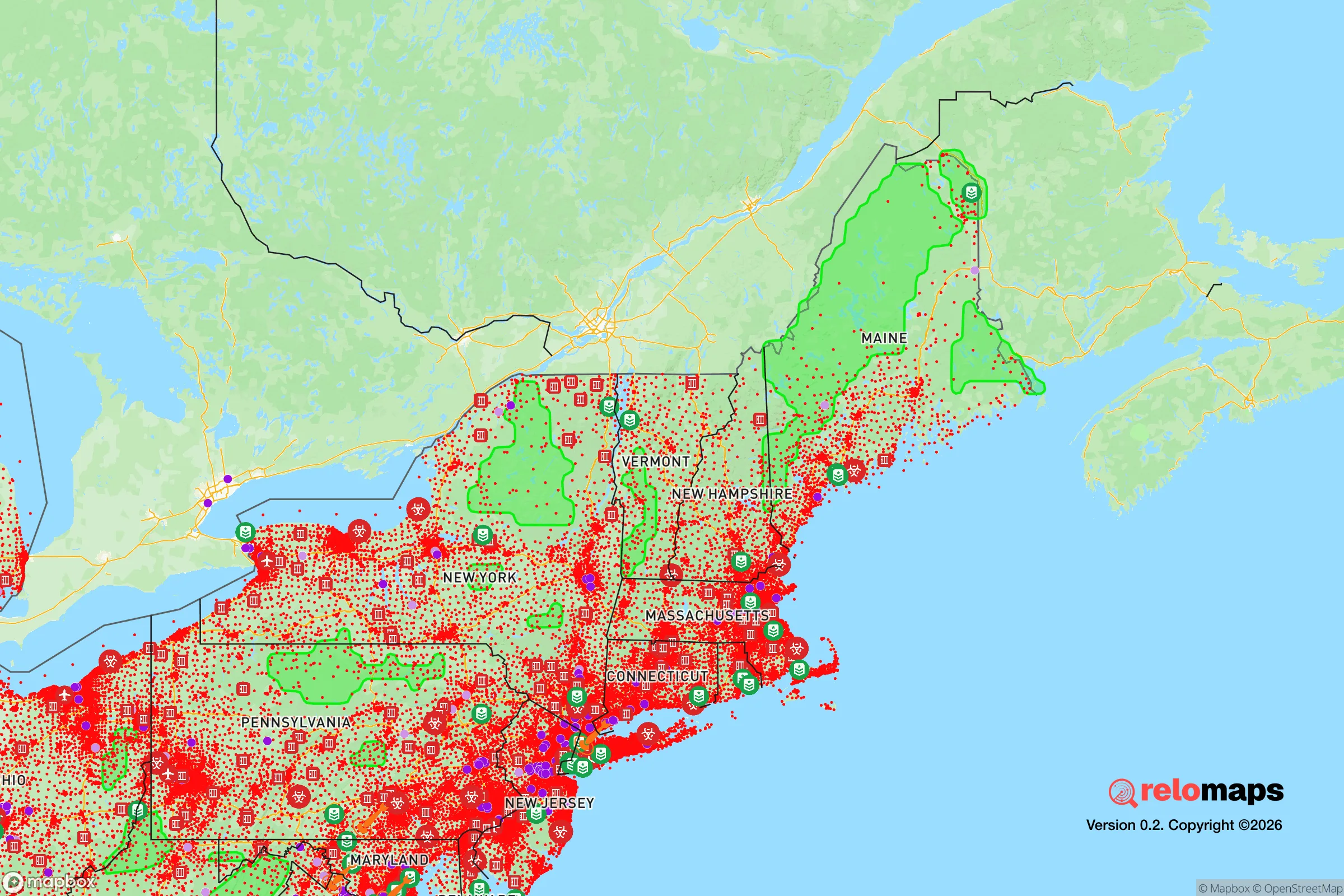
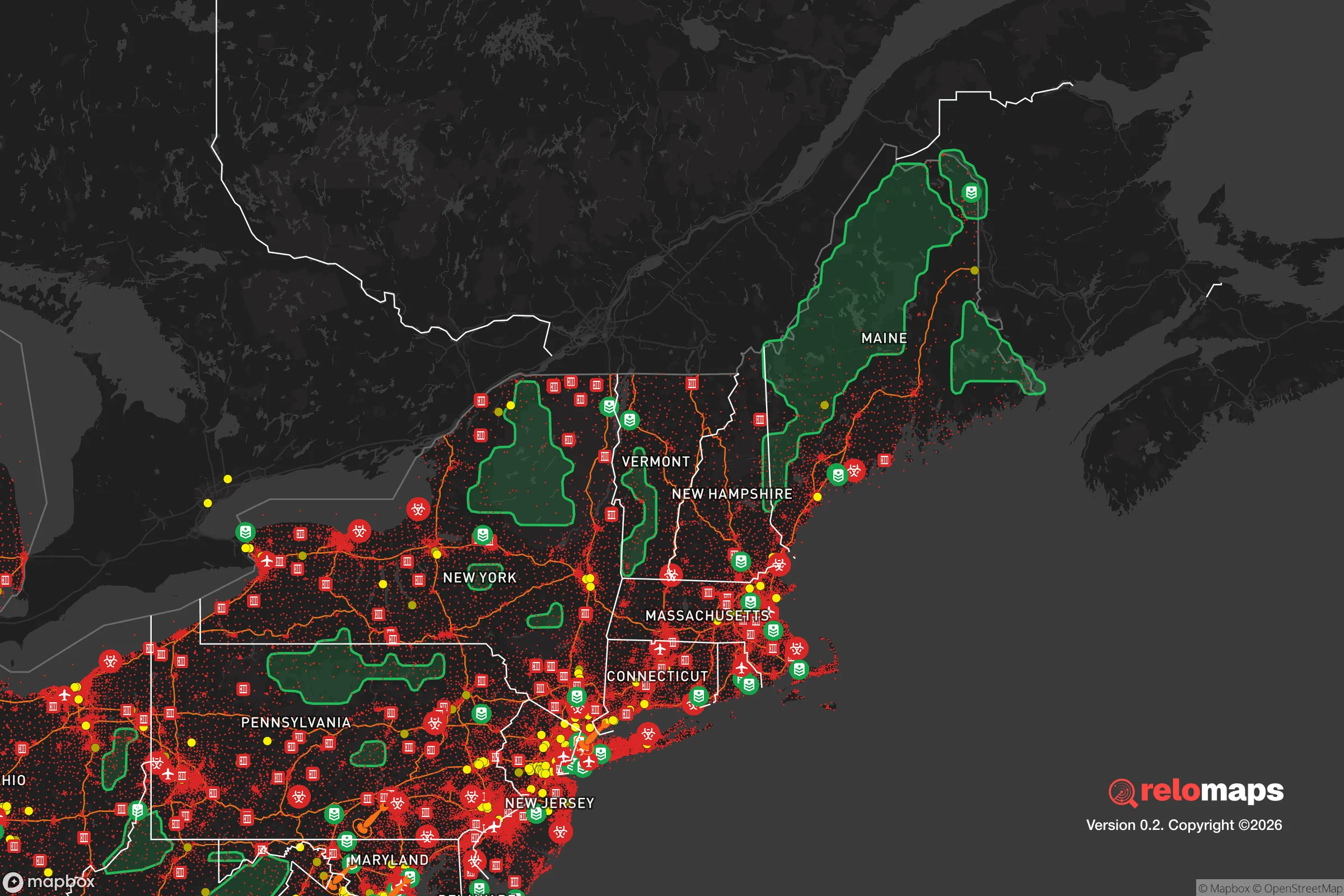


Important Note: For informational purposes only. This does not mean nothing bad ever happens in the green zones. Please use common sense. This is based on public data and modeled with AI. We tried to take a conservative approach but mistakes happen. We update this regularly as new information becomes available.
Solar Generator Recommendations
Backup power matters more here than in safer locations. We've picked three solar generators across budgets and capacity tiers — start with the budget unit if you only need a few essentials, or step up if you want to run a fridge and HVAC for days at a time.

Jackery Portable Power Station Explorer 300
Budget OptionPower on the Go: Weighing only 11 lbs, it's convenient to set up and store with book-sized foldable solar panels

BLUETTI Portable Power Station AC180
Designed for both indoor and outdoor scenarios, AC180 is highly capable as it has a robost capacity and continuous output power.

EF ECOFLOW DELTA Pro Ultra Power Station
Upgraded PickEcoFlow DELTA Pro Ultra is a whole-home energy system designed to grow with your family. Integrated with the Smart Home Panel 2, it scales to meet your evolving energy needs — keeping your home powered, intelligent, and secure through every stage of life.
We earn a commission, at no additional cost to you.
Strategic Assessment Analysis
Jenkintown, Pennsylvania, presents a mixed strategic picture for the relocation-minded reader focused on resilience and self-sufficiency. Its primary advantage is its location within a dense suburban network that offers redundancy in resources and services, but this same proximity to major metropolitan centers and critical infrastructure introduces significant vulnerabilities. For a single individual or family weighing disaster readiness, Jenkintown offers convenience and community stability at the cost of exposure to the risks inherent in a highly interconnected, population-dense corridor.
Geographic position and natural advantages in the Delaware Valley
Jenkintown sits in southeastern Pennsylvania, roughly 12 miles north of Center City Philadelphia, placing it squarely within the Philadelphia-Camden-Wilmington metropolitan statistical area. The borough itself is small—just over 1.5 square miles—and is situated on a relatively flat plateau in the Piedmont region, which means it is not prone to the flooding that plagues areas closer to the Delaware and Schuylkill Rivers. The local geology is underlain by the Wissahickon Formation, a mix of schist and gneiss that provides stable ground for building and well-drilling, though most homes here rely on municipal water. The area's natural advantages are modest: it is far enough inland to avoid direct hurricane storm surge, and its elevation (around 200–300 feet above sea level) offers no significant topographic defensibility. The surrounding Montgomery County is heavily developed, with a patchwork of suburbs, woodlots, and preserved open spaces like the 1,800-acre Pennypack Preserve to the east, which could serve as a modest source of game and forage in a prolonged emergency. However, the borough's small footprint means that any local natural resource—be it a stream or a patch of woods—is quickly exhausted by a determined population. The climate is temperate, with hot, humid summers and cold winters, which imposes a baseline need for heating fuel and cooling energy that a self-sufficient household must plan for year-round.
Risks, exposures, and proximity to fallout-relevant landmarks
The most significant strategic liability for Jenkintown is its location within a dense web of potential man-made disaster targets. The borough lies roughly 15 miles from the Philadelphia International Airport and the Port of Philadelphia, both of which are high-value targets in a conflict scenario. More critically, it is within 20 miles of the Limerick Generating Station, a nuclear power plant in Pottstown, and about 30 miles from the Peach Bottom Atomic Power Station in York County. While the risk of a nuclear accident is statistically low, the consequences are catastrophic, and Jenkintown falls within the 10-mile emergency planning zone for Limerick, meaning that a major release would require evacuation or sheltering in place. For the reader concerned with fallout from a nuclear detonation, the borough's proximity to Philadelphia—a likely target—is a clear negative. Prevailing winds in the region are from the west-northwest, which would carry fallout from a Philadelphia strike directly over Jenkintown. The borough's dense suburban layout, with narrow streets and limited open space, offers little natural shielding from radiation; basements are common in older homes but are often unfinished and may not provide adequate protection without reinforcement. Beyond nuclear risks, the area is exposed to the cascading failures of a major metropolitan grid: a cyberattack on the regional power infrastructure, a pandemic, or a prolonged supply chain disruption would hit Jenkintown hard because it imports nearly all of its food, fuel, and manufactured goods. The borough's reliance on the SEPTA regional rail system (the Jenkintown-Wyncote station serves the West Trenton and Warminster lines) means that a disruption to rail service would strand many commuters and limit evacuation options for those without personal vehicles.
Practical resilience for a relocator: food, water, energy, and defensibility
For a relocator serious about self-sufficiency, Jenkintown presents a challenging environment. Food security is the weakest link. The borough has no working farms within its limits, and the nearest agricultural land is in the northern reaches of Montgomery County or Bucks County, 15–20 miles away. The local grocery stores—a Giant and a Fresh Market—are typical suburban supermarkets with just 3–5 days of shelf stock. A determined household could supplement with community garden plots (the Jenkintown Community Garden on West Avenue offers a limited number of plots), but the growing season is only about 180 days, and the clay-heavy soil requires significant amendment. Water is a moderate concern. The borough draws its municipal water from the Delaware River via the Philadelphia Water Department, a single-point-of-failure system that would be compromised by a major contamination event or power outage. A well is not a practical option for most properties due to the small lot sizes and existing infrastructure. Rainwater collection is legal in Pennsylvania but is limited by the borough's stormwater management ordinances; a 55-gallon drum system would provide only a few days of drinking water for a family of four. Energy resilience is achievable but requires upfront investment. The grid is reliable under normal conditions, but the area is prone to occasional winter storms that knock out power for 24–72 hours. Solar panels are viable—the region averages about 4.2 peak sun hours per day—but homeowners must contend with tree cover and historic district restrictions in parts of the borough. Natural gas is the primary heating fuel, and the local utility (PECO) has a robust infrastructure, but a prolonged grid outage would also disable gas pumps for backup generators. Defensibility is poor. Jenkintown is a classic streetcar suburb with a walkable downtown, meaning homes are close together and the street grid offers multiple ingress/egress points. There are no natural chokepoints, and the borough is surrounded on all sides by other densely developed suburbs (Abington, Cheltenham, and Elkins Park). In a civil unrest scenario, the borough would be difficult to secure, and its proximity to Philadelphia's northern neighborhoods (just 10 minutes by car) means that any urban disruption would spill over quickly. The local police department is small—around 20 officers—and would be overwhelmed in a widespread emergency.
The overall strategic picture for Jenkintown is one of calculated trade-offs. For the relocator who values community stability, access to medical facilities (Abington Hospital is three miles away), and a strong local government that maintains services well, the borough offers a baseline of day-to-day resilience that many rural areas lack. But for the reader whose primary concern is long-term self-sufficiency and insulation from catastrophic risks, Jenkintown's location in a dense, target-rich corridor is a fundamental weakness. The prudent approach for a family settling here would be to treat it as a "bug-in" location for short-term disruptions (up to two weeks) while maintaining a secondary retreat property in a lower-risk area, such as the Pennsylvania Wilds or the Finger Lakes region. Stockpiling at least 30 days of food and water, installing a solar generator with battery backup, and reinforcing a basement shelter would address the most immediate vulnerabilities. Jenkintown is not a survivalist's haven, but for the disciplined householder willing to invest in preparation, it can be a comfortable and resilient base—provided they understand the risks and plan accordingly.

* Values derived from national, state, county, city and local statistics and may differ in a specific area. Last updated: 2026-09-10T20:01:24.000Z
Narrative content on this page is AI-generated and may contain mistakes. Verify any details that matter before acting on them.
ReloMaps may earn a commission from affiliate links at no extra cost to you.

