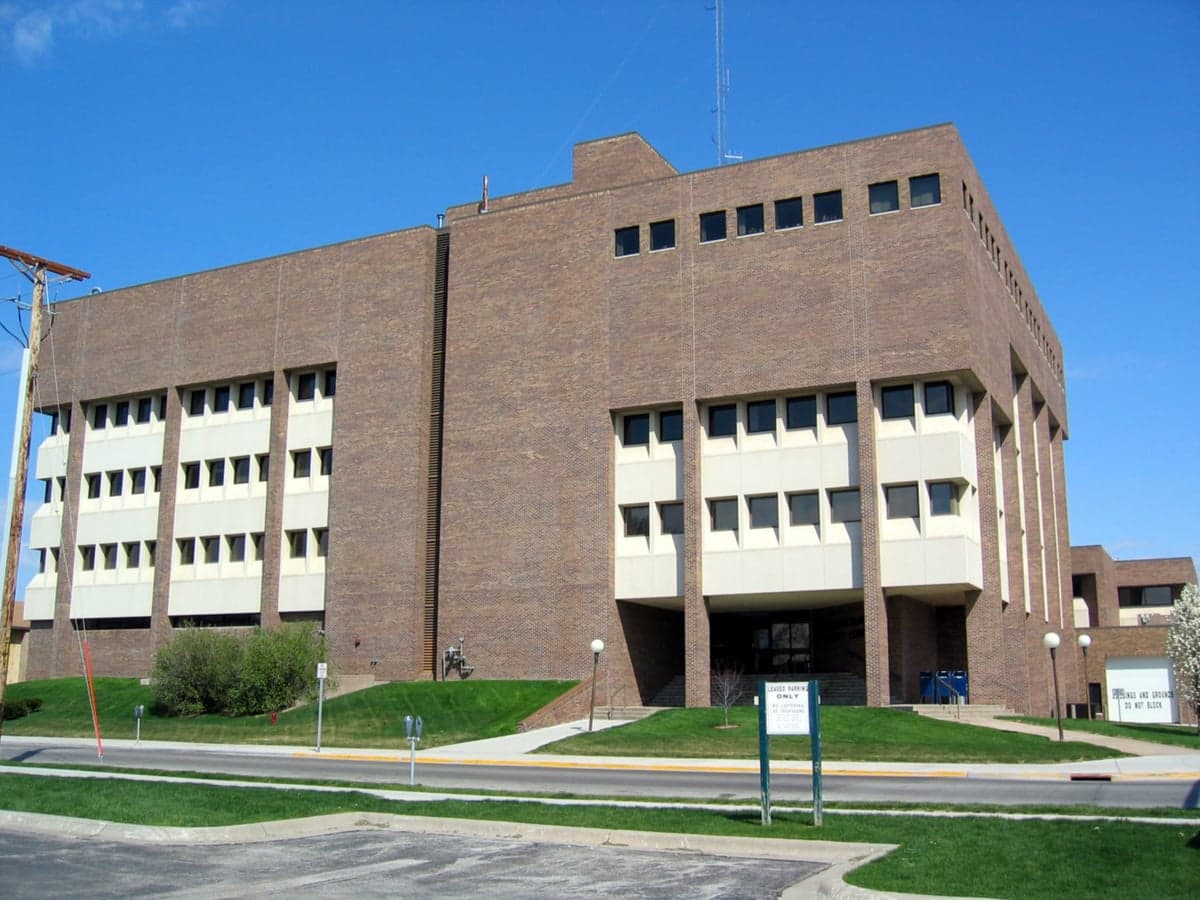
Photo: Wikipedia
Political ClimatePolitical Climate in Pottawattamie County
Showing county-level results — no local-only data available.
Lean and PVI are calculated from this county’s 2020 and 2024 presidential results, Cook-style.
Political rankings in Iowa
- Most Conservative Cities in Iowa
- Most Liberal Cities in Iowa
- Best Liberal-Leaning Towns in the Midwest
- Safest Liberal-Leaning Towns in the Midwest
- Safest Conservative-Leaning Towns in the Midwest
- Affordable Small Towns for Conservatives
- Most Affordable Liberal-Leaning Small Towns in the U.S.
- Safest Conservative-Leaning Cities in the U.S.
- Most Conservative Counties in Iowa
- Most Liberal Counties in Iowa
Local Political AnalysisPolitical Analysis of Pottawattamie County
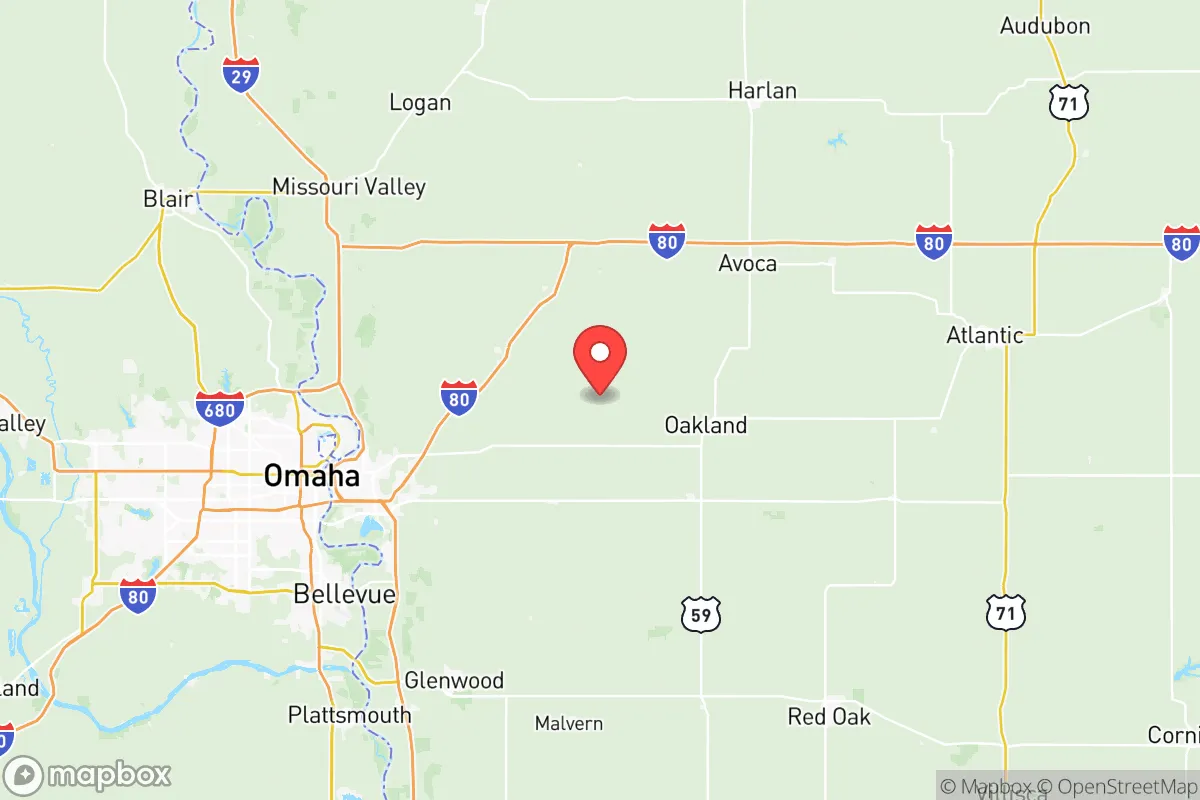
Pottawattamie County is a solidly Republican area, with a Cook PVI of R+15 that makes it significantly more conservative than Iowa as a whole, which sits at R+6. That 9-point gap isn't just a number—it reflects a real cultural and political divide between the county and the state's more competitive swing regions. The county has been trending redder over the last decade, driven largely by growth in exurban Omaha commuter towns and a shrinking Democratic base in the older industrial parts of Council Bluffs. If you're moving here, you're moving into a place where conservative candidates typically win by double digits, but the local flavor of that conservatism is more pragmatic and less ideological than what you'd find in, say, deep-red rural counties further north.
How it compares
The R+15 rating puts Pottawattamie County in a different political universe from Iowa's statewide R+6. In the 2024 presidential race, the county voted roughly 58% to 40% for the Republican candidate, while the statewide margin was closer to 53%-45%. That gap is driven by the county's western half, which is heavily influenced by Omaha's suburban spillover. Towns like Council Bluffs itself are more competitive—the city's core precincts around the historic downtown and near Iowa Western Community College often lean Democratic, with some precincts going 55-60% blue in recent cycles. But head east to Avoca or Walnut, and you'll find precincts that vote 70-75% Republican. The swing precincts are actually in the middle-ring suburbs like Treynor and Underwood, where growth is fastest and voters tend to be fiscally conservative but socially moderate—these areas can shift 5-10 points between cycles depending on the candidate. By contrast, Iowa's statewide R+6 is a product of balancing deep-blue college towns like Iowa City and Ames against rural red counties, so Pottawattamie's R+15 puts it firmly in the state's conservative column, but not at the extreme end—counties like Sioux or Plymouth are R+20 or higher.
What this means for residents
For conservative residents, the political climate is comfortable and affirming. Local offices—county supervisor, sheriff, school board—are reliably held by Republicans, and policy debates tend to center on tax rates, road funding, and development rather than culture-war flashpoints. For liberal residents, the reality is that you're in a clear minority, but not an isolated one. Council Bluffs provides a blue-leaning urban core with active Democratic clubs and a progressive presence at Iowa Western. The practical effect is that local elections are often decided in the Republican primary, which means the general election is usually a formality. This can make it harder for progressive policy ideas to gain traction, but it also means the county government tends to be stable and predictable—no wild swings in direction from election to election. The biggest cultural distinction is the Omaha influence: many residents commute across the river for work, and that cross-state exposure keeps the county more moderate on economic issues than deep-rural Iowa counties. You'll hear more talk about regional transit and housing costs than about national politics at the local coffee shop.
Looking ahead, the trajectory is likely to continue redward as new subdivisions fill in around Treynor and Underwood, drawing younger families who lean conservative on taxes but are less engaged in partisan activism. The Democratic stronghold in Council Bluffs' older neighborhoods is slowly shrinking as those populations age and new residents favor the suburbs. But the county's proximity to Omaha also means it's not immune to the kind of suburban moderation that's shifted places like Douglas County, Nebraska, toward the center. If that trend crosses the river, Pottawattamie could settle into a stable R+12 to R+14 range rather than continuing to drift right. For now, it's a reliably red county with a blue urban pocket and a pragmatic, development-focused political culture that prioritizes results over rhetoric.

State Political ClimatePolitical Climate in Iowa
State Political AnalysisPolitical Environment in the State
Iowa has shifted from a classic purple swing state to a solidly Republican-leaning one, carrying a Cook PVI of R+6. Over the past 20 years, the state has moved rightward by about 10 points, driven by a realignment of rural voters and a steady exodus of younger, more liberal residents from smaller towns. The old "Iowa nice" consensus politics has given way to a sharper partisan edge, but the state still retains a pragmatic, live-and-let-live streak that surprises newcomers from either coast.
Urban vs. rural divide
The political map of Iowa is a textbook study in the urban-rural split. The two major metros — Des Moines and Iowa City — are the state's blue anchors. Polk County (Des Moines) and Johnson County (Iowa City) together cast about a quarter of the state's votes and reliably deliver Democratic margins of 15-25 points. Des Moines itself has grown more diverse and progressive, with its suburbs like West Des Moines and Ankeny trending purple but still leaning right in local races. Iowa City, home to the University of Iowa, is the state's most liberal enclave, with a young, educated population that drives Democratic turnout. Outside these islands, the story flips. The vast rural and small-town landscape — places like Sioux Center, Pella, and Carroll — votes heavily Republican. The 2020 election saw counties like Lyon (northwest) and Ringgold (south) deliver margins of 70-80% for Trump. The real shift has been in the exurbs and small cities: Cedar Rapids (Linn County) has moved from a Democratic stronghold to a competitive toss-up, while Dubuque and Council Bluffs have trended right as blue-collar and Catholic voters realigned with the GOP.
Policy environment
Iowa's policy environment is a reflection of its Republican trifecta (governor, House, Senate) since 2017. The state has a flat income tax of 3.8% (phasing down to 3.5% by 2027), no estate tax, and a relatively low corporate tax rate. Property taxes are moderate, though local levies vary. The regulatory posture is business-friendly, with a right-to-work law and limited occupational licensing requirements. Education policy has been a flashpoint: Governor Kim Reynolds signed a school choice law in 2023 creating Education Savings Accounts (ESAs) that allow public funds to follow students to private schools, a major win for conservative families. The state also passed a law requiring schools to notify parents of curriculum changes and allowing parents to opt their children out of certain instruction. On healthcare, Iowa expanded Medicaid under the Affordable Care Act but has since sought waivers to impose work requirements. Election laws tightened in 2021 with a law reducing early voting days, closing polls at 8 p.m., and requiring stricter voter ID. The state also banned most abortions after a fetal heartbeat is detected (around 6 weeks) in 2023, with no exceptions for rape or incest.
Recent policy direction
The last three years have seen a rapid consolidation of conservative priorities. On gun rights, Iowa became a permitless carry state in 2021, allowing any legal gun owner to carry concealed without a permit. Parental rights were strengthened with a law banning instruction on sexual orientation and gender identity in K-6 classrooms (2023), and a separate law requiring schools to obtain parental consent before a student can change their name or pronouns. Medical and bodily autonomy is sharply restricted: the 6-week abortion ban is among the strictest in the Midwest, and the state has no shield laws for out-of-state abortion seekers. Property rights are generally strong, with no statewide rent control and limited eminent domain use, though a 2022 law restricted foreign ownership of agricultural land. Privacy and surveillance saw a mixed record: the state banned TikTok on government devices but has not passed a comprehensive consumer data privacy law. Voting and ballot access has tightened, as noted, but absentee voting remains available with an excuse. The overall direction is toward a more assertive conservative governance model, with less tolerance for local blue-city resistance.
Civil unrest & political movements
Iowa has not seen the large-scale civil unrest of coastal states, but it has its flashpoints. The 2020 Black Lives Matter protests in Des Moines and Iowa City were sizable but largely peaceful, with some property damage in downtown Des Moines. The state's immigration politics are relatively quiet — Iowa is not a border state and has no sanctuary cities, though Iowa City and Des Moines have informal policies limiting cooperation with ICE. The most visible political movements are on the right: the Iowa Faith & Freedom Coalition is a powerful force in GOP primaries, and the state's first-in-the-nation caucuses mean national conservative activists regularly organize here. Election integrity controversies flared after 2020, with some rural counties passing symbolic resolutions questioning the results, but no major fraud was found. The "school choice" debate has been the most heated local issue, with public school advocates staging rallies at the state capitol. A new resident would notice the prevalence of "Trump 2024" signs in rural areas and "Pride" flags in college towns — the divide is visible but rarely spills into daily life.
Projection
Over the next 5-10 years, Iowa is likely to become more Republican, not less. The demographic trends are clear: rural counties are aging and shrinking, while the urban cores of Des Moines and Iowa City are growing but not fast enough to offset rural losses. In-migration is modest and comes mostly from other Midwestern states, not from high-tax coastal areas, so there's no liberal infusion. The state's Republican Party is consolidating power, and the Democratic Party is struggling to rebuild outside its urban bases. However, the margin of control may narrow if national politics shift — Iowa is still competitive in down-ballot races, as seen in the 2022 governor's race where Reynolds won by 19 points but some legislative seats were close. The wildcard is the caucuses: if the GOP moves to a different nominating calendar, Iowa's political influence could wane, but its internal trajectory seems set. A new resident moving in now should expect a state that is reliably conservative on most issues, with a strong rural voice, but with enough urban and suburban diversity to keep things interesting.
For a new resident, the bottom line is this: Iowa offers a stable, low-tax, family-friendly environment with a conservative tilt that is likely to deepen. If you're a conservative, you'll find a state that generally aligns with your values on education, guns, and taxes, with a government that is actively pursuing those priorities. If you're a liberal, you'll find welcoming communities in Iowa City and Des Moines, but you'll be living in a state where your vote carries less weight in statewide races and where policy will often run against your preferences. Either way, the state's politics are less intense than in many others — Iowans tend to be civil, and the pace of life is slow enough that most people just get on with their business. The political climate is real, but it rarely dominates daily life the way it does in, say, Texas or California.
* Values derived from national, state, county, city and local statistics and may differ in a specific area. Last updated: 2026-11-07T06:57:56.000Z
Narrative content on this page is AI-generated and may contain mistakes. Verify any details that matter before acting on them.
ReloMaps may earn a commission from affiliate links at no extra cost to you.

