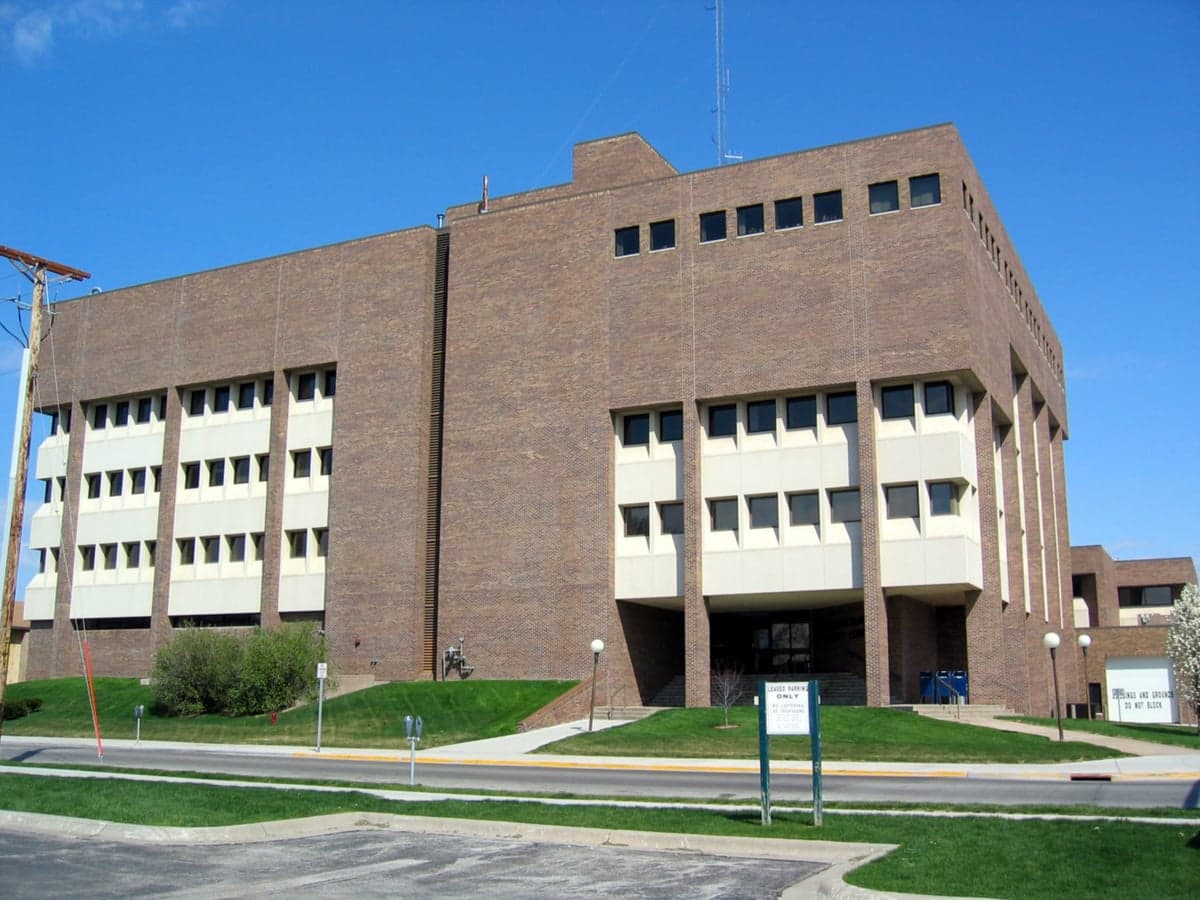
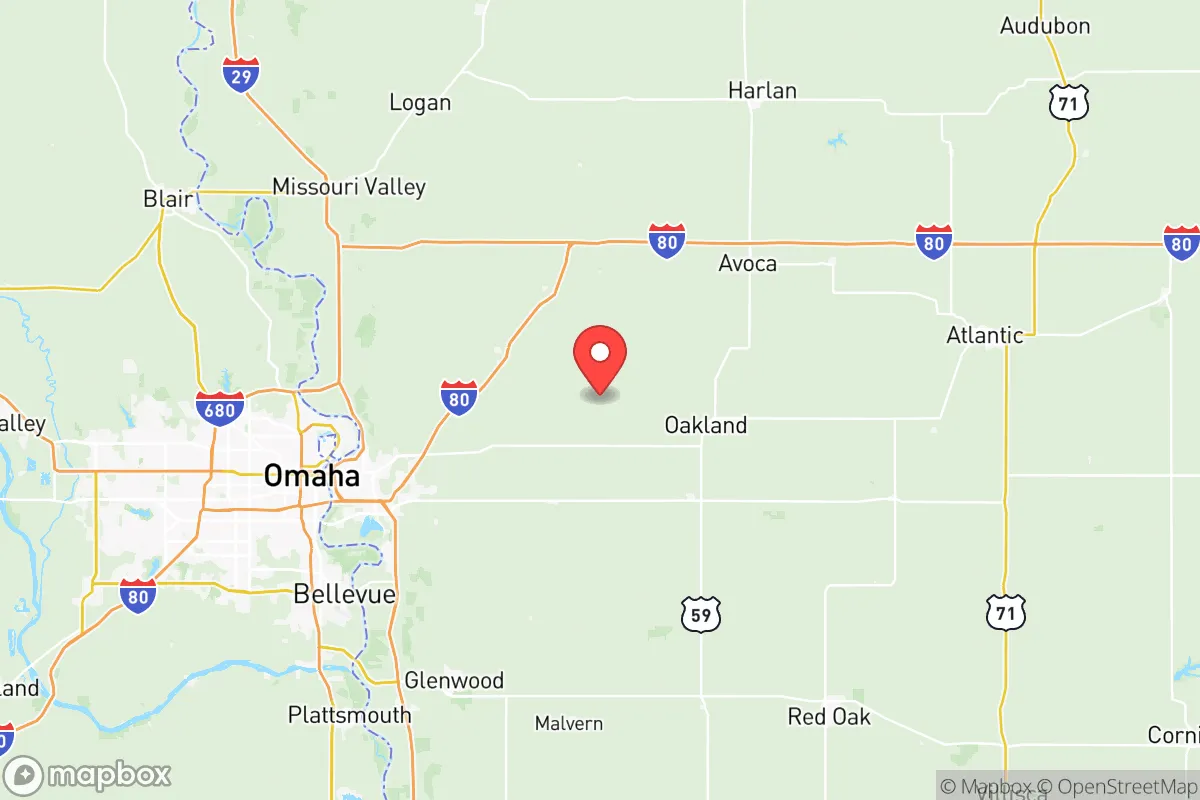
Photo: Wikipedia
Demographics of Pottawattamie County
Affluence Level in Pottawattamie County
A middle-class area roughly in line with national averages across income, home values, education, and employment.
People of Pottawattamie County
Pottawattamie County, Iowa, is home to 93,407 residents, a population that remains predominantly white (85.4%) with a small but growing Hispanic community (8.7%) and a foreign-born share of just 2.0%. The county’s character is shaped by its position as a historic crossroads—straddling the Missouri River and the Omaha metro area—where waves of European settlers, railroad workers, and modern suburbanites have created a community that values its agricultural roots while adapting to metropolitan influence. Distinctive identity markers include a strong sense of local independence, a conservative-leaning political culture, and a population density that clusters around the urban corridor of Council Bluffs while leaving vast stretches of farmland sparsely populated.
Settlement & growth (pre-1960)
Before American settlement, the land that became Pottawattamie County was home to the Omaha, Otoe, and Missouri tribes, with the Potawatomi—for whom the county is named—passing through during forced removals in the 1830s. The area was part of the Louisiana Purchase and saw limited French fur trading activity, but no permanent European colonization occurred until after the Black Hawk Purchase of 1832 opened the region to American settlers. The first wave of white settlers arrived in the 1840s and 1850s, primarily from the Upper South and Ohio Valley—Kentucky, Tennessee, and Ohio—drawn by cheap land and the promise of the Mormon Trail, which passed through Council Bluffs. These early settlers were largely of Scots-Irish and English stock, establishing farms and small communities like Council Bluffs, Glenwood, and Avoca.
The county’s population exploded after 1860 with the arrival of the railroad. The Union Pacific Railroad began its transcontinental line from Council Bluffs in 1863, turning the city into a boomtown. This brought a second major wave: Irish and German immigrants who built the railroad and then stayed to work in the rail yards, meatpacking plants, and supporting industries. Council Bluffs became a hub for Irish laborers, while German farmers settled the surrounding townships, founding communities like Minden and Neola. By 1900, the county’s population had reached roughly 55,000, with a strong mix of native-born Americans and European immigrants. A smaller wave of Danish and Swedish immigrants arrived in the 1880s and 1890s, settling in rural areas around Hancock and Walnut, where they established Lutheran churches and tight-knit farming communities.
The Dust Bowl and Great Depression of the 1930s brought a modest influx of displaced farmers from Oklahoma and Arkansas—often called “Okies”—who found work in Council Bluffs’ meatpacking plants and on local farms. However, Pottawattamie County’s population remained relatively stable through the mid-20th century, as the agricultural economy provided steady but not explosive growth. By 1960, the county’s population was about 80,000, overwhelmingly white and native-born, with a cultural identity rooted in small-town Midwestern values, Protestant Christianity, and a strong work ethic tied to farming and manufacturing.
Modern era (post-1965)
The 1965 Hart-Cellar Act had a limited direct impact on Pottawattamie County, as the region did not attract the large-scale immigration seen in coastal cities. The foreign-born population today stands at just 2.0%, far below the national average. However, the post-1965 period reshaped the county through domestic migration and suburbanization. The growth of the Omaha metropolitan area, which includes Council Bluffs, accelerated after 1970 as families sought affordable housing and lower taxes across the state line in Iowa. This suburban wave brought a steady stream of white, middle-class families from Nebraska and the broader Midwest, concentrating in Council Bluffs and its newer subdivisions like the Lake Manawa area.
The most significant demographic shift since 1965 has been the growth of the Hispanic population, which now accounts for 8.7% of the county. This community began forming in the 1990s and 2000s, driven by employment in meatpacking plants and construction. The largest concentration is in Council Bluffs, where Hispanic residents have established small businesses, churches, and community organizations. Unlike many parts of the country, Pottawattamie County has seen very little growth in Asian or Black populations—East/Southeast Asian residents make up 0.9%, Black residents 1.7%, and Indian-subcontinent residents just 0.1%. The county remains one of the least diverse in Iowa by some measures, with a white population share of 85.4% that is higher than the state average.
Suburbanization has also reshaped smaller towns. Glenwood has grown as a bedroom community for Omaha commuters, while Avoca and Walnut have seen modest growth from retirees and remote workers. The county’s college-educated share is 23.5%, below the national average, reflecting a workforce still heavily oriented toward manufacturing, logistics, and agriculture rather than knowledge-economy jobs. The closure of several meatpacking plants in the 2000s led to population stagnation in some rural areas, but the overall trend has been a slow, steady increase driven by Council Bluffs’ role as an Omaha suburb.
The future
Pottawattamie County is projected to become slightly more diverse over the next 10–20 years, primarily through continued Hispanic growth. The Hispanic population share could reach 12–15% by 2040, driven by natural increase and ongoing migration for labor in construction, warehousing, and food processing. The white population will likely decline in share but remain the overwhelming majority. The county is unlikely to see significant growth in Asian, Black, or Indian populations unless new industries—such as data centers or renewable energy—attract a more diverse workforce. The foreign-born share may rise to 3–4%, still well below national levels.
Geographically, growth will continue to concentrate in Council Bluffs and the Lake Manawa corridor, with rural towns like Minden and Hancock likely to see population stagnation or slight decline. The county’s cultural identity is evolving from a purely agricultural and railroad heritage toward a more suburban, Omaha-integrated character. This means more chain retail, more commuters, and a gradual softening of the independent, small-town ethos that defined earlier generations. For new residents, the county offers a stable, affordable, and safe environment with low crime rates and good schools in communities like Glenwood and Avoca, but with limited diversity and fewer cultural amenities than larger metro areas.
For someone moving in now, Pottawattamie County is becoming a quieter, more suburban extension of Omaha—a place where conservative values, low taxes, and access to a mid-sized city’s jobs and services coexist with a still-strong agricultural identity. The population is slowly diversifying, but the pace is gradual, and the county will remain predominantly white and native-born for the foreseeable future. It is a good fit for families and individuals seeking affordable housing, good schools, and a slower pace of life within commuting distance of a regional hub.

* Values derived from national, state, county, city and local statistics and may differ in a specific area. Last updated: 2026-11-07T06:57:56.000Z
Narrative content on this page is AI-generated and may contain mistakes. Verify any details that matter before acting on them.
ReloMaps may earn a commission from affiliate links at no extra cost to you.

