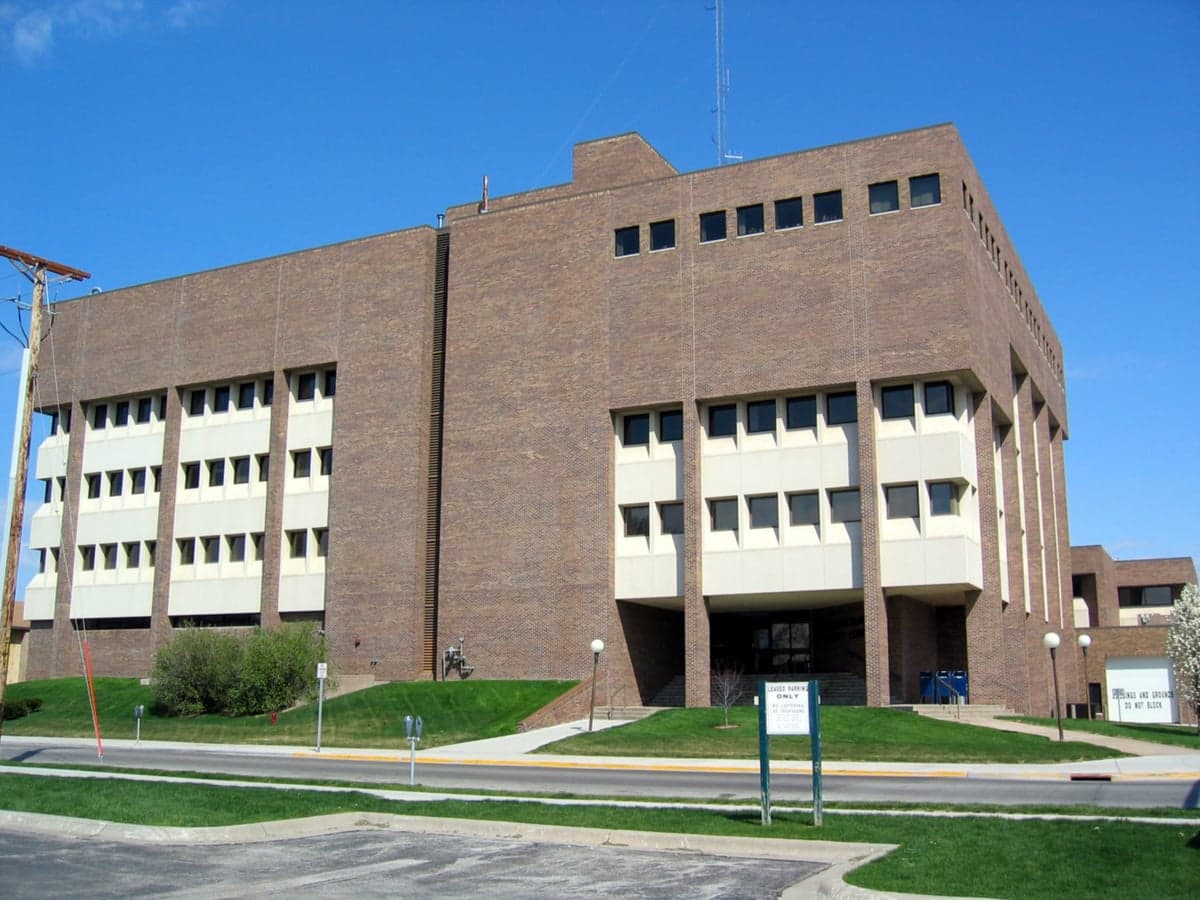
Photo: Wikipedia
Personal Sovereignty in Pottawattamie County
Viable for self-reliance. Generally workable, though some barriers may limit total independence.
What does Personal Sovereignty tell us?
Personal Sovereignty measures your capacity for self-reliance and independence with minimal government friction. Higher scores mean fewer barriers between you and the way you want to live... but it assumes you have the space you need and good neighbors.
What does this tell us?
Personal Sovereignty measures your capacity for self-reliance and independence with minimal government friction. Higher scores mean fewer barriers between you and the way you want to live... but it assumes you have the space you need and good neighbors.
State Policy
Energy independence: Importer (59% of energy produced in-state)
Personal Liberty
Homesteading

Personal Liberty Analysis
Pottawattamie County, Iowa, offers a notably high degree of personal sovereignty, anchored by a state-level commitment to low taxes, broad gun rights, and limited government interference in daily life. While the county itself is not a libertarian enclave, its regulatory posture is consistently lighter than what residents would encounter in neighboring Nebraska’s Douglas County (Omaha) or in urbanized parts of the Midwest. For individuals and families prioritizing autonomy, the key variables are where within the county you settle—rural townships versus the city of Council Bluffs—and how you navigate Iowa’s preemption laws, which generally override local ordinances on firearms and property use.
Tax burden and regulatory posture across Pottawattamie County
Iowa’s 2023 flat income tax of 3.9% (phasing down to 3.65% by 2026) and a state sales tax of 6% create a baseline tax burden that is moderate but predictable. Pottawattamie County adds a local option sales tax of 1%, bringing the total to 7% in most jurisdictions, though Council Bluffs and Avoca apply the full rate. Property taxes are the primary local revenue source, with the county’s average levy around $14.50 per $1,000 of assessed value—lower than Douglas County, Nebraska’s $18.00+ rate. The regulatory environment is distinctly light-touch: there is no county-wide zoning in unincorporated areas, meaning a resident in Hancock or Walnut can build a workshop, keep livestock, or operate a small home business without navigating a planning commission. Council Bluffs does enforce a municipal zoning code, but it is less restrictive than Omaha’s, with fewer overlay districts and no inclusionary zoning mandates. For a reader comparing to states like Colorado or Oregon, the absence of state-level land-use planning (Iowa has no statewide growth management law) is a significant autonomy advantage.
Self-defense and gun law specifics in Pottawattamie County
Iowa is a “shall-issue” state for permits to carry weapons, and since 2021, permitless (constitutional) carry is legal for anyone 21 or older who can legally possess a firearm. Pottawattamie County Sheriff’s Office processes permits efficiently, with typical turnaround under 30 days. The county has no local gun ordinances that exceed state law—a direct result of Iowa’s strong preemption statute (Iowa Code 724.28), which prohibits cities from regulating firearms more strictly than the state. This means Council Bluffs cannot enact magazine capacity limits or waiting periods, unlike Omaha across the river. Stand-your-ground law is in effect, with no duty to retreat in any place where a person is lawfully present. For homesteaders in Silver City or Macedonia, the practical effect is that defending property with deadly force is legally protected if the occupant reasonably believes force is necessary to prevent a forcible felony. The county’s gun culture is mainstream: the Pottawattamie County Izaak Walton League range near Underwood offers a public shooting facility, and private land in rural townships is commonly used for target practice without noise complaints.
Self-reliance and homesteading viability: lot sizes, zoning, and off-grid feasibility
Homesteading viability varies sharply by location. In unincorporated townships like Garner and Keg Creek, minimum lot sizes are typically 1-2 acres for residential use, but agricultural parcels of 5+ acres are common and allow for livestock, orchards, and small-scale farming without special permits. Council Bluffs requires a minimum of 6,000 square feet for a single-family lot, which precludes serious homesteading within city limits. Off-grid feasibility is high in rural areas: Iowa has no state law prohibiting rainwater collection, and private wells are permitted with a standard county permit ($150-$300). Solar panels require no county-level permit for roof-mounted systems, though ground-mounted arrays on agricultural land may trigger a building permit if over 20 feet tall. Composting toilets are legal in unincorporated areas, but Council Bluffs requires connection to municipal sewer if within 200 feet of a main line. The county’s building code is based on the 2018 International Residential Code, but enforcement is minimal in townships—many rural homes are built by owner-occupants without formal inspections. For a family wanting to raise chickens, keep goats, and generate their own power, Hancock or Walnut offer a near-zero regulatory barrier compared to the suburbs of Des Moines or Omaha.
Personal liberties: parental rights, medical autonomy, speech, and property
Iowa law strongly protects parental rights in education, with a 2023 law requiring school districts to notify parents of any curriculum involving gender identity or sexual orientation and to obtain parental consent before a student can change their name or pronouns. Pottawattamie County’s school districts—including Council Bluffs Community School District and Lewis Central—have largely complied, though some parents in Treynor report more transparent communication from smaller rural districts. Medical autonomy is less robust: Iowa requires parental consent for minors seeking abortion, but the state does not have a religious exemption for vaccine mandates in private workplaces. Speech protections are standard First Amendment, with no county-level hate speech ordinances. Property rights are strong: Iowa’s “right to farm” law (Iowa Code 352) protects agricultural operations from nuisance lawsuits, which benefits homesteaders in Underwood and Minden who keep livestock. Eminent domain is rarely used for private development, and the county’s board of supervisors has a reputation for resisting federal land-use grants that would impose conditions on local property use.
Overall, Pottawattamie County ranks among the more sovereignty-friendly areas in the upper Midwest, particularly for those who choose rural townships over Council Bluffs. The combination of permitless carry, no local gun preemption battles, minimal zoning in unincorporated areas, and strong parental rights creates an environment where an individual can live largely unbothered by government. Compared to Douglas County, Nebraska, or Johnson County, Iowa (Iowa City), the regulatory burden is noticeably lighter. For a conservative-leaning family or single person who values self-reliance, the county offers a practical balance of low taxes, broad liberties, and the ability to live off-grid without bureaucratic friction—provided you pick the right township.

* Values derived from national, state, county, city and local statistics and may differ in a specific area. Last updated: 2026-11-07T06:57:56.000Z
Narrative content on this page is AI-generated and may contain mistakes. Verify any details that matter before acting on them.
ReloMaps may earn a commission from affiliate links at no extra cost to you.

