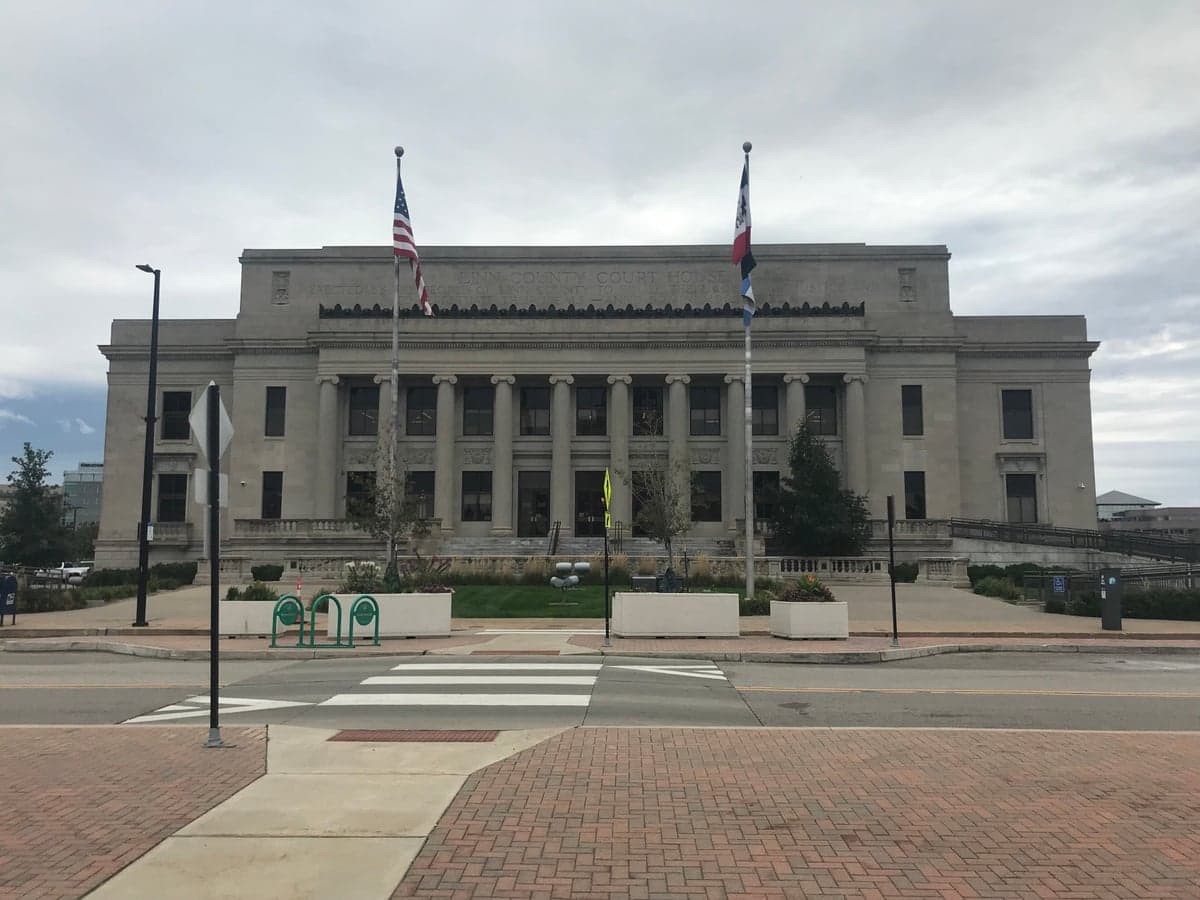
Photo: Wikipedia
Quality of Life in Linn County
A livable area that tracks near national norms for affordability, walkability, and neighborhood health.
What does Quality of Life tell us?
Quality of Life measures an area by evaluating factors like cost of living, nearby amenities, country club access, airport proximity, socioeconomic signals and neighborhood character. For large states, this is a general average — quality of life can vary dramatically between metro areas, suburbs, and rural communities within the same state.
What does this tell us?
Quality of Life measures an area by evaluating factors like cost of living, nearby amenities, country club access, airport proximity, socioeconomic signals and neighborhood character. For large states, this is a general average — quality of life can vary dramatically between metro areas, suburbs, and rural communities within the same state.
Cost of Living
24% below national average
131%
The Real Cost of Living in Linn County for 2026
| Tier | Individual | Family (4) |
|---|---|---|
| Survival | $15k | $27k |
| Comfortable | $40k | $58k |
| Luxury | $136k+ | $211k+ |
| Elite (Top 5%) | $160k+ | $248k+ |
Quality-of-Life Analysis
Linn County, Iowa, offers a broad quality-of-life spectrum that ranges from the dense, amenity-rich urban core of Cedar Rapids to quiet, unincorporated crossroads and farmsteads, drawing everyone from young professionals and remote workers to retirees and agricultural families. With a cost of living index of 76 — well below the national average of 100 — and a median home value of $204,400, the county provides significant financial breathing room regardless of which lifestyle tier a resident chooses. The average commute of just over 19 minutes further reinforces the county's appeal as a place where daily life is efficient and affordable across its diverse communities.
Largest town(s) & population centers
Cedar Rapids is the county's dominant population center and economic engine, home to roughly 137,000 residents. Daily life here is defined by a robust job market anchored by major employers such as Collins Aerospace, General Mills, and Transamerica, alongside a growing healthcare sector led by UnityPoint Health and Mercy Medical Center. The city offers a full slate of urban amenities — the Cedar Rapids Museum of Art, the Paramount Theatre, the NewBo City Market, and an extensive trail system along the Cedar River — while maintaining a distinctly Midwestern pace that avoids the congestion of larger metros. Marion, the county's second-largest city with about 40,000 residents, functions as a more suburban alternative to Cedar Rapids, with highly rated Marion Independent School District schools, the Uptown Marion shopping district, and a strong sense of community identity. Both cities provide walkable neighborhoods near their respective downtowns, though most residents rely on cars for errands and commuting.
Smaller towns & rural pockets
Beyond the urban core, Linn County is dotted with smaller communities that offer quieter, more affordable lifestyles. Hiawatha, a suburb of roughly 7,000 people directly north of Cedar Rapids, blends small-town feel with easy access to the region's jobs and retail, including the Lindale Mall area. Robins (pop. ~3,300) is a residential enclave known for its highly regarded College Community School District and newer housing developments that attract families seeking space without total isolation. Fairfax (pop. ~2,500) and Ely (pop. ~2,200) are classic Iowa farm towns that have seen modest growth as commuter outposts, each retaining a grain elevator, a main street, and a volunteer fire department. The county's rural pockets — areas around Mount Vernon (which straddles the county line) and unincorporated places like Bertram and Paris — consist of working farms, acreages, and scattered homes where residents trade proximity to shopping for privacy and land. These areas are served by a patchwork of smaller school districts, including Linn-Mar and Alburnett, and lack municipal utilities like public water and sewer in many cases.
Cost & lifestyle range
The cost of living across Linn County remains uniformly low by national standards, but the trade-offs between urban convenience and rural space are pronounced. At the high end of the spectrum, Cedar Rapids' historic neighborhoods like Mount Vernon-Lisbon or the Beverly Hills area feature homes above the county median of $204,400, with some properties exceeding $350,000, while still offering walkability to restaurants, parks, and cultural venues. Median rent in the county is just $915, making Cedar Rapids and Marion affordable for renters compared to peer Midwestern metros. At the low end, rural properties in unincorporated Linn County or small towns like Central City (pop. ~1,250) can be found for under $150,000, though buyers must factor in well and septic maintenance, longer drives to grocery stores, and limited internet options in some areas. The lifestyle range is stark: a Cedar Rapids resident can walk to a coffee shop and a concert venue, while a resident near Whittier or Springville may drive 20 minutes to the nearest gas station. Property taxes in the county average around 1.5% of assessed value, with rural properties often carrying slightly lower mill levies due to the absence of municipal services.
Linn County is best suited for people who want a low-cost, low-stress base with genuine urban, suburban, and rural options within a 30-minute radius. Young professionals and families who prioritize job access and cultural amenities will gravitate toward Cedar Rapids and Marion, while retirees, remote workers, and agricultural families will find the smaller towns and rural pockets offer the space and affordability that larger metros cannot match. The county's short average commute and below-average cost of living make it a practical choice for nearly any lifestyle preference, provided the resident is comfortable with the trade-offs inherent in each tier of the spectrum.

Crime in Linn County
Generally safer than 69% of comparable U.S. locations.
Violent CrimeViolent Crime Analysis
Property CrimeProperty Crime Analysis
Crime Analysis
Linn County, Iowa, reports a violent crime rate of 230.9 per 100,000 residents and a property crime rate of 1,168.5 per 100,000, placing it above the state average but below many similarly sized Midwestern urban counties. The county's safety picture is heavily shaped by the contrast between its largest city, Cedar Rapids, and its smaller, more suburban communities like Marion, Hiawatha, and Robins. While overall rates are moderate, the influence of progressive prosecutorial policies in the county's judicial district has become a growing concern for residents seeking consistent public safety outcomes.
Crime in context
Linn County's violent crime rate of 230.9 per 100,000 is roughly 20% higher than the Iowa state average of approximately 190 per 100,000, but remains well below the national rate of 380 per 100,000. Property crime in the county, at 1,168.5 per 100,000, tracks closely with the national average but is significantly elevated compared to rural Iowa counties such as Benton or Jones, which often report rates below 800 per 100,000. The disparity is driven almost entirely by Cedar Rapids, which accounts for the majority of reported offenses. Suburban jurisdictions like Marion and Hiawatha consistently report lower crime rates, though they still exceed the state's safest small towns. The 6th Judicial District, which covers Linn County, has seen increasing criticism from residents and local law enforcement for a pattern of reduced sentencing and early release programs that critics argue have eroded deterrence and contributed to repeat offenses.
What residents experience
Residents in Cedar Rapids neighborhoods such as the Mound View area and the Wellington Heights district report the highest frequency of property crimes, including vehicle break-ins and residential burglaries. Violent incidents, while less common, are concentrated in these same areas and along the Collins Road corridor. In contrast, families in the suburbs of Robins and Fairfax describe a markedly different daily experience, with low rates of stranger-on-stranger crime and a visible police presence. The Linn County Attorney's Office has adopted a number of progressive diversion programs, including deferred prosecution for certain property crimes and reduced bond requirements for repeat offenders. While these policies aim to reduce incarceration rates, they have drawn sharp criticism from victims' advocacy groups and neighborhood watch organizations, who report that known offenders are frequently back on the street within days of arrest. The practical effect, according to local crime mapping data, is that property crime in Cedar Rapids has remained stubbornly flat since 2021, despite a statewide decline.
Neighborhood-level variation in Linn County is significant and predictable. The safest residential areas are generally found in the northern and western suburbs: Robins, Hiawatha, and the College Hills area of Marion all report violent crime rates below 100 per 100,000. The most challenging conditions are in central and southeast Cedar Rapids, particularly around the Time Check neighborhood and the areas near the intersection of 1st Avenue and 16th Street SE. For prospective residents, the choice of jurisdiction within Linn County has a measurable impact on daily safety. Those moving to the area should review the specific crime statistics for their target neighborhood and consider the broader implications of the county's justice system philosophy, which prioritizes rehabilitation and reduced incarceration over strict enforcement and victim restitution.
* Values derived from national, state, county, city and local statistics and may differ in a specific area. Last updated: 2026-07-24T14:21:29.000Z
Narrative content on this page is AI-generated and may contain mistakes. Verify any details that matter before acting on them.
ReloMaps may earn a commission from affiliate links at no extra cost to you.

