
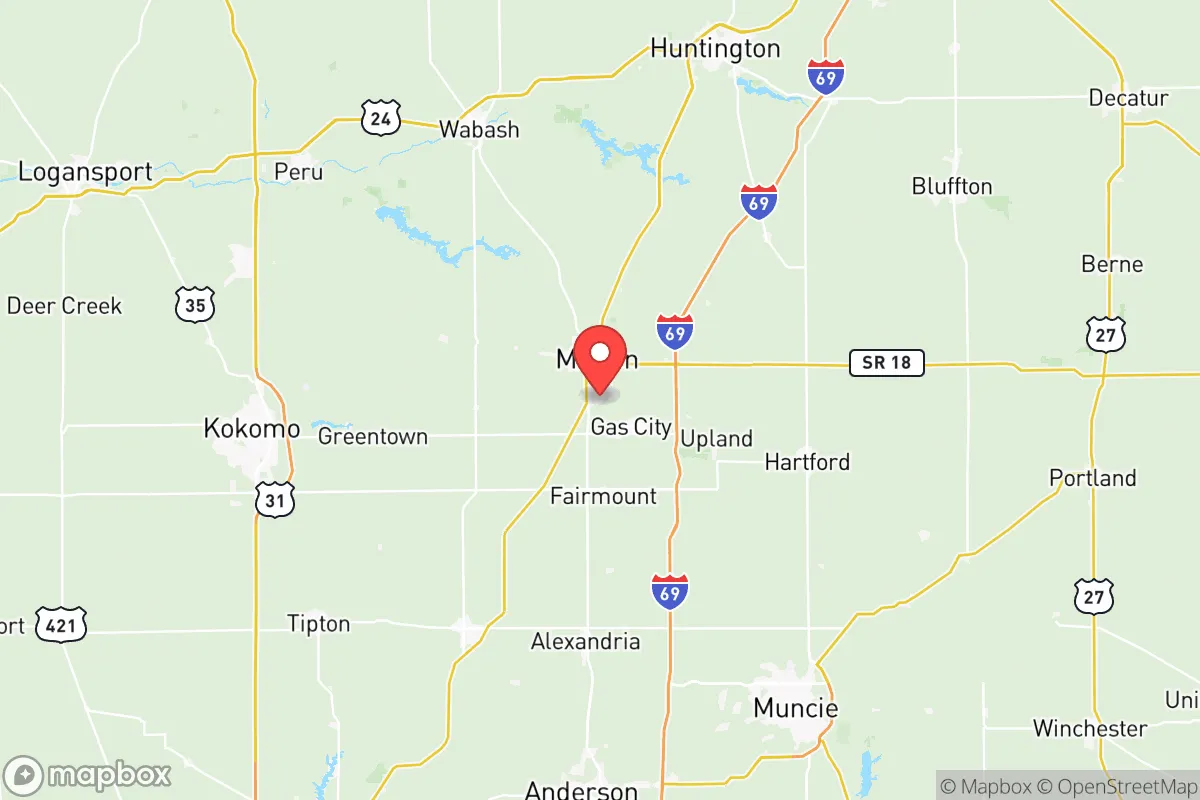
Photo: Wikipedia
Quality of Life in Grant County
A livable area that tracks near national norms for affordability, walkability, and neighborhood health.
What does Quality of Life tell us?
Quality of Life measures an area by evaluating factors like cost of living, nearby amenities, country club access, airport proximity, socioeconomic signals and neighborhood character. For large states, this is a general average — quality of life can vary dramatically between metro areas, suburbs, and rural communities within the same state.
What does this tell us?
Quality of Life measures an area by evaluating factors like cost of living, nearby amenities, country club access, airport proximity, socioeconomic signals and neighborhood character. For large states, this is a general average — quality of life can vary dramatically between metro areas, suburbs, and rural communities within the same state.
Cost of Living
42% below national average
163%
The Real Cost of Living in Grant County for 2026
| Tier | Individual | Family (4) |
|---|---|---|
| Survival | $13k | $24k |
| Comfortable | $23k | $33k |
| Luxury | $93k+ | $144k+ |
| Elite (Top 5%) | $109k+ | $170k+ |
Quality-of-Life Analysis
Grant County, Indiana, offers a broad quality-of-life spectrum that ranges from the historic, walkable core of its county seat, Marion, to quiet, unincorporated crossroads and open farmland. The county’s overall cost of living index sits at a remarkably low 58 (100 is the U.S. average), with a median home value of $116,000 and median rent of $799, making it one of the most affordable places in the state. This economic reality attracts a mix of manufacturing workers, families seeking space, and retirees looking to stretch their savings, though the lifestyle experience shifts noticeably depending on whether one chooses the denser town centers or the surrounding rural townships.
Largest town(s) & population centers
Marion is the county’s dominant population center and the only city with a full-service downtown, anchored by Indiana Wesleyan University and a historic courthouse square. Daily life here offers a compact, car-optional environment with grocery stores, a hospital (Marion Health), and a modest selection of restaurants and retail along the SR 9 and SR 18 corridors. The average commute in Grant County is just 22.5 minutes, and Marion residents often enjoy even shorter drives to work, with major employers like StarPlus Energy (a joint venture between Samsung SDI and Stellantis building a massive EV battery plant) and local manufacturers such as Wieland North America providing steady blue-collar employment. Gas City, immediately east of Marion, functions as a secondary commercial hub with big-box retail and a more suburban feel, while Jonesboro and Upland are smaller incorporated towns that blend residential streets with light industry and university life (Taylor University is in Upland).
Smaller towns & rural pockets
Outside the Marion-Gas City-Upland corridor, Grant County’s smaller communities offer a distinctly quieter, land-based lifestyle. Swayzee (population roughly 900) and Converse (population roughly 1,100) are classic farm-service towns with grain elevators, a single main street, and a strong sense of neighborly connection. Van Buren and Fairmount (the latter known as the hometown of James Dean) sit on the county’s edges, each with a small school system and a handful of local businesses. Unincorporated areas such as Fowlerton and Sims are little more than crossroads with scattered homes and agricultural operations, where residents often drive 15–20 minutes to Marion for groceries and medical care. These rural pockets are defined by larger lot sizes, lower property taxes than the town cores, and a pace of life that appeals to those who prioritize privacy and land over proximity to amenities.
Cost & lifestyle range
The cost spread across Grant County is narrow in absolute dollars but meaningful in lifestyle terms. At the low end, a buyer can find a move-in-ready three-bedroom home in Jonesboro or Van Buren for under $90,000, with rents often falling below $700. At the higher end, newer subdivisions in Gas City and the east side of Marion (near the Mississinewa Reservoir) push median home values toward $150,000–$180,000, offering larger floor plans and more modern finishes. The median home value of $116,000 means that even the priciest areas remain affordable by national standards. Amenities follow a similar gradient: Marion and Gas City have chain restaurants, a Walmart Supercenter, and a multiplex cinema, while residents of Fairmount or Swayzee rely on a single gas station and a local diner. The Mississinewa Reservoir and the Salamonie River provide recreational access for the entire county, but those living in the rural northern townships (Jefferson and Mill townships) have the easiest access to hunting, fishing, and ATV trails.
Grant County is best suited for people who value low housing costs and short commutes over urban nightlife or high-end shopping. Families and retirees on fixed incomes find the county’s tax burden light and its schools (particularly Marion Community Schools and Oak Hill United School Corporation) adequate for most needs. Workers in manufacturing, logistics, and healthcare will find the strongest job market, while remote workers can leverage the low cost of living to maximize savings. The county’s quiet rural corners reward those who want land and solitude, while Marion and Gas City offer enough convenience to satisfy most daily errands without a long drive.

Crime in Grant County
Generally safer than 63% of comparable U.S. locations.
Violent CrimeViolent Crime Analysis
Property CrimeProperty Crime Analysis
Crime Analysis
Grant County, Indiana, reports a violent crime rate of 228.1 incidents per 100,000 residents and a property crime rate of 948.7 per 100,000, placing it below the national average for violent offenses but slightly above the state average for property crime. These figures suggest a community where serious violent incidents are less common than in many urban centers, though property-related offenses like theft and burglary remain a concern for residents. The county’s safety profile is shaped by its mix of small cities, rural areas, and the presence of Marion, the county seat and largest population center.
Crime in context
Grant County’s violent crime rate of 228.1 per 100,000 is notably lower than the national average of roughly 380 per 100,000, but it sits close to Indiana’s statewide rate of approximately 230 per 100,000. Property crime in the county, at 948.7 per 100,000, exceeds both the Indiana average (around 850 per 100,000) and the national average (approximately 1,950 per 100,000), indicating that while property offenses are not as rampant as in high-crime metros, they are more frequent than in many neighboring rural counties. For comparison, nearby Howard County (Kokomo) reports a violent crime rate near 300 per 100,000, while Madison County (Anderson) hovers around 350 per 100,000, making Grant County a relatively safer option for violent crime within the region. However, property crime in Grant County is elevated relative to Wabash County (roughly 700 per 100,000) and Miami County (around 800 per 100,000), suggesting that residents should take precautions against theft and vandalism.
What residents experience
Daily life in Grant County involves a moderate risk of property crime, with larceny-theft and motor vehicle theft being the most common offenses reported to local law enforcement. Violent crime, including assault and robbery, is less frequent but tends to concentrate in specific areas, particularly around Marion’s downtown corridor and near the Indiana Wesleyan University campus periphery. Residents in Gas City and Jonesboro often report lower property crime rates than the county average, while Upland benefits from a quieter, small-town atmosphere with fewer incidents overall. The presence of progressive judicial policies in Marion’s city courts has been a point of concern for some residents, as lenient sentencing and diversion programs can lead to repeat offenders cycling back into neighborhoods more quickly. This approach, while intended to reduce incarceration, may undermine public confidence in the justice system and contribute to a perception that property crime is not taken seriously enough.
Neighborhood-level variation is significant within Grant County. The safest areas tend to be the outlying towns like Swayzee and Van Buren, where crime rates are a fraction of Marion’s. Conversely, the south side of Marion and areas near State Road 9 see higher concentrations of both property and violent crime, often linked to drug-related activity. Residents considering a move to Grant County should weigh the trade-offs: lower violent crime than many Indiana counties, but property crime that demands vigilance, especially in Marion’s denser neighborhoods. For those prioritizing safety, the smaller towns offer a clear advantage, while Marion provides more amenities at the cost of elevated risk.
* Values derived from national, state, county, city and local statistics and may differ in a specific area. Last updated: 2026-07-15T04:47:51.000Z
Narrative content on this page is AI-generated and may contain mistakes. Verify any details that matter before acting on them.
ReloMaps may earn a commission from affiliate links at no extra cost to you.

