
Photo: Wikipedia
Personal Sovereignty in Grant County
Viable for self-reliance. Generally workable, though some barriers may limit total independence.
What does Personal Sovereignty tell us?
Personal Sovereignty measures your capacity for self-reliance and independence with minimal government friction. Higher scores mean fewer barriers between you and the way you want to live... but it assumes you have the space you need and good neighbors.
What does this tell us?
Personal Sovereignty measures your capacity for self-reliance and independence with minimal government friction. Higher scores mean fewer barriers between you and the way you want to live... but it assumes you have the space you need and good neighbors.
State Policy
Energy independence: Importer (35% of energy produced in-state)
Personal Liberty
Homesteading

Personal Liberty Analysis
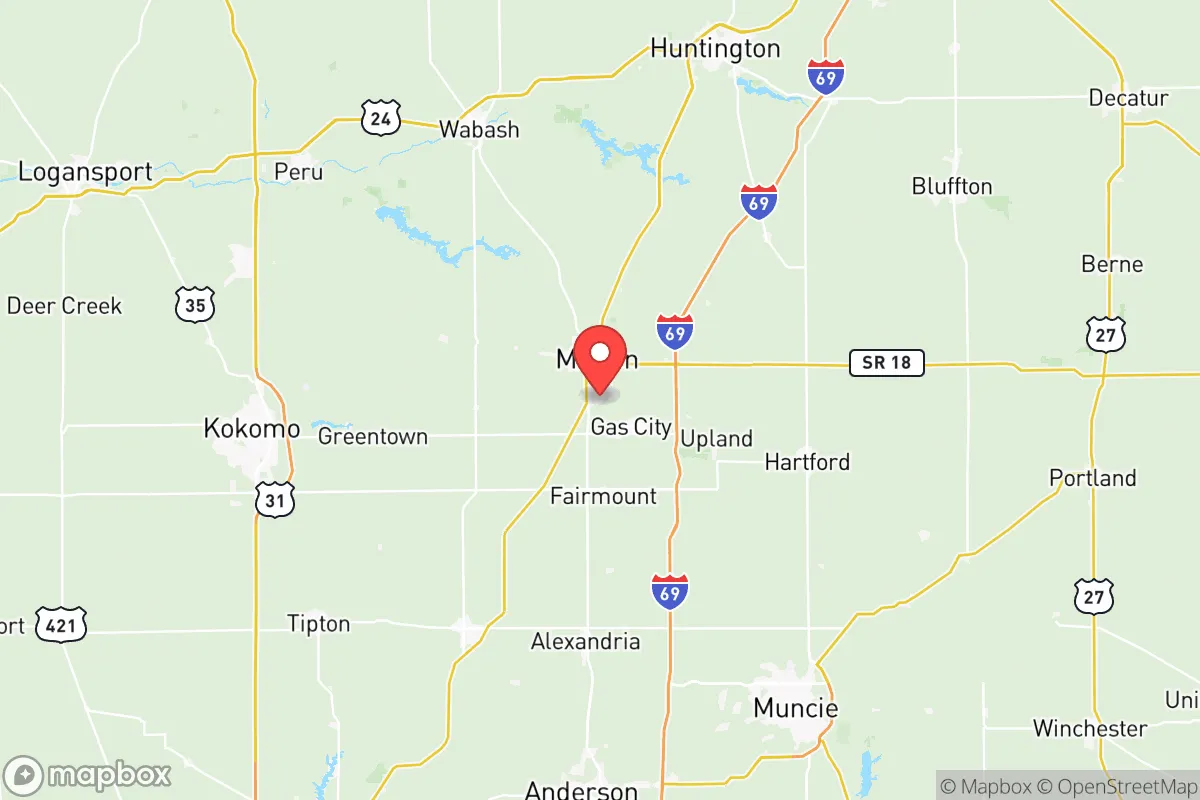
Grant County, Indiana, offers a notably high degree of personal sovereignty, grounded in a state-level legal framework that prioritizes limited government, strong property rights, and individual self-defense. For residents of cities like Marion, Gas City, and Upland, this translates into a lower regulatory burden than in many Midwestern counties, with local governance generally deferring to state preemption on key issues like firearms and zoning. The county’s mix of small-town and rural environments provides tangible opportunities for self-reliance, though the specific level of autonomy varies between the more developed urban corridors and the outlying agricultural townships.
Tax burden and regulatory posture in Grant County
Indiana’s tax structure is among the most favorable in the nation for individuals seeking to minimize government overhead. The state imposes a flat income tax rate of 3.15% (as of 2025, with ongoing reductions toward 2.9%), and Grant County’s property tax rates are well below the national average. The effective property tax rate in Marion, the county seat, typically falls between 0.8% and 1.1% of assessed value, depending on the specific township and school district. This is significantly lower than in neighboring states like Illinois or Ohio. Regulatory posture at the county level is light-touch: there is no county-wide zoning in unincorporated areas, meaning that in townships such as Pleasant, Richland, and Green, landowners face minimal bureaucratic hurdles for building structures, running home-based businesses, or keeping livestock. The city of Gas City, however, maintains a more conventional municipal zoning code, so residents there should verify setback requirements and permitted uses before purchasing property. Overall, the tax and regulatory environment in Grant County ranks among the most permissive in Indiana, especially when compared to the more restrictive codes found in counties surrounding Indianapolis.
Self-defense and gun law specifics in Grant County
Indiana is a constitutional carry state, meaning that as of July 2022, no permit is required to carry a handgun openly or concealed for any law-abiding adult 18 or older. Grant County law enforcement, including the Marion Police Department and the Grant County Sheriff’s Office, are known for a pro-Second Amendment posture, and there are no local ordinances that restrict firearm possession beyond state law. This stands in contrast to cities like Gary or Bloomington, which have attempted to enact local gun restrictions (often later struck down). The county has a strong hunting culture, with public shooting ranges available at locations like the Grant County Fish and Game Association near Upland. For residents of rural areas such as Swayzee or Van Buren, discharging firearms on private property is generally permitted, provided the discharge is not reckless and does not violate any township-specific noise ordinances. Stand-your-ground and castle doctrine laws apply fully, granting broad latitude for self-defense in the home, vehicle, or any place where a person has a legal right to be. For the sovereignty-minded individual, Grant County offers one of the most unencumbered self-defense environments in the Midwest.
Self-reliance and homesteading viability in Grant County
Grant County is highly conducive to a self-reliant lifestyle, particularly in its unincorporated townships and smaller towns. Lot sizes in rural areas such as Sims Township and Liberty Township commonly range from one to five acres, with larger parcels of 10 to 40 acres available at prices well under $10,000 per acre — a fraction of the cost in central Indiana. Zoning in unincorporated areas is minimal: there are no county-wide restrictions on keeping chickens, goats, or even larger livestock like cattle and horses on residential parcels, provided the property meets basic acreage thresholds. Off-grid feasibility is moderate; while Indiana law does not explicitly prohibit solar panel installation or rainwater collection, residents must comply with state electrical codes if connecting to the grid. The city of Marion has building permit requirements for structural additions, but rural townships like Mill and Franklin generally require no permits for agricultural outbuildings or fences. Water access is straightforward — most rural properties have wells, and the county health department handles septic permits with a straightforward process. For families seeking to reduce dependence on municipal systems and grocery supply chains, the areas around Converse and Fairmount offer particularly low-barrier entry points for homesteading, with established networks of local farmers and feed stores.
Personal liberties in Grant County
Personal liberties in Grant County are shaped by Indiana’s strong tradition of parental rights and medical autonomy. The state has a robust parental bill of rights, ensuring that parents have the final say in their children’s education, medical decisions, and religious upbringing. School choice is extensive: Grant County is home to several public school corporations (Marion Community Schools, Oak Hill United, and Madison-Grant United) as well as private and parochial options, and Indiana’s voucher program (Choice Scholarship) makes private education financially accessible to most families. Medical autonomy is protected by state law, which prohibits mandates for vaccines or medical procedures as a condition of employment or public accommodation — a stance that has held firm through recent public health debates. Free speech and religious expression are broadly protected, with no local hate speech ordinances or speech codes that exceed First Amendment protections. Property rights are reinforced by Indiana’s strong eminent domain protections, which require a public necessity and just compensation before any taking. In Grant County, local government has a track record of respecting these boundaries; there have been no notable controversies over property seizures or overreach in recent years. For the resident who values minimal interference in personal, familial, and medical decisions, Grant County aligns closely with a classical liberal vision of individual sovereignty.
Compared to other regions in the Midwest, Grant County stands out as a jurisdiction where personal sovereignty is not just tolerated but structurally supported. The combination of constitutional carry, low taxes, minimal rural zoning, strong parental rights, and a culture of self-reliance creates an environment where individuals and families can exercise a high degree of control over their own lives. While the county is not entirely free of regulation — municipal codes in Marion and Gas City impose some constraints — the overall posture is one of deference to the individual. For the relocation researcher weighing autonomy against community infrastructure, Grant County offers a rare balance: the freedoms of rural Indiana with the practical amenities of a small city like Marion, all within a two-hour drive of Indianapolis.

* Values derived from national, state, county, city and local statistics and may differ in a specific area. Last updated: 2026-07-15T04:47:51.000Z
Narrative content on this page is AI-generated and may contain mistakes. Verify any details that matter before acting on them.
ReloMaps may earn a commission from affiliate links at no extra cost to you.

