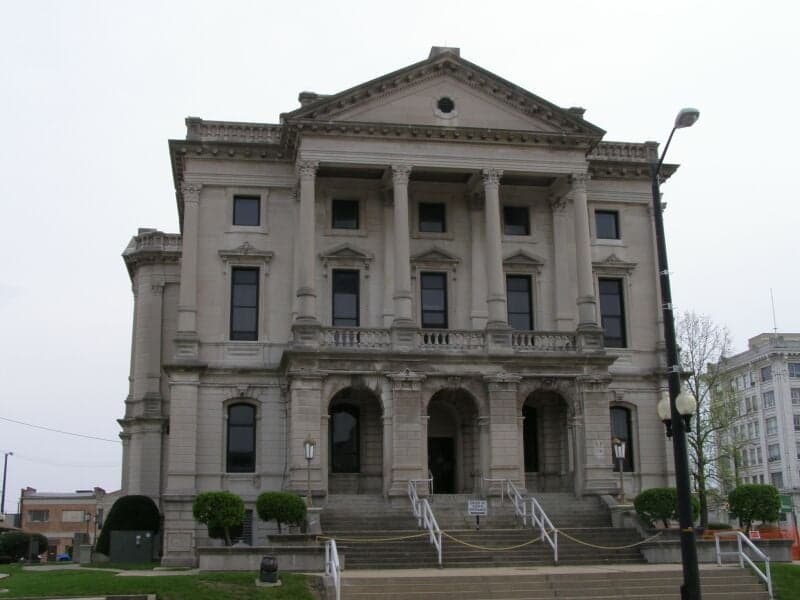
Photo: Wikipedia
Political ClimatePolitical Climate in Grant County
Showing district-level results — no local-only data available.
Local Political AnalysisPolitical Analysis of Grant County
Grant County, Indiana, leans solidly Republican, with a Cook PVI of R+8, making it slightly more competitive than the state as a whole (R+9) but still a reliable red stronghold in most elections. The county has been trending rightward over the past decade, though not as sharply as some rural Indiana counties, due to the presence of two distinct political blocs: the conservative-leaning rural and small-town voters who dominate the county's eastern and southern precincts, and a more moderate-to-liberal cluster centered in the city of Marion, the county seat. In the 2024 presidential race, Grant County voted for Donald Trump by a margin of roughly 65% to 33%, a shift from 2020 when Trump won 63% to 35%, showing a slight but steady rightward drift. The real story, however, is the internal divide: Marion's precincts, particularly around Indiana Wesleyan University and the downtown core, have trended bluer in recent cycles, while towns like Gas City, Jonesboro, and Upland remain deeply red, with Upland's precincts often hitting 75%+ Republican turnout.
How it compares
Compared to Indiana's statewide R+9 PVI, Grant County is essentially a mirror image of the state's overall partisan lean, but with more internal variation. The county's R+8 rating means it is slightly less Republican than the state average, a quirk driven by Marion's Democratic-leaning precincts—something you don't see in neighboring counties like Miami (R+16) or Wabash (R+14). In the 2022 gubernatorial race, Grant County backed Republican Mike Braun by 63%, nearly identical to his statewide 64% share, but Marion's precincts gave Democrat Jennifer McCormick 44% of the vote, a full 10 points higher than her countywide average. The swing precincts are in the suburban fringe of Marion—places like the area around 38th Street and the southern edge of town—where voters split tickets more often, especially in local races. This makes Grant County a bellwether of sorts: if a Democrat can win Marion by 8-10 points, they can keep the county competitive, but the rural towns consistently push the final tally red.
What this means for residents
For conservative residents, the political climate is comfortable but not complacent. The county GOP is well-organized, with strong turnout operations in Gas City and Upland, and local offices like the county commission and sheriff have been held by Republicans for decades. Policy-wise, this means low taxes—the county's property tax rate is among the lowest in the region—and a pro-business environment that has attracted light manufacturing and logistics firms to the I-69 corridor. For liberal residents, the reality is more nuanced. Marion's Democratic-leaning precincts provide a sense of community, especially around the university and the city's historic core, but statewide and national elections can feel like a lost cause. That said, local Democrats have found success in nonpartisan races like school board and city council, particularly in Marion's 2nd and 3rd wards, where progressive candidates have won on platforms of infrastructure and education funding. The key takeaway: Grant County is not a monolith, and the political divide is as much about urban vs. rural as it is about party labels.
Culturally, the county's political lean shapes daily life in subtle ways. Gun rights are broadly supported—open carry is common, and the county's sheriff's office is known for its Second Amendment-friendly stance. Social issues like abortion and LGBTQ+ rights are more divisive, with Marion's more liberal precincts pushing back against the county's conservative majority on things like library programming and public school curriculum. The biggest policy distinction from the state as a whole is in local economic development: Grant County has aggressively courted renewable energy projects, including a large solar farm near Jonesboro, which has drawn bipartisan support for the jobs but also some conservative pushback over land use. Looking ahead, the county's political trajectory will likely hinge on whether Marion's blue trend accelerates or stalls, and whether the rural towns continue to harden their Republican lean. For now, Grant County remains a classic Indiana swing county—red enough to feel safe, but with enough blue pockets to keep things interesting.

State Political ClimatePolitical Climate in Indiana
State Political AnalysisPolitical Environment in the State
Indiana is a solidly Republican state with a Cook PVI of R+9, meaning it typically votes about nine points more Republican than the nation as a whole. Over the past two decades, the state has shifted rightward, driven by the realignment of rural and exurban voters and the continued dominance of culturally conservative values in most of the state outside of a few urban pockets. While it was once considered a swing state—voting for Barack Obama in 2008 by a narrow margin—Indiana has not voted for a Democratic presidential candidate since, and Republicans now hold supermajorities in both chambers of the state legislature and every statewide elected office.
Urban vs. rural divide
The political map of Indiana is defined by a stark urban-rural split. The Democratic strongholds are concentrated in the state's most populous counties: Marion County (Indianapolis), Lake County (Gary and the Chicago suburbs), and Monroe County (Bloomington, home to Indiana University). These three counties alone deliver a significant share of Democratic votes, but they are increasingly outmatched by the rest of the state. The Indianapolis suburbs, particularly Hamilton County (Carmel, Fishers, Noblesville), have become reliably Republican, with Carmel and Fishers ranking among the wealthiest and most conservative-leaning suburbs in the Midwest. Meanwhile, the rural counties in southern Indiana—like Orange, Crawford, and Switzerland—vote Republican by margins of 70% or more. The state's second-largest city, Fort Wayne (Allen County), has trended Republican in recent cycles, while South Bend (St. Joseph County) remains a competitive but lean-Republican area. The divide is not just geographic but cultural: urban voters tend to prioritize education funding, healthcare access, and social services, while rural and suburban voters focus on taxes, gun rights, and local control.
Policy environment
Indiana's policy environment is shaped by a conservative majority that prioritizes low taxes, limited regulation, and traditional social values. The state has a flat income tax rate of 3.15% (scheduled to decline further to 2.9% by 2027), and property taxes are capped at 1% of assessed value for owner-occupied homes. There is no inheritance or estate tax. The regulatory climate is business-friendly, with right-to-work laws in place since 2012 and a tort reform system that caps noneconomic damages in medical malpractice cases. Education policy has been a flashpoint: Indiana has one of the most robust school choice programs in the nation, with vouchers available to most families regardless of income, and a growing network of charter schools. The state also passed a law in 2022 requiring schools to post curriculum materials online and notify parents of any changes to a student's health or well-being, a move that energized conservative parents. On healthcare, Indiana expanded Medicaid under the Affordable Care Act via a conservative waiver program (HIP 2.0) but has not pursued a state-based exchange. Election laws have tightened: voter ID is required, early voting windows are shorter than in many states, and a 2023 law restricted the use of drop boxes and limited who can assist voters with mail-in ballots.
Recent policy direction
Indiana's recent legislative sessions have pushed the state further in a conservative direction across multiple fronts. On gun rights, Indiana became a permitless carry state in 2022, allowing any law-abiding adult to carry a handgun without a license. The same year, the legislature passed a law prohibiting local governments from enacting their own gun restrictions, preempting any potential local ordinances. On education and parental rights, the state enacted a law in 2023 banning instruction on human sexuality in grades K-3 and requiring schools to notify parents if a student requests a name or pronoun change. In 2024, the legislature passed a bill requiring public schools to display the Ten Commandments in every classroom, though it faces legal challenges. On abortion, Indiana was one of the first states to pass a near-total ban after the Dobbs decision, with exceptions only for rape, incest, and lethal fetal anomalies up to 10 weeks, and to save the mother's life. The ban took effect in 2023 after a court challenge failed. On property rights, the state has not enacted broad eminent domain reform, but it has strengthened protections for landowners in pipeline and utility easement disputes. On privacy and surveillance, Indiana has no comprehensive data privacy law, though a 2023 bill regulating the use of facial recognition by law enforcement was signed into law. On voting, the state has not expanded mail-in voting and has resisted efforts to make Election Day a state holiday. The overall direction is toward fewer restrictions on firearms, more parental control in schools, and tighter limits on abortion access.
Civil unrest & political movements
Indiana has seen its share of political activism, though large-scale civil unrest has been relatively contained compared to some states. The 2020 George Floyd protests in Indianapolis led to several nights of clashes between demonstrators and police, but the state did not see the prolonged unrest of larger cities. The abortion ban has galvanized a small but vocal pro-choice movement, with regular protests at the Statehouse and on college campuses, particularly in Bloomington and Indianapolis. On the right, the Indiana Republican Party has seen internal divisions between establishment conservatives and more populist, anti-establishment factions, particularly around education and COVID-19 mandates. The state has not seen significant secession or nullification rhetoric, though some rural counties have passed symbolic resolutions opposing federal gun control and environmental regulations. Immigration politics are less heated than in border states, but a 2024 law requiring local law enforcement to cooperate with federal immigration authorities has drawn criticism from immigrant advocacy groups. Election integrity controversies have been minimal; Indiana's voter ID law is well-established, and there have been no major fraud allegations in recent cycles. A new resident would likely notice that political signs and bumper stickers are common in rural areas, while urban neighborhoods are more mixed. The overall atmosphere is one of stable, if sometimes contentious, partisan division.
Projection
Over the next five to ten years, Indiana is likely to remain solidly Republican, though the margin may narrow slightly as the Indianapolis suburbs continue to grow and diversify. Hamilton County, once a Republican stronghold, has seen a slow but steady increase in Democratic votes, particularly in Carmel and Fishers, as younger, more educated professionals move in. However, this trend is offset by the continued out-migration of Democrats from rural areas and the growth of exurban and small-town communities that lean heavily Republican. The state's population is aging and growing slowly, with most growth concentrated in the Indianapolis metro area. In-migration from Illinois and California is modest but tends to be conservative-leaning, drawn by lower taxes and housing costs. The Republican supermajority in the legislature is unlikely to be seriously challenged in the next decade, meaning the policy direction—lower taxes, school choice expansion, and cultural conservatism—will continue. A new resident moving in now should expect a state where conservative values dominate public policy, but where urban enclaves offer a counterbalance for those seeking a more progressive environment. The practical takeaway is that Indiana offers a stable, low-tax, business-friendly environment for conservatives, while liberals will find welcoming communities in Indianapolis, Bloomington, and parts of Lake County, but will have limited influence on state-level policy.
For someone choosing Indiana, the bottom line is that the state delivers on its conservative promises: low taxes, strong gun rights, school choice, and a regulatory climate that favors business. Liberals can find their niche in the urban cores, but should be prepared for a state government that is unlikely to align with their priorities on abortion, education, or social policy. The political climate is stable, not volatile, and the trajectory is clear: Indiana will remain a reliably red state for the foreseeable future, with the Indianapolis suburbs as the main battleground for any future shifts.
* Values derived from national, state, county, city and local statistics and may differ in a specific area. Last updated: 2026-07-15T04:47:51.000Z
Narrative content on this page is AI-generated and may contain mistakes. Verify any details that matter before acting on them.
ReloMaps may earn a commission from affiliate links at no extra cost to you.

