
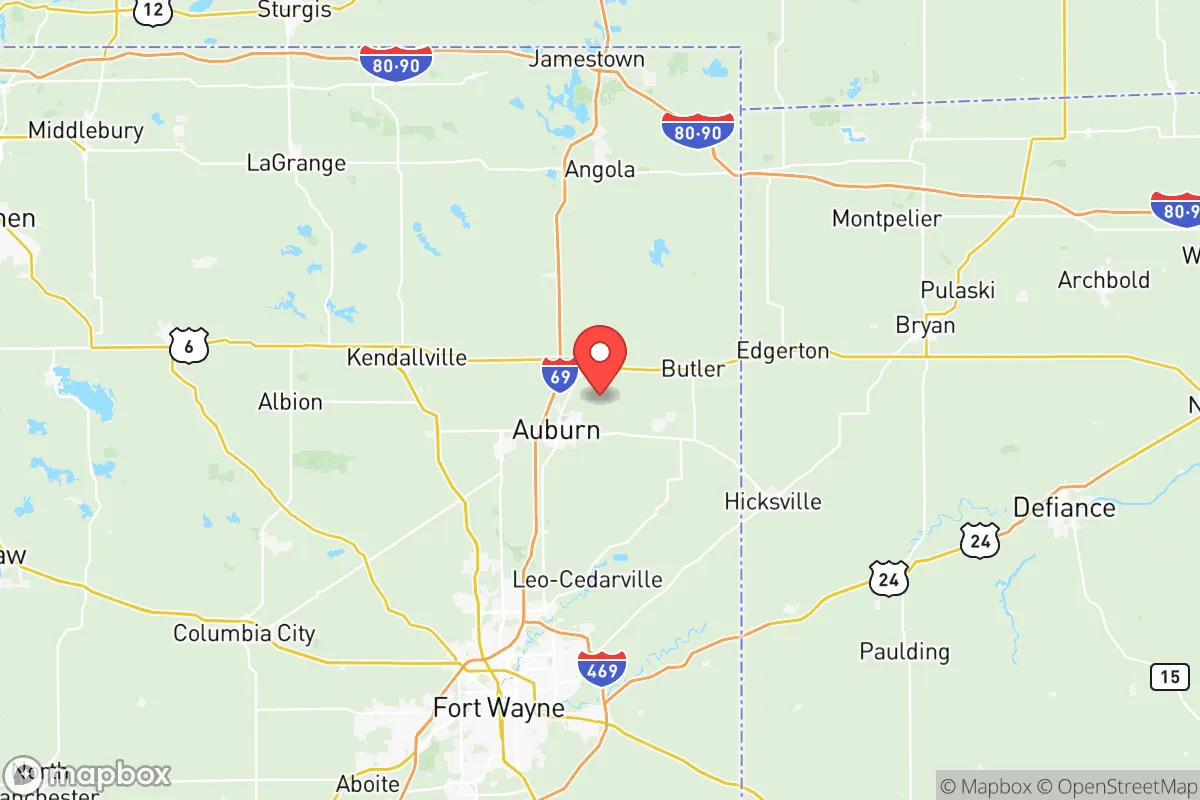
Photo: Wikipedia
Quality of Life in Dekalb County
A livable area that tracks near national norms for affordability, walkability, and neighborhood health.
What does Quality of Life tell us?
Quality of Life measures an area by evaluating factors like cost of living, nearby amenities, country club access, airport proximity, socioeconomic signals and neighborhood character. For large states, this is a general average — quality of life can vary dramatically between metro areas, suburbs, and rural communities within the same state.
What does this tell us?
Quality of Life measures an area by evaluating factors like cost of living, nearby amenities, country club access, airport proximity, socioeconomic signals and neighborhood character. For large states, this is a general average — quality of life can vary dramatically between metro areas, suburbs, and rural communities within the same state.
Cost of Living
32% below national average
138%
The Real Cost of Living in Dekalb County for 2026
| Tier | Individual | Family (4) |
|---|---|---|
| Survival | $13k | $25k |
| Comfortable | $35k | $51k |
| Luxury | $105k+ | $163k+ |
| Elite (Top 5%) | $123k+ | $191k+ |
Quality-of-Life Analysis
DeKalb County, Indiana, offers a broad quality-of-life spectrum that ranges from the small-city conveniences of its county seat, Auburn, to the quiet, agricultural landscapes of communities like St. Joe and Corunna. The county’s character is defined by this mix, drawing residents who want affordable housing and short commutes while still having access to basic urban amenities. With a cost of living index of 68—well below the national average of 100—and a median home value of $177,900, the county appeals strongly to first-time homebuyers, manufacturing workers, and families seeking a slower pace without sacrificing proximity to larger job markets like Fort Wayne.
Largest town(s) & population centers
The primary population center is Auburn, the county seat and home to roughly 13,000 residents. Daily life here revolves around a compact downtown with local restaurants, the Auburn Cord Duesenberg Automobile Museum, and a mix of retail along SR 8. The city is a hub for manufacturing employment, anchored by companies like Metal Technologies and Parker Hannifin. Auburn offers a solid range of amenities—grocery stores, a hospital (Parkview DeKalb Health), and several parks—but lacks the big-box density of a metro area. The average commute in the county is just 20.8 minutes, reflecting how most residents work locally or make the 25-minute drive to Fort Wayne. Garrett, the second-largest town with about 6,500 people, has a more industrial feel, centered on rail history and the Garrett Historical Museum. Its housing stock is older and slightly cheaper than Auburn’s, and it provides a quieter, more blue-collar lifestyle with fewer retail options.
Smaller towns & rural pockets
Beyond the two main towns, DeKalb County is dotted with small communities that offer a distinctly rural experience. Butler (pop. ~2,700) sits in the county’s northeast corner, with a small downtown and a strong agricultural base; it’s a place where residents often know their neighbors and commute to Auburn or Hicksville, Ohio. Waterloo (pop. ~2,200) is a historic railroad town with a handful of local businesses and easy access to I-69, making it a bedroom community for both Auburn and Fort Wayne. St. Joe (pop. ~500) and Corunna (pop. ~250) are unincorporated hamlets surrounded by farmland, offering little more than a post office or a gas station but providing deep quiet and low property taxes. These areas attract people who prioritize land, privacy, and a self-sufficient lifestyle over walkability or nightlife.
Cost & lifestyle range
The cost of living varies noticeably across the county, though it remains low everywhere by national standards. At the higher end, Auburn’s newer subdivisions—like those near Eckhart Park—see median home values around $200,000–$220,000, while median rent in the county is just $828. In contrast, rural properties in Butler or Waterloo can be found for under $150,000, especially for older homes needing updates. The lifestyle spread is equally wide: Auburn offers sidewalks, a YMCA, and a farmers market, while a farmhouse near Corunna might be miles from the nearest traffic light. Property taxes are low across the board—Indiana’s capped at 1% of assessed value for owner-occupied homes—but rural residents often pay more for well water and septic maintenance. For renters, the $828 median rent is a bargain compared to the national median of $1,200+, though rental inventory is tight outside of Auburn and Garrett.
DeKalb County is best suited for those who value affordability, short commutes, and a clear choice between small-city amenities and rural solitude. Families working in manufacturing or logistics will find the housing market accessible, while remote workers can trade a lower cost of living for fewer dining and entertainment options. Retirees on fixed incomes often gravitate to the quieter towns like St. Joe or Butler, where property taxes are minimal and the pace is unhurried. The county’s strength lies in its diversity of options—from the museum-lined streets of Auburn to the cornfield horizons of Corunna—all within a 20-minute drive of each other.

Crime in Dekalb County
Generally safer than 58% of comparable U.S. locations.
Violent CrimeViolent Crime Analysis
Property CrimeProperty Crime Analysis
Crime Analysis
Dekalb County, Indiana, presents a mixed safety profile for potential residents. The county's violent crime rate of 264.1 per 100,000 residents is notably lower than the national average, but its property crime rate of 1,100.9 per 100,000 exceeds both state and national benchmarks. This means that while the risk of violent victimization is relatively low, property crimes like theft and burglary are a more pressing concern, particularly in the county's more populated areas.
Crime in context
When compared to Indiana's statewide violent crime rate of roughly 380 per 100,000, Dekalb County's rate of 264.1 is about 30% lower, placing it in a safer tier than many urban Hoosier counties. However, the property crime rate of 1,100.9 per 100,000 is significantly higher than the Indiana average of approximately 1,800 per 100,000. This discrepancy is largely driven by incidents in the county's largest city, Auburn, which accounts for a disproportionate share of reported thefts and vehicle break-ins. The county's location along the I-69 corridor, connecting Fort Wayne to the Michigan border, contributes to transient property crime, as criminals can easily move through the area. The judicial climate in Dekalb County, which falls under the 35th Judicial Circuit, has historically been more conservative than in neighboring Allen County (Fort Wayne), meaning offenders here are more likely to face stricter sentencing, which helps keep violent crime in check.
What residents experience
For most residents, daily life in Dekalb County does not involve violent encounters. The violent crime rate of 264.1 per 100,000 translates to roughly 1 in 379 residents being a victim of a violent crime annually—a risk that is lower than the national average of about 1 in 300. The primary safety concern is property crime. Residents in Auburn and Garrett report higher instances of unlocked vehicle entries and package thefts, while more rural towns like Butler and Waterloo see far fewer incidents. The county's law enforcement agencies, including the Dekalb County Sheriff's Office and the Auburn Police Department, maintain a visible presence, but residents are advised to secure outbuildings and vehicles, especially in areas near the interstate exits. The presence of progressive prosecutorial policies is not a factor here; the county's elected prosecutor maintains a law-and-order approach, which provides a deterrent effect that residents in larger, more liberal jurisdictions often lack.
Neighborhood-level variation
Safety varies noticeably across Dekalb County's communities. Auburn, the county seat and largest city, has the highest concentration of both violent and property crime, largely due to its population density and commercial activity. The area around the Auburn Cord Duesenberg Automobile Museum and the downtown district sees more foot traffic and associated petty crime. In contrast, Garrett has a slightly lower violent crime rate but struggles with drug-related property offenses. The smaller towns of St. Joe and Corunna are the safest, with violent crime rates near zero and property crime limited to occasional farm equipment theft. For families seeking the lowest risk, the rural townships outside of Auburn—particularly in the northern part of the county near the Michigan state line—offer the most secure environment. The county's conservative judicial philosophy means that repeat offenders are less likely to receive lenient sentences, a factor that directly contributes to the lower violent crime rates compared to counties with more progressive district attorneys.
* Values derived from national, state, county, city and local statistics and may differ in a specific area. Last updated: 2026-10-22T20:53:12.000Z
Narrative content on this page is AI-generated and may contain mistakes. Verify any details that matter before acting on them.
ReloMaps may earn a commission from affiliate links at no extra cost to you.

