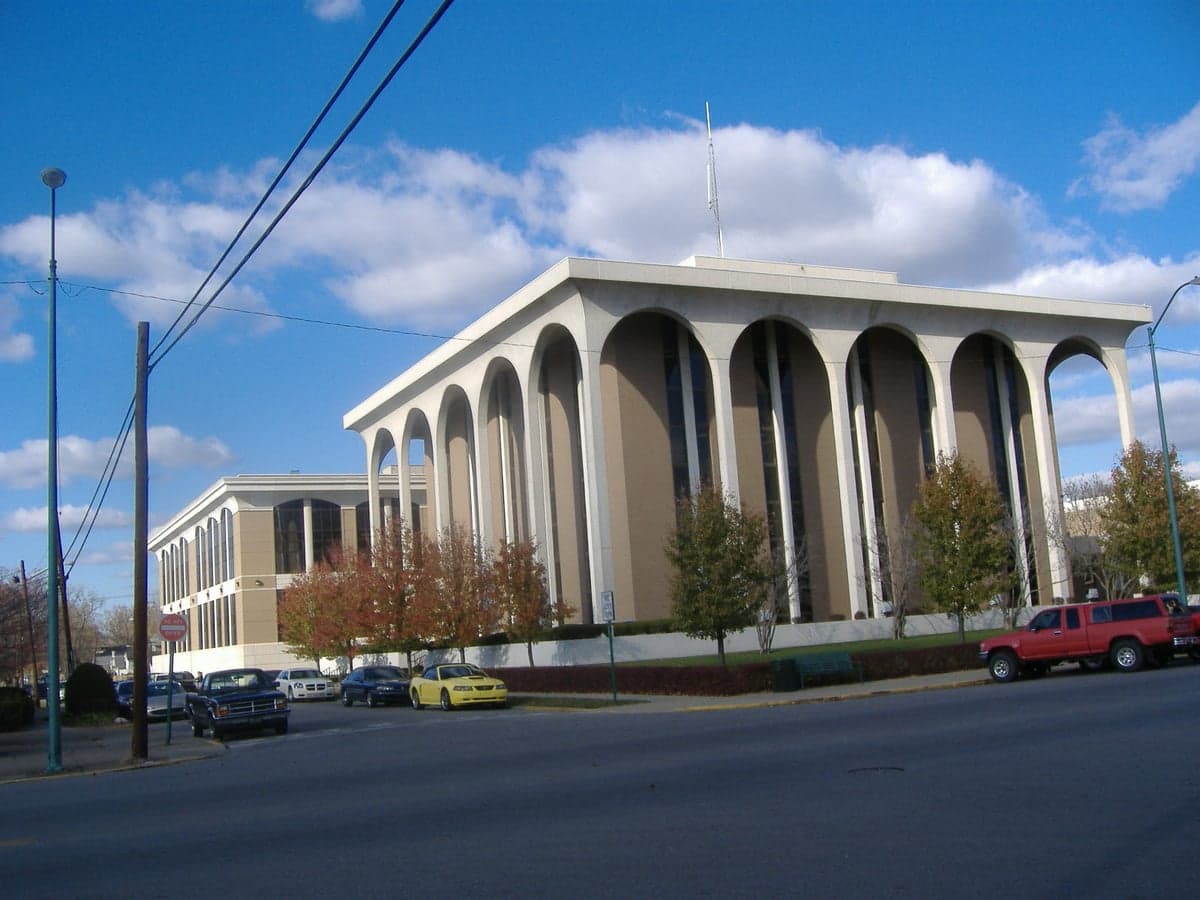
Photo: Wikipedia
Political ClimatePolitical Climate in Clark County
Showing district-level results — no local-only data available.
Local Political AnalysisPolitical Analysis of Clark County
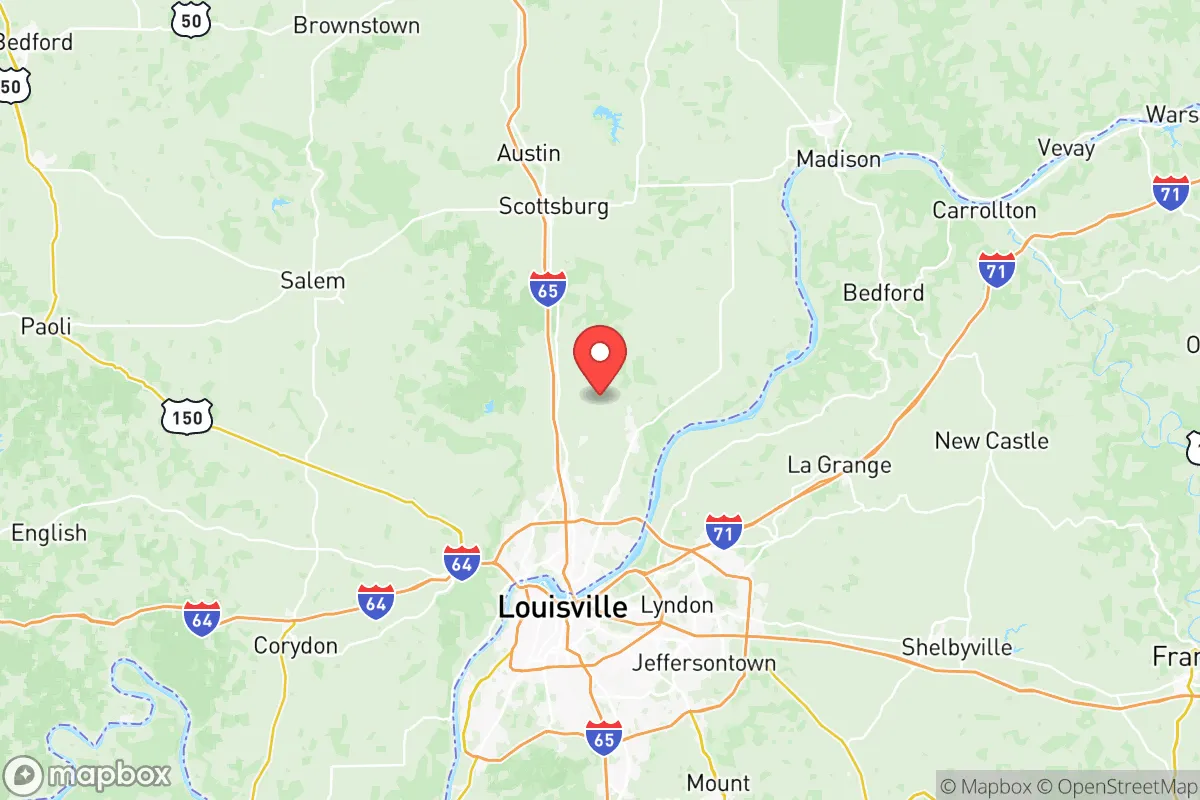
Clark County, Indiana, is a reliably Republican stronghold with a Cook PVI of R+15, making it significantly more conservative than the state of Indiana as a whole, which sits at R+9. This isn't a recent shift; the county has been a GOP bastion for decades, though the margins have tightened slightly in suburban pockets near Louisville. The real story is the internal divide: the rural and exurban towns like Charlestown, Sellersburg, and Henryville are deeply red, while the city of Jeffersonville has become a genuine swing area, and the riverfront neighborhoods of Clarksville and New Albany lean noticeably blue, especially in state and local races.
How it compares
Indiana’s R+9 rating reflects a state that is solidly Republican but with competitive pockets in Marion County (Indianapolis) and Lake County (Gary). Clark County’s R+15 is a different animal. It’s more akin to the deep-red counties of central and southern Indiana, like Johnson or Bartholomew. The difference is that Clark County sits directly across the Ohio River from Louisville, Kentucky, a blue-leaning city. This creates a unique dynamic: many residents commute to Louisville for work, bringing back a more moderate perspective on social issues, but the county’s own political infrastructure—from the county commissioners to the sheriff’s office—remains overwhelmingly Republican. In the 2024 presidential election, Donald Trump carried Clark County by roughly 18 points, while the state as a whole gave him a 12-point margin. The swing precincts are almost entirely in Jeffersonville’s newer subdivisions and the older, walkable neighborhoods of New Albany, where local Democrats can occasionally win city council seats.
What this means for residents
For conservative residents, Clark County is a comfortable place to live. The local government is generally pro-business, taxes are kept low, and Second Amendment rights are strongly supported. You’ll find plenty of gun shops, conservative churches, and Republican campaign signs in every yard from Sellersburg to Charlestown. For liberal residents, the reality is more nuanced. You won’t feel unsafe or unwelcome, but you will be in the minority. The local Democratic Party is active but struggles to field candidates for countywide office. Socially, the area is more tolerant than its voting record suggests—especially in Clarksville and New Albany, where you’ll find LGBTQ+ friendly businesses and a growing arts scene. The key is that political affiliation doesn’t define daily life here; neighbors help each other regardless of party, and the biggest local controversies tend to be about development, school funding, and road projects, not national culture wars.
The cultural and policy distinctions are subtle but real. Clark County has a strong independent streak, partly because of its proximity to Kentucky. For example, the county has resisted adopting some of the more restrictive state-level alcohol laws, and local officials have pushed back on state mandates regarding solar energy and wind farms. The riverfront communities of Jeffersonville and New Albany have invested heavily in parks, bike trails, and mixed-use development, creating a more urban, progressive feel that contrasts with the rural, agricultural character of the county’s interior. Looking ahead, the county is likely to remain R+15 for the foreseeable future, but the blue-trending precincts in Jeffersonville and New Albany could make local races more competitive, especially if the Louisville metro area continues to grow northward across the river. For now, Clark County is a place where you can find both a Trump flag and a Pride flag within the same mile, and most people are fine with that.

State Political ClimatePolitical Climate in Indiana
State Political AnalysisPolitical Environment in the State
Indiana has been a reliably Republican state for decades, with a Cook PVI of R+9 that reflects a solid but not overwhelming conservative lean. The state hasn't voted for a Democratic presidential candidate since 2008, when Barack Obama narrowly won it, and that was largely a one-off driven by the financial crisis and Obama's appeal in the industrial Midwest. Since then, the GOP has tightened its grip: Donald Trump won the state by 16 points in 2020 and 19 points in 2024, and Republicans hold supermajorities in both chambers of the state legislature. The shift has been gradual but steady, driven by the hollowing out of union-heavy industrial towns and the growth of conservative-leaning suburbs and exurbs around Indianapolis and along the I-69 corridor.
Urban vs. rural divide
The political map of Indiana is a textbook case of the urban-rural split. Marion County (Indianapolis) is the only reliably Democratic stronghold, voting blue by about 20 points in recent presidential elections. Lake County, in the northwest corner near Chicago, also leans Democratic, but its margins have shrunk as white working-class voters have shifted right. The rest of the state is overwhelmingly red. Hamilton County, just north of Indianapolis, is the wealthiest and fastest-growing county in the state and votes Republican by about 25 points — it's the engine of suburban conservatism. Allen County (Fort Wayne) and St. Joseph County (South Bend) are more competitive, but both have trended right in recent cycles. The rural south and central regions — places like Greene County, Knox County, and Rush County — routinely vote 70-80% Republican. The only real blue islands are college towns: Monroe County (Bloomington, home to Indiana University) and Tippecanoe County (West Lafayette, Purdue) vote Democratic by comfortable margins, but they're small relative to the rest of the state.
Policy environment
Indiana's policy environment is consistently conservative, with a strong emphasis on low taxes, limited regulation, and traditional social values. The state has a flat income tax rate of 3.15%, which is scheduled to drop to 2.9% by 2027. Property taxes are capped at 1% of assessed value for owner-occupied homes, 2% for rental properties, and 3% for commercial — a constitutional amendment passed in 2010. There is no estate tax. The regulatory climate is business-friendly: Indiana is a right-to-work state (though that law was repealed in 2025, a notable shift), and it has a robust tort reform system that caps non-economic damages in medical malpractice cases. On education, the state has a robust school choice program: the Choice Scholarship program, launched in 2011, now serves over 70,000 students, and the state expanded universal school choice in 2022. Indiana also has a near-total abortion ban, passed in 2022 after Dobbs, with exceptions only for rape, incest, and life of the mother. Election laws are moderately restrictive: voter ID is required, early voting is available for 28 days, and no-excuse absentee voting was eliminated in 2023. The state does not have a sanctuary city policy; in fact, a 2011 law requires local law enforcement to cooperate with federal immigration authorities.
Recent policy direction
The last few years have seen Indiana move further right on most fronts, though with some notable exceptions. Gun and self-defense law: Indiana became a constitutional carry state in 2022, meaning no permit is required to carry a handgun. The state also has a "stand your ground" law and preempts local gun ordinances. Parental and education rights: In 2023, the state passed a Parents' Bill of Rights, requiring schools to notify parents of any changes to a student's health or well-being, and banning instruction on human sexuality in grades K-3. The state also prohibits transgender girls from participating in girls' sports (2022) and bans gender-affirming care for minors (2023). Speech and privacy: Indiana has no broad privacy law, but it does have a data breach notification statute. There is no state-level shield law for journalists, and the state's public records law has been criticized as weak. Medical and bodily autonomy: The abortion ban is the most significant restriction; the state also has a 20-week limit on abortion prior to the ban. Medical marijuana remains illegal, though a limited CBD program exists. Property rights: Indiana is a "strong" property rights state, with no statewide rent control and limited eminent domain authority. Taxation: The flat tax is being phased down, and the state eliminated the business personal property tax for most small businesses in 2022. Voting and ballot access: The 2023 law eliminating no-excuse absentee voting was a significant restriction; the state also purged over 100,000 inactive voters from the rolls in 2024. Overall, the direction is clearly toward more conservative governance, with the legislature overriding local ordinances on issues like firearms and LGBTQ+ rights.
Civil unrest & political movements
Indiana has seen its share of political flashpoints, though they tend to be less dramatic than in neighboring states. The 2020 protests in Indianapolis over George Floyd's murder were large and occasionally violent, leading to property damage and a heavy police response. The state has a small but active progressive movement centered in Bloomington and Indianapolis, with groups like Indivisible Hoosiers and the Indiana Democratic Socialists of America. On the right, the Indiana Republican Party has been increasingly influenced by the conservative grassroots, including the Indiana Family Institute and the Hoosier Conservative Coalition. Immigration politics are less heated than in border states, but there have been controversies over the state's cooperation with ICE, particularly after the 2011 law. There is no serious secession or nullification movement. Election integrity has been a recurring issue: after the 2020 election, some Republican legislators pushed for a full audit, but the state's GOP leadership largely resisted. The most visible flashpoint for a new resident would likely be the abortion debate — the 2022 ban sparked large protests at the Statehouse, and the issue remains a live political battleground.
Projection
Over the next 5-10 years, Indiana is likely to remain solidly Republican, but the margins may narrow slightly. The state is seeing modest in-migration from blue states like Illinois and California, particularly to the Indianapolis suburbs and the I-69 corridor. These newcomers tend to be more moderate, especially on social issues, which could soften the GOP's edge in places like Hamilton County. However, the rural areas are aging and shrinking, and the Democratic base in Lake County and Marion County is not growing fast enough to offset the suburban shift. The state's demographic profile is relatively stable: it's about 85% white, with a growing Hispanic population (now about 8%) concentrated in the northwest and central parts of the state. The Hispanic vote is not monolithic but leans Democratic, though not as strongly as nationally. The biggest wildcard is the state's economic trajectory: if the manufacturing sector continues to decline, the rural-urban divide could widen further. A new resident moving in now should expect a state that remains reliably conservative, with a GOP that is likely to hold the governor's office and legislature for the foreseeable future, but with occasional competitive races in the Indianapolis suburbs and the 1st Congressional District (Lake County).
For a new resident, the bottom line is that Indiana offers a stable, low-tax, business-friendly environment with a conservative social and political culture. If you're a conservative, you'll find a state that generally aligns with your values on guns, taxes, education, and abortion. If you're a liberal, you'll find a state where your vote is unlikely to matter in statewide elections, but where you can still find like-minded communities in Bloomington, Indianapolis, and West Lafayette. The practical takeaway: Indiana is a place where politics is less of a daily obsession than in swing states, but where the direction is clearly rightward. If you're looking for a state that's reliably red and unlikely to flip anytime soon, Indiana fits the bill. If you're looking for a purple state with competitive elections and a more mixed policy environment, you'd be better off looking at Michigan or Pennsylvania.
* Values derived from national, state, county, city and local statistics and may differ in a specific area. Last updated: 2026-07-20T05:42:06.000Z
Narrative content on this page is AI-generated and may contain mistakes. Verify any details that matter before acting on them.
ReloMaps may earn a commission from affiliate links at no extra cost to you.

