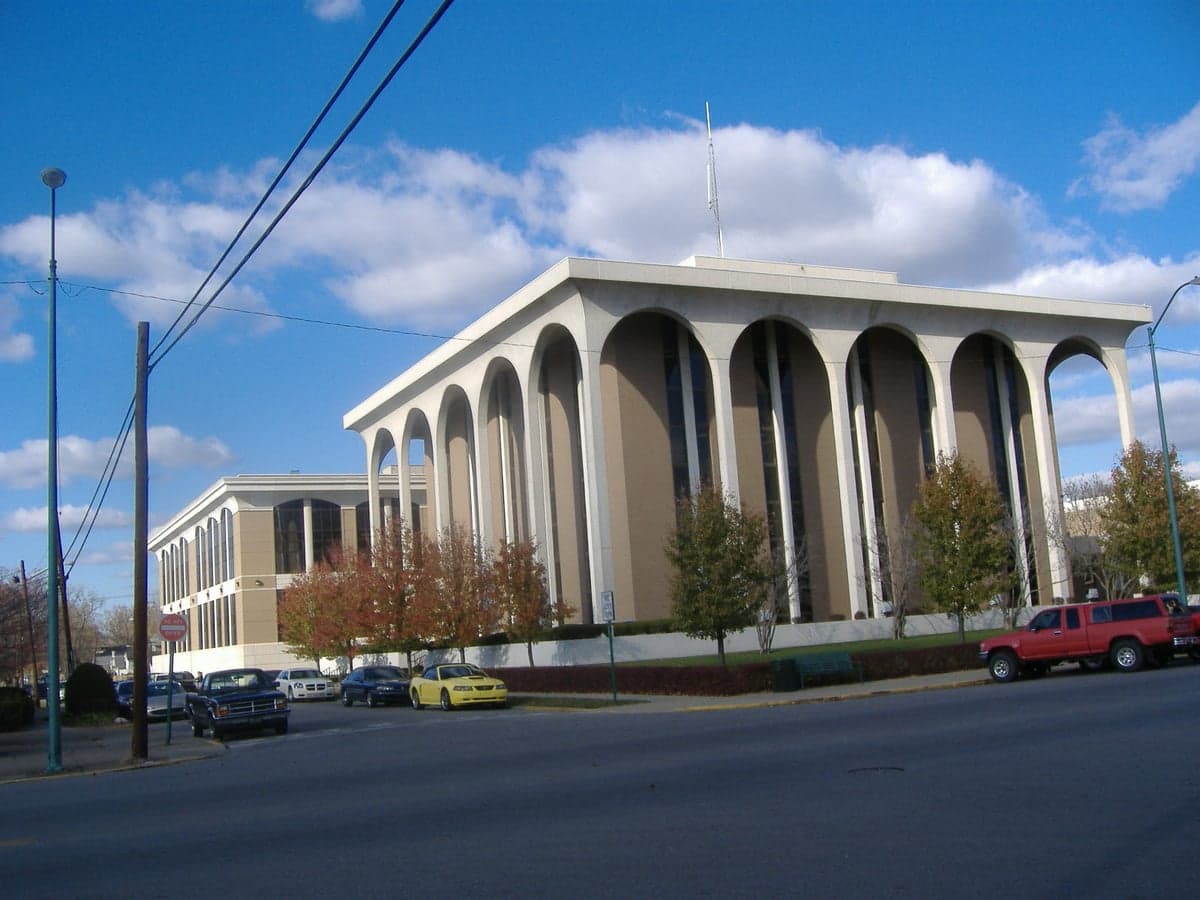
Photo: Wikipedia
Demographics of Clark County
Affluence Level in Clark County
A middle-class area roughly in line with national averages across income, home values, education, and employment.
People of Clark County
Clark County, Indiana, today is a predominantly white, working-to-middle-class community of roughly 122,800 residents, shaped by its historic role as a gateway to the Midwest and its position on the Ohio River opposite Louisville, Kentucky. The county’s population is notably less diverse than the national average, with a foreign-born share of just 2.3% and a college attainment rate of 25.5%, reflecting a blue-collar heritage rooted in manufacturing, river trade, and agriculture. Distinctive identity markers include a strong sense of local patriotism tied to its Revolutionary War founding, a conservative-leaning political culture, and a population that remains concentrated in the county’s older river towns and newer suburban corridors.
Settlement & growth (pre-1960)
The human history of Clark County begins with Native American peoples, primarily the Shawnee and Miami, who used the Ohio River valley as hunting and trading grounds. French explorers and fur traders passed through the region in the 17th and 18th centuries, but no permanent European settlement occurred until after the American Revolution. The county was officially formed in 1801, named for George Rogers Clark, the Revolutionary War hero who captured British forts in the Illinois country. The earliest American settlers were predominantly Scots-Irish and English migrants from Virginia, Kentucky, and the Carolinas, drawn by the promise of cheap land under the Northwest Ordinance. They founded the county seat of Charlestown in 1808 and the river town of Jeffersonville in 1802, which became the primary port and commercial hub.
Through the 19th century, the population grew steadily with the arrival of German and Irish immigrants, who came in significant numbers between 1830 and 1860. Germans settled in Jeffersonville and Clarksville, working as brewers, bakers, and craftsmen, while the Irish provided labor for the construction of the Louisville and Portland Canal and the railroads that linked the county to the national market. The Ohio River steamboat industry and the establishment of the Jeffersonville Quartermaster Depot (a major Union Army supply base during the Civil War) anchored the local economy. After the Civil War, freed African Americans moved into the county, settling primarily in Jeffersonville and Clarksville, where they found work in the river trades, domestic service, and later in the growing railroad yards. By 1900, the county’s population was roughly 90% white, with a small but established Black community concentrated in Jeffersonville’s “Cabbage Patch” neighborhood.
The early 20th century brought a wave of domestic migrants from the rural South, both white and Black, who came for jobs in the expanding manufacturing sector. The opening of the Louisville Cement Company plant in Speed (incorporated 1912) and the Colgate-Palmolive factory in Clarksville (1910) drew workers from Kentucky and Tennessee. The Great Migration saw a modest increase in the county’s Black population, though it remained below 10% of the total. World War II and the postwar boom accelerated industrialization, with the Indiana Army Ammunition Plant in Charlestown employing thousands. Suburbanization began in earnest in the 1950s, as white families moved from Jeffersonville and Clarksville into newly developed subdivisions in Sellersburg and Utica, seeking larger lots and newer homes.
Modern era (post-1965)
The 1965 Hart-Cellar Act had a limited direct impact on Clark County, as the region did not attract the large-scale immigration seen in coastal cities or major Midwestern hubs. The foreign-born population today stands at just 2.3%, far below the national average of roughly 14%. The modest post-1965 immigration that did occur came primarily from Mexico and Central America, with Hispanic residents now making up 6.6% of the county’s population. These families settled in Jeffersonville and Clarksville, often working in construction, landscaping, and the service industry. A small but growing Indian-subcontinent community (0.4% of the population) has emerged in Jeffersonville and Sellersburg, drawn by professional jobs in healthcare and logistics. East and Southeast Asian residents (0.7%) are a tiny presence, concentrated in Clarksville near the River Ridge Commerce Center.
The most significant demographic shift since 1965 has been domestic: the continued suburbanization of the county’s white population and the slow diversification of its older towns. The Black population has grown modestly to 6.9%, with many families moving from Louisville across the Ohio River into Jeffersonville and Clarksville, attracted by lower housing costs and perceived better schools. The county’s overall racial composition remains 80.3% white, a figure that has declined only gradually from 90% in 1980. The college-educated share of the population (25.5%) is below the national average of roughly 33%, reflecting the county’s continued reliance on manufacturing, warehousing, and logistics jobs rather than knowledge-economy employment. The River Ridge Commerce Center, a massive industrial park straddling Jeffersonville and Clarksville, has become the county’s largest employer, drawing workers from across the region but not fundamentally altering the county’s demographic character.
The future
Clark County is projected to become slightly more diverse over the next 10-20 years, but the pace of change will be slow. The Hispanic share of the population is expected to rise from 6.6% to perhaps 10-12% by 2040, driven by natural increase and continued migration for construction and service jobs. The Black population may grow to 8-9%, as some Louisville residents continue to cross the river for more affordable housing. The Indian-subcontinent and East/Southeast Asian communities will likely remain small, as the county lacks the high-tech job base or university presence that attracts larger numbers of these groups. The white population, while declining as a share, will remain the overwhelming majority.
New residential development is concentrating in the southern and western parts of the county, particularly around Sellersburg and Charlestown, where new subdivisions are being built on former farmland. The older river towns of Jeffersonville and Clarksville are seeing infill development and some gentrification, particularly along the waterfront, but the county’s cultural identity remains rooted in its conservative, blue-collar heritage. The county is becoming more suburban and less rural, but it is not becoming a cosmopolitan or highly diverse place. For someone moving in now, Clark County offers a stable, affordable, and predominantly white community with a strong sense of local history, where demographic change is gradual and unlikely to disrupt the existing social fabric.

* Values derived from national, state, county, city and local statistics and may differ in a specific area. Last updated: 2026-07-20T05:42:06.000Z
Narrative content on this page is AI-generated and may contain mistakes. Verify any details that matter before acting on them.
ReloMaps may earn a commission from affiliate links at no extra cost to you.

