
Photo: Wikipedia
Personal Sovereignty in Clark County
Viable for self-reliance. Generally workable, though some barriers may limit total independence.
What does Personal Sovereignty tell us?
Personal Sovereignty measures your capacity for self-reliance and independence with minimal government friction. Higher scores mean fewer barriers between you and the way you want to live... but it assumes you have the space you need and good neighbors.
What does this tell us?
Personal Sovereignty measures your capacity for self-reliance and independence with minimal government friction. Higher scores mean fewer barriers between you and the way you want to live... but it assumes you have the space you need and good neighbors.
State Policy
Energy independence: Importer (35% of energy produced in-state)
Personal Liberty
Homesteading

Personal Liberty Analysis
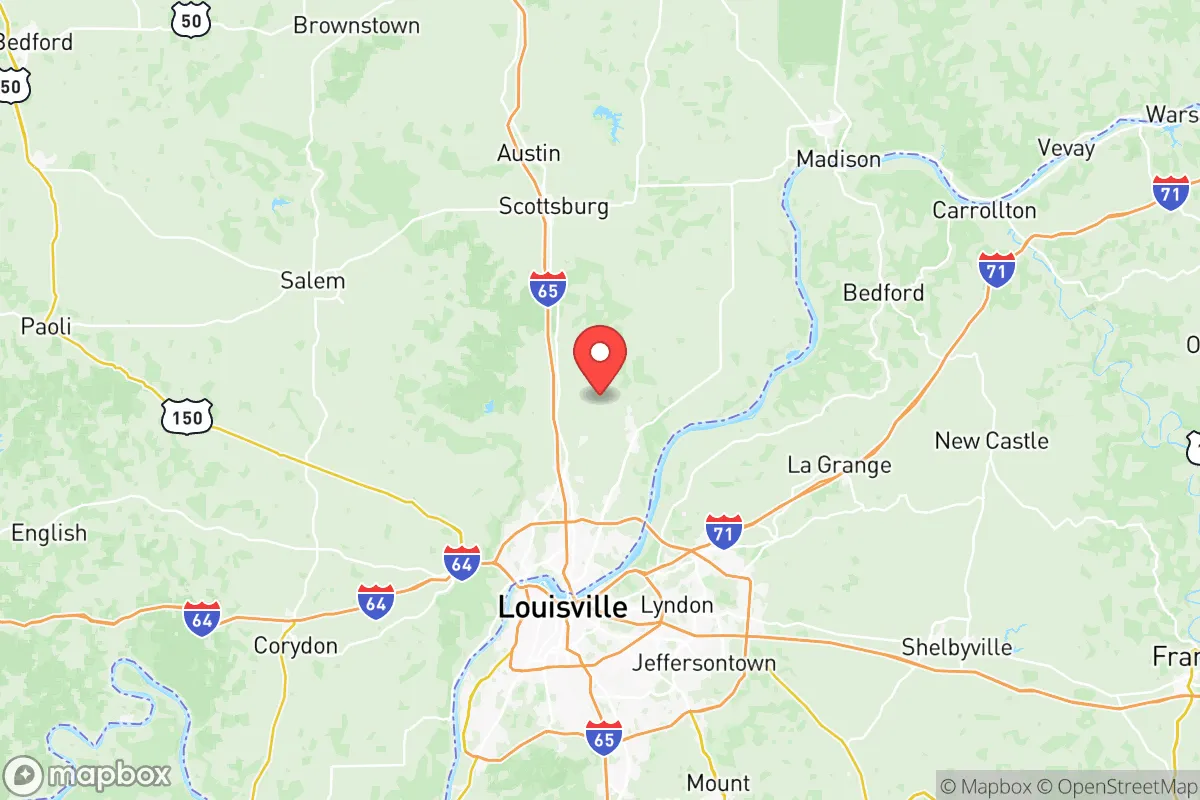
Clark County, Indiana offers a notably high degree of personal sovereignty compared to many urban and suburban areas across the Midwest, driven by Indiana’s generally light-touch state-level governance and a local culture that values self-reliance. The county, anchored by the city of Jeffersonville and including the towns of Clarksville, New Albany, Charlestown, and Sellersburg, provides a regulatory environment where residents face fewer restrictions on property use, self-defense, and personal lifestyle choices than in neighboring Kentucky or much of the Chicago metro area. This autonomy is particularly appealing to individuals and families who prioritize freedom from overbearing local ordinances and seek a community where personal responsibility is the default.
Tax burden and regulatory posture: How Indiana’s policies shape Clark County
Indiana’s state-level tax and regulatory framework creates a favorable environment for personal sovereignty in Clark County. The state imposes a flat income tax rate of 3.15% as of 2025, one of the lowest in the nation, and property taxes are capped at 1% of assessed value for owner-occupied homes, 2% for rental properties, and 3% for commercial real estate. This cap, enshrined in the state constitution, provides predictable tax burdens that allow residents to retain more of their earnings. Clark County’s local option income tax adds roughly 1.5%, but total effective tax rates remain well below those in nearby Louisville, Kentucky, where combined state and local income taxes can exceed 5%. The regulatory posture is similarly restrained: Indiana is a right-to-work state, meaning no one can be forced to join a union as a condition of employment, and occupational licensing requirements are less burdensome than in many coastal states. For example, starting a home-based business in Jeffersonville or Sellersburg requires only a simple business license, with no zoning hurdles for low-impact operations like consulting or online retail. This light-touch approach extends to environmental regulations, where Indiana’s Department of Environmental Management operates with a cooperative rather than adversarial stance, making it easier for small-scale agricultural or light industrial activities to proceed without costly permits.
Self-defense and gun law specifics: What the Second Amendment looks like in practice
Clark County is a stronghold for Second Amendment rights, with Indiana’s permitless carry law, enacted in 2022, allowing any law-abiding adult 18 or older to carry a handgun openly or concealed without a license. This places the county among the most gun-friendly jurisdictions in the Midwest. Local sheriffs in Clark County, including those in Charlestown and New Albany, are known for issuing permits for those who still want them for reciprocity purposes, with a typical turnaround of under 30 days. The county has no local ordinances restricting magazine capacity, firearm types, or storage requirements, meaning residents can own AR-15s, suppressors, and high-capacity magazines without additional state-level restrictions beyond federal NFA rules. Stand-your-ground laws apply statewide, with no duty to retreat in any place where a person has a legal right to be. This legal framework is actively supported by local gun clubs and ranges, such as the Clark County Shooting Complex near Sellersburg, which offers public access for training and practice. For families, this means self-defense is a personal responsibility with minimal government interference, a key consideration for those moving from states with magazine bans or waiting periods.
Self-reliance and homesteading viability: Lot sizes, zoning, and off-grid feasibility
Homesteading and off-grid living are viable in Clark County, but feasibility varies sharply by location. In the rural eastern and southern parts of the county, particularly around the towns of Borden and Henryville, zoning is minimal, and lot sizes of 1 to 5 acres are common and affordable, with prices often under $10,000 per acre. These areas allow for chickens, goats, and even small livestock without special permits, and the county’s building code does not require connection to municipal water or sewer, making rainwater collection and septic systems straightforward. Off-grid solar is legal, with net metering available through Duke Energy and local co-ops, though residents must still maintain a grid connection for backup. In contrast, the more urbanized areas of Jeffersonville, Clarksville, and New Albany have stricter zoning: lot sizes are typically under a quarter-acre, and homeowners’ associations in subdivisions like those near Sellersburg often prohibit livestock, outdoor storage, or visible solar panels. For those seeking true self-reliance, the unincorporated areas near the Clark State Forest or the Ohio River bluffs offer the most freedom, with no HOA oversight and county-level enforcement that is complaint-driven rather than proactive. The county’s soil quality is generally good for gardening, and the growing season runs from April to October, supporting substantial food production.
Personal liberties: Parental rights, medical autonomy, speech, and property
Clark County aligns with Indiana’s broader emphasis on personal liberties, particularly in education and medical choice. Parental rights are strong: Indiana’s 2022 law requires schools to notify parents of any curriculum changes involving human sexuality, and parents can opt their children out of any instruction they find objectionable. The county’s school districts, including Greater Clark County Schools and West Clark Community Schools, generally respect these rights, with minimal pushback from local boards. Medical autonomy is similarly robust: Indiana does not require parental consent for minors to receive routine vaccinations, but it does require parental consent for abortion, and the state’s 2022 near-total abortion ban (with exceptions for rape, incest, and life of the mother) is enforced in Clark County. The county has no local mask or vaccine mandates, and healthcare providers in Jeffersonville and New Albany operate with standard informed consent protocols. Free speech protections are strong, with no local hate speech ordinances or permit requirements for public gatherings beyond standard parade permits. Property rights are protected by Indiana’s strong eminent domain laws, which require just compensation and public use, and Clark County has a low rate of zoning variances or condemnation actions. For families, this means a high degree of control over their children’s education, medical decisions, and property use, with the state acting as a backstop rather than a micromanager.
Overall, Clark County offers a level of personal sovereignty that is notably higher than in neighboring Louisville, Kentucky, or in much of the Chicago metro area, but slightly lower than in deeply rural Indiana counties like Orange or Crawford. The county’s mix of urban centers and rural hinterlands means that residents can choose their level of autonomy: those seeking maximum freedom gravitate toward Borden or Henryville, while those who want a balance of convenience and liberty find Jeffersonville or Sellersburg suitable. For a conservative-leaning individual or family prioritizing self-reliance, gun rights, and minimal government intrusion, Clark County represents a strong option within the Ohio River Valley, with a regulatory environment that respects personal responsibility without imposing unnecessary burdens.

* Values derived from national, state, county, city and local statistics and may differ in a specific area. Last updated: 2026-07-20T05:42:06.000Z
Narrative content on this page is AI-generated and may contain mistakes. Verify any details that matter before acting on them.
ReloMaps may earn a commission from affiliate links at no extra cost to you.

