Political ClimatePolitical Climate in St Clair County
Showing district-level results — no local-only data available.
Local Political AnalysisPolitical Analysis of St Clair County
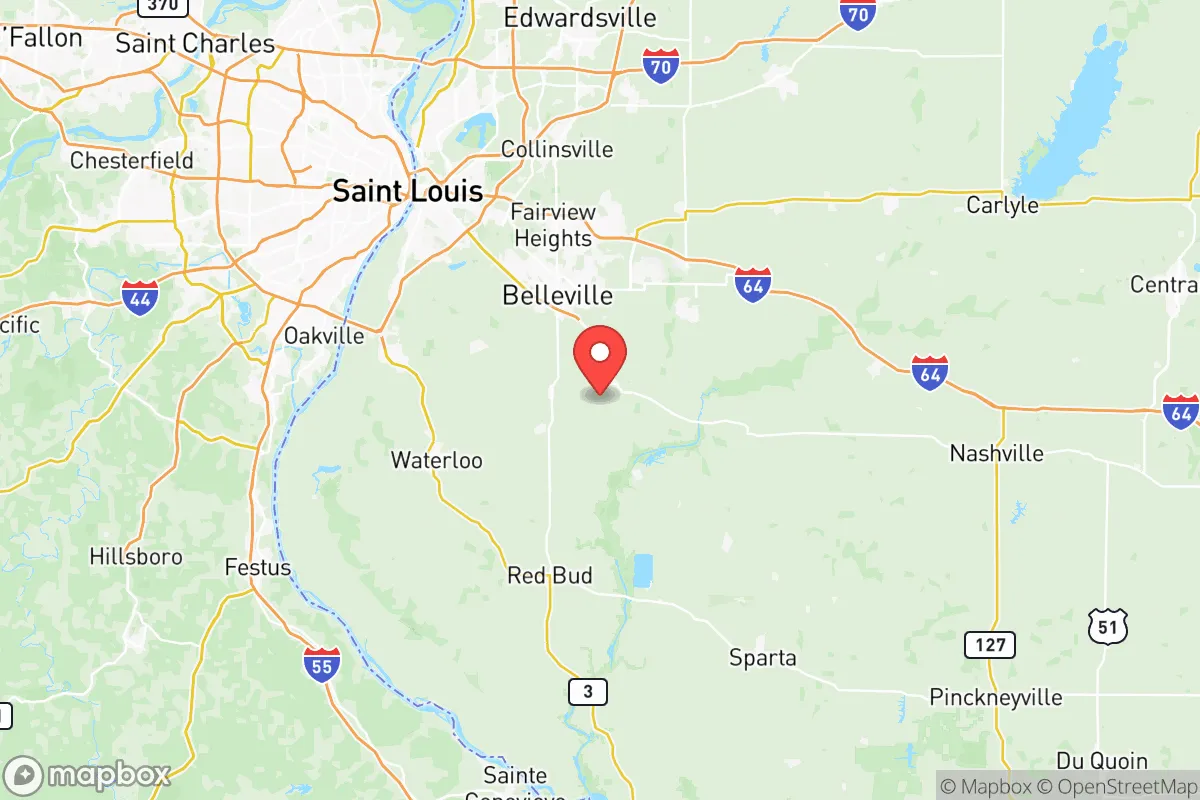
St Clair County, Illinois, is a deep red outlier in a blue state, carrying a Cook PVI of R+22 compared to Illinois’s overall D+7. That 29-point gap makes it one of the most conservative-leaning counties in the Metro East region, but the reality on the ground is more nuanced than a single number suggests. The county’s political weight is split between the reliably Democratic stronghold of East St. Louis and the surrounding suburban and rural precincts that have shifted hard right over the past decade, creating a patchwork where your zip code often predicts your party registration.
How it compares
Illinois as a whole has trended bluer since the 2010s, driven by Chicago and its inner suburbs, but St Clair County has moved in the opposite direction. While the state’s D+7 PVI reflects a comfortable Democratic lean, St Clair’s R+22 rating places it in the same conservative tier as downstate counties like Effingham or Clinton. The divergence is starkest in presidential elections: in 2020, Donald Trump carried St Clair by roughly 12 points, even as Joe Biden won Illinois by 17. That split is not uniform across the county. East St. Louis and parts of Centreville remain overwhelmingly Democratic, often delivering 80-90% of their votes to the Democratic candidate. Meanwhile, Belleville, the county seat, is a genuine swing area—its precincts have flipped between parties in recent cycles, making it the bellwether for countywide races. Further out, O’Fallon, Shiloh, and Mascoutah have become reliably Republican, fueled by an influx of Scott Air Force Base families and St. Louis commuters who favor lower taxes and conservative social policies. The county’s trajectory is clear: the rural and exurban precincts are growing faster than the urban core, so the R+22 rating is likely to hold or even widen in the near term.
What this means for residents
For conservative residents, St Clair County offers a rare pocket of political comfort inside a blue state. Local offices—county board, sheriff, circuit clerk—are dominated by Republicans, and the county’s stance on issues like Second Amendment rights and property taxes aligns with downstate Illinois norms. Conservative voters here rarely feel outnumbered in local government, even if they lose statewide races. For liberal residents, especially those in East St. Louis or Belleville, the experience is more mixed. They can reliably elect Democratic representatives to the Illinois General Assembly and U.S. House—St Clair sits in the safely blue 13th Congressional District—but county-level policy often runs against their preferences. Progressive initiatives on criminal justice reform or environmental regulation tend to stall at the county board level, where the Republican majority holds sway. The practical upshot is that residents learn to navigate two political worlds: one for state and federal elections, where Chicago’s influence dominates, and another for local governance, where St Clair’s conservative lean shapes everything from zoning to school funding.
Culturally, St Clair County feels more like rural Missouri than urban Illinois. Gun rights are a near-universal given—open carry is common, and county officials have publicly resisted state-level firearm restrictions. Tax policy is another flashpoint: the county’s reliance on property taxes to fund schools and services is a perennial complaint, with residents often comparing their rates unfavorably to those across the river in Missouri. Socially, the county is a mix of traditional Midwestern conservatism and a pragmatic, live-and-let-live attitude. You’ll find Trump flags in Mascoutah and Black Lives Matter signs in Belleville, often within a few miles of each other. The political divide is real, but it rarely boils over into the kind of hostility you see in more polarized suburbs. Most folks just get on with it, knowing that the county’s R+22 rating is less a battle cry and more a fact of life—like the humidity in July or the traffic on I-64.

State Political ClimatePolitical Climate in Illinois
State Political AnalysisPolitical Environment in the State
Illinois is a solidly Democratic state with a Cook PVI of D+7, meaning it votes about seven points more Democratic than the national average in presidential elections. The state’s political trajectory over the last 20 years has been a slow but steady march leftward, driven overwhelmingly by the Chicago metro area, while the rest of the state has grown more Republican in response. For a conservative-leaning relocator, the reality is that Illinois is a one-party state at the top level, but the lived experience varies dramatically depending on whether you’re in Cook County, the collar counties, or downstate.
Urban vs. rural divide
The political map of Illinois is a textbook case of the urban-rural split. Chicago and its inner suburbs (Cook County) produce roughly 40% of the state’s vote and deliver margins of 70-80% for Democrats. That alone is enough to outweigh the rest of the state. The collar counties — DuPage, Lake, Kane, McHenry, and Will — have been trending Democratic for a decade, especially in local and presidential races. In 2020, Joe Biden won DuPage County, a former GOP stronghold, by 18 points. Meanwhile, downstate Illinois — places like Effingham, Mount Vernon, and Quincy — vote Republican by margins of 60-70% or more. The divide is stark: drive two hours southwest of Chicago and you’re in deep-red territory where Trump flags still fly and local officials are almost all Republicans. The geographic polarization means that a conservative moving to Naperville (DuPage) will have a very different political experience than one moving to Marion (southern Illinois), even though both are in the same state.
Policy environment
Illinois has a progressive tax structure — actually, a flat income tax of 4.95% after voters rejected a graduated rate amendment in 2020. Property taxes are among the highest in the nation, averaging around 2.1% of home value, which is a major pain point for homeowners. The state’s regulatory posture is business-friendly in some sectors (finance, agriculture) but heavily regulated in others (energy, labor, firearms). Illinois is a shall-issue state for concealed carry, but it also has a ban on assault weapons and high-capacity magazines passed in 2023. Education policy is controlled by the state, with Chicago Public Schools under mayoral control and a statewide school funding formula that favors poorer districts. Healthcare is broadly liberal: Illinois expanded Medicaid under the ACA and has strong protections for abortion access, including the Reproductive Health Act (2019) that codified abortion as a fundamental right. Election laws are among the most accessible in the country: automatic voter registration, no-excuse mail-in voting, and early voting starting 40 days before an election. For a conservative, the policy environment feels like a mixed bag — low-ish income tax but crushing property taxes, gun rights with major restrictions, and a voting system that favors turnout over security.
Recent policy direction
The last five years have seen a clear acceleration of progressive legislation. In 2023, Governor JB Pritzker signed the Protect Illinois Communities Act, banning the sale and manufacture of assault weapons and high-capacity magazines — a direct response to the Highland Park parade shooting in 2022. That law is currently being challenged in federal court, but it remains in effect. On the parental rights front, Illinois has moved in the opposite direction of states like Florida: the state mandates that schools teach LGBTQ-inclusive history and prohibits book bans based on partisan or religious objections. Medical and bodily autonomy is strongly protected: Illinois is a sanctuary state for abortion, with no waiting periods, no parental consent for minors (though notification is required), and state funding for providers. Property rights are relatively strong for landowners, but the state’s eminent domain powers are broad, and property taxes are a constant source of friction. On privacy and surveillance, Illinois has one of the strongest biometric privacy laws in the country (BIPA), which has led to a flood of class-action lawsuits against employers. Voting access has been expanded steadily: automatic voter registration, same-day registration, and universal mail-in ballots were made permanent after the 2020 election. For a conservative, the direction is clear: Illinois is becoming more liberal on guns, education, and healthcare, while maintaining a relatively business-friendly tax structure.
Civil unrest & political movements
Illinois has seen its share of political flashpoints. The 2020 George Floyd protests in Chicago were large and occasionally violent, leading to looting and property damage in the Loop and along Michigan Avenue. The state’s sanctuary policies — Illinois is a "Welcoming State" with laws limiting local police cooperation with federal immigration enforcement — have been a persistent source of tension, especially in downstate counties that have passed resolutions declaring themselves "Second Amendment sanctuaries" in response to the gun ban. Election integrity has been a live issue: in 2020, some downstate counties saw long lines and polling place closures, leading to lawsuits and accusations of voter suppression. The state’s mail-in voting system was heavily criticized by Republicans, though no widespread fraud was found. Organized activist movements are strong on both sides: the Illinois State Rifle Association is a powerful lobbying force, while groups like Indivisible and the Illinois Coalition for Immigrant and Refugee Rights are active in Chicago and the suburbs. A new resident will notice the political divide most acutely in the signage and bumper stickers — "We Back the Badge" in the suburbs, "Defund the Police" in the city — and in the local news, which is heavily segmented by region.
Projection
Over the next 5-10 years, Illinois is likely to continue its leftward drift, but at a slower pace. The Chicago metro area is growing slowly, while downstate is losing population, which means the Democratic base is becoming a larger share of the electorate. In-migration from other states is net negative, with Illinois losing residents to Florida, Texas, and Indiana — many of them conservatives and middle-class families fleeing high property taxes. The state’s fiscal situation is precarious: a massive unfunded pension liability (over $140 billion) will eventually force either tax increases or service cuts, which could accelerate out-migration. For a conservative moving in now, the realistic expectation is that Illinois will remain a Democratic-controlled state with a progressive policy agenda, but with significant regional variation. The collar counties may continue to trend left, but downstate will remain a Republican stronghold. The gun ban will likely survive legal challenges in some form, and property taxes are unlikely to decrease. A new resident should expect to pay high property taxes, live under a Democratic governor, and navigate a state that is increasingly polarized between Chicago and everywhere else.
For a conservative relocator, the bottom line is that Illinois offers a mixed experience: you get a low-ish income tax and a strong economy in the Chicago area, but you pay for it with high property taxes and a progressive policy environment that may clash with your values. If you’re moving to Edwardsville or Carbondale, you’ll find a more conservative community and lower costs, but you’ll still be subject to state laws on guns, taxes, and education that you may disagree with. The practical takeaway is to choose your county carefully — and be prepared for a state that is unlikely to change direction anytime soon.
* Values derived from national, state, county, city and local statistics and may differ in a specific area. Last updated: 2026-07-19T21:21:53.000Z
Narrative content on this page is AI-generated and may contain mistakes. Verify any details that matter before acting on them.
ReloMaps may earn a commission from affiliate links at no extra cost to you.

