Personal Sovereignty in St Clair County
Viable for self-reliance. Generally workable, though some barriers may limit total independence.
What does Personal Sovereignty tell us?
Personal Sovereignty measures your capacity for self-reliance and independence with minimal government friction. Higher scores mean fewer barriers between you and the way you want to live... but it assumes you have the space you need and good neighbors.
What does this tell us?
Personal Sovereignty measures your capacity for self-reliance and independence with minimal government friction. Higher scores mean fewer barriers between you and the way you want to live... but it assumes you have the space you need and good neighbors.
State Policy
Energy independence: Importer (45% of energy produced in-state)
Personal Liberty
Homesteading

Personal Liberty Analysis
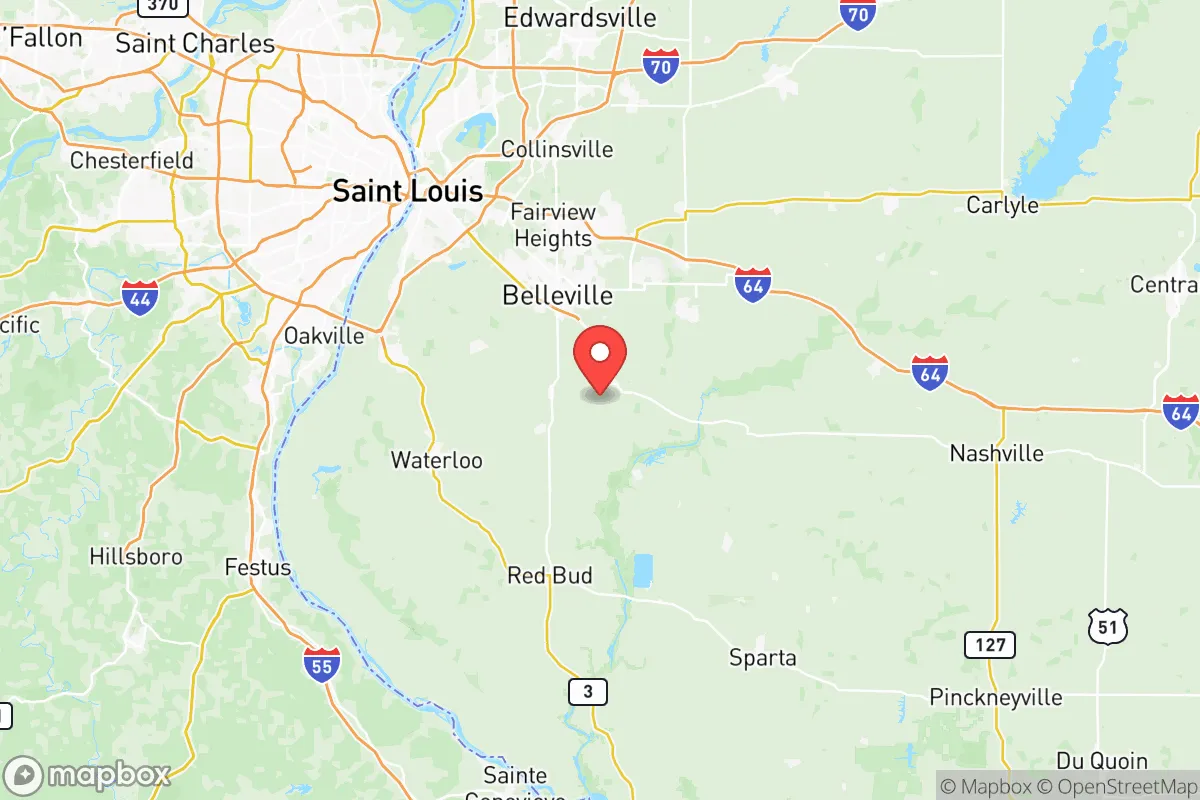
St Clair County, Illinois, offers a nuanced personal sovereignty environment that balances Midwestern practicality with the regulatory realities of a state dominated by Chicago politics. While Illinois as a whole ranks poorly in national freedom indices due to its tax burden and firearm restrictions, St Clair County—particularly its rural townships and smaller municipalities—provides a notably lighter touch than Cook County or the collar counties. Residents in communities like Belleville, Mascoutah, and Millstadt enjoy a degree of local autonomy that contrasts sharply with the state-level posture, making the county a viable option for those seeking personal independence without leaving Illinois entirely.
Tax burden and regulatory posture in St Clair County
Illinois carries a reputation for high taxes, and St Clair County is not exempt from state-level burdens. The state's flat income tax rate of 4.95% and property tax rates that average around 2.1% of assessed value create a baseline cost that is higher than neighboring Missouri or Indiana. However, within St Clair County, property tax rates vary significantly by municipality. Belleville and O'Fallon see higher effective rates due to school district funding and municipal services, while unincorporated areas and smaller towns like New Athens and Marissa often have lower mill rates. The county's regulatory posture is moderate: zoning exists but is not aggressively enforced in rural townships, and business licensing requirements are standard for Illinois. For a single individual or family, the practical impact is that housing costs are lower than the national median—median home values in the county hover around $150,000–$180,000—which partially offsets the tax load. The absence of a county-level sales tax surcharge beyond the state's 6.25% base keeps everyday purchases manageable.
Self-defense and gun law specifics in St Clair County
Illinois is a shall-issue state for concealed carry, requiring a Firearm Owner's Identification (FOID) card and a separate Concealed Carry License (CCL). St Clair County's sheriff's office processes these applications with standard turnaround times, typically 90–120 days for a CCL. The county itself is generally gun-friendly in practice, with multiple indoor and outdoor ranges near Mascoutah and Lebanon, and a strong culture of hunting and sport shooting in rural areas. However, state law imposes restrictions that matter: no carry in public transit, libraries, or government buildings, and a 72-hour waiting period for long gun purchases. Local ordinances in Belleville and East St Louis add no additional restrictions beyond state law, but the latter's higher crime rate means responsible carry is more of a practical necessity. For self-defense in the home, Illinois law recognizes the Castle Doctrine but does not have a Stand Your Ground statute—duty to retreat applies outside the home. This is a meaningful limitation for those accustomed to Texas or Florida's legal framework. Overall, St Clair County is as permissive as Illinois gets for gun owners, but it is not a free state on this front.
Self-reliance and homesteading viability across St Clair County
For those interested in homesteading, off-grid living, or significant self-reliance, St Clair County offers a mixed but workable landscape. Unincorporated areas and townships outside the metro-east corridor allow for larger lot sizes—typically 1 to 5 acres in rural zoning districts—with minimal permitting for agricultural outbuildings, chicken coops, or small-scale livestock. Millstadt, Smithton, and Freeburg are particularly attractive for homesteaders, with active 4-H programs, local feed stores, and a culture that values self-sufficiency. Off-grid feasibility is limited by Illinois building codes that require connection to the electrical grid for new construction, though solar panels with net metering are permitted and increasingly common. Rainwater collection is legal but must comply with state plumbing codes. Zoning in East St Louis and parts of Belleville is more restrictive, with smaller lots and stricter building permits, making serious homesteading impractical. For a family seeking acreage and freedom to raise animals or grow food, the rural townships of St Clair County are a solid choice—far more viable than Cook County or the collar counties, but less permissive than Missouri's rural counties just across the river.
Personal liberties in St Clair County: parental rights, medical autonomy, and property
Illinois law generally favors individual rights in some areas while restricting them in others. Parental rights are strong in practice: school districts in O'Fallon and Mascoutah have conservative-leaning school boards that have resisted state-level mandates on curriculum transparency, and parents retain the right to opt children out of sex education or specific health services. Medical autonomy is more constrained—Illinois has broad vaccine mandates for school attendance and a state-run health insurance exchange that limits private plan options. However, St Clair County's healthcare infrastructure, anchored by Memorial Hospital in Belleville and St Elizabeth's in O'Fallon, offers a range of private providers that respect patient choice. Property rights are well-protected under Illinois law, with clear title processes and a county recorder's office that handles deeds efficiently. The main friction point is eminent domain: the state's broad authority has been used for infrastructure projects like the I-64 and I-255 expansions, but St Clair County has not seen the aggressive use seen in Cook County. Speech and assembly rights are fully protected, and the county's political diversity—ranging from deep red rural precincts to blue urban cores—means a wide range of viewpoints are expressed without legal hindrance.
Compared to other areas in the Midwest, St Clair County occupies a middle ground on personal sovereignty. It is significantly freer than Cook County or Lake County in terms of regulatory burden and gun culture, but it does not match the low-tax, low-regulation environment of Indiana or Missouri. For a conservative-leaning individual or family who cannot or will not leave Illinois, St Clair County—particularly its rural towns and unincorporated areas—offers the best balance of affordability, self-reliance potential, and personal liberty available in the state. The key is choosing the right municipality: Millstadt, Mascoutah, and Freeburg for homesteading and gun culture; Belleville and O'Fallon for economic opportunity with moderate regulation; and avoiding East St Louis entirely if property rights and personal safety are top priorities.

* Values derived from national, state, county, city and local statistics and may differ in a specific area. Last updated: 2026-07-19T21:21:53.000Z
Narrative content on this page is AI-generated and may contain mistakes. Verify any details that matter before acting on them.
ReloMaps may earn a commission from affiliate links at no extra cost to you.

