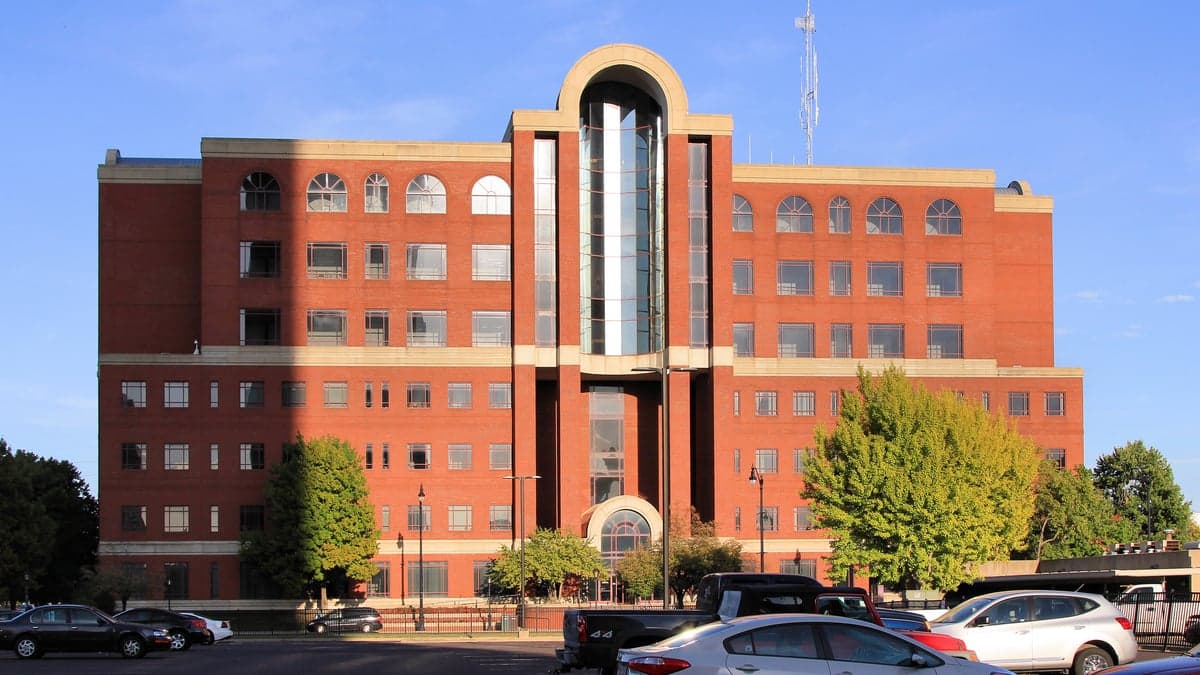
Photo: Wikipedia
Quality of Life in Sangamon County
A livable area that tracks near national norms for affordability, walkability, and neighborhood health.
What does Quality of Life tell us?
Quality of Life measures an area by evaluating factors like cost of living, nearby amenities, country club access, airport proximity, socioeconomic signals and neighborhood character. For large states, this is a general average — quality of life can vary dramatically between metro areas, suburbs, and rural communities within the same state.
What does this tell us?
Quality of Life measures an area by evaluating factors like cost of living, nearby amenities, country club access, airport proximity, socioeconomic signals and neighborhood character. For large states, this is a general average — quality of life can vary dramatically between metro areas, suburbs, and rural communities within the same state.
Cost of Living
27% below national average
152%
The Real Cost of Living in Sangamon County for 2026
| Tier | Individual | Family (4) |
|---|---|---|
| Survival | $15k | $29k |
| Comfortable | $33k | $49k |
| Luxury | $131k+ | $202k+ |
| Elite (Top 5%) | $154k+ | $238k+ |
Quality-of-Life Analysis
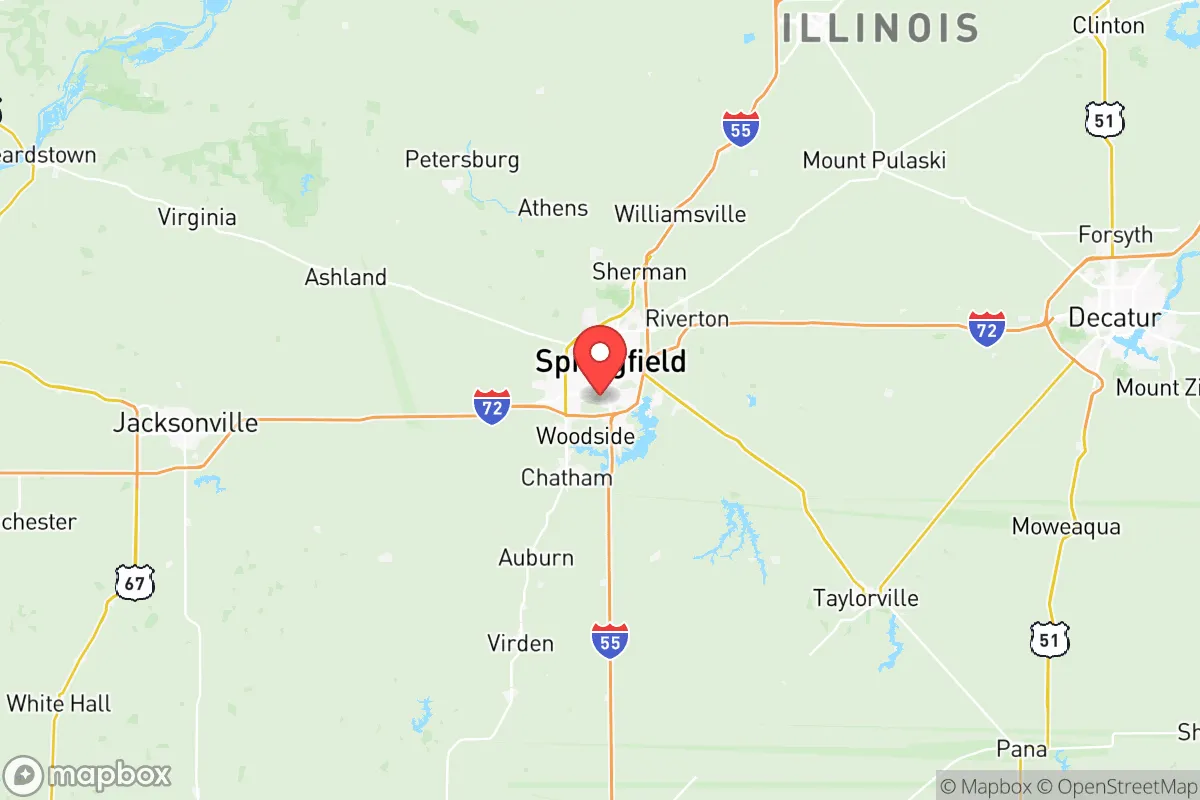
Sangamon County offers a broad quality-of-life spectrum, from the state capital and regional hub of Springfield to quiet farming communities and unincorporated crossroads. The county’s character shifts noticeably within a 20-minute drive: downtown Springfield delivers urban amenities and government employment, while towns like Rochester and Chatham provide suburban family living, and places like Loami or Curran offer deep rural seclusion. This range attracts state workers, young families seeking good schools, retirees downsizing from farms, and commuters who want land without losing access to a mid-sized city.
Largest town(s) & population centers
Springfield dominates the county as the largest city and the seat of Illinois government, with roughly 114,000 residents. Daily life here centers on state government offices, the University of Illinois Springfield, and a downtown corridor of restaurants, museums, and the Abraham Lincoln Presidential Library and Museum. The city’s median home value of $170,300 and median rent of $954 are well below national averages, making it affordable for early-career professionals and state employees. The average commute of 19.5 minutes is notably short for a capital city, allowing residents to live in quieter neighborhoods like the historic Enos Park area or the commercial corridor along Veterans Parkway and still reach downtown in under 15 minutes. Outside Springfield, the village of Chatham (pop. ~13,000) functions as a fast-growing bedroom community with its own school district and a Main Street of local shops, while Rochester (pop. ~3,700) is known for its highly rated K-12 schools and large-lot subdivisions that attract families willing to pay a slight premium over Springfield prices.
Smaller towns & rural pockets
Beyond the suburban ring, Sangamon County contains several incorporated villages and unincorporated areas that define rural life. Pleasant Plains (pop. ~800) sits along the Sangamon River and offers a quiet, agricultural setting with a small downtown and access to the Sangamon River Trail. Loami (pop. ~800) is a classic farm town with a grain elevator and a handful of local businesses, where residents often commute 25 minutes to Springfield. New Berlin (pop. ~1,300) has a historic square and a strong sense of community centered on its school and church events. Unincorporated areas like Curran and Bates are essentially open farmland with scattered homes, no municipal services, and property taxes that can be 20-30% lower than in Springfield. These pockets attract hobby farmers, equestrians, and retirees who want acreage but still need to reach a hospital or grocery store within 30 minutes.
Cost & lifestyle range
The county’s overall cost of living index of 73 (100 = U.S. average) masks significant internal variation. At the low end, rural properties in unincorporated areas like Curran or Bates can have median home values below $120,000, with property taxes roughly half of what a comparable home would cost in Chatham or Rochester. At the high end, newer subdivisions in Chatham and Rochester push median home values above $250,000, and these areas also carry higher property tax rates due to their well-funded school districts. Renters see a similar spread: a two-bedroom apartment in Springfield’s older neighborhoods can rent for $750–$850, while a similar unit in a newer Chatham complex often exceeds $1,100. Amenities follow the same gradient: Springfield offers multiple grocery chains, a regional hospital (HSHS St. John’s), and cultural venues like the Hoogland Center for the Arts, while rural residents rely on small-town hardware stores and drive 20+ minutes for a major grocery run. Commute times are the great equalizer—even from the farthest corner of the county, a drive to downtown Springfield rarely exceeds 35 minutes.
This county works best for people who value choice within a compact geography. State employees and downtown workers can live in a walkable Springfield neighborhood or a rural homestead 20 minutes away. Families who prioritize schools gravitate to Chatham or Rochester, while retirees and remote workers find affordable acreage in Loami or Pleasant Plains. The trade-off is that rural residents accept limited dining and shopping options, and suburbanites pay higher taxes for schools and services. For anyone who wants a midwestern capital city’s jobs and amenities without the cost or congestion of a larger metro, Sangamon County delivers a wide range of viable lifestyles.

Crime in Sangamon County
Crime rates similar to the national median for U.S. locations.
Violent CrimeViolent Crime Analysis
Property CrimeProperty Crime Analysis
Crime Analysis
Sangamon County, anchored by the state capital of Springfield, presents a mixed safety picture where property crime rates significantly exceed national averages while violent crime remains slightly below the U.S. norm. The county's 2024 reported violent crime rate of 243.3 per 100,000 residents and property crime rate of 1,469.3 per 100,000 reflect the challenges of a mid-sized Midwestern county with a concentrated urban core and sprawling rural areas. Residents and prospective movers should understand that safety outcomes vary dramatically between the city of Springfield and outlying communities like Chatham, Rochester, and Sherman.
Crime in context
Sangamon County's violent crime rate of 243.3 per 100,000 sits roughly 10% below the national average of approximately 270 per 100,000, but the property crime rate of 1,469.3 per 100,000 is about 15% higher than the U.S. median. Compared to the state of Illinois, which reported a violent crime rate of roughly 395 per 100,000 in 2024, Sangamon County appears safer — but this comparison is misleading. The state figure is heavily inflated by Chicago's violent crime, meaning Sangamon County's rate is actually elevated relative to downstate Illinois peers. For context, neighboring Macon County (Decatur) reported a violent crime rate near 320 per 100,000, while McLean County (Bloomington-Normal) came in around 210 per 100,000. Property crime in Sangamon County is driven largely by vehicle thefts and burglaries in Springfield's older neighborhoods, particularly near the downtown core and along the MacArthur Boulevard corridor.
What residents experience
Daily life in Sangamon County involves a sharp urban-rural divide. In Springfield, residents commonly report vehicle break-ins, package thefts, and occasional armed robberies near the city's commercial strips. The city's progressive district attorney, elected in 2020 on a reform platform, has implemented policies that critics argue prioritize offender rehabilitation over public safety. These include reduced cash bail requirements for non-violent property offenders and a diversion program that allows first-time burglary and theft suspects to avoid felony charges. While supporters say these measures reduce recidivism, the practical effect has been a noticeable increase in repeat property offenders cycling through the system. In the county's unincorporated areas and smaller towns, residents experience far fewer incidents. Chatham, a village of roughly 13,000, reported just 12 violent crimes in 2024, while Rochester (population 3,700) recorded zero homicides and only 15 property crimes. Sherman, a growing exurb northwest of Springfield, has maintained a violent crime rate below 50 per 100,000 for three consecutive years.
Neighborhood-level variation
The most significant safety disparities exist within Springfield itself. The city's northwest side, including the historic Enos Park neighborhood and areas near the State Capitol complex, sees elevated rates of both violent and property crime. The southeast quadrant, particularly around the University of Illinois Springfield campus and the upscale Hawthorne Place subdivision, reports crime rates comparable to the county's safest suburbs. For families considering relocation, the consensus among local real estate agents and law enforcement is that the safest investments are in Chatham, Rochester, or the newer developments along the I-55 corridor south of Springfield. The county's judicial system, operating under the 7th Judicial Circuit, has drawn criticism from conservative watchdogs for its handling of repeat offenders — a concern that prospective residents should weigh when evaluating long-term safety trends in the urban core.
* Values derived from national, state, county, city and local statistics and may differ in a specific area. Last updated: 2026-07-27T10:46:49.000Z
Narrative content on this page is AI-generated and may contain mistakes. Verify any details that matter before acting on them.
ReloMaps may earn a commission from affiliate links at no extra cost to you.

