
Photo: Wikipedia
Personal Sovereignty in Sangamon County
Viable for self-reliance. Generally workable, though some barriers may limit total independence.
What does Personal Sovereignty tell us?
Personal Sovereignty measures your capacity for self-reliance and independence with minimal government friction. Higher scores mean fewer barriers between you and the way you want to live... but it assumes you have the space you need and good neighbors.
What does this tell us?
Personal Sovereignty measures your capacity for self-reliance and independence with minimal government friction. Higher scores mean fewer barriers between you and the way you want to live... but it assumes you have the space you need and good neighbors.
State Policy
Energy independence: Importer (45% of energy produced in-state)
Personal Liberty
Homesteading

Personal Liberty Analysis
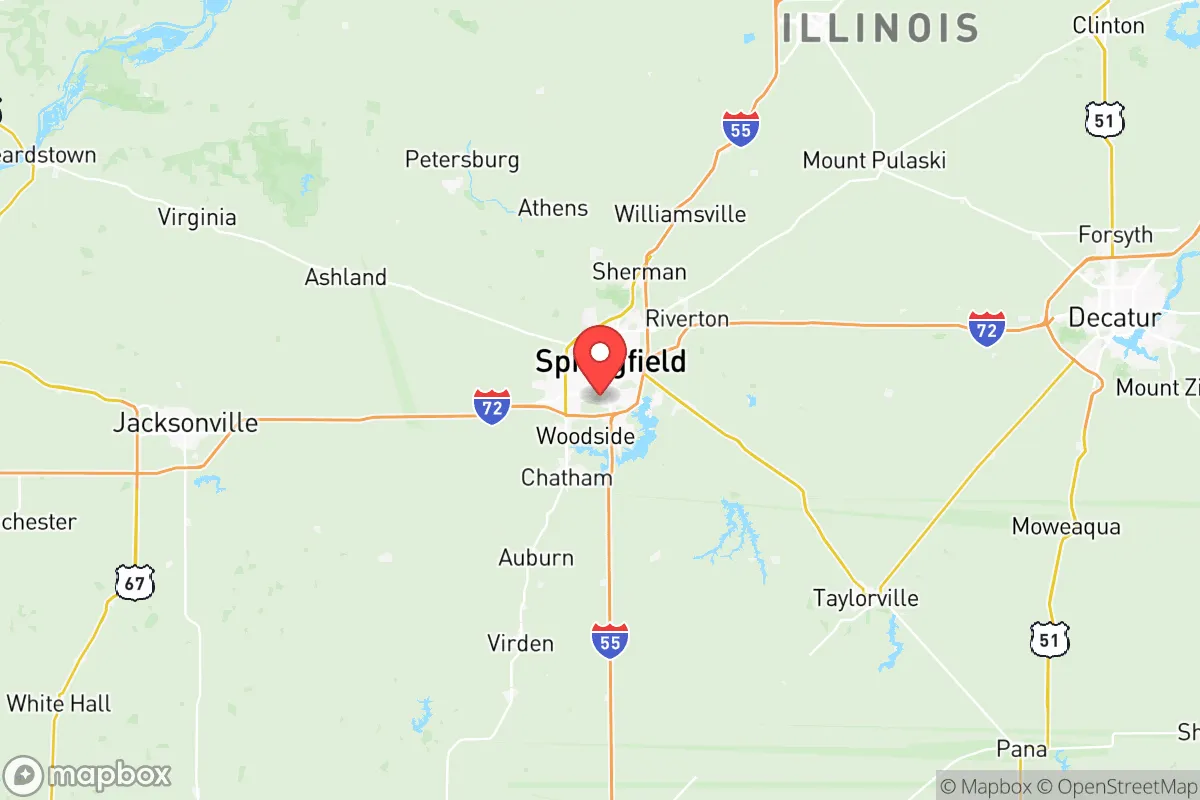
Sangamon County, anchored by the state capital of Springfield, presents a nuanced personal sovereignty environment that balances Midwestern pragmatism with the regulatory realities of a county housing a major state government apparatus. For individuals and families prioritizing autonomy, the county offers a relatively low cost of living and a legal framework that generally respects self-defense rights, but the tax burden and zoning restrictions in more urbanized areas require careful navigation. The county's political landscape is a mix of conservative rural townships and a more moderate-to-liberal Springfield, creating a patchwork of local ordinances that directly impact personal freedom. Understanding where you live within Sangamon County—from the rural expanses of Loami to the suburban corridors of Chatham—is critical to assessing your true level of personal sovereignty.
Tax burden and regulatory posture in Sangamon County
Illinois is not a low-tax state, and Sangamon County reflects that reality. The combined state and local sales tax rate in Springfield is 8.5%, while the county's average property tax rate hovers around 2.1% of assessed value, which is high by national standards. However, the county's regulatory posture is notably lighter in its unincorporated areas. Towns like Pleasant Plains and Rochester operate with minimal zoning enforcement compared to Springfield, where building permits and land-use restrictions are more rigorously applied. For a self-reliant individual, the county's lack of a countywide building code in many rural townships is a significant advantage—you can build a workshop, install a rainwater catchment system, or construct a detached garage without the layers of bureaucracy common in suburban Cook County. The state's income tax is a flat 4.95%, and while there is no county-level income tax, the overall state tax burden (ranking 36th worst in the nation according to the Tax Foundation) is a persistent drag on disposable income. The regulatory environment is best described as "moderate with local variation"—the further you get from the Capitol complex, the fewer rules you encounter.
Self-defense and gun law specifics in Sangamon County
Illinois is a "shall-issue" state for concealed carry permits, and Sangamon County's sheriff's office processes applications efficiently, typically within the 90-day statutory window. The county is home to several gun ranges and firearms retailers, particularly along the I-55 corridor near Sherman and Williamsville, reflecting a strong gun culture in the rural and suburban areas. However, state law imposes significant restrictions: a 72-hour waiting period for all firearm purchases, a Firearm Owners Identification (FOID) card requirement, and a ban on "assault weapons" and high-capacity magazines enacted in 2023 (the Protect Illinois Communities Act). This state-level legislation is a major point of contention for sovereignty-minded residents. In practice, enforcement varies—Springfield police are more likely to enforce the new restrictions, while sheriff's deputies in outlying areas like Loami or New Berlin tend to focus on violent crime rather than magazine capacity. Castle Doctrine and Stand Your Ground laws apply statewide, meaning no duty to retreat in your home or vehicle. For a family prioritizing self-defense, the county offers a lawful path to carry, but the state's regulatory creep is a persistent concern that has driven some residents to consider relocation to Missouri or Indiana.
Self-reliance and homesteading viability across Sangamon County
Homesteading and off-grid living are viable in Sangamon County, but the feasibility depends almost entirely on location. In the unincorporated townships around Pawnee and Divernon, land is affordable—typically $5,000 to $8,000 per acre—and zoning is minimal. You can keep chickens, goats, and even a few head of cattle without a special permit. Rainwater collection is legal and unregulated at the county level, though the state Department of Public Health has guidelines for potable systems. Solar panel installation is straightforward in rural areas, with no county-level permitting hurdles, though net metering with the local utility (Ameren Illinois) is capped at 2% of peak demand, which can limit larger systems. The major constraint is well and septic regulations: the Sangamon County Department of Public Health requires permits for new wells and septic systems, with soil testing mandatory for the latter. This adds $1,000–$3,000 to setup costs but is not prohibitive. In contrast, within Springfield's city limits, urban homesteading is more restricted—backyard chickens are allowed with a permit and neighbor notification, but beekeeping requires registration, and front-yard vegetable gardens are technically prohibited by city code. For serious self-reliance, the rural townships offer a far more permissive environment than the county seat.
Personal liberties in Sangamon County: parental rights, medical autonomy, and property
Parental rights in Sangamon County are generally respected, with the local school districts—particularly in Chatham and Rochester—maintaining conservative curriculum policies that emphasize parental notification for health services. The county's school boards have been relatively quiet on the culture-war issues that dominate larger districts, reflecting a community preference for local control. Medical autonomy is a mixed bag: Illinois has a state-level vaccine mandate for schoolchildren (with medical and religious exemptions), and the state's telehealth laws are permissive, allowing direct-to-consumer lab testing and online prescriptions. However, the state's strict certificate-of-need laws for healthcare facilities limit competition, meaning residents have fewer choices for surgical centers and imaging services than in less-regulated states. Property rights are strong in unincorporated areas—there are no county-level rent control ordinances, and short-term rental regulations (Airbnb/VRBO) are minimal outside Springfield. The county's approach to property is best described as "live and let live" in the rural townships, with the caveat that the state's estate tax (starting at $4 million) and transfer taxes are among the highest in the Midwest. For a family seeking to pass land to the next generation, this is a meaningful financial consideration.
Overall, Sangamon County offers a moderate level of personal sovereignty that is significantly better than Chicago or Cook County but falls short of the libertarian-leaning environments found in parts of Missouri or Indiana. The county's strength lies in its rural townships, where zoning is light, gun culture is respected, and homesteading is practical. Its weakness is the state-level tax burden and the recent firearm restrictions, which are unlikely to be reversed in the near term. For a conservative-leaning family or individual who values self-reliance, the best strategy is to locate in an unincorporated area like Loami or Pawnee, where local governance is minimal and the county's regulatory hand is lightest. The trade-off is proximity to amenities—you'll drive 20–30 minutes to Springfield for groceries, healthcare, and employment—but for those prioritizing autonomy, that distance is a feature, not a bug.

* Values derived from national, state, county, city and local statistics and may differ in a specific area. Last updated: 2026-07-27T10:46:49.000Z
Narrative content on this page is AI-generated and may contain mistakes. Verify any details that matter before acting on them.
ReloMaps may earn a commission from affiliate links at no extra cost to you.

