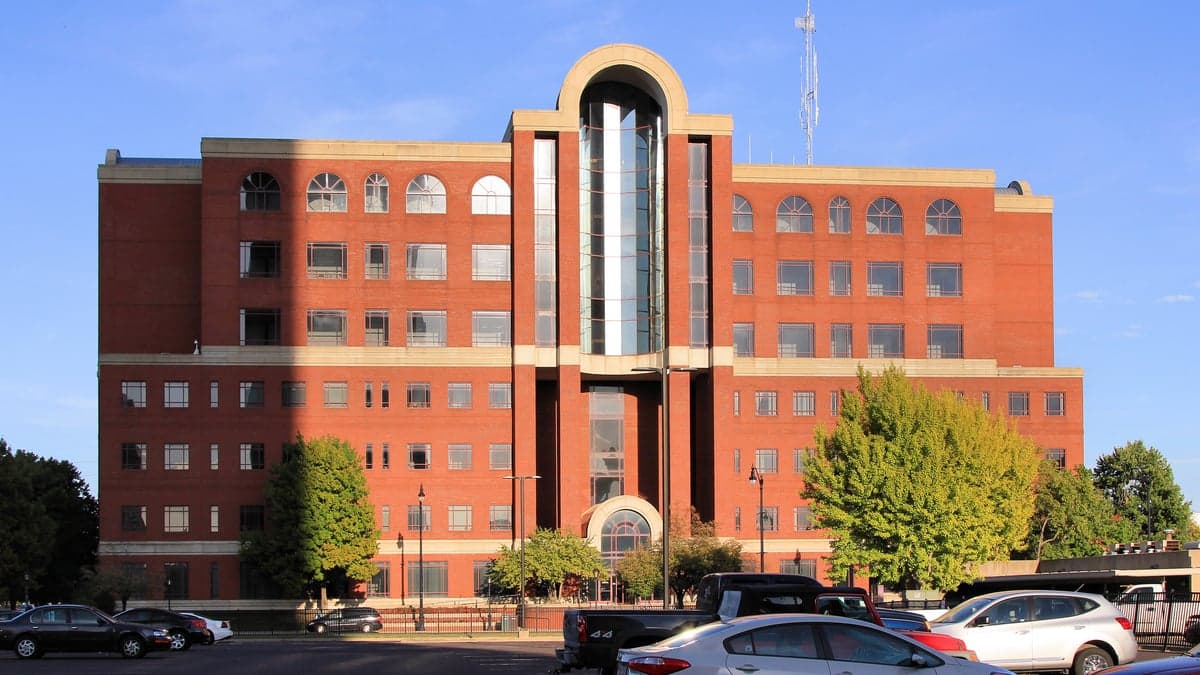
Photo: Wikipedia
Political ClimatePolitical Climate in Sangamon County
Showing district-level results — no local-only data available.
Local Political AnalysisPolitical Analysis of Sangamon County
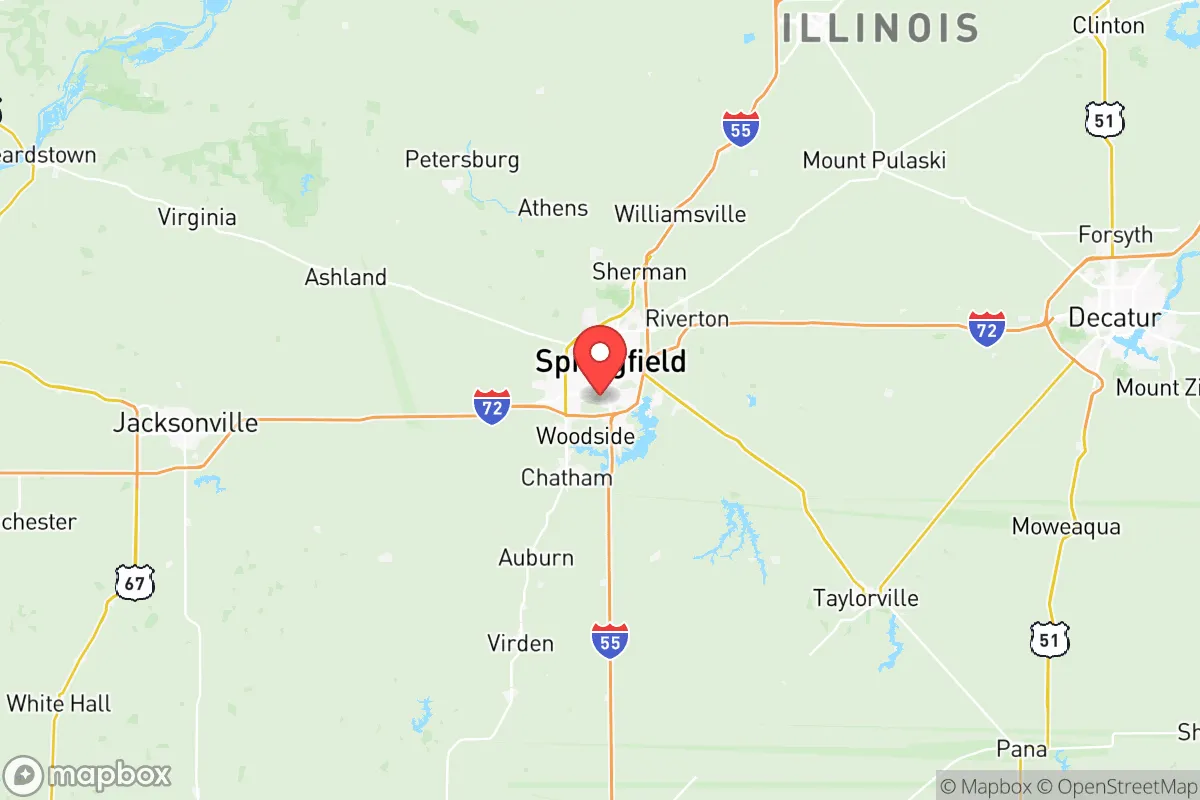
Sangamon County, anchored by the state capital of Springfield, is a politically competitive area that leans slightly Democratic, with a Cook PVI of D+5, making it a bit more conservative than Illinois as a whole (D+7). Over the past decade, the county has shifted rightward, driven by growing Republican margins in its rural and suburban towns, while Springfield itself remains a Democratic stronghold. This dynamic creates a nuanced political landscape where neither party holds a commanding grip, and local elections often hinge on turnout in specific precincts.
How it compares
Compared to Illinois overall, Sangamon County is about two points more Republican, which is a meaningful gap in a state where Democrats dominate Chicago and its suburbs. Within the county, the political divide is stark: Springfield's urban core, particularly precincts near the State Capitol and the University of Illinois Springfield, leans heavily blue, often voting 60-70% Democratic in recent presidential elections. In contrast, towns like Rochester, Sherman, and Williamsville are reliably red, with Republican margins exceeding 20 points in 2024. The swing precincts are in the county's unincorporated areas and smaller communities like Chatham and Riverton, where ticket-splitting is common—voters might back a Republican for president but a Democrat for county board. This pattern mirrors the broader Illinois trend of urban-rural polarization, but Sangamon's smaller scale means local races are more personal and less driven by national party machinery.
What this means for residents
For conservative residents, the county's rightward drift means their votes carry real weight in local races, even if statewide outcomes are a tougher lift. Republican candidates for county board and sheriff have won consistently in recent cycles, and the GOP holds a majority on the county board as of 2026. Liberal residents, meanwhile, find their influence concentrated in Springfield, where city council races and school board elections are reliably progressive. The practical effect is a government that often requires compromise: Springfield's Democratic mayor must work with a Republican-leaning county board on shared issues like economic development and infrastructure. For both sides, the key takeaway is that voter turnout in the swing towns of Chatham and Riverton often decides the county's overall tilt, making those areas the focus of campaign resources during election season.
Cultural and policy distinctions
One of the most visible cultural differences is the relationship with state government. Springfield's economy is heavily tied to state employment and lobbying, which fosters a more pragmatic, deal-making political culture than in deeply red or blue parts of Illinois. You'll see union members and small-business owners mingling at the same coffee shops near the Capitol, and local policy debates—like the recent fight over a new sales tax for road repairs—tend to be less ideological than in other counties. Gun rights are a live issue: while Sangamon County is generally supportive of Second Amendment rights, Springfield has its own ordinances that are stricter than the county's, creating a patchwork that frustrates both sides. The county's trajectory suggests it will remain a bellwether, with its PVI likely staying within a point or two of D+5 for the foreseeable future, as long as the suburban swing towns don't shift decisively toward either party.

State Political ClimatePolitical Climate in Illinois
State Political AnalysisPolitical Environment in the State
Illinois is a solidly Democratic state with a Cook PVI of D+7, but that top-line number masks a deeply fractured political landscape. The state’s blue lean is driven almost entirely by Chicago and its inner suburbs, while the rest of Illinois—from the Mississippi River towns to the southern tip—votes reliably Republican. Over the past 20 years, the Democratic coalition has consolidated power in Springfield, but the GOP has held its ground in the rural and exurban counties, creating a state where your experience of politics depends heavily on which zip code you call home.
Urban vs. rural divide
The political map of Illinois is a tale of two states. Cook County, home to Chicago, casts roughly 40% of the state’s vote and delivers margins of 70-80% for Democrats. That alone is enough to swing the entire state blue. The collar counties—DuPage, Lake, Kane, and Will—have trended Democratic over the last decade, especially in the inner-ring suburbs like Naperville and Arlington Heights, where educated professionals have shifted left. But drive 30 miles west of Chicago, and you hit places like DeKalb and Rochelle, where the landscape turns deep red. Downstate Illinois, from Peoria to Carbondale, is reliably Republican, with many counties voting 65-75% for Trump in 2020. The divide isn’t just urban vs. rural; it’s also cultural. Chicago’s economy is built on finance, tech, and services, while downstate relies on agriculture, manufacturing, and energy. Those different economic bases produce very different political priorities.
Policy environment
Illinois has a progressive tax and regulatory structure that reflects its Democratic leadership. The state has a flat income tax of 4.95%, but voters rejected a graduated income tax amendment in 2020. Property taxes are among the highest in the nation, averaging around 2.1% of home value, which is a major pain point for homeowners. The regulatory posture is business-friendly in some sectors (like data centers and renewable energy) but burdensome in others, particularly for small employers. Education policy is dominated by Chicago Public Schools, which receives a disproportionate share of state funding, though downstate districts often complain about being shortchanged. Healthcare is broadly accessible, with Medicaid expansion under the Affordable Care Act and a strong network of safety-net hospitals. Election laws are among the most liberal in the country: no-excuse mail voting, same-day registration, and automatic voter registration are all in place. For a conservative relocator, the policy environment can feel like a headwind, especially on taxes and school choice.
Recent policy direction
The last five years have seen a sharp leftward shift in Springfield. In 2021, Illinois became the first state to eliminate cash bail entirely, through the SAFE-T Act, though the law was later amended after backlash. On gun rights, the state passed a ban on assault weapons and high-capacity magazines in 2023, a direct response to the Highland Park parade shooting. This has been a flashpoint for gun owners, with many downstate counties declaring themselves “sanctuary counties” for the Second Amendment. On education, the state eliminated parental notification requirements for students changing their gender identity or pronouns at school, a move that has energized conservative opposition. Medical and bodily autonomy: Illinois has codified abortion rights into law and expanded access for out-of-state patients, making it a regional hub for reproductive healthcare. Property rights are generally strong, but local zoning can be restrictive, especially in the Chicago metro. On privacy, the state passed a biometric information privacy act (BIPA) that has led to massive class-action lawsuits against employers. For a conservative relocator, the recent direction is clearly toward more government regulation and fewer traditional liberties, particularly on guns and parental rights.
Civil unrest & political movements
Illinois has a history of organized political activism on both sides. Chicago saw major protests in 2020 after George Floyd’s murder, with looting and property damage that led to a lasting debate about public safety. The city’s status as a sanctuary jurisdiction—it limits cooperation with federal immigration enforcement—has been a persistent point of tension, especially with the influx of migrants from the southern border in 2022-2023. On the right, the Illinois Republican Party has been fractured between moderates and Trump-aligned populists, but grassroots groups like the Illinois Family Institute and local gun rights organizations remain active. There have been calls for downstate counties to secede and form a separate state, but those are largely symbolic. Election integrity has been a hot-button issue, with some rural counties refusing to certify primary results in 2024 over concerns about voting machines, though those disputes were resolved in court. A new resident would notice the political polarization most in the media: Chicago news is relentlessly liberal, while downstate papers and radio are conservative. The flashpoints are real, but daily life is generally peaceful.
Projection
Over the next 5-10 years, Illinois is likely to remain a blue state, but the margins could narrow. Chicago’s population has been declining for decades, while the collar counties are growing and trending more Democratic. Downstate is shrinking and aging, which reduces its electoral weight. The state’s fiscal challenges—a massive unfunded pension liability and high debt—will constrain future spending, but the political will to raise taxes further is limited after the failed graduated income tax vote. In-migration is mostly from abroad and from other blue states, so the cultural tilt will continue leftward. A conservative moving in now should expect to live in a state where their vote matters little in statewide races but can be decisive in local contests. The real action will be at the county and municipal level, where fights over zoning, school boards, and law enforcement will shape daily life. The state’s trajectory is toward more regulation and higher costs, but also toward a more diverse and urbanized economy.
For a new resident, the bottom line is this: Illinois offers a high level of public services and infrastructure, but you’ll pay for them through taxes and fees. If you’re conservative, you’ll find like-minded communities in the suburbs and downstate, but you’ll be swimming against the current on state policy. If you’re liberal, you’ll find a welcoming environment in Chicago and its suburbs, but you’ll have to contend with the state’s fiscal mess. The practical takeaway is to choose your location carefully—your experience in Naperville will be very different from one in Effingham or Galena. The state is big enough to accommodate both worldviews, but it’s not a place where you can ignore politics entirely.
* Values derived from national, state, county, city and local statistics and may differ in a specific area. Last updated: 2026-07-27T10:46:49.000Z
Narrative content on this page is AI-generated and may contain mistakes. Verify any details that matter before acting on them.
ReloMaps may earn a commission from affiliate links at no extra cost to you.

