
Photo: Wikipedia
Personal Sovereignty in Peoria County
Viable for self-reliance. Generally workable, though some barriers may limit total independence.
What does Personal Sovereignty tell us?
Personal Sovereignty measures your capacity for self-reliance and independence with minimal government friction. Higher scores mean fewer barriers between you and the way you want to live... but it assumes you have the space you need and good neighbors.
What does this tell us?
Personal Sovereignty measures your capacity for self-reliance and independence with minimal government friction. Higher scores mean fewer barriers between you and the way you want to live... but it assumes you have the space you need and good neighbors.
State Policy
Energy independence: Importer (45% of energy produced in-state)
Personal Liberty
Homesteading

Personal Liberty Analysis
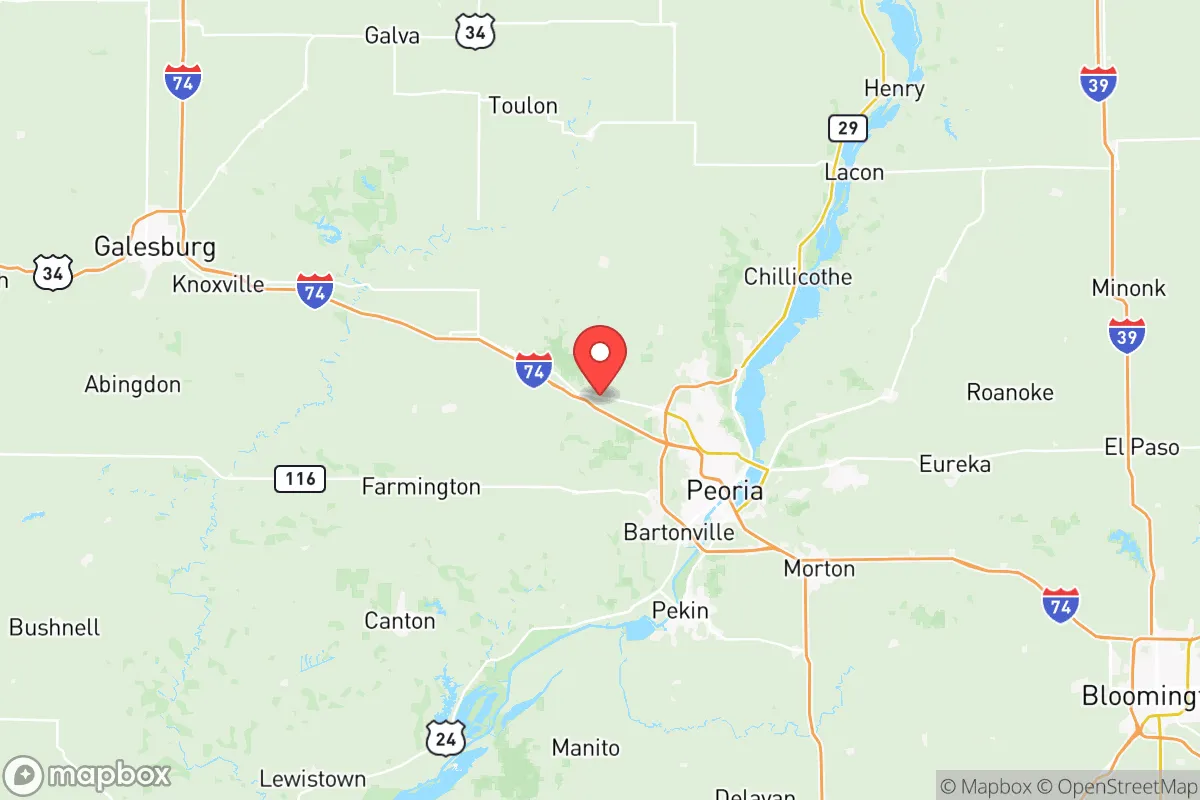
Peoria County offers a mixed personal sovereignty environment where state-level restrictions on firearms and taxation create a baseline regulatory framework, but local conditions vary significantly between the urban core of Peoria and the outlying towns of Chillicothe, Dunlap, Elmwood, and Princeville. Residents in the county's rural stretches enjoy notably greater autonomy in daily life than those within Peoria city limits, though all areas operate under Illinois' relatively centralized state authority. For individuals and families prioritizing personal freedom, the key question is not whether Peoria County is a libertarian stronghold—it is not—but whether its specific balance of tax burden, gun laws, homesteading viability, and personal liberties aligns with your priorities compared to other Midwestern options.
Tax burden and regulatory posture in Peoria County
Illinois imposes a flat state income tax of 4.95% as of 2026, and Peoria County adds a combined sales tax rate of approximately 8.75% in Peoria proper, though rates dip slightly in unincorporated areas and smaller towns like Elmwood and Princeville. Property taxes are the most significant local burden: Peoria County's average effective property tax rate hovers around 2.1% of assessed home value, placing it above the national average but below Cook County levels. The county's regulatory posture is moderate—zoning is enforced in incorporated areas, but rural townships such as Medina and Kickapoo impose fewer restrictions on home-based businesses and accessory structures than the city of Peoria. For a conservative-leaning reader, the tax environment is manageable if you choose a smaller municipality or unincorporated land, but it is not a low-tax haven. The county assessor's office maintains transparent appeal processes, and homestead exemptions are available for owner-occupied primary residences, reducing taxable value by up to $15,000 for most homeowners.
Self-defense and gun law specifics in central Illinois
Illinois is a shall-issue state for concealed carry licenses as of 2026, requiring a 16-hour training course, a $150 application fee, and a background check—Peoria County's sheriff's office processes these with typical turnaround times of 90-120 days. The state maintains a Firearm Owners Identification (FOID) card requirement for possession or purchase of any firearm or ammunition, a system unique to Illinois that some residents view as an infringement. Peoria County itself has no additional county-level gun restrictions beyond state law, but the city of Peoria enforces a municipal ordinance prohibiting the discharge of firearms within city limits except at licensed ranges. This means that if you live in Dunlap, Chillicothe, or rural Princeville, you can legally target shoot on your own property provided you meet setback requirements and do not create a public nuisance. The county's sheriff, as of the 2024 election cycle, has publicly stated a pro-Second Amendment stance and issues concealed carry licenses without discretionary delays. For self-defense-minded individuals, the practical reality is that Peoria County is gun-friendly relative to the Chicago metro area but operates under Illinois' restrictive state framework—you can own and carry, but the administrative hurdles are real.
Self-reliance and homesteading viability across Peoria County
Homesteading and off-grid living are feasible in Peoria County's rural townships but are effectively impossible within Peoria city limits due to zoning codes that mandate minimum lot sizes of 6,000 square feet in residential districts and require connection to municipal water and sewer where available. In contrast, unincorporated areas and towns like Elmwood, Princeville, and Brimfield offer 1- to 5-acre parcels zoned for agricultural use, where residents can keep livestock, install solar panels, and drill private wells without excessive permitting. The county's building code follows the Illinois State Plumbing Code and International Residential Code, but enforcement is less aggressive in rural townships—many landowners build pole barns, greenhouses, and accessory dwellings without pulling permits, though this carries risk if the property is sold. Off-grid water and septic systems require county health department approval, with percolation tests and setback requirements that can cost $2,000-$5,000 upfront. Solar energy is viable: net metering is available through Ameren Illinois, the dominant utility, but the state's interconnection process requires an approved application and utility-grade equipment. For a family serious about self-reliance, the best strategy is to target land in the county's western townships near Elmwood or the northern areas around Chillicothe, where zoning is lightest and neighbors are accustomed to agricultural lifestyles.
Personal liberties in Peoria County: parental rights, medical autonomy, and property
Parental rights in Peoria County are shaped by Illinois state law, which mandates comprehensive sex education in public schools unless parents opt their children out in writing—a policy that has drawn criticism from conservative families. The county's school districts, including Dunlap Community Unit School District 323 and Elmwood Community Unit School District 322, vary in their responsiveness to parental concerns; Dunlap's board has a reputation for being more accommodating to parental input on curriculum and library materials. Medical autonomy is constrained by Illinois' status as a sanctuary state for abortion, with Peoria's Planned Parenthood clinic providing services that some residents oppose, though no county-level restrictions exist. Vaccine mandates for school attendance follow state law, with medical and religious exemptions available but requiring documentation. Property rights are generally respected: Peoria County's zoning board of appeals hears variance requests regularly, and approval rates for reasonable requests—such as building a fence taller than the code limit or operating a small home business—are high in rural townships. The county does not have a rental registration or inspection program outside of Peoria city limits, giving landlords and property owners more freedom to manage their assets without municipal oversight.
Overall, Peoria County offers a moderate level of personal sovereignty that falls short of the freedom found in states like Missouri or Indiana but exceeds what you would experience in Cook County or the collar counties around Chicago. The tax burden is real but manageable if you choose a smaller municipality or unincorporated land, the gun laws are restrictive by national standards but workable for those who complete the licensing process, and homesteading is viable in the county's rural stretches. For a conservative-leaning individual or family, the smartest move is to locate in Elmwood, Princeville, or rural Chillicothe rather than Peoria proper—the difference in regulatory freedom between the city and the townships is substantial. If maximum autonomy is your priority, Peoria County is a compromise; if you want Illinois living with room to breathe, it is one of the better options in the state.

* Values derived from national, state, county, city and local statistics and may differ in a specific area. Last updated: 2026-07-17T15:52:30.000Z
Narrative content on this page is AI-generated and may contain mistakes. Verify any details that matter before acting on them.
ReloMaps may earn a commission from affiliate links at no extra cost to you.

