Strategic Assessment of Mchenry County
Meaningful friction. Expect exposure to either population pressure, blast zones, or natural disaster risk. Consider buying a retreat property.
What does the Strategic Assessment tell us?
Our Strategic Assessment grades tactical survivability of an area. Major population centers, military targets, fallout zones, natural disasters, and border exposure all drive risk — lower exposure means a more defensible position in a crisis.
This is heavily inspired by Joel Skousen's Strategic Relocation book. Highly recommended you checkout the book ($)What does this tell us?
Our Strategic Assessment grades tactical survivability of an area. Major population centers, military targets, fallout zones, natural disasters, and border exposure all drive risk — lower exposure means a more defensible position in a crisis.
This is heavily inspired by Joel Skousen's Strategic Relocation book. Highly recommended you checkout the book ($)Strategic Pillars
Key Distances
Strategic Assessment Analysis
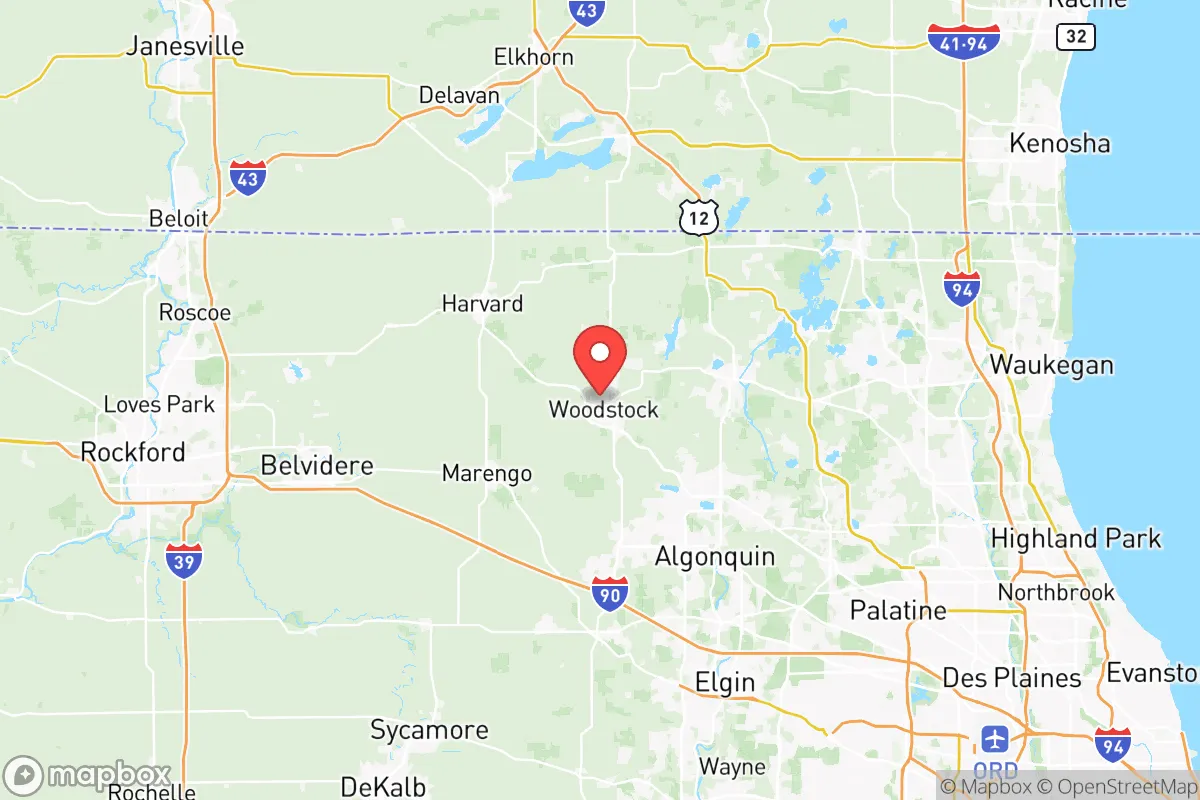
McHenry County, Illinois, offers a compelling strategic position for relocators prioritizing resilience and self-sufficiency, balancing proximity to Chicago’s economic engine with a distinctly rural and suburban character that provides meaningful buffer from urban risks. The county’s location in the far northern reaches of the Chicago metropolitan area places it roughly 50 miles northwest of the Loop, a distance that insulates it from the immediate fallout of a major urban disaster while still allowing access to regional infrastructure. With a population of just over 310,000 spread across communities like Crystal Lake, Woodstock, and McHenry, the area maintains a low-density footprint that supports both community cohesion and individual preparedness, making it a practical choice for families and single individuals alike who are thinking seriously about long-term stability.
Geographic position and natural advantages for long-term stability
McHenry County sits at the edge of the Driftless Area, a region of rolling hills and glacial moraines that escaped the flattening of the last ice age, giving it a topography rare in the Midwest. This terrain provides natural drainage and defensible high ground, especially in the western portions near Harvard and Marengo, where elevations rise to over 1,000 feet. The county is bisected by the Fox River, which flows south through McHenry and Algonquin, offering a reliable freshwater source that is less prone to contamination than the Lake Michigan intake that serves Chicago. The river’s watershed is fed by numerous small lakes and wetlands, including the Chain O’Lakes to the north, which act as natural reservoirs. The area’s agricultural land—still active in the western and northern townships—supports local food production, with farms around Hebron and Richmond growing corn, soybeans, and hay. This combination of water access, elevation, and arable land gives McHenry County a baseline resilience that many suburban counties lack, as it can theoretically sustain a reduced population without relying entirely on external supply chains.
Risk exposure and proximity to fallout-relevant landmarks
While McHenry County avoids the worst of urban concentration risks, it is not without exposure to man-made and natural hazards that a strategic relocator must weigh. The county lies within 60 miles of the Braidwood Generating Station, a nuclear power plant in Will County, and roughly 70 miles from the Byron Nuclear Generating Station to the west. In the event of a radiological incident, prevailing winds from the southwest could carry fallout toward McHenry County, though the distance provides a significant safety margin compared to communities within 20 miles of either plant. More immediate is the county’s proximity to Chicago’s O’Hare International Airport, a major transportation hub and potential target for terrorism or infrastructure failure; the airport is about 40 miles southeast of Crystal Lake, placing the county outside the most likely blast or contamination zones but within the range of secondary effects like supply chain disruption or mass evacuation traffic. Natural risks are moderate: the area experiences occasional tornadoes, with an average of one to two per year, and heavy snowstorms can isolate rural roads for days. Flooding along the Fox River is a localized concern in low-lying parts of McHenry and Algonquin, but the county’s overall flood risk is lower than in the flatlands to the south. The presence of the McHenry County Fairgrounds in Woodstock, a large open space, could serve as a staging area for emergency response, but it also represents a potential concentration point for displaced populations in a crisis.
Practical resilience for a relocator: food, water, energy, and defensibility
For a relocator focused on self-sufficiency, McHenry County’s practical resilience is a mixed picture that rewards preparation. Water access is strong: the Fox River and its tributaries provide surface water, and the area sits atop the shallow Cambrian-Ordovician aquifer, which supports private wells in rural zones. Municipal water systems in Crystal Lake and Woodstock are treated and reliable, but a well with a hand pump offers true independence. Food security is bolstered by active farmers’ markets in McHenry, Woodstock, and Cary, as well as a network of small-scale farms that sell directly to consumers; the McHenry County Farm Bureau reports over 1,200 farms in the county, many of which raise livestock and poultry. However, the county is not a major grain or vegetable exporter, and a long-term disruption would require residents to shift to home gardening and animal husbandry, which is feasible on the larger lots common in unincorporated areas. Energy infrastructure is a vulnerability: the county is served by ComEd, with power lines that are above ground and susceptible to ice storms and wind damage. Solar potential is moderate, with about 200 sunny days per year, but net metering policies in Illinois are favorable, and off-grid solar installations are legal in most townships. Natural gas is widely available in towns but absent in rural zones, making wood heating a practical backup—the county’s forest cover, particularly in the Moraine Hills State Park area, provides a sustainable fuel source. Defensibility is a relative strength: the county’s dispersed population and network of county roads and state highways (including IL-47 and IL-31) create multiple egress routes, while the lack of a single choke point reduces the risk of being trapped. The McHenry County Sheriff’s Office maintains a strong presence, and the area’s conservative leanings—the county voted for Donald Trump by a 12-point margin in 2024—suggest a population that values self-reliance and community watchfulness, though this also means less tolerance for unprepared newcomers in a crisis.
The overall strategic picture for McHenry County is one of calculated advantage for the relocator who values resilience without total isolation. It offers a Goldilocks position: close enough to Chicago for employment and medical access—Northwestern Medicine’s McHenry Hospital and Centegra Hospital in Woodstock provide regional care—but far enough to avoid the worst of urban collapse scenarios. The county’s natural resources, from the Fox River to its working farms, give it a foundation for post-disaster recovery that denser suburbs like DuPage or Lake County lack. However, the risks from nearby nuclear plants and the potential for mass evacuation from Chicago mean that a serious preparedness plan must include multiple water sources, a year’s supply of non-perishable food, and a defensible home site away from major roads. For the single individual or family willing to invest in those preparations, McHenry County represents one of the more balanced options in the upper Midwest—a place where the land itself offers a buffer, and the community’s character aligns with the values of self-sufficiency and mutual aid that underpin true resilience.

* Values derived from national, state, county, city and local statistics and may differ in a specific area. Last updated: 2026-09-15T09:35:38.000Z
Narrative content on this page is AI-generated and may contain mistakes. Verify any details that matter before acting on them.
ReloMaps may earn a commission from affiliate links at no extra cost to you.

