Personal Sovereignty in Mchenry County
Viable for self-reliance. Generally workable, though some barriers may limit total independence.
What does Personal Sovereignty tell us?
Personal Sovereignty measures your capacity for self-reliance and independence with minimal government friction. Higher scores mean fewer barriers between you and the way you want to live... but it assumes you have the space you need and good neighbors.
What does this tell us?
Personal Sovereignty measures your capacity for self-reliance and independence with minimal government friction. Higher scores mean fewer barriers between you and the way you want to live... but it assumes you have the space you need and good neighbors.
State Policy
Energy independence: Importer (45% of energy produced in-state)
Personal Liberty
Homesteading

Personal Liberty Analysis
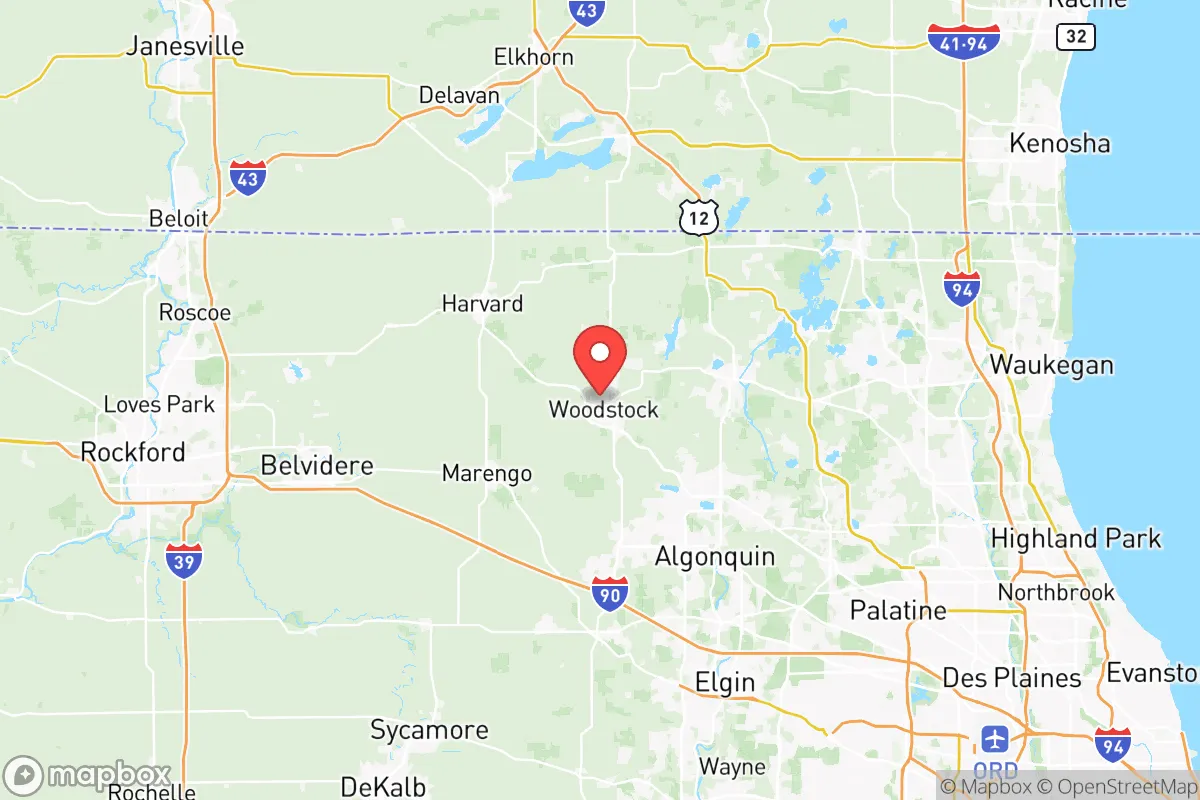
McHenry County, Illinois, offers a notably higher degree of personal sovereignty than much of the Chicago metropolitan area, particularly for residents who prioritize self-reliance, property rights, and a lighter regulatory touch. While Illinois as a whole imposes a significant state-level tax burden and firearm regulatory framework, McHenry County’s local governance, zoning flexibility, and cultural leanings create a more autonomy-friendly environment than neighboring Cook, Lake, or Kane counties. For a conservative-leaning individual or family, the county represents a pragmatic balance: proximity to Chicago’s economic opportunities without the heavy-handed municipal oversight found closer to the city.
Tax burden and regulatory posture in McHenry County
McHenry County’s overall tax burden is moderate by Illinois standards, but significantly lower than Cook County’s. The county’s property tax rate averages around 2.1% of assessed value, which is below the state average of 2.3% and far below Cook County’s 2.5%+ rates. However, this is still high compared to states like Texas or Florida. The county’s regulatory posture is generally permissive at the township level. Unincorporated areas—such as those near Harvard, Hebron, and Richmond—offer the lightest touch, with minimal zoning restrictions on outbuildings, home businesses, and livestock. In contrast, incorporated cities like Crystal Lake, Cary, and Algonquin enforce stricter building codes, setback requirements, and business licensing. The county’s sales tax is 7.25% (state + county), and there is no local income tax beyond the state’s flat 4.95% rate. For a self-employed individual or small business owner, the county’s lack of a local payroll tax is a meaningful advantage over Chicago’s 1.5% city levy.
Self-defense and gun law specifics in McHenry County
Illinois is a shall-issue state for concealed carry, and McHenry County’s sheriff’s office processes permits efficiently, typically within 90 days. The county is home to a strong gun culture, with multiple indoor and outdoor ranges, including the McHenry County Conservation District’s range near Richmond and private clubs like the Harvard Sportsmen’s Club. Local law enforcement is generally supportive of Second Amendment rights; the sheriff’s office has publicly stated it will not enforce any state-level “assault weapon” registration mandates that it deems unconstitutional, a stance shared by sheriffs in neighboring Boone and DeKalb counties. However, state law still prohibits carrying in public parks, libraries, and government buildings, and the county’s municipalities—particularly Woodstock, McHenry, and Crystal Lake—have local ordinances restricting discharge of firearms within city limits. For rural property owners in unincorporated areas near Marengo or Union, target shooting on private land is generally permitted, provided it’s done safely and not within 300 feet of an occupied dwelling. The county’s gun-friendly culture is strongest in its northern and western townships, where hunting and sport shooting are common.
Self-reliance and homesteading viability in McHenry County
McHenry County offers some of the best homesteading and off-grid viability in northeastern Illinois, though it falls short of the true rural autonomy found in central or southern Illinois. Unincorporated parcels in townships like Dunham, Burton, and Chemung allow for acreage lots of 5 to 40 acres, with minimal zoning interference for gardens, chicken coops, and small livestock. The county’s zoning code permits up to four chickens per acre in most agricultural zones, and beekeeping is allowed without a permit on parcels over one acre. Off-grid living is legally challenging: Illinois requires connection to the electrical grid for new construction, though solar panels with net metering are permitted. Rainwater collection is legal for non-potable uses, and composting toilets are allowed with a county health department permit. The county’s soil quality is excellent for gardening, with loamy soils in the Harvard and Hebron areas. However, well and septic permits are required for any dwelling, and the county’s health department inspects all systems. For a family seeking a self-sufficient lifestyle, the unincorporated areas around Woodstock and Marengo offer the best balance of affordability and regulatory flexibility, with land prices averaging $8,000–$12,000 per acre—far cheaper than Lake County’s $30,000+ per acre.
Personal liberties in McHenry County: parental rights, medical autonomy, speech, and property
McHenry County’s local governance is generally respectful of parental rights and free speech. The county’s school districts—particularly Harvard CUSD 50 and Marengo-Union Elementary District 165—have adopted policies allowing parents to opt children out of sex education and controversial curriculum materials, a contrast to more progressive districts in Cook County. Medical autonomy is limited by state law: Illinois mandates vaccination for school attendance and has a strict medical marijuana program, though the county’s sheriff has historically deprioritized low-level cannabis enforcement. Property rights are strong in unincorporated areas, where the county’s zoning board of appeals routinely grants variances for home occupations, accessory dwellings, and non-conforming uses. In incorporated cities like Crystal Lake and Algonquin, homeowners’ associations and municipal codes impose stricter rules on signage, parking, and exterior modifications. Free speech is protected under the First Amendment, and the county’s public comment periods at board meetings are generally open and civil. The county’s political climate is reliably conservative: McHenry County voted +14 points Republican in the 2024 presidential election, a stark contrast to Cook County’s +35 Democratic margin. This political alignment translates into a local culture that values individual responsibility over collective mandates.
Overall, McHenry County offers a meaningful degree of personal sovereignty relative to the rest of the Chicago metro area, but it is not a libertarian paradise. The state-level tax burden and firearm restrictions are real constraints, and the county’s incorporated cities impose typical suburban regulations. For a conservative-leaning individual or family who wants to live within commuting distance of Chicago while maintaining a self-reliant lifestyle, the unincorporated townships near Harvard, Hebron, and Marengo provide the best autonomy-to-proximity ratio. Compared to Lake County’s high taxes and Cook County’s regulatory density, McHenry County is a clear step toward greater freedom—but those seeking truly minimal government will find more latitude in rural Wisconsin or Indiana, just an hour’s drive north or east.

* Values derived from national, state, county, city and local statistics and may differ in a specific area. Last updated: 2026-09-15T09:35:38.000Z
Narrative content on this page is AI-generated and may contain mistakes. Verify any details that matter before acting on them.
ReloMaps may earn a commission from affiliate links at no extra cost to you.

