Quality of Life in Mchenry County
A livable area that tracks near national norms for affordability, walkability, and neighborhood health.
What does Quality of Life tell us?
Quality of Life measures an area by evaluating factors like cost of living, nearby amenities, country club access, airport proximity, socioeconomic signals and neighborhood character. For large states, this is a general average — quality of life can vary dramatically between metro areas, suburbs, and rural communities within the same state.
What does this tell us?
Quality of Life measures an area by evaluating factors like cost of living, nearby amenities, country club access, airport proximity, socioeconomic signals and neighborhood character. For large states, this is a general average — quality of life can vary dramatically between metro areas, suburbs, and rural communities within the same state.
Cost of Living
11% above national average
126%
The Real Cost of Living in Mchenry County for 2026
| Tier | Individual | Family (4) |
|---|---|---|
| Survival | $22k | $41k |
| Comfortable | $56k | $82k |
| Luxury | $160k+ | $248k+ |
| Elite (Top 5%) | $189k+ | $292k+ |
Quality-of-Life Analysis
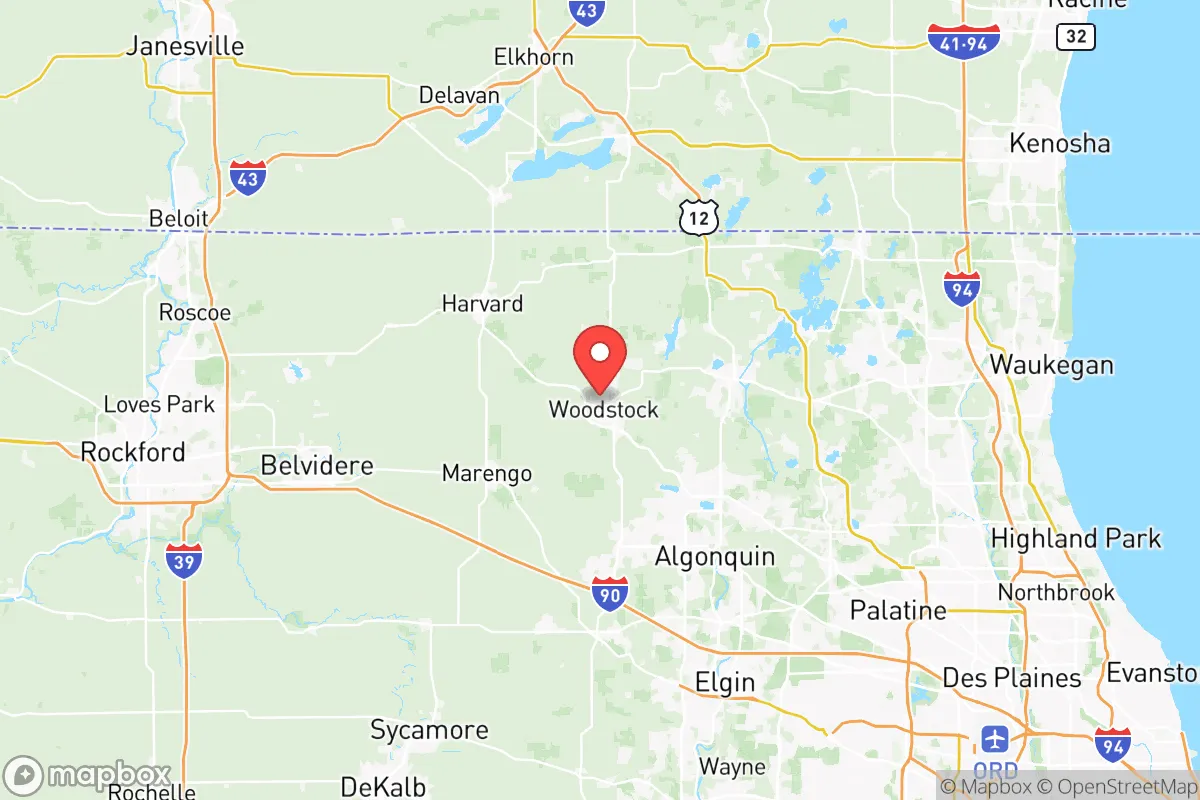
McHenry County, Illinois, offers a broad spectrum of quality-of-life options, from the walkable, amenity-rich downtowns of its largest towns to the quiet, agricultural landscapes of its rural townships. The county’s character shifts noticeably as you move from the urbanized eastern edge, which feels like an extension of Chicago’s northwest suburbs, to the more sparsely populated western and northern reaches. This diversity attracts a mix of commuters seeking train access to Chicago, families looking for affordable suburban homes with land, and long-time residents who value the county’s remaining farmland and conservation areas.
Largest town(s) & population centers
The county’s primary population centers are Crystal Lake (pop. ~40,000) and McHenry (pop. ~27,000), followed closely by Lake in the Hills, Algonquin, and Huntley. Crystal Lake functions as the de facto urban hub, with a vibrant downtown anchored by the historic Raue Center for the Arts, a Metra commuter rail station offering direct service to Chicago’s Ogilvie Transportation Center, and a dense mix of restaurants and independent shops. Daily life here is car-light for many residents, with walkable blocks around the lake and a strong sense of community events. McHenry, situated along the Fox River, offers a more industrial-commercial feel in its core but has seen significant reinvestment in its riverwalk and marina area. Algonquin and Huntley have grown rapidly as bedroom communities, with large master-planned subdivisions and big-box retail corridors along Randall Road. These towns have an average commute of roughly 30.6 minutes, though peak-hour drives to O’Hare or downtown can stretch to 60-75 minutes. The median home value in the county sits at $286,900, with Crystal Lake and Algonquin homes typically commanding a premium of 10-15% above that figure.
Smaller towns & rural pockets
Stepping away from the population centers reveals a different McHenry County. Towns like Marengo, Harvard, and Woodstock retain a small-town, agricultural character. Woodstock, the county seat, is notable for its intact 19th-century town square (featured in the film Groundhog Day) and a slower pace of life, though it still has a Metra station. Marengo and Harvard are more working-class, with a stronger manufacturing and farming base; Harvard is home to the Mott’s (Keurig Dr Pepper) plant and a large dairy industry. Further west, unincorporated areas like Riley, Greenwood, and Chemung townships are almost entirely agricultural, with grain elevators and farmsteads dominating the landscape. These rural pockets offer larger lot sizes (often 1-5 acres), lower property taxes than the eastern suburbs, and a lifestyle centered on hunting, horseback riding, and volunteer fire departments. Residents here typically commute longer distances—often to Rockford or Elgin—rather than to Chicago.
Cost & lifestyle range
The cost of living index for McHenry County is 111 (100 = US average), but this masks a wide internal spread. At the high end, Crystal Lake and Lakewood (a village on Crystal Lake’s north shore) have median home values near $350,000-$400,000, with higher property taxes and HOA fees in lakefront communities. At the low end, Harvard and Marengo offer median home values closer to $200,000-$230,000, making them some of the most affordable options in the Chicago region. Median rent countywide is $1,358, but rents in Harvard can be as low as $900 for a two-bedroom, while a similar unit in Crystal Lake might run $1,500. Amenities follow the same gradient: eastern towns have multiple grocery stores, gyms, and medical centers within a 10-minute drive, while western residents often drive 20-30 minutes to Woodstock or Huntley for major shopping. The county’s Conservation District manages over 25,000 acres of open space, including the Glacial Park and Marengo Ridge areas, which are accessible to all residents regardless of where they live.
McHenry County works best for people who want a genuine choice between suburban convenience and rural quiet within a single county. Commuters who need a reliable train to Chicago will gravitate to Crystal Lake or Woodstock. Families seeking affordable acreage for horses or a large garden will find it in the western townships. Retirees and young professionals who value walkable downtowns and lake access will prefer the eastern population centers. The county’s diversity of housing stock, commute patterns, and community character means that “McHenry County living” means something different depending on whether you’re on a farm near Harvard or a subdivision in Algonquin—and that range is its defining strength.

Crime in Mchenry County
WARNING: The crime statistics are unreliable for this jurisdiction. Local authorities have either not reported or under reported their data to the FBI. This could be due to bad intentions, incompetence or technical issues. Regardless, we suggest skepticism.
Higher crime rates than 64% of comparable U.S. locations.
Violent CrimeViolent Crime Analysis
Property CrimeProperty Crime Analysis
Crime Analysis
McHenry County, Illinois, presents a mixed safety profile for prospective residents. With a violent crime rate of 243.9 per 100,000 residents and a property crime rate of 1,473.2 per 100,000, the county is safer than the national average but requires careful neighborhood selection. The county’s proximity to Chicago and its progressive Cook County justice system means some spillover crime is a concern, particularly in communities along the Metra rail lines that connect directly to the city.
Crime in context
McHenry County’s violent crime rate of 243.9 per 100,000 is 30% lower than the national average of roughly 380 per 100,000 and significantly below Illinois’ statewide rate of about 440 per 100,000. Property crime in the county, at 1,473.2 per 100,000, also undercuts the national average of approximately 1,950 per 100,000. However, these countywide averages mask stark differences between communities. The city of Woodstock, the county seat, reports higher-than-county-average property crime, driven largely by vehicle break-ins and thefts near the historic square. Crystal Lake, the largest city in the county, maintains a violent crime rate roughly half the county average, but its retail corridors along Route 14 see elevated shoplifting and car burglaries. Harvard, in the far western part of the county, has a property crime rate that is nearly double the county average, partly due to its proximity to the Wisconsin border and limited local law enforcement resources.
What residents experience
Most residents in McHenry County experience property crime as their primary safety concern. Vehicle burglaries and package thefts are the most common incidents reported, particularly in unincorporated subdivisions and apartment complexes near major highways like Route 31 and Route 47. Violent crime is rare in the county’s core communities—Algonquin, Lake in the Hills, and Huntley all report violent crime rates below 150 per 100,000—but does concentrate in specific areas. The McHenry Township area, including the city of McHenry itself, sees a higher incidence of domestic violence and drug-related assaults, reflecting broader opioid addiction challenges in the region. Residents in Marengo and Union report feeling safe walking at night, though the lack of street lighting in rural stretches is a common concern. The McHenry County Sheriff’s Office maintains a proactive community policing model, with deputies assigned to specific zones, which helps keep response times under 10 minutes in most incorporated areas.
A significant concern for residents is the potential for progressive criminal justice policies from the surrounding region. While McHenry County itself elects a conservative State’s Attorney and has a generally tough-on-crime judiciary, the county shares a border with Cook County, where progressive prosecutors have implemented cash bail reform and reduced sentences for nonviolent offenses. This creates a crime displacement effect: offenders arrested in Cook County are often released quickly and travel to McHenry County’s wealthier suburbs to commit property crimes. The city of Cary, located near the Cook County line, has seen a 15% increase in residential burglaries since 2022, which local police attribute to this dynamic. Residents in Fox River Grove and Barrington Hills (the latter straddling the county line) report frequent vehicle prowling incidents linked to offenders from the Chicago area.
Neighborhood-level variation is pronounced. The gated communities and lakefront properties in Wonder Lake and Pistakee Highlands have near-zero violent crime but suffer from seasonal property crime spikes during summer months when vacation homes are vacant. Conversely, the older downtown areas of Woodstock and McHenry have higher foot traffic and more police presence, which deters violent crime but does little to stop opportunistic theft. For families, the safest bets are the newer subdivisions in Huntley and Lake in the Hills, where homeowners’ associations fund private security patrols and the public schools have dedicated resource officers. Prospective buyers should check the McHenry County Sheriff’s daily crime map and avoid properties within a half-mile of Metra stations, where property crime rates are consistently 20-30% higher than the surrounding blocks.
* Values derived from national, state, county, city and local statistics and may differ in a specific area. Last updated: 2026-09-15T09:35:38.000Z
Narrative content on this page is AI-generated and may contain mistakes. Verify any details that matter before acting on them.
ReloMaps may earn a commission from affiliate links at no extra cost to you.

