Demographics of Mchenry County
Affluence Level in Mchenry County
A middle-class area roughly in line with national averages across income, home values, education, and employment.
People of Mchenry County
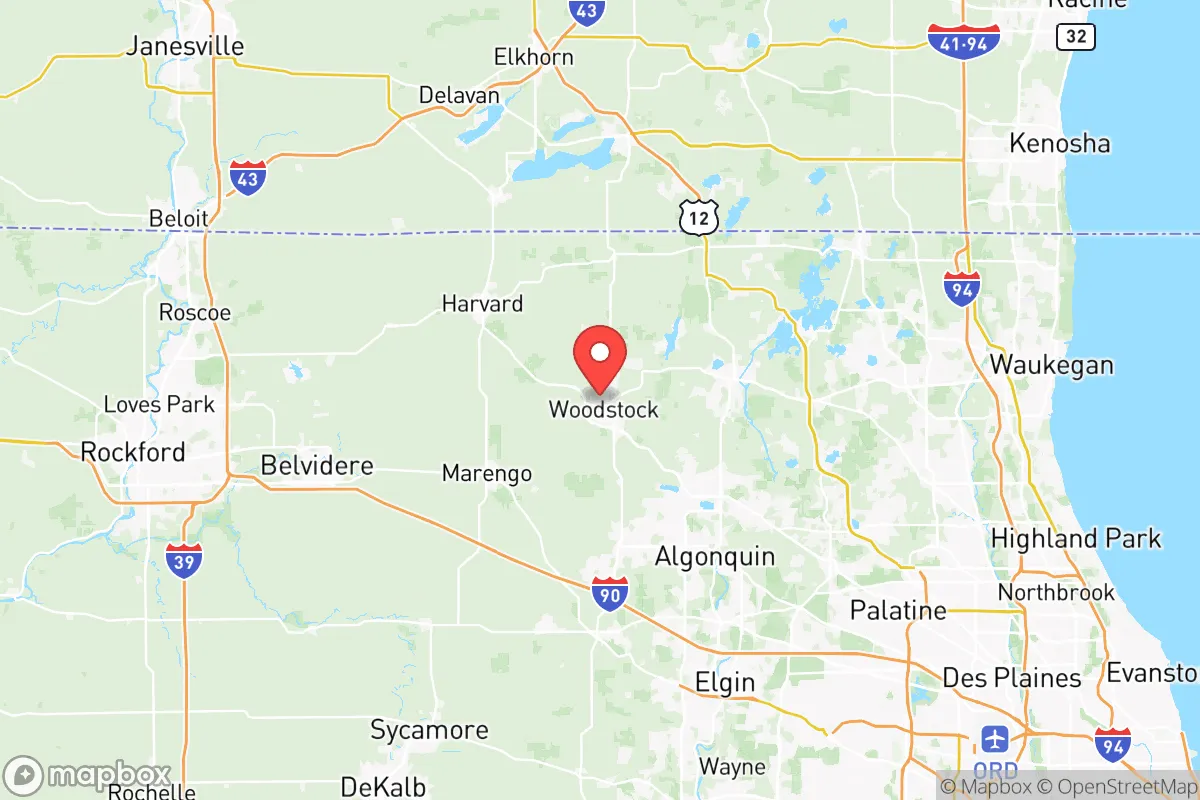
McHenry County, Illinois, is home to 311,366 residents who live in a predominantly white (76.9%) and increasingly Hispanic (15.6%) suburban and exurban landscape northwest of Chicago. The county’s identity is shaped by its history as a German and Irish farming stronghold, now transitioning into a bedroom community for Chicago commuters and a destination for families seeking lower taxes and larger lots. With a foreign-born population of just 4.2% and a college-educated rate of 35.2%, the county remains less diverse and slightly less educated than the Chicago metro average, but its demographic profile is steadily shifting.
Settlement & growth (pre-1960)
Before European settlement, the area now known as McHenry County was inhabited by the Potawatomi, who used the Fox River and Kishwaukee River valleys for seasonal hunting and fishing. The 1833 Treaty of Chicago forced the Potawatomi to cede their lands, opening the region to American settlers. The first wave of Euro-American pioneers arrived in the mid-1830s, primarily Yankees from New England and upstate New York, drawn by cheap federal land and the promise of fertile prairie soil. They established the earliest towns, including Woodstock (founded 1844), McHenry (1837), and Crystal Lake (1836), which became agricultural service centers.
The second and largest wave came from Germany and Ireland between 1840 and 1880. German immigrants, many from the Rhineland and Bavaria, settled heavily in Harvard (founded 1856), Marengo (1835), and Algonquin (1836), where they established dairy farms, breweries, and Catholic parishes. Irish immigrants, fleeing the Great Famine, concentrated in Fox River Grove and Barrington Hills, working on the Chicago and North Western Railway and in local mills. By 1870, German and Irish surnames dominated county records, and the region’s agricultural economy—centered on dairy, corn, and hogs—remained the backbone through the early 20th century.
A smaller but notable wave of Swedish immigrants arrived in the 1880s, settling in Wonder Lake (founded 1926 as a resort community) and parts of Hebron (1844). These groups were drawn by railroad construction jobs and the promise of land for small-scale farming. The county’s population grew slowly but steadily, reaching 35,000 by 1900 and 50,000 by 1930, as the region remained rural and agricultural. No significant Dust Bowl or Great Migration influx occurred; McHenry County’s black population remained below 0.5% until the late 20th century.
Modern era (post-1965)
The 1965 Hart-Cellar Act had a muted direct effect on McHenry County compared to urban Chicago, but its indirect impact reshaped the county through suburbanization. As Chicago’s white ethnic populations—primarily of German, Irish, and Polish descent—began moving outward in the 1970s and 1980s, McHenry County absorbed a wave of domestic migrants from Cook County and the city itself. Towns like Crystal Lake, Lake in the Hills, and Huntley exploded in population: Crystal Lake grew from 14,000 in 1970 to 38,000 by 2000, while Huntley transformed from a village of 1,200 in 1990 to over 24,000 by 2010, driven by master-planned subdivisions like Sun City Huntley (a 55+ community).
Hispanic growth is the most significant demographic shift of the modern era. Starting in the 1990s, Mexican and Central American immigrants—many from Jalisco, Guanajuato, and Michoacán—moved into the county for construction, landscaping, and manufacturing jobs. Woodstock and Harvard became the primary enclaves, with Harvard’s Hispanic population reaching 38% by 2020. The county’s Hispanic share rose from 3.2% in 1990 to 15.6% today, making it the fastest-growing demographic group. East/Southeast Asian communities (2.0%) and Indian subcontinent residents (0.9%) are smaller but growing, concentrated in Barrington and Algonquin, where tech and professional jobs in the northwest suburbs draw families. The black population remains tiny at 1.4%, with no single concentrated enclave.
Domestic migration from the Rust Belt—particularly from Wisconsin, Michigan, and Indiana—has also contributed to growth, as has a steady outflow from Cook County. The county’s population peaked at 315,000 in 2020 and has since plateaued, as rising home prices and longer commutes push some growth farther west into Boone and DeKalb counties.
The future
McHenry County is becoming more diverse, but slowly. The Hispanic population is projected to reach 20-22% by 2040, driven by natural increase and continued migration from Mexico and Central America. This growth is dispersing beyond Woodstock and Harvard into McHenry and Lake in the Hills, where Hispanic families are buying single-family homes and starting small businesses. The East/Southeast Asian and Indian populations are expected to grow modestly, reaching 3-4% combined, as professionals are drawn to the county’s lower housing costs compared to DuPage and Lake counties. The white non-Hispanic share will continue to decline, likely falling to 68-70% by 2040.
The county’s cultural identity is evolving from a homogenous, rural-Germanic past to a more suburban, multi-ethnic present. Newer residents are less tied to farming and more connected to Chicago’s economy, with many commuting to jobs in Schaumburg, Arlington Heights, and the city itself. The county’s political leanings—historically Republican—are shifting slightly, with the 2024 presidential election showing a narrower margin than in 2016, as Hispanic and younger voters tilt Democratic. For a family moving in now, McHenry County offers a middle ground: more space and lower taxes than Cook County, but with growing diversity and a suburban infrastructure that still feels small-town in places like Harvard and Hebron.
This is a county in transition—still predominantly white and conservative-leaning, but with a Hispanic population that is reshaping its schools, churches, and main streets. For a relocating family, the key question is whether they want a community that is changing or one that has already changed. McHenry County offers the former, with all the opportunity and friction that entails.

* Values derived from national, state, county, city and local statistics and may differ in a specific area. Last updated: 2026-09-15T09:35:38.000Z
Narrative content on this page is AI-generated and may contain mistakes. Verify any details that matter before acting on them.
ReloMaps may earn a commission from affiliate links at no extra cost to you.

