Political ClimatePolitical Climate in Mchenry County
Showing district-level results — no local-only data available.
Local Political AnalysisPolitical Analysis of Mchenry County
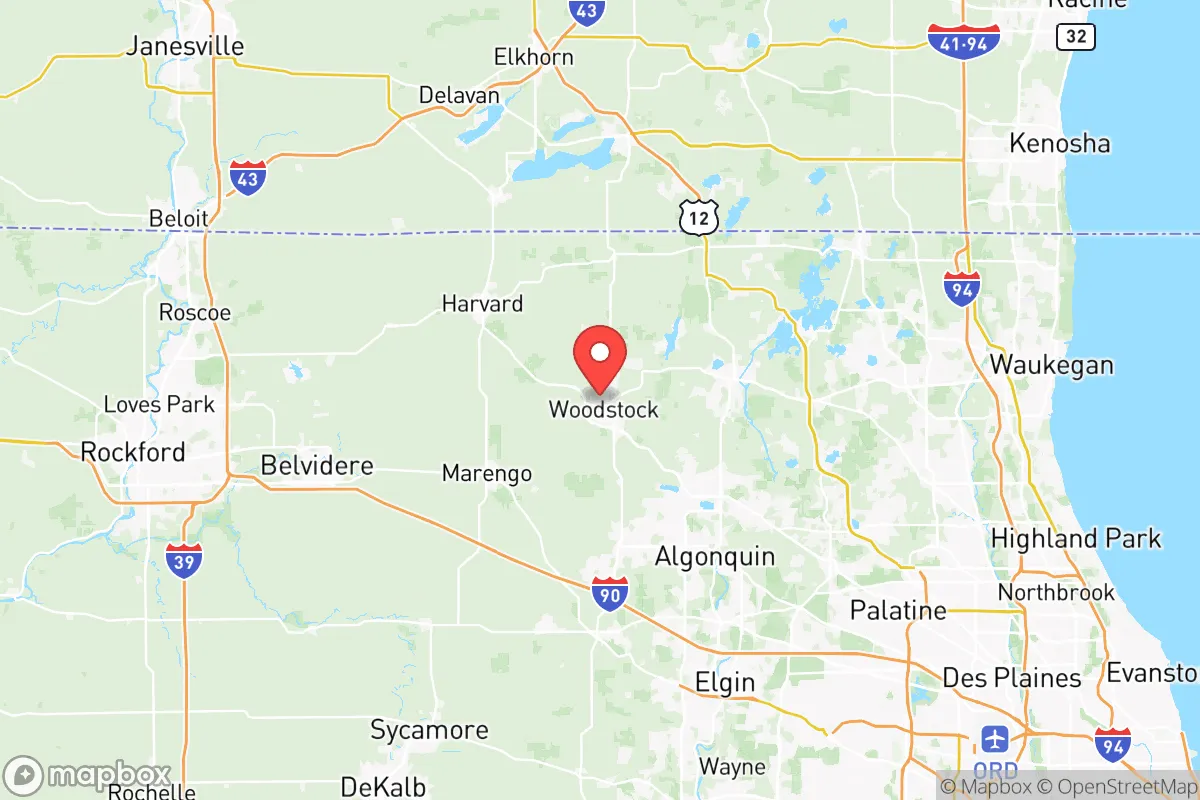
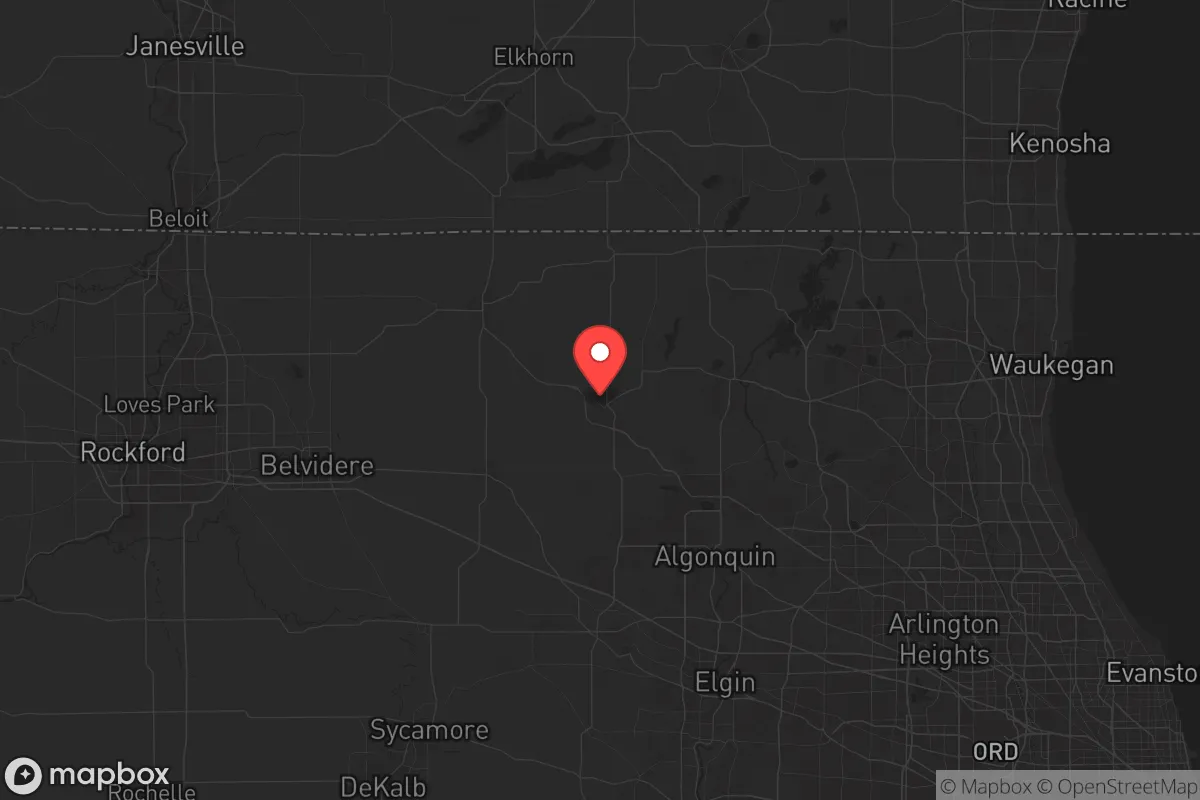
McHenry County has been a reliably Republican stronghold for decades, but its political trajectory is shifting noticeably toward the center as the Chicago exurbs grow and diversify. The county’s Cook Partisan Voting Index (PVI) of D+6 might seem to suggest a Democratic lean, but that number is a bit misleading—it reflects how the county votes relative to the national average, not its raw partisan split. In practice, McHenry County still votes Republican in most statewide and federal races, though by shrinking margins. The 2024 presidential election saw Donald Trump carry the county with roughly 52% of the vote, down from 54% in 2020 and 56% in 2016, while Democratic turnout surged in the more densely populated eastern townships. This gradual drift leftward mirrors trends across the collar counties, but McHenry remains the most conservative of the five counties ringing Cook County.
How it compares to Illinois as a whole
Illinois as a state carries a Cook PVI of D+7, meaning McHenry County (D+6) is actually slightly more Republican-leaning than the state average—a rare distinction in a state dominated by Chicago and its Democratic suburbs. The key difference is geographic concentration: Illinois’s Democratic votes are packed into Cook County and the immediate collar counties (DuPage, Lake, Kane, Will), while McHenry’s Republican votes are more spread out but still decisive in local races. For example, Crystal Lake and Cary tend to be swing areas—Crystal Lake’s precincts around the train station often vote Democratic, while the rural outskirts lean heavily red. Woodstock, the county seat, has a more moderate profile, with a mix of longtime conservative families and newer residents commuting to jobs in Schaumburg or Elgin. In contrast, towns like Harvard and Marengo remain deeply Republican, with precincts routinely delivering 60-65% for GOP candidates. The state-level comparison matters most in legislative races: McHenry’s state house and senate districts are among the few in the collar counties still represented by Republicans, though some seats have become competitive in the last two cycles.
What this means for residents
For conservative residents, McHenry County still feels like home turf—local school boards, county board seats, and township offices are overwhelmingly held by Republicans, and the county GOP apparatus remains active. You’ll see plenty of Trump signs in Huntley and Bull Valley during election season, and the county’s Republican Party holds regular events in McHenry and Johnsburg. For liberal residents, the political reality is more nuanced: you’re in a minority, but a growing one. Democratic clubs in Crystal Lake and Woodstock are well-organized, and progressive candidates have won seats on the county board in the more urbanized eastern precincts. The practical effect is that policy debates—especially around development, taxes, and school funding—tend to be more contentious than in deep-blue Lake County to the east. The county’s Republican majority has kept property taxes relatively low compared to Cook County, but it has also resisted expanding public transit and affordable housing initiatives that many newer residents want.
Culturally, McHenry County still feels more like rural Wisconsin than suburban Chicago in many ways—gun rights are widely supported, churches are prominent, and the county’s annual fair in Woodstock draws crowds that skew conservative. But the influx of families from Cook and Lake counties is slowly changing the character of towns like Algonquin and Lake in the Hills, where you’ll now find craft breweries, farmers markets, and a growing number of Democratic precinct committeemen. The long-term trajectory points toward a purple county within a decade, especially if the state’s Democratic majorities continue to draw new residents from Chicago. For now, though, McHenry remains a place where both sides can find their people—and where the political fights are still civil enough that you can disagree with your neighbor over a beer at the Duke’s in Crystal Lake.

State Political ClimatePolitical Climate in Illinois
State Political AnalysisPolitical Environment in the State
Illinois is a solidly Democratic state at the statewide level, with a Cook PVI of D+7, meaning it votes about seven points more Democratic than the national average in presidential elections. Over the past 10-20 years, the state has shifted leftward in statewide races, driven overwhelmingly by the massive Democratic turnout in Cook County and the Chicago metro area, while the rest of the state has trended Republican. This creates a stark political reality: a blue urban core that dictates state policy, and a red-to-purple downstate region that feels increasingly alienated from Springfield.
Urban vs. rural divide
The political map of Illinois is essentially a tale of two states. Chicago and its inner suburbs (Cook County) produce roughly 40% of the state's vote, and they vote Democratic by margins of 30-50 points. The collar counties around Cook—DuPage, Lake, Kane, Will, and McHenry—have been trending blue over the last decade, especially in presidential years, as suburban voters shift left on social issues. In contrast, downstate Illinois—places like Peoria, Springfield, Decatur, and the southern tip around Carbondale—vote reliably Republican, often by 20-30 points. The divide is so sharp that a Democrat can win statewide without carrying a single county outside the Chicago media market. For example, in 2020, Joe Biden won Illinois by 17 points but lost 96 of the state's 102 counties. The rural-urban split is the defining feature of Illinois politics.
Policy environment
Illinois has a progressive policy environment that is heavily shaped by its Democratic supermajority in the legislature. The state has a flat income tax rate of 4.95% (after a 2017 increase from 3.75%), but a 2020 constitutional amendment to allow a graduated income tax was rejected by voters. Property taxes are among the highest in the nation, averaging around 2.1% of home value, which is a major burden for homeowners. The state has a strong regulatory posture on business, with a $15 minimum wage (phased in by 2025) and strict environmental rules. Education policy is dominated by the Chicago Teachers Union, which has pushed for progressive funding formulas and charter school restrictions. Healthcare is broadly accessible, with Illinois expanding Medicaid under the ACA and maintaining a state-based exchange. Election laws are among the most liberal: automatic voter registration, no-excuse mail-in voting, and same-day registration are all in place. Gun laws are strict—Illinois requires a Firearm Owner's Identification (FOID) card, has a 72-hour waiting period for handguns, and banned assault weapons and high-capacity magazines in 2023.
Recent policy direction
The last five years have seen Illinois double down on progressive governance. In 2021, the state abolished cash bail under the SAFE-T Act, making it one of the first states to do so—though implementation was chaotic and led to a wave of criticism from law enforcement. The 2023 assault weapons ban (HB 5471) was a flashpoint, with hundreds of counties passing resolutions opposing it, though the law remains in effect. On parental rights, Illinois has moved in the opposite direction of states like Florida: the state mandates LGBTQ-inclusive curriculum in schools and prohibits school boards from banning books based on content. On medical and bodily autonomy, Illinois is a safe haven for abortion access, with the Reproductive Health Act (2019) codifying abortion rights and removing parental notification requirements for minors. Privacy and surveillance laws are moderate—the state has a biometric privacy law (BIPA) that has led to massive class-action lawsuits against employers. Property rights are constrained by high property taxes and strong tenant protections, including a statewide rent control ban preemption (meaning cities can't impose rent control). Voting access has expanded steadily, with the 2023 Elections Code overhaul streamlining mail-in voting and early voting.
Civil unrest & political movements
Illinois has a history of organized political activism on both sides. The 2020 George Floyd protests in Chicago were among the largest in the country, with significant property damage and looting in the Loop and along the Magnificent Mile. Since then, Chicago has seen a rise in organized conservative and libertarian activism, particularly around Second Amendment rights and school board elections. The "sanctuary state" status—Illinois is a designated sanctuary state for immigrants, with the TRUST Act (2017) limiting local law enforcement cooperation with ICE—has been a persistent flashpoint, especially in downstate counties that have passed resolutions opposing it. Election integrity controversies have been relatively muted compared to swing states, though the 2020 election saw some localized disputes in Republican-leaning counties. Secession or nullification rhetoric is common in downstate areas—there's a long-running "New Illinois" movement advocating for the separation of Cook County from the rest of the state, but it has no realistic path to success. A new resident would notice the political tension most acutely in the contrast between Chicago's progressive city council and the conservative county boards in places like Effingham or Williamson County.
Projection
Over the next 5-10 years, Illinois is likely to remain a solidly Democratic state, but the margin could narrow slightly as downstate population loss continues and suburban voters moderate. Chicago's population decline (down about 80,000 since 2020) is a wild card—if it accelerates, it could reduce the Democratic vote share. In-migration patterns are mixed: Illinois loses residents to neighboring states like Indiana, Wisconsin, and Missouri, but gains international immigrants, particularly in the Chicago area. The state's fiscal challenges—a massive unfunded pension liability of over $140 billion—will constrain future spending and could lead to tax increases, which may push more conservative-leaning residents out. The political trajectory suggests continued progressive governance on social issues (abortion, gun control, LGBTQ rights) but potential moderation on economic issues if the pension crisis forces austerity. A new resident moving in now should expect the state's political culture to remain deeply divided, with Chicago and its suburbs driving policy while downstate feels increasingly powerless.
For a conservative-leaning relocator, the bottom line is that Illinois offers a high-tax, high-regulation environment with strong protections for progressive social policies. You'll find like-minded communities in the collar counties (like McHenry or Kendall) or in downstate cities like Peoria or Springfield, but you'll be living under a state government that is consistently at odds with your values on guns, taxes, and education. For a liberal relocator, Illinois is a reliable blue state with robust public services and strong legal protections, but you'll pay for it in property taxes and pension debt. Either way, the political reality is that Illinois is a state where your vote in a statewide election is largely irrelevant—the outcome is decided in Cook County before the rest of the state even votes.
* Values derived from national, state, county, city and local statistics and may differ in a specific area. Last updated: 2026-09-15T09:35:38.000Z
Narrative content on this page is AI-generated and may contain mistakes. Verify any details that matter before acting on them.
ReloMaps may earn a commission from affiliate links at no extra cost to you.

