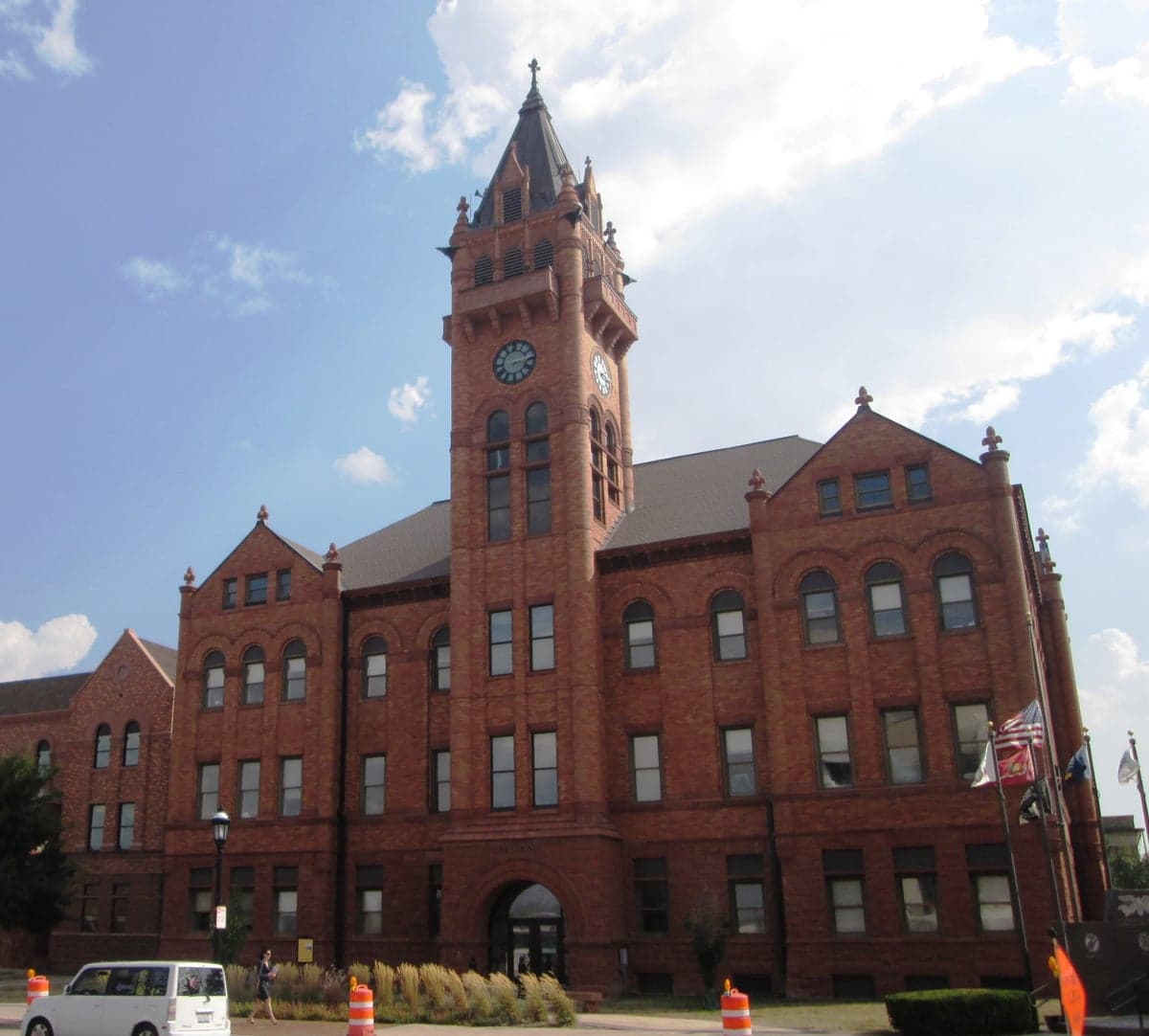
Photo: Wikipedia
Demographics of Champaign County
Affluence Level in Champaign County
A middle-class area roughly in line with national averages across income, home values, education, and employment.
People of Champaign County
Champaign County’s 206,098 residents form a distinctively educated, racially diverse population anchored by the University of Illinois at Urbana-Champaign, where 46.6% of adults hold a college degree. With a white population at 63.6%, a Black community of 13.1%, an East/Southeast Asian population of 7.9%, a Hispanic share of 8.1%, and an Indian subcontinent population of 2.7%, this is one of Illinois’ most ethnically varied counties outside Cook County. The county’s character blends Midwestern agricultural roots with a globally connected university town, creating a population that is politically mixed and economically anchored in education, research, and farming.
Settlement & growth (pre-1960)
Champaign County lies within the traditional territory of the Potawatomi and Kickapoo nations, with the latter maintaining villages along the Sangamon River until the 1820s. The 1832 Black Hawk War led to the final removal of Native peoples, opening the area to American settlers. Early Anglo-American pioneers arrived from Kentucky, Tennessee, and Ohio in the 1830s, drawn by the prairie’s fertile, black soil for grain farming. They founded the county seat of Urbana (1833) and the railroad town of Champaign (1855), which emerged when the Illinois Central Railroad bypassed downtown Urbana by a few miles, creating a twin-city dynamic that persists today.
The Illinois Central Railroad’s arrival in the 1850s transformed the county from subsistence farming into a commercial grain hub. By 1860, the population had reached roughly 14,000, with small settlements like Mahomet, Tolono, and Rantoul serving as agricultural service centers. German immigrants arrived in the 1850s-1870s, drawn by cheap land and railroad work, settling heavily in St. Joseph and along the county’s rural townships, where German Lutheran churches still dot the landscape. Irish immigrants came for railroad construction labor, settling in working-class neighborhoods of Urbana and Champaign, particularly the North Urbana area near the rail yards.
The 1867 founding of the University of Illinois (then Illinois Industrial University) in Champaign-Urbana fundamentally reshaped the county’s population. The university attracted faculty, administrators, and students from across the Midwest and Northeast, bringing a cosmopolitan, educated cohort that contrasted with the surrounding farm population. By 1900, the county had grown to 47,000, with Champaign and Urbana developing distinct identities: Champaign as the commerce and railroad hub, Urbana as the university town and government seat.
The early 20th century brought a significant Black population north during the Great Migration. Between 1910 and 1950, African Americans moved from the Deep South (especially Mississippi and Alabama) for railroad jobs, agricultural work, and service positions at the university. They concentrated in Champaign’s North End neighborhood and in Urbana’s near-north side, forming tight-knit communities around churches, businesses, and the historic Bethel A.M.E. Church. The Japanese American population arrived after World War II, when a small number of resettled families and university-affiliated individuals settled in Champaign-Urbana. By 1960, the county’s population stood at 102,000, with a nearly 7% Black share and a tiny Asian presence.
Modern era (post-1965)
The 1965 Hart-Cellar Act began diversifying Champaign County in ways the university anchored. The University of Illinois aggressively recruited international graduate students starting in the 1970s, particularly in engineering and sciences. East/Southeast Asian students—from China, South Korea, Taiwan, and later Vietnam—arrived for graduate programs, and many stayed after graduation, forming the core of today’s 7.9% East/Southeast Asian population. They concentrated near campus in Campustown (the area immediately south of the main quad in Urbana) and in Champaign’s west-side neighborhoods near the research parks. By the 1990s, a distinct Chinese American community had emerged in Champaign’s Sawyer area, with ethnic grocery stores, churches, and cultural organizations.
The Indian subcontinent population (2.7%) grew later, spiking after the 1990s tech boom. Indian graduate students and tech workers in Champaign-Urbana’s Research Park and software firms formed a smaller but visible community, with cultural festivals at the university and a handful of Indian grocery and restaurant businesses serving both cities. The Hispanic population (8.1%) expanded steadily from the 1980s onward, driven by Mexican immigrants working in agriculture, construction, and food processing. They concentrated in Rantoul (where the former Chanute Air Force Base’s closure in 1993 created inexpensive housing) and in rural townships east of Thomasboro and Pesotum. Hispanic families also settled in Champaign’s southwest side, where a growing Latino community center and Catholic church serve the population.
Domestic migration shifted the county post-1965 as the Rust Belt declined. While Champaign County avoided the catastrophic population loss of northern Illinois, it saw moderate out-migration of younger adults to Chicago and the Sun Belt in the 1980s-1990s. The university acted as a brake on decline, attracting domestic graduate students and faculty from across the country. Suburbanization pushed growth east of Champaign into Savoy, which grew from a tiny village in 1960 to a 9,000-person bedroom community by 2020, and north into Mahomet, which doubled in size between 2000 and 2020. These suburbs drew white, middle-class families seeking good schools and larger lots, contributing to the county’s 63.6% white share staying relatively stable even as diversity grew in the urban core.
The Black population (13.1%) has been a significant but slowly declining share since 1970, when it peaked near 15%. Young Black residents have left for Chicago, Atlanta, and other urban centers, while older Black families remain in Champaign’s North End and Urbana’s north side. Race relations have been a persistent issue, with the 2009 arrest of a Black University of Illinois professor at his home sparking protests and policy changes.
The future
Champaign County is becoming more diverse, driven largely by international graduate students and their families. The East/Southeast Asian and Indian populations are the fastest-growing demographics, concentrated in Champaign-Urbana’s west side and near campus, but also dispersing to Savoy and Mahomet as second-generation families move to suburbs. The Hispanic population will likely grow moderately, driven by natural increase and continued agricultural work, with Rantoul and Tolono seeing the highest concentrations. The white population is aging and projected to decline slowly, as young white graduates leave for coastal cities and birth rates fall. The Black population may stabilize if Champaign-Urbana can retain its young Black professionals through local tech and healthcare growth.
The next 10-20 years will see Champaign County become more suburban and more globally connected, with Savoy and Mahomet absorbing most new housing development. The university’s continued strength as a draw for international talent will keep the county’s foreign-born share (currently 8.9%) rising, likely to 12-15% by 2040. This will accelerate cultural diversity—more Asian grocery stores, more religious diversity (Hindu, Muslim, Buddhist communities are already visible), and more multilingual schools. The rural townships will remain majority white and agriculturally focused, creating a cultural contrast between the cosmopolitan Champaign-Urbana-Savoy corridor and the surrounding small towns.
Champaign County in 2026 is a Midwestern hybrid: a university-driven, diverse island in a sea of corn and soy, where a conservative farming population coexists with a liberal academic community. For a family or individual moving in now, the county offers excellent schools in the Champaign and Mahomet-Seymour districts, a low cost of living relative to Chicago, and a community that is increasingly multiethnic but still Midwestern in its friendliness. The future points toward more diversity, more suburban sprawl, and a stronger connection to global academic and tech networks—but a place that remains grounded in its agricultural past.

* Values derived from national, state, county, city and local statistics and may differ in a specific area. Last updated: 2026-07-02T02:52:44.000Z
Narrative content on this page is AI-generated and may contain mistakes. Verify any details that matter before acting on them.
ReloMaps may earn a commission from affiliate links at no extra cost to you.

