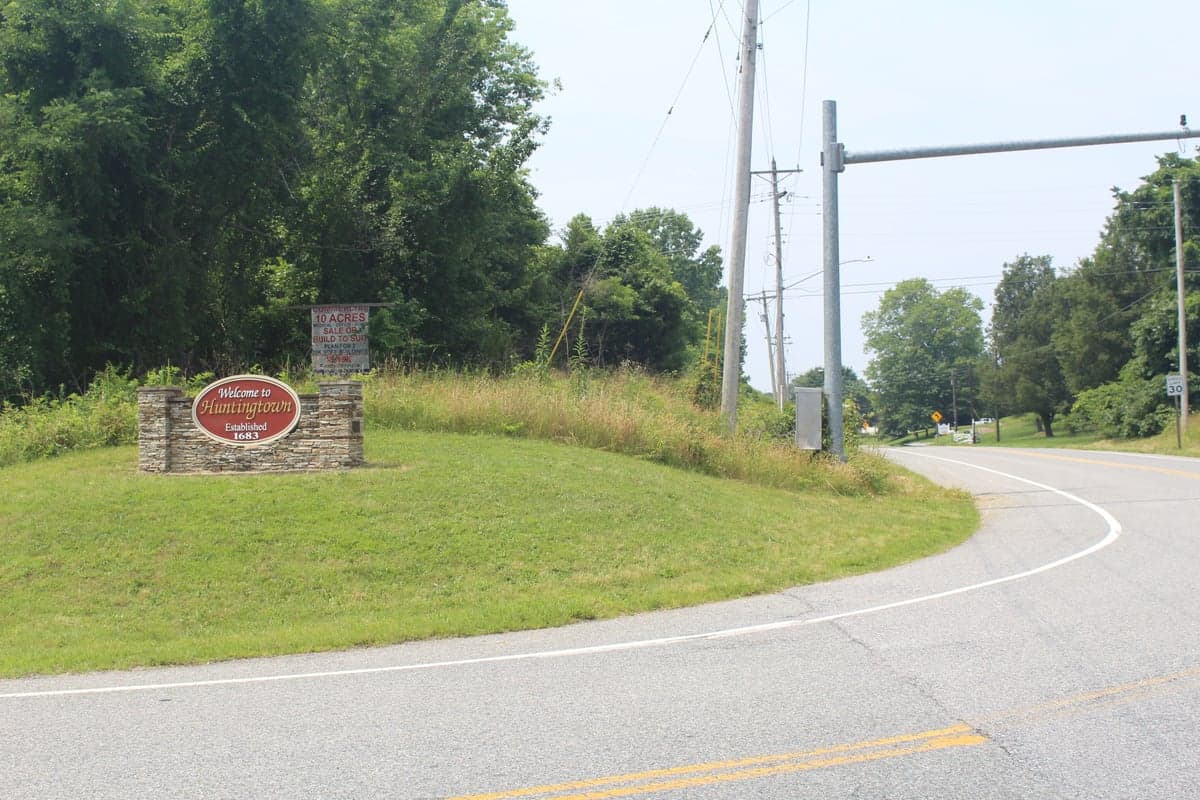
Photo: Wikipedia
Political ClimatePolitical Climate in Huntingtown, MD
District shown is the primary district for this city’s centroid. Cities may span multiple districts.
Inherited from parent county — no local data available.
* Lean and PVI are calculated from the surrounding county’s 2020 and 2024 presidential results, Cook-style — a finer measure here than its congressional district (MD-5).
Political rankings in Maryland
- Most Conservative Cities in Maryland
- Most Liberal Cities in Maryland
- Best Conservative-Leaning Towns in the Mid-Atlantic
- Safest Liberal-Leaning Towns on the East Coast
- Safest Conservative-Leaning Towns on the East Coast
- Affordable Small Towns for Conservatives
- Most Affordable Liberal-Leaning Small Towns in the U.S.
- Safest Liberal-Leaning Cities in the U.S.
- Most Conservative Counties in Maryland
- Most Liberal Counties in Maryland
Local Political AnalysisPolitical Analysis of Huntingtown, MD
Huntingtown, Maryland, is a reliably conservative pocket in a deeply blue state, with a Cook Partisan Voting Index (PVI) of R+5. That means the area leans about five points more Republican than the national average, a stark contrast to Maryland’s statewide PVI of D+17. Over the last decade, the shift here has been subtle but real—Huntingtown has held steady as a Republican stronghold while the surrounding Calvert County has seen a slow trickle of new residents from more liberal areas like Prince George’s County and Anne Arundel County. But don’t expect a blue wave anytime soon; the local GOP machine is well-organized, and the area’s rural character and military-connected population (many commute to or work at Naval Air Station Patuxent River) keep the conservative base solid.
How it compares
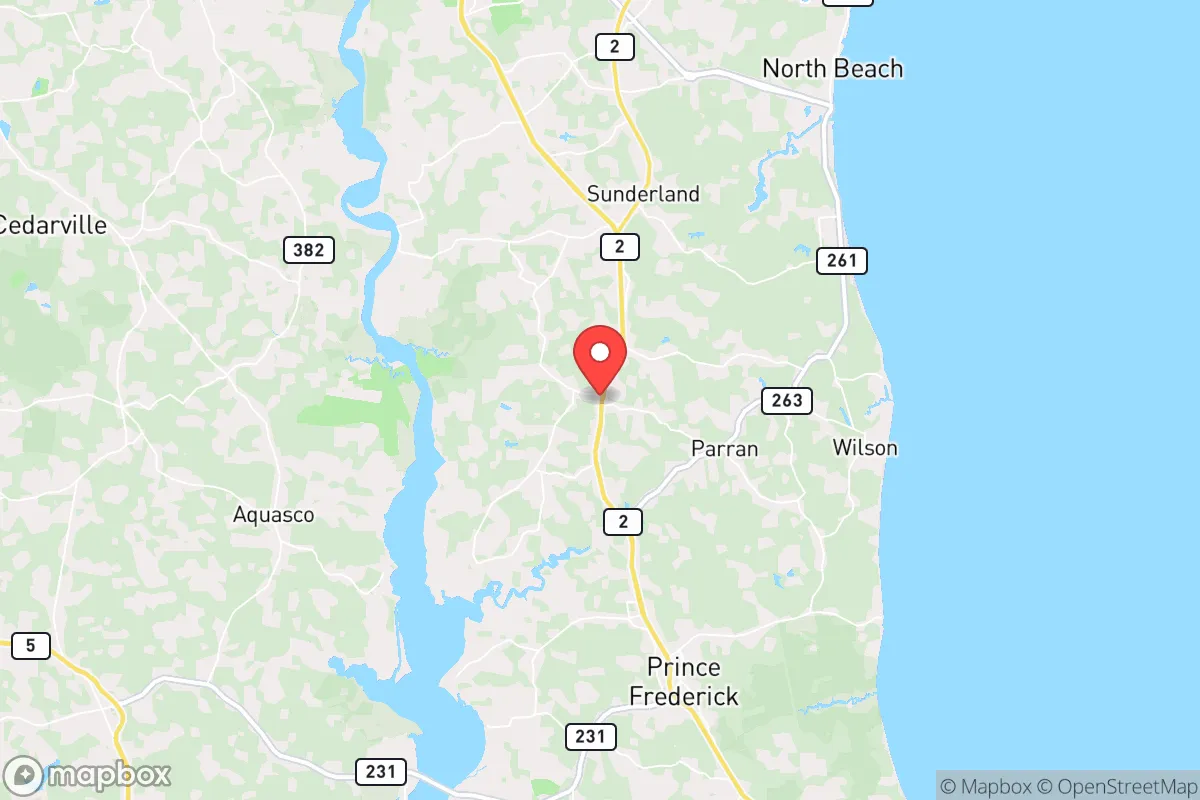
Drive 15 miles north to Prince Frederick, and you’ll find a slightly more moderate mix, but Huntingtown itself is the heart of Calvert County’s reddest precincts. Compare that to the state as a whole: Maryland’s D+17 PVI is driven by the Baltimore-Washington corridor, where Democratic margins are crushing. In Huntingtown, you’re more likely to see Trump signs in yards than O’Malley bumper stickers. The real contrast comes when you cross the Patuxent River into St. Mary’s County, which is also conservative (R+4), or head south to the Eastern Shore, where places like Easton and Cambridge lean red. But within Calvert County, Huntingtown stands out as the most reliably Republican community—think of it as the political opposite of Takoma Park or College Park. Local elections here are often decided in the GOP primary, and the county council has a conservative majority that reflects Huntingtown’s values.
What this means for residents
For conservative residents, Huntingtown feels like a safe haven. You’ll find like-minded neighbors, a strong local Republican club, and a school board that’s been cautious on progressive curriculum changes. Taxes are lower than in neighboring Anne Arundel County, and the county government tends to prioritize growth management and property rights. For liberal residents, it’s not hostile, but it can feel isolating. You’ll be in the minority at town halls and PTA meetings, and local Democratic candidates rarely get above 40% in Huntingtown precincts. That said, the area is not a political echo chamber—most folks are civil, and the “live and let live” rural ethos means you can fly a Pride flag or a Blue Lives Matter flag without much drama. The real friction comes on issues like development: conservatives push for slower growth to preserve the rural feel, while some newer residents want more amenities and housing options.
One cultural distinction that sets Huntingtown apart is its strong military and agricultural roots. The local economy leans on the Pax River base and farming, which reinforces a practical, self-reliant mindset. You won’t see the same kind of activist energy you’d find in Annapolis or Baltimore—protests are rare, and political conversations tend to be about septic systems and school capacity rather than national culture wars. Looking ahead, Huntingtown’s political trajectory is likely to stay conservative, but the margin could narrow slightly as more commuters from D.C. suburbs move in for the lower cost of living. For now, though, it remains a place where the GOP is the default, and the state’s blue wave breaks against a quiet, red shore.

State Political ClimatePolitical Climate in Maryland
State Political AnalysisPolitical Environment in the State
Maryland is one of the most reliably Democratic states in the nation, with a Cook Partisan Voting Index of D+17, meaning it votes about 17 points more Democratic than the country as a whole. The state hasn't voted for a Republican presidential candidate since George H.W. Bush in 1988, and Democrats hold supermajorities in both chambers of the General Assembly. However, this blue veneer masks a deeply divided state — the political reality is a story of two Marylands: the densely populated, wealthy, and increasingly progressive Washington, D.C. suburbs, and the rest of the state, which ranges from moderate to deeply conservative. Over the last 20 years, the D.C. suburbs have grown in population and political influence, pulling the state further left, while rural areas have become more Republican and more frustrated with being outvoted.
Urban vs. rural divide
The political map of Maryland is stark. The entire state's Democratic majority is generated by Montgomery County and Prince George's County, the two D.C. suburbs that together cast about a third of the state's votes and routinely deliver 75-85% for Democratic candidates. Baltimore City and Baltimore County add another deep-blue bloc. Meanwhile, the Eastern Shore, Western Maryland, and the rural parts of Southern Maryland are solidly Republican. Garrett County, in the far west, is the most Republican county in the state, often voting 70%+ for GOP candidates. The divide is so sharp that you can drive 45 minutes from downtown Baltimore to Harford County and feel like you've entered a different political universe. The suburbs of Annapolis and Frederick are the true battlegrounds — Frederick County, once reliably red, has been trending purple and then blue as D.C. commuters push north along the I-270 corridor. Carroll County remains a Republican stronghold, one of the few places where the GOP still holds county-level power. The urban-rural split isn't just about voting — it's about culture, economics, and a growing sense in rural areas that their way of life is under threat from Annapolis.
Policy environment
Maryland's policy environment is shaped entirely by Democratic control of the governorship and legislature, with Republicans holding roughly a third of the seats — enough to slow things down but not stop them. The state has a progressive income tax structure with rates from 2% to 5.75%, plus local piggyback taxes that push the top combined rate over 8% in some counties. Property taxes are set at the county level and vary widely, from relatively low rates in rural Garrett County to high rates in Baltimore City. Maryland has some of the strictest gun laws in the country, including a ban on assault weapons, a handgun permit system that requires "good and substantial reason" (though this was loosened after the Bruen decision), and universal background checks. The state also has a strong regulatory posture on environmental issues, with the Chesapeake Bay cleanup driving land use and agricultural policy. Education is a top priority — Maryland consistently ranks near the top nationally in K-12 spending per pupil, but outcomes vary wildly between wealthy suburban districts and struggling urban and rural ones. Election laws lean heavily toward access: same-day voter registration, no-excuse mail-in voting, and early voting are all standard.
Recent policy direction
The last five years have seen Maryland accelerate in a progressive direction on several fronts. In 2023, the legislature passed the Abortion Care Access Act, which expanded who can perform abortions and required most insurance plans to cover them with no cost-sharing. The state also passed the Trans Health Equity Act, requiring Medicaid to cover gender-affirming care. On the gun front, after the Bruen decision, Maryland passed a law requiring a permit to carry in "sensitive places" like bars and hospitals — a law that is currently being litigated. The 2024 legislative session saw the passage of the Maryland Kids Safety Act, which requires parental notification when a child's school-issued device is monitored, a rare bipartisan win on parental rights. On property rights, the state has moved toward more tenant protections, including a "just cause" eviction requirement in some jurisdictions. Tax policy has been relatively stable, though there is growing pressure to raise taxes on high earners to fund transportation and education. Voting access has been expanded significantly: Maryland now has automatic voter registration at the DMV, same-day registration, and no-excuse mail-in voting. The state also passed the Maryland Online Data Privacy Act in 2024, giving residents more control over how companies collect and sell their personal data.
Civil unrest & political movements
Maryland has a long history of political activism, from the 2015 Baltimore protests after the death of Freddie Gray to ongoing movements around police reform and environmental justice. The state's sanctuary policies are a flashpoint: Maryland has a statewide "Trust Act" that limits local law enforcement cooperation with federal immigration authorities, and several counties, including Montgomery and Prince George's, have gone further. This has created tension with more conservative jurisdictions like Harford and Carroll, where some sheriffs have publicly stated they will cooperate with ICE regardless. Election integrity has been a recurring issue in rural counties, with some local GOP officials questioning the security of mail-in voting, though no major fraud has been found. On the right, the Maryland Republican Party has become more populist and Trump-aligned, with groups like the Maryland Conservative Action Network pushing for school board takeovers and anti-critical race theory legislation. On the left, groups like CASA and the ACLU of Maryland are highly active on immigrant rights and criminal justice reform. The most visible political flashpoint in recent years has been the debate over the "Blue Line" — the proposed expansion of the D.C. Metro into rural areas, which has become a symbol of suburban encroachment and cultural change.
Projection
Over the next 5-10 years, Maryland is likely to become even more Democratic, driven by continued population growth in the D.C. suburbs and the out-migration of younger, more conservative-leaning residents to lower-cost states like Pennsylvania, West Virginia, and the Carolinas. The state's Democratic supermajority is not at risk — the question is how far left the party will go. The biggest wild card is the growing tension between the progressive wing, centered in Montgomery County and Baltimore, and the more moderate Democrats who dominate in places like Anne Arundel and Frederick counties. If the party pushes too hard on issues like defunding the police or eliminating charter schools, it could trigger a backlash in the suburbs. On the Republican side, the party is unlikely to win statewide office again without a major shift, but they could continue to hold ground in rural counties and possibly flip a few state legislative seats in the exurbs. The biggest demographic shift is the aging of the population in rural areas and the influx of younger, more diverse residents to the suburbs — a trend that favors Democrats. For a conservative relocator, the realistic outlook is that Maryland will remain a deep-blue state with progressive policies on taxes, guns, and social issues, but with enough local variation to find a community that fits — if you're willing to live in Carroll, Harford, or Garrett County.
For a new resident, the bottom line is this: Maryland is a state where your political experience will depend almost entirely on where you live. If you're a conservative moving to Montgomery County, you will be in a clear minority and may find state policies frustrating. If you move to the Eastern Shore or Western Maryland, you'll be in a community that shares your values, but you'll still be governed by a state legislature that doesn't. The practical takeaway is that Maryland offers a high quality of life — good schools, strong economy, beautiful natural areas — but it comes with a progressive policy package that is unlikely to change anytime soon. If you can live with that trade-off, you'll find plenty of places to call home. If you can't, you're better off looking at Pennsylvania or Virginia.
* Values derived from national, state, county, city and local statistics and may differ in a specific area. Last updated: 2026-11-16T20:08:39.000Z
Narrative content on this page is AI-generated and may contain mistakes. Verify any details that matter before acting on them.
ReloMaps may earn a commission from affiliate links at no extra cost to you.

