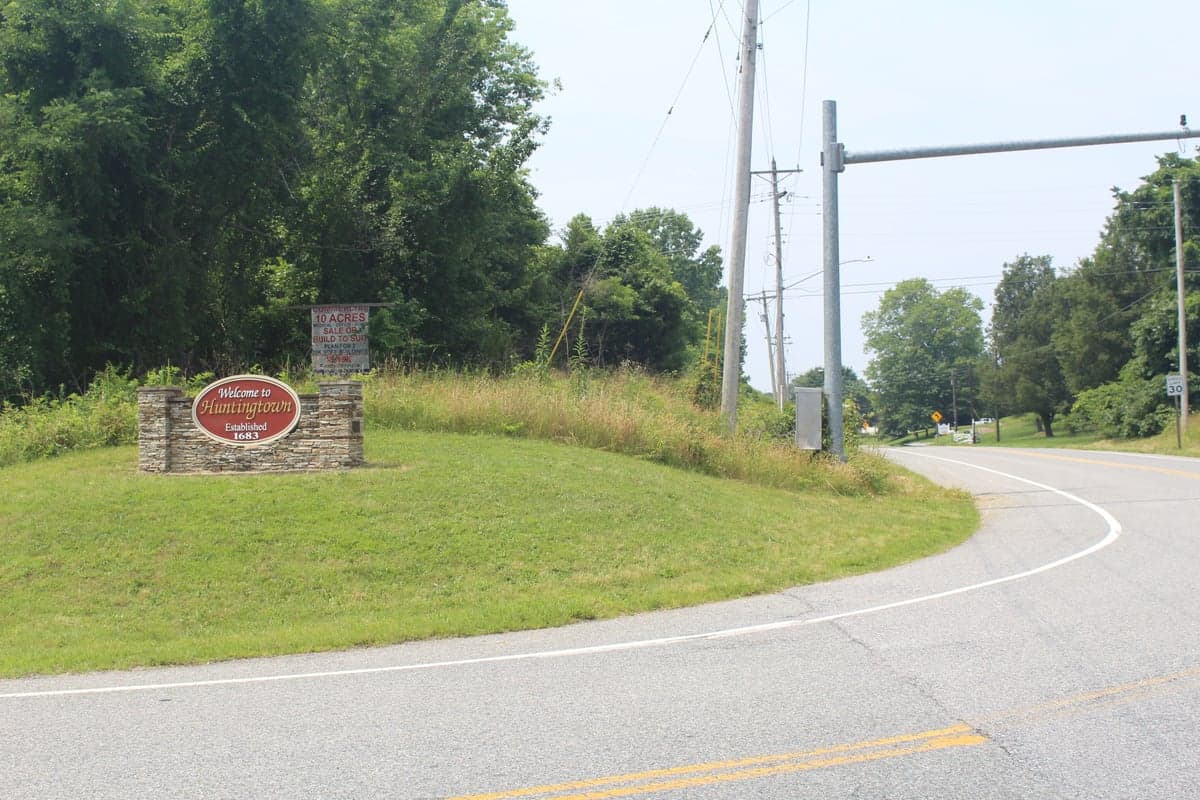
Photo: Wikipedia
Demographics of Huntingtown, MD
Historical data isn't available for Huntingtown, MD. Trends shown are for Calvert County, MD.
Affluence Level in Huntingtown, MD
An upper-middle-class area. Household wealth, education levels, and homeownership run ahead of national benchmarks.
People of Huntingtown, MD
Huntingtown, Maryland, is a small, unincorporated community of 2,634 residents in Calvert County, characterized by a predominantly White population (70.3%) with a significant Black minority (15.0%) and a very low foreign-born share (3.5%). The community retains a distinctly rural-suburban feel, with a higher-than-average college attainment rate of 37.0% and a population that is notably less diverse than the broader Washington, D.C. metropolitan area. Its identity is rooted in a quiet, family-oriented lifestyle, shaped by generations of agricultural and maritime families alongside a steady influx of professionals seeking space from the capital.
How the city was settled and grew
Huntingtown’s early history is tied to the tobacco-based plantation economy of Southern Maryland, with the first European settlers arriving in the mid-17th century as land grants from Lord Baltimore. These early families, primarily of English and Scottish descent, established farms along the Patuxent River and its tributaries, with the area around Old Huntingtown Road and the historic Huntingtown Town Center serving as the original nucleus. The community remained a sparsely populated agricultural crossroads through the 19th century, with a small free Black population working as farmers and laborers. The arrival of the Chesapeake Beach Railway in the early 1900s spurred modest growth, but Huntingtown never industrialized; instead, it remained a collection of family farms and tobacco barns, with the Dares Beach Road corridor becoming a secondary settlement area for watermen and their families. By 1950, the population was still under 500, overwhelmingly White and native-born, with a small Black community concentrated in the Lower Huntingtown area near the river.
Modern era (post-1965)
The post-1965 era brought gradual change as the expansion of the federal government and the construction of the Chesapeake Bay Bridge (completed in 1952) made Calvert County accessible to Washington, D.C., commuters. Huntingtown began absorbing domestic in-migration from the D.C. suburbs, particularly from Prince George’s and Montgomery counties, as families sought larger lots and lower taxes. This wave was predominantly White, but it also included a growing number of Black professionals and middle-class families moving from the Washington area, who settled in newer subdivisions like Hunting Creek and Pine Tree Village. The 1990s and 2000s saw the most rapid growth, with the population more than doubling as large-lot subdivisions such as Long Beach and Ward Farm Estates were developed. This period solidified Huntingtown’s character as a bedroom community: the foreign-born share remained very low (3.5%), and the Hispanic population (1.4%) and East/Southeast Asian population (0.9%) are minimal, reflecting limited immigration-driven diversity. The Black population, now at 15.0%, is largely concentrated in the older Lower Huntingtown area and in the more affordable Huntingtown Estates subdivision, while newer developments remain predominantly White.
The future
Huntingtown’s population is projected to grow slowly, constrained by limited developable land and Calvert County’s growth management policies. The community is likely to become slightly more diverse, driven by continued domestic in-migration from the D.C. region, particularly by Black and Hispanic families seeking more space and lower costs than in closer-in suburbs. However, the foreign-born share is expected to remain well below the national average, as Huntingtown lacks the rental housing stock and job diversity that attract immigrant populations. New development will likely concentrate in the Huntingtown Town Center area and along MD Route 2/4, where mixed-use zoning is being encouraged, but the overall character will remain that of a low-density, car-dependent community. The cultural identity is evolving from a purely agricultural past to a more suburban, commuter-oriented one, though the community retains a strong sense of local tradition, with events like the Huntingtown Volunteer Fire Department carnival and the Calvert County Fairgrounds activities reinforcing a conservative, family-first ethos.
For someone moving in now, Huntingtown offers a stable, safe, and predominantly native-born environment with a strong sense of place, but limited diversity and few rental options. It is best suited for families and individuals who prioritize space, low crime, and a slower pace over urban amenities or a highly multicultural setting. The community is becoming more suburban and slightly more diverse, but it will likely remain a predominantly White, middle-class enclave for the foreseeable future.

* Values derived from national, state, county, city and local statistics and may differ in a specific area. Last updated: 2026-11-16T20:08:39.000Z
Narrative content on this page is AI-generated and may contain mistakes. Verify any details that matter before acting on them.
ReloMaps may earn a commission from affiliate links at no extra cost to you.

