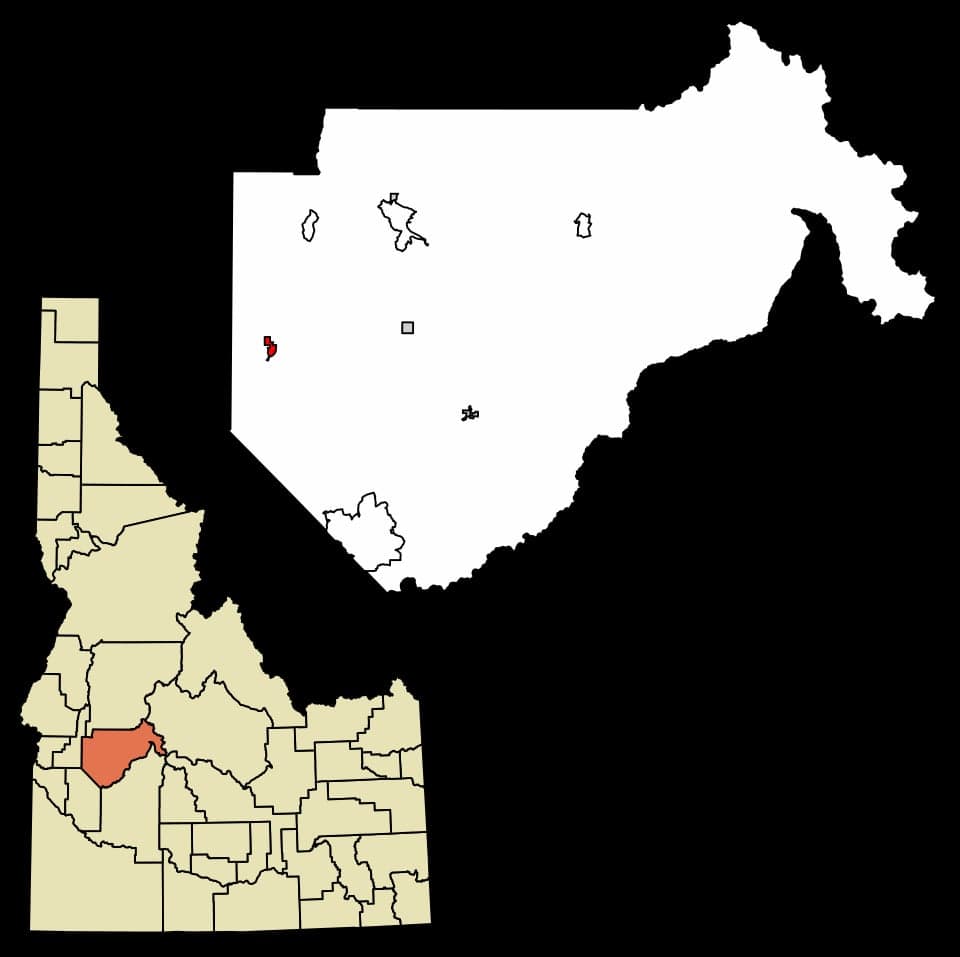
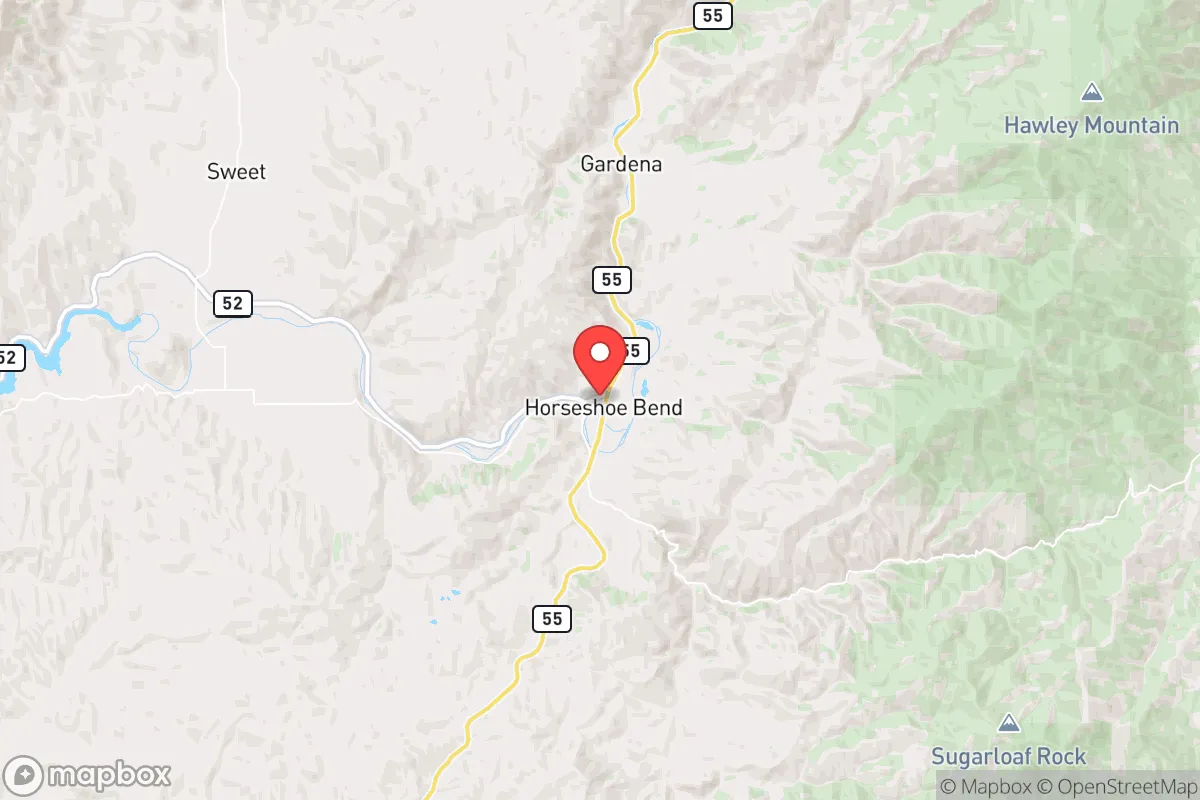
Photo: Wikipedia
Personal Sovereignty in Horseshoe Bend, ID
Viable for self-reliance. Generally workable, though some barriers may limit total independence.
What does Personal Sovereignty tell us?
Personal Sovereignty measures your capacity for self-reliance and independence with minimal government friction. Higher scores mean fewer barriers between you and the way you want to live... but it assumes you have the space you need and good neighbors.
What does this tell us?
Personal Sovereignty measures your capacity for self-reliance and independence with minimal government friction. Higher scores mean fewer barriers between you and the way you want to live... but it assumes you have the space you need and good neighbors.
State Policy
Energy independence: Importer (25% of energy produced in-state)
Personal Liberty
Homesteading

Personal Liberty Analysis
Horseshoe Bend, Idaho, offers a notably high degree of personal sovereignty, rooted in the state's deeply ingrained culture of individual liberty and limited government. For those prioritizing autonomy, the area presents a regulatory environment that is among the lightest in the nation, with low taxes, permissive self-defense laws, and significant latitude for self-reliant living. This analysis examines the specific factors that shape personal freedom in this small Boise River community, providing a factual baseline for relocation decisions.
Tax burden and regulatory posture: How Idaho's light-touch approach affects daily life
Idaho's tax and regulatory framework is designed to minimize government intrusion, and Horseshoe Bend residents benefit directly. The state levies a flat income tax rate of 5.8% (as of 2026), which applies to all income brackets, and there is no state-level estate or inheritance tax. Property taxes in Boise County, where Horseshoe Bend is located, are among the lowest in the state, with an effective rate typically around 0.6% to 0.8% of assessed home value. This is significantly lower than the national average of roughly 1.1%. The county assessor's office is known for a straightforward, non-adversarial valuation process, and appeals are common and generally handled without excessive bureaucracy. Business licensing is minimal; a simple city business license is required for most commercial activities, but there are no county-level occupational licenses for common trades like landscaping, handyman services, or home-based consulting. Zoning in the unincorporated areas surrounding Horseshoe Bend is permissive, with no county-wide building codes for agricultural structures or accessory dwellings on parcels over 20 acres. The Idaho Department of Environmental Quality (DEQ) has a reputation for practical, outcome-based enforcement rather than prescriptive rule-making, particularly for small-scale septic systems and well permits. For a household seeking to minimize tax and regulatory friction, Horseshoe Bend's posture is decidedly hands-off.
Self-defense and gun law specifics: Constitutional carry and stand your ground in practice
Idaho is a "constitutional carry" state, meaning no permit is required to carry a concealed firearm for any law-abiding adult 18 or older. This right is explicitly protected by Article I, Section 11 of the Idaho Constitution, which states that "the people have the right to keep and bear arms, which right shall not be abridged." Horseshoe Bend has no local ordinances that further restrict this right; there are no city-level bans on open carry, magazine capacity, or specific firearm types. The state's "stand your ground" law (Idaho Code § 19-202A) removes any duty to retreat before using deadly force in self-defense, provided the individual is lawfully present and not engaged in criminal activity. This applies both inside the home and in public spaces. The Gem State also has strong preemption laws (Idaho Code § 18-3302J), which prohibit cities and counties from enacting their own gun control measures that are stricter than state law. This means that even if local sentiment shifts, the legal framework for self-defense remains uniform and protective of individual rights. For a resident in Horseshoe Bend, the practical reality is that carrying a firearm for personal protection is a legally unencumbered choice, and the legal system is structured to favor the defender in a justified use-of-force incident.
Self-reliance and homesteading viability: Lot sizes, zoning, and off-grid feasibility
Horseshoe Bend's geography and zoning code make it a strong candidate for self-reliant living. The city itself has standard residential lots (typically 0.25 to 0.5 acres), but the surrounding unincorporated areas of Boise County offer 5-acre, 10-acre, and 20-acre parcels that are zoned for agricultural and residential use. There is no county-wide minimum lot size for a single-family dwelling, but subdivision regulations require at least 5 acres for a new lot in most rural zones. Off-grid living is legally straightforward: Idaho law does not require connection to a municipal power grid, and many rural properties rely on solar, wind, or generator systems. The county health department permits composting toilets and greywater systems for residential use, provided they meet basic setback and containment standards. Rainwater collection is unrestricted at the state level, and many residents use cisterns for household water. Drilling a private well requires a permit from the Idaho Department of Water Resources, but the process is simple and fees are low (typically under $200). There are no county-level restrictions on keeping livestock, including chickens, goats, or even a small number of cattle, on parcels of 2 acres or more. The Boise County Planning and Zoning office is known for a practical, "live and let live" approach; variances for alternative building methods (e.g., straw bale, earthship, or container homes) are routinely granted if basic safety and setback requirements are met. For a family or individual seeking to minimize reliance on municipal services and external supply chains, Horseshoe Bend offers a permissive legal environment that supports a high degree of self-sufficiency.
Personal liberties: Parental rights, medical autonomy, speech, and property
Idaho law strongly protects parental rights in education and healthcare. The state's "Parents' Bill of Rights" (Idaho Code § 33-5201) explicitly affirms that parents have the fundamental right to direct the upbringing, education, and health care of their children. This includes the right to opt children out of any curriculum or activity without penalty, and to access all educational records. Homeschooling is deregulated: parents need only file a one-time "intent to homeschool" form with the local school district, and there are no state-mandated curriculum, testing, or reporting requirements. Medical autonomy is similarly broad. Idaho does not have a state-level vaccine mandate for adults, and while school attendance requires certain immunizations, parents can claim a personal or religious exemption with a simple written statement. The state's "Right to Try" law (Idaho Code § 39-9301) allows terminally ill patients to access experimental treatments without FDA approval, and there are no state restrictions on the use of alternative or complementary medicine by licensed practitioners. Freedom of speech and assembly are robustly protected under both the U.S. and Idaho Constitutions. Horseshoe Bend has no local noise ordinances that restrict amplified speech or public gatherings, and the city council has a history of granting parade and assembly permits without content-based restrictions. Property rights are strongly defended: Idaho's "private property protection" law (Idaho Code § 67-8003) requires the government to compensate landowners for any regulatory taking that reduces property value by more than 20%. This creates a powerful disincentive against overreaching zoning or environmental regulations. For a resident who values the ability to make personal decisions without government interference, Horseshoe Bend's legal framework is consistently protective of individual choice.
In the broader context of the American West, Horseshoe Bend ranks among the most sovereignty-friendly communities for its size. The combination of Idaho's constitutional protections, low tax burden, permissive self-defense laws, and practical support for off-grid living creates an environment where personal autonomy is not just tolerated but actively enabled. While no location is without trade-offs—limited healthcare access and distance from major employment centers are real considerations—for a household whose primary priority is maximizing individual freedom and self-reliance, Horseshoe Bend represents a strong, data-backed choice.

* Values derived from national, state, county, city and local statistics and may differ in a specific area. Last updated: 2026-10-28T16:40:36.000Z
Narrative content on this page is AI-generated and may contain mistakes. Verify any details that matter before acting on them.
ReloMaps may earn a commission from affiliate links at no extra cost to you.

