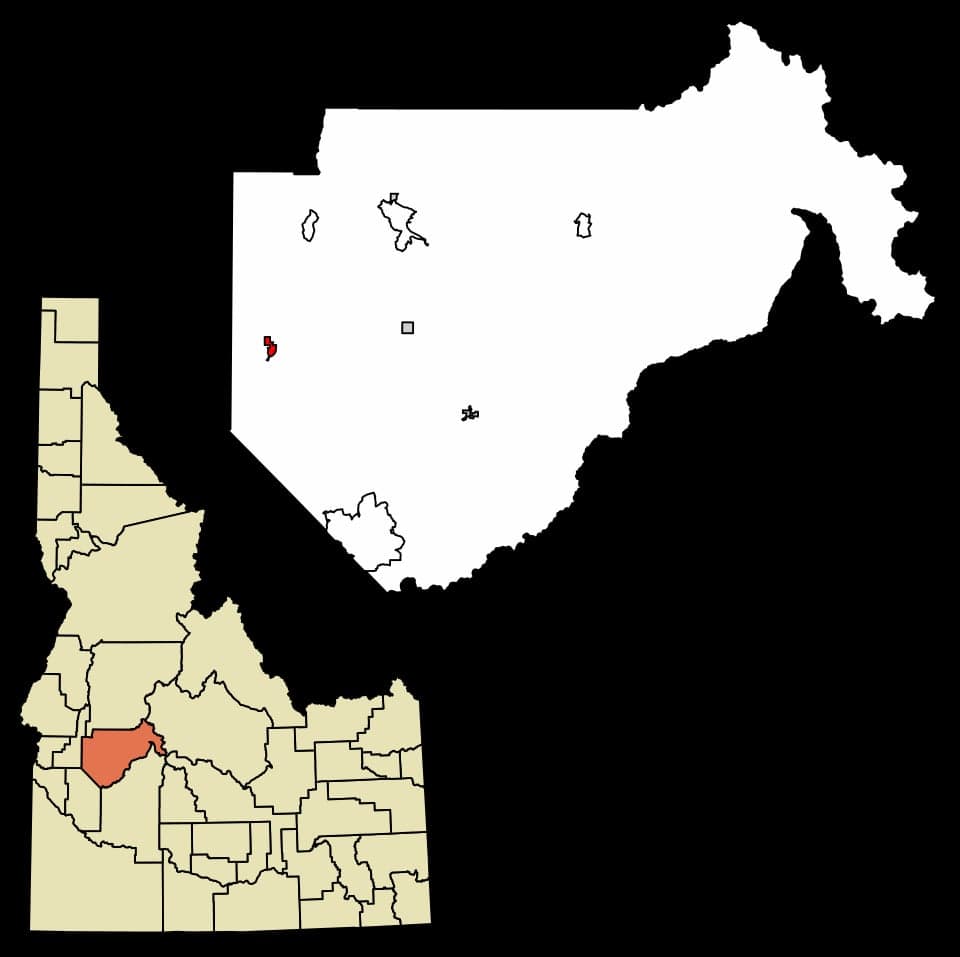
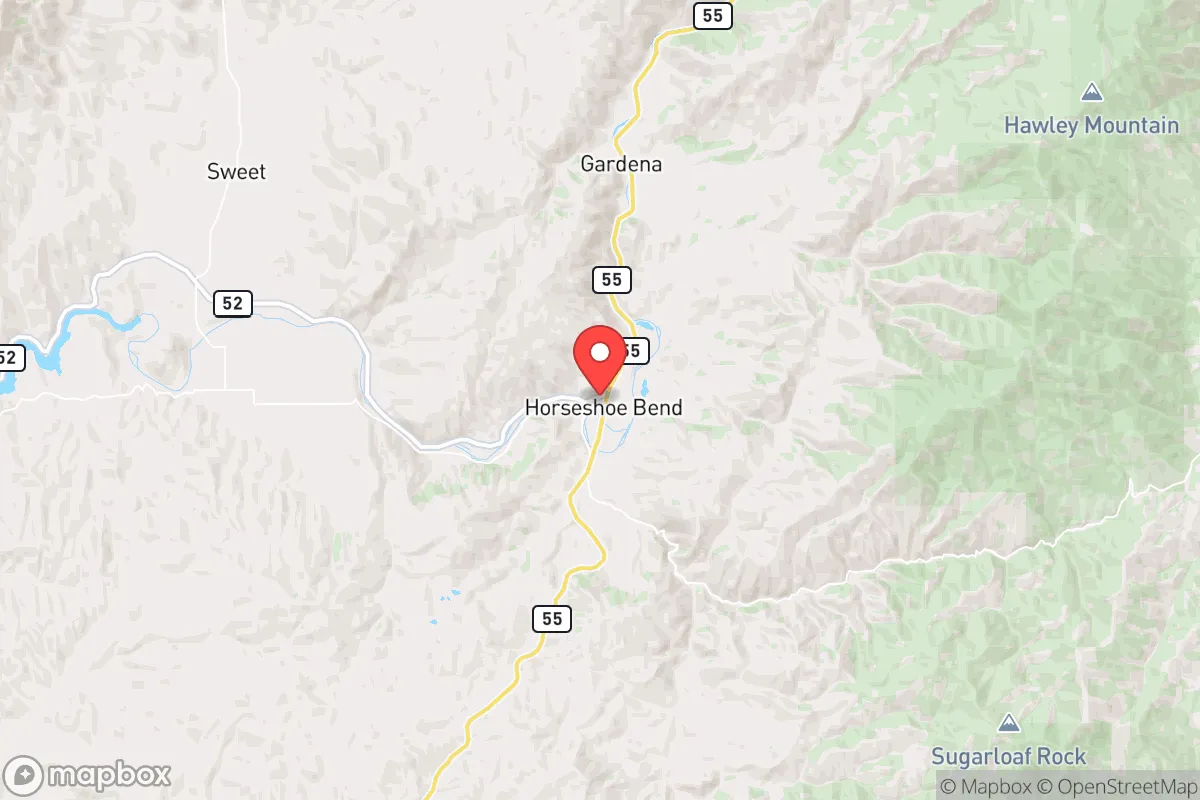
Photo: Wikipedia
Demographics of Horseshoe Bend, ID
Affluence Level in Horseshoe Bend, ID
A middle-class area roughly in line with national averages across income, home values, education, and employment.
People of Horseshoe Bend, ID
The people of Horseshoe Bend, Idaho, today number 756, forming a tight-knit, predominantly white community with a distinct small-town character rooted in its river-valley setting. With 81.0% of residents identifying as white, 6.2% as Hispanic, and 2.5% as East or Southeast Asian, the population is notably less diverse than the national average, and its 18.6% college-educated rate reflects a working-class orientation. The city’s identity is shaped by its location along the Payette River and its history as a service hub for nearby agriculture and recreation, giving it a self-reliant, outdoorsy feel that appeals to families and individuals seeking a quieter, more affordable alternative to Boise, 40 miles south.
How the city was settled and grew
Horseshoe Bend’s human history begins with the Shoshone and Bannock peoples, who used the Payette River corridor for fishing and seasonal travel long before Euro-American settlement. The first permanent non-Native settlers arrived in the 1860s, drawn by the promise of gold in the Boise Basin and the fertile bottomlands along the river. By the 1870s, a small agricultural community had formed, centered on the Old Town district near the river crossing, where homesteaders built log cabins and planted orchards. The arrival of the Oregon Short Line Railroad in the 1880s spurred growth, turning Horseshoe Bend into a shipping point for fruit, hay, and livestock. The River Road neighborhood, hugging the Payette’s north bank, became home to many of these early farming families, whose descendants still own land there today. The town incorporated in 1907, and through the early 20th century, its population remained small and overwhelmingly white, with a handful of Chinese laborers who had worked on the railroad settling briefly in a small enclave near the depot before dispersing.
Modern era (post-1965)
After the 1965 Hart-Cellar Act, Horseshoe Bend saw little direct immigration, and its demographic profile remained largely static through the 1970s and 1980s. The most significant shift came from domestic in-migration, as families and retirees from California and other Western states began moving in during the 1990s and 2000s, drawn by lower housing costs and the area’s recreational appeal—rafting, fishing, and hunting on the Payette River. These newcomers concentrated in the Mountain View Estates subdivision, a planned development on the town’s eastern edge, and in newer homes along Banks Road, which connects to the larger Boise National Forest. The Hispanic population, now 6.2%, grew modestly during this period, primarily through agricultural labor in nearby orchards and ranches, with families settling in the South Side area near the old highway. The East/Southeast Asian share (2.5%) is largely tied to a small number of business owners and professionals who moved in after 2010, often working in Boise but choosing Horseshoe Bend for its slower pace. The black population remains at 0.0%, and the Indian-subcontinent population is also 0.0%, reflecting the town’s limited pull for diverse immigrant streams.
The future
Horseshoe Bend’s population is projected to grow slowly, likely reaching 850–900 by 2040, driven by continued spillover from the Boise metro area. The city’s Riverside Addition neighborhood, a newer subdivision platted in the 2010s, is absorbing most of this growth, attracting younger families and remote workers who value river access and lower property taxes. The population is expected to become slightly more diverse, with the Hispanic share potentially rising to 8–10% as agricultural and service-sector jobs expand, and the East/Southeast Asian share holding steady or increasing marginally as Boise’s tech economy pushes housing seekers further afield. However, the white share will likely remain above 75%, and the town’s cultural identity—conservative, outdoors-focused, and neighborly—is not expected to shift dramatically. The lack of rental housing and limited job opportunities within city limits will keep growth modest, preserving the small-town feel that current residents prize.
For someone moving in now, Horseshoe Bend offers a stable, predominantly white community where change comes slowly and newcomers are expected to integrate into existing social networks. It is a place for those who prioritize quiet, affordability, and proximity to nature over diversity or urban amenities, and its future trajectory suggests it will remain much the same for the next generation.

* Values derived from national, state, county, city and local statistics and may differ in a specific area. Last updated: 2026-10-28T16:40:36.000Z
Narrative content on this page is AI-generated and may contain mistakes. Verify any details that matter before acting on them.
ReloMaps may earn a commission from affiliate links at no extra cost to you.

